
Baby Eczema Basics: Triggers, Care, and Doctor Tips
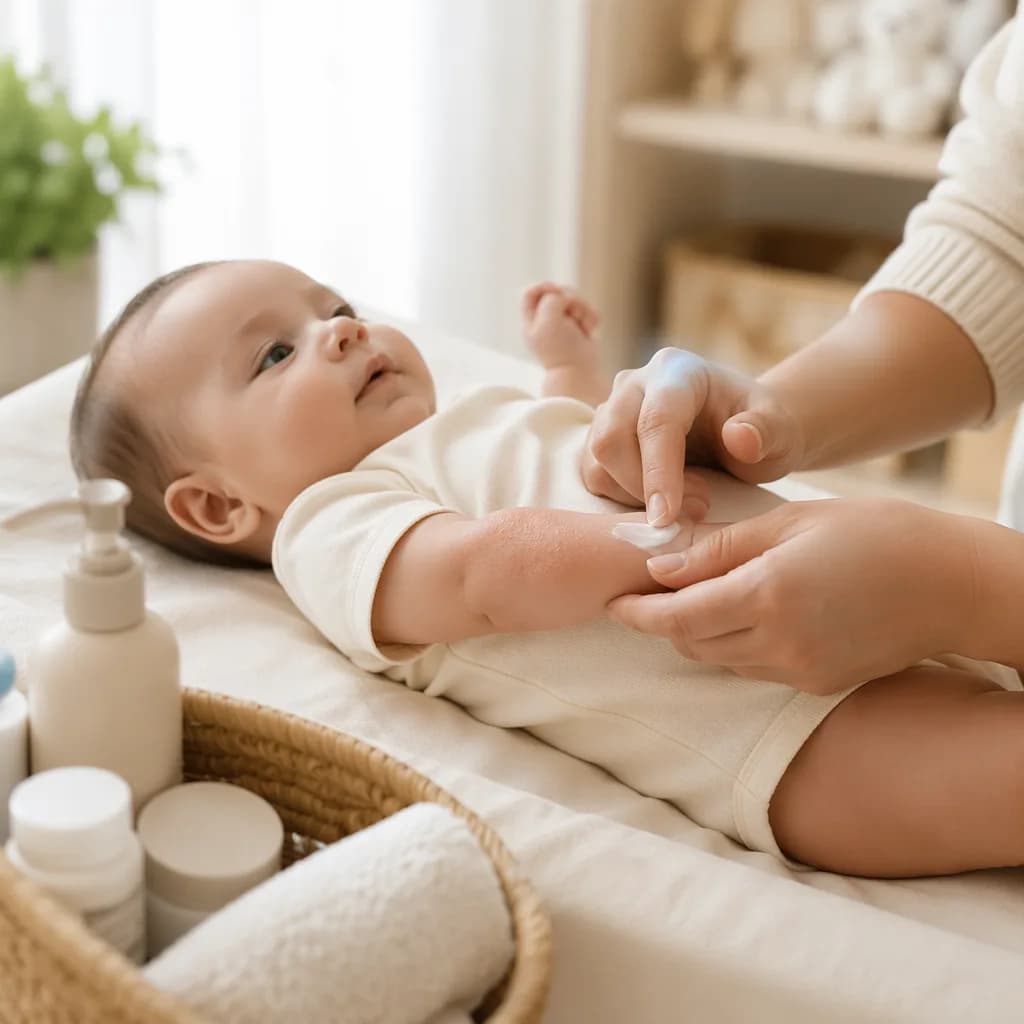
What baby eczema looks like
Baby eczema, also called infant eczema or atopic dermatitis, is a common inflammatory skin condition that makes a baby’s skin dry, itchy, sensitive, and irritated. It can show up as rough patches that look red on lighter skin. On deeper skin tones, eczema may look darker than the surrounding skin, or sometimes purple, gray-brown, or ashy.
The biggest clue is usually itchiness. A baby may rub their face on your shirt, scratch at their legs, or seem extra fussy at bedtime because the skin feels uncomfortable.
In younger babies, eczema often shows up on the scalp and face, especially the forehead, cheeks, chin, and around the mouth. After about 6 months, it may appear around the elbows and knees. Some babies also get patches on their arms, legs, wrists, ankles, or trunk.
A simple dry skin rash is usually more even and less inflamed. Cradle cap tends to be greasy or scaly on the scalp, rather than itchy patches on the cheeks or joints. Heat rash often looks like tiny bumps after overheating or sweating. Diaper rash stays mostly in the diaper area, while eczema can show up outside it.
Here’s a real-life picture: a 5-month-old has rough red patches on both cheeks. They look worse after a drooly afternoon, then flare again after a cold, dry stroller walk. That pattern fits with common eczema triggers like saliva, dry air, and cold-weather irritation. If drooling is part of the picture, our guide to teething symptoms, signs, remedies, and soothing tips may help you sort out what’s going on.
If you’re already tracking feedings, naps, or appointments like the baby vaccine schedule for the first year, adding a quick skin note can be useful too: where the rash is, what touched the skin, and what helped.
Common triggers that can make infant eczema flare
Baby eczema can feel random, but flare-ups often have a pattern. The trick is spotting what touches your baby’s skin, what’s happening in the room, and what changed that week.
Everyday irritants are a good place to start. Fragranced soap, bubble bath, scented laundry detergent, dryer sheets, baby wipes, powder, shampoos, and heavily fragranced lotions can all bother sensitive skin. So can scratchy fabrics like wool, rough bedding, and clothing that rubs the same spot again and again. Saliva is another sneaky one. If your baby is drooling more during teething, that damp skin around the mouth and chin can flare, so a thin layer of plain petroleum jelly before naps or feeds may help protect the area. If teething is part of the picture, our guide to teething symptoms and soothing tips may help you sort out what’s connected.
Weather can be a trigger, too. Dry indoor heat, cold air, sweating, and sudden temperature changes can make eczema angrier. A baby who’s bundled for a stroller walk, then comes into a warm house and gets sweaty in the car seat, may end up with irritated patches behind the knees or around the neck.
Food allergies can worsen eczema for some babies, especially once solids have started. But eczema is usually tied to a mix of skin barrier, genetics, and environmental triggers, not one simple food cause. Please ask your baby’s doctor before cutting out breast milk, formula, or major foods.
Scratching and infection can also keep the cycle going. Itchy skin leads to rubbing, rubbing can break the skin, and broken skin gets more irritated. Call your doctor if you notice pus-filled blisters, sores, or yellowish-orange crusting.
A simple trigger diary helps. Write down the date, products used, weather, foods if solids have started, and where the rash appeared. “Aurora had red cheeks after a cold windy walk” or “Rami’s elbow patches worsened after new detergent” is exactly the kind of detail that helps. You can use the same practical note-taking style you might use for appointments, like tracking questions alongside a first-year vaccine schedule, or even in the baby notes where you saved Aurora’s name meaning or Rami’s origin.
Daily baby skin care that helps calm eczema
Baby eczema care doesn’t need to be fancy. The goal is simple: clean gently, trap moisture, reduce irritation, and make scratching harder.
Start with bath time. Use lukewarm water, not hot, and keep the bath short, about five to 10 minutes. Wash only the spots that are dirty or smelly with a mild, fragrance-free cleanser. Think diaper area, neck folds, hands, and anywhere milk or food tends to collect. Skip scrubbing, even with a soft washcloth, because rubbing can irritate already sensitive skin.
Right after the bath, use the 3-minute rule. Pat your baby’s skin so it’s still a little damp, then apply moisturizer right away. This helps seal in water before the skin dries out. For eczema, thick creams and ointments are usually better than thin lotions or oils because they create more of a barrier on the skin. If your doctor has prescribed a topical corticosteroid, follow their directions and apply it after the bath before moisturizer.
Clothing matters too. Soft cotton layers are often a good choice because you can add or remove a layer before your baby gets sweaty. Sweat and overheating can trigger or worsen eczema for some babies, so keep sleep clothing breathable and the room comfortably cool. Trim nails often to reduce damage from scratching. Mittens can help during a rough flare or overnight, but use them only when needed so your baby still has time to explore with their hands.
Laundry is another place to simplify. Choose fragrance-free detergent, skip fabric softener, and rinse new clothes before your baby wears them. The same idea applies to blankets, crib sheets, and pajamas. Fragrance can be a trigger, and new fabrics may have residues that bother sensitive skin.
Here’s what this can look like on a regular night: a short lukewarm bath, no scrubbing, then thick cream on cheeks and legs while the skin is still damp. Cotton pajamas. A cool room. Nails clipped before bed. If teething drool is making the rash around the mouth worse, a little plain petroleum jelly before sleep can help protect the skin, and our guide to teething symptoms and soothing tips may help you sort out what’s drool-related.
If you’re already tracking feeds, sleep, and appointments like the baby vaccine schedule for the first year, add one small eczema note too: what touched your baby’s skin that day and where the rash showed up. A tiny pattern can make daily care feel less like guessing.
How to choose an eczema cream for babies
A good eczema cream for babies starts with a boring label. That’s a compliment.
Look for products that are fragrance-free and dye-free, since fragranced baby items, soaps, shampoos, laundry products, wipes, and lotions can trigger flare-ups for some babies. Thick creams and ointments are usually a better choice than light lotions or oils, especially right after a bath. If the product is accepted by the National Eczema Association, that can be a helpful extra clue when you’re comparing shelves full of nearly identical tubes.
Some common ingredients parents often see on labels include petrolatum, ceramides, glycerin, colloidal oatmeal, and dimethicone. In plain terms, you’re looking for something that helps coat, protect, and moisturize dry, sensitive skin. Plain petroleum jelly can also be useful around the mouth before feedings or naps if saliva seems to be setting off eczema on your baby’s face.
There’s a difference between a daily moisturizer and a medicated eczema cream for babies. A daily moisturizer is part of everyday skin care. It helps keep the skin hydrated and supports the skin barrier. A medicated cream, such as a low-strength topical corticosteroid, is meant to calm inflammation and itching during a flare. Use those only the way your baby’s clinician or dermatologist recommends, because babies are more sensitive to corticosteroids than adults.
Skip adult steroid creams, essential oils, herbal salves, and antibiotic ointments unless your doctor specifically says to use them. Baby skin can react quickly, and eczema already makes it easier for germs and irritants to get in.
Before using a new cream all over, try a tiny amount on one small patch of skin for a day. If the area looks angrier, oozes, or your baby seems more uncomfortable, stop and call your clinician.
This is a lot to track, especially alongside teething, feeds, and appointments. If you’re sorting out fussiness too, our guide to teething symptoms and soothing tips may help. And if you’re planning checkups, this baby vaccine schedule for the first year keeps the timing in one place. Then, during the rare quiet minute, you can do something softer, like reading about Rami or Aurora.
When to ask a doctor about baby eczema
Most baby eczema can be managed with gentle daily care, but there are times when it’s better to call the pediatrician than wait it out.
Call your baby’s doctor if you see oozing, pus-filled blisters, sores, yellowish-orange crust, fever, swelling, warmth, worsening redness, or signs that the rash is painful. These can point to infection, and babies with eczema are more prone to skin infections because irritated skin makes it easier for germs to get in.
Some situations deserve faster help. Reach out promptly if eczema is near your baby’s eyes, the rash is spreading over large areas, your baby is feeding poorly, or they seem unusually sleepy. If your baby is under 3 months and has a concerning rash, it’s also a good idea to call. Tiny babies can be harder to read, and a doctor can help sort out what’s eczema and what might be something else.
Routine help is useful too. If itching is keeping your baby awake, if the rash hasn’t improved after about a week of gentle care, or if flare-ups keep coming back, your pediatrician can help adjust the plan. They may check the diagnosis, suggest a prescription cream, treat an infection if one is present, talk through possible allergy triggers, or refer you to a dermatologist.
Before the visit, jot down the products touching your baby’s skin: cleanser, lotion, laundry detergent, wipes, diaper cream, even shampoo. Photos help too, because rashes love to look calmer by appointment day. A quick picture during the worst flare can give the doctor a clearer idea of what’s been happening.
This is the same practical approach we take with other baby questions, like tracking teething symptoms or keeping up with the baby vaccine schedule. Notice patterns, save details, and ask early. Even if your baby’s name is Rami or Aurora, the best care plan is the one made for their skin.
What parents can expect over time
Baby eczema can feel unpredictable. You may do the bath, the moisturizer, the careful laundry, and still see a flare show up on a cheek or behind a knee. That doesn’t mean you did anything wrong. Eczema often comes and goes, even when skin care is thoughtful and consistent.
The goal usually isn’t “never again.” It’s fewer flares, less itching, better sleep, and skin that calms down faster when irritation happens. A simple daily routine can make a real difference: short lukewarm baths, fragrance-free cleanser only where needed, and a thick fragrance-free cream or ointment right after. Dermatologists often recommend moisturizing twice a day, or more often if your baby’s skin needs it.
Many children improve as they get older, though some keep sensitive skin and need extra care during dry weather, sweating, teething drool, or illness. If saliva seems to make the rash around the mouth worse, a thin layer of plain petroleum jelly before naps or feedings can help protect the skin. If you’re also sorting through drool, sore gums, and fussiness, our guide to Teething Symptoms: Signs, Remedies, and Soothing Tips may help you separate what’s skin-related from what’s teething-related.
Consistency matters more than buying every cream on the shelf. A plain ointment used every day can beat a bathroom cabinet full of half-used products.
You didn’t cause your baby’s eczema. And you don’t have to manage it alone. If the rash is worsening, sleep is falling apart, or you see signs of infection like pus-filled blisters, sores, or yellowish-orange crusting, ask your pediatrician or dermatologist for help early. It can make daily life easier.
Frequently Asked Questions
Is baby eczema the same as dry skin?
No. Dry skin can feel rough or flaky, but baby eczema is usually itchier, red or discolored, inflamed, and likely to come back in patches.
What is the best eczema cream for babies?
A thick, fragrance-free cream or ointment is usually best for daily care. Ask your pediatrician before using medicated creams, especially steroids.
Can food cause infant eczema?
Food can trigger flares in some babies, but it is not the main cause for most. Talk with a doctor before removing foods, formula, or breastfeeding foods.
How often should I moisturize baby eczema?
Most babies with eczema do best with moisturizer at least twice a day, plus right after baths while the skin is still slightly damp.
Should I bathe my baby less if they have eczema?
Not always. Short lukewarm baths can help if you use gentle cleanser and apply thick moisturizer right after.
When is baby eczema an emergency?
Seek urgent care for fever, rapidly spreading redness, swelling, pain, blisters, or a baby who seems very sleepy, ill, or is feeding poorly.
Frequently asked questions
What does baby eczema usually look like?
What commonly triggers infant eczema flare-ups?
How can I help my baby's eczema at home?
Should I change my baby's diet because of eczema?
When should I call the doctor about baby eczema?
References
Sources
External research this article was grounded in.
- How to treat eczema in babiesaad.org
- Baby Eczema Causes & Treatmentmy.clevelandclinic.org
- Baby Eczema: A Complete Parent's Guide (+ Free Downloadable Booklet) - Mustela USAmustelausa.com
- Baby Shark | ABCkidTV Nursery Rhymes & Kids Songs - Videos For Kidskidvideo.org
Related reading
More from the journal → health
When to Call the Pediatrician: Baby Warning Signs Now
A calm, clear guide to baby warning signs, including fever, breathing trouble, dehydration, poor feeding, and when to call the pediatrician now.
13 min readJun 26, 2026 health
When Do Babies Start Teething? Signs and Relief
Most babies start teething around 6 months, but earlier or later can be normal. Learn the signs, timeline, and safe ways to soothe sore gums.
13 min readJun 17, 2026- health
Baby Fever: When to Call the Doctor and Track
Baby fever can feel scary fast. Learn what counts as a fever, when to call the doctor by age, and what details to track before you call.
10 min readJun 17, 2026