
Baby Sleep Sack Tog, Sizing, and Safety Guide
What is a baby sleep sack?
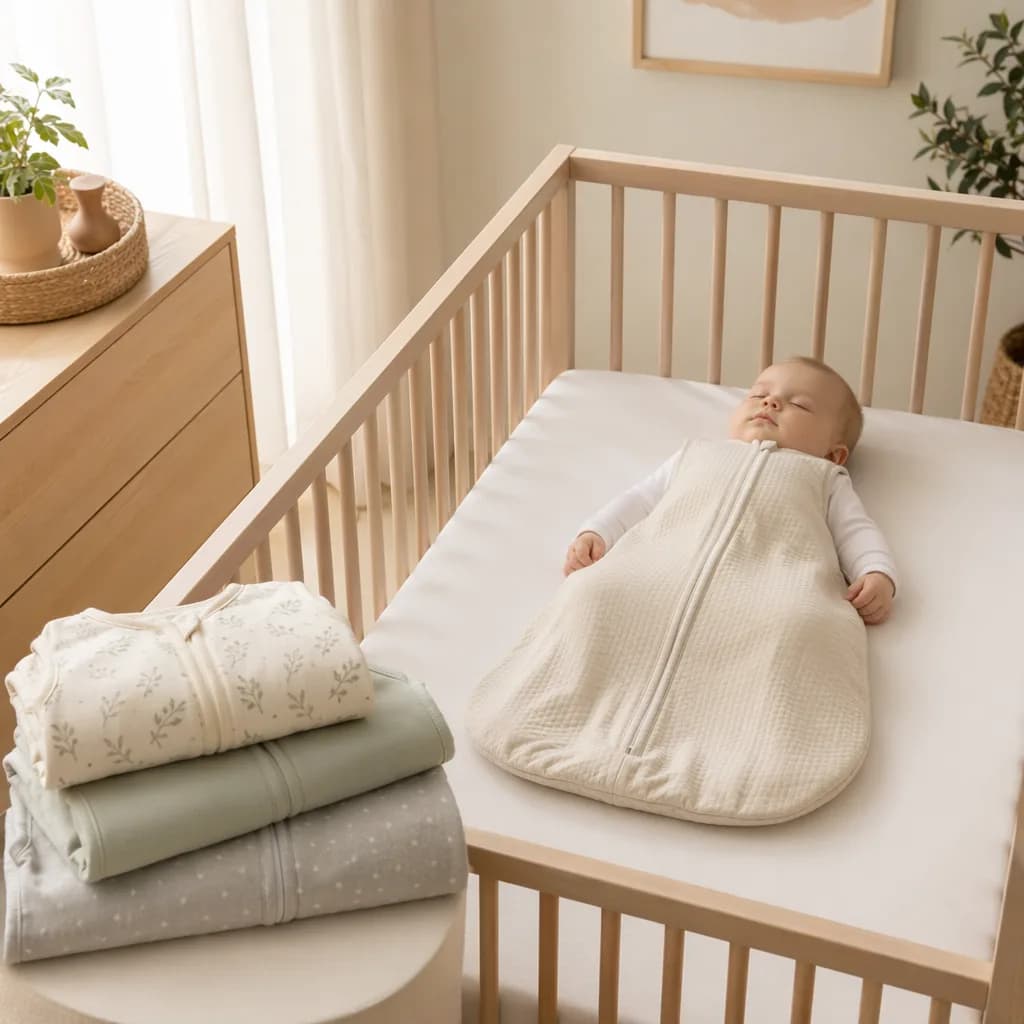
A baby sleep sack is a wearable blanket your baby can sleep in. It usually has armholes, a neck opening, and a closed bottom, so baby stays covered without having a loose blanket in the crib.
That’s the main point: it replaces loose bedding. Loose blankets aren’t recommended for babies under 12 months, so a sleep sack gives warmth in a way that’s designed to stay on the body instead of bunching up near baby’s face. Think of it like a tiny sleeping bag with safe openings for the neck and arms.
A sleep sack is different from a swaddle. A swaddle wraps baby’s arms snugly, which many newborns find calming in those early weeks. A sleep sack leaves the arms free. Many families make the switch once baby starts rolling or outgrows swaddling, because free arms help baby move and reposition. If you’re still in that sleepy newborn stage, Newborn Sleep Basics for Calmer Days and Nights can help you sort out what’s normal.
It’s also different from a sleep gown. A sleep gown is usually open or elastic at the bottom for easy diaper changes, while a sleep sack has that closed bottom for cozy coverage during sleep.
As baby grows, sleep sacks often become part of the nap and bedtime rhythm, right alongside wake windows and feeding patterns. If naps are changing too, you may find Baby Nap Transitions: Ages, Signs, and Schedule Tips and Baby Nap Schedule by Age: Newborn to 12 Months helpful.
Sleep sack tog rating explained
A sleep sack tog rating tells you how warm the sleep sack is. It doesn’t tell you how thick it feels in your hand, how soft the fabric is, or how cozy it looks on the hanger.
TOG stands for Thermal Overall Grade, and it measures how well a textile holds heat. For sleep sacks, lower tog numbers are cooler, and higher tog numbers are warmer. Most sleep sack tog ratings run from about 0.5 to 3.5.
Here’s a simple way to think about it:
- 0.5 tog: warm rooms
- 1.0 tog: mild rooms
- 2.5 tog: cooler rooms
- 3.5 tog: very cold rooms, if the brand says it’s appropriate
For example, if your nursery is around 70°F, a 1.0 tog sleep sack over cotton pajamas is often enough for many babies. If your baby tends to run warm, you might use lighter pajamas. If their room is cooler, you may look at a warmer option.
The big thing: follow the brand’s temperature chart. Two sleep sacks can have the same tog rating but feel different because the fabric, quilting, or batting varies. Cotton, viscose, scuba knits, and quilted options don’t all behave the same way.
Warmer isn’t automatically better. Overheating is a safety concern, so the goal is comfortable warmth, not maximum warmth. A baby who is sweaty, flushed, or hot to the touch may be dressed too warmly for sleep.
Sleep sacks are only one piece of the sleep puzzle. If you’re sorting out daytime rest too, our guides to Baby Nap Schedule by Age: Newborn to 12 Months and Baby Nap Transitions: Ages, Signs, and Schedule Tips can help you match sleep timing with what your baby is ready for. And for those early weeks, Newborn Sleep Basics for Calmer Days and Nights is a gentle place to start.
How to choose the right baby sleep sack size
Baby sleep sack sizing should start with the brand’s height and weight chart, not age alone. Age ranges can be helpful, but babies grow in their own funny patterns. One 6-month-old may be long and lean, while another is shorter with deliciously chunky thighs. The label’s height and weight range gives you the safer, more practical starting point.
Once you’ve picked a size, do a quick fit check before bedtime.
The neck opening matters most. It should sit comfortably around baby’s neck and should not be able to slip up over the chin, mouth, or nose. If you can picture the fabric riding up when baby wiggles, rolls, or scoots, that sack is too loose at the top.
Next, check the armholes. They should be snug enough that baby’s arms can’t slide down inside the sleep sack. Baby should still be able to move naturally, but the openings shouldn’t gape. This is especially important for younger babies who don’t have the same body control as older infants.
Then look at the bottom. You want enough room for natural leg movement, since a sleep sack that’s too tight can feel restrictive. But bigger isn’t better here. If the sack is so long or wide that extra fabric bunches around baby’s body, it’s not the right fit.
It’s time to size up if you notice tightness across the shoulders, a zipper that looks stretched, toes pressing hard against the bottom, or baby has passed the brand’s weight limit. Those are clear signs the sleep sack is no longer comfortable or safe for sleep.
If you’re still sorting out sleep basics, our guide to Newborn Sleep Basics for Calmer Days and Nights is a helpful place to start. And as naps shift with growth spurts and new skills, Baby Nap Transitions: Ages, Signs, and Schedule Tips can help you adjust the rest of the day around better nights.
What should baby wear under a sleep sack?
Think of a sleep sack as one layer of the outfit, not the whole plan. What goes underneath should match three things: the room temperature, the sleep sack’s TOG rating, and whether your baby usually runs warm or cool.
A lower TOG means a lighter sleep sack, while a higher TOG means more warmth. So on a warm summer night, a short sleeve bodysuit under a 0.5 TOG sleep sack may be plenty. In a mild room, footed pajamas under a 1.0 TOG sleep sack often feel just right. For a cooler room, long sleeve pajamas under a 2.5 TOG sleep sack can give that extra cozy layer without loose bedding.
The best check is your baby’s core. Feel the chest, back, or tummy. Hands and feet can feel cool even when baby is comfortable, so they’re not the most helpful guide.
Watch for signs your baby may be too warm: a sweaty neck, damp hair, flushed skin, or rapid breathing. If you notice those, remove a layer or switch to a lighter sleep sack. Too warm is uncomfortable, and it can make sleep more unsettled.
Signs baby may be too cool can include a cool chest, fussiness that improves after adding one light layer, or waking often in a chilly room. If early mornings are suddenly rough, temperature can be one piece of the puzzle, along with the ideas in Baby Waking Up Early: Causes and Gentle Fixes.
As sleep patterns change, clothing may need tiny adjustments too. Nap timing, longer stretches, and room temperature all work together, especially during stages covered in Newborn Sleep Basics for Calmer Days and Nights, Baby Nap Schedule by Age: Newborn to 12 Months, and Baby Nap Transitions: Ages, Signs, and Schedule Tips.
Safe use basics for sleep sacks
A sleep sack is meant to replace loose bedding, not add another layer of clutter to the crib. Use it only on a firm, flat sleep surface, and always place your baby on their back for sleep. That simple setup matters more than any cute print or fancy zipper.
Keep the crib bare. No loose blankets, pillows, bumpers, stuffed animals, or sleep positioners. If you’re in that newborn stage where sleep feels like tiny puzzle pieces scattered across the day, Newborn Sleep Basics for Calmer Days and Nights can help you sort out the bigger picture without overcomplicating bedtime.
Fit is a safety issue, not just a comfort issue. Don’t use a sleep sack that’s too large, because the neck opening can slip up and become a hazard. Check the maker’s age, weight, and length range, then look at your actual baby in it. The neckline should sit comfortably without riding toward the mouth or chin, and the armholes shouldn’t let your baby wiggle down inside.
Before bedtime, do a quick hands-on check: zipper flat, snaps closed, seams intact. If there’s a zipper garage, make sure it covers the zipper pull so it doesn’t scratch your baby’s skin. If anything is loose, stretched, torn, or catching, set that sleep sack aside.
Once your baby shows signs of rolling, stop using swaddles or weighted swaddle styles. Rolling changes the sleep safety picture. Also avoid weighted sleep sacks unless a trusted pediatric medical professional specifically recommends one for your child.
Choose sleepwear that follows your local safety standards, such as flame resistant or snug fitting options. If your baby goes to daycare, ask what wearable blanket styles they allow, since some providers avoid styles with arms to reduce overheating concerns.
And if sleep feels bumpy during growth spurts or schedule changes, that’s normal. You might find Baby Nap Schedule by Age: Newborn to 12 Months, Baby Nap Transitions: Ages, Signs, and Schedule Tips, or Baby Waking Up Early: Causes and Gentle Fixes helpful as you adjust. Then, after bedtime, you can do something wildly unrelated, like browsing Tanmay Suresh Upadhyay: meaning & origin just because names are fun.
Common sleep sack mistakes parents can avoid
Sleep sacks are wonderfully simple, but a few small choices can make them safer and more comfortable.
The first mistake is buying by the age label only. Ages are just a starting point. Check the manufacturer’s height and weight range, because a 4-month-old in one family may fit very differently from a 4-month-old in another. A sack that’s too loose can ride up near the face, and one that’s too tight can limit comfortable movement.
Another common one: choosing a high TOG sack because baby’s hands or feet feel cool. Little hands and feet can feel chilly even when baby’s body is warm enough. Since TOG ratings show how much warmth the fabric holds, a higher TOG in a warm nursery can lead to overheating. If sleep feels unsettled, it may help to look at the whole routine too, especially with newborn sleep basics for calmer days and nights.
In winter, try not to pile on too many layers under the sack. A warmer sack plus heavy pajamas can be too much. Think in simple layers, then adjust based on the room and your baby’s comfort.
It’s also tempting to move into a toddler size early because it looks extra cozy. Bigger isn’t better here. Too much fabric can shift during sleep.
If your baby is using a swaddle-style sack, stop once rolling begins. Babies need their arms free when they start rolling.
And after a growth spurt, recheck the fit. This matters a lot around 3 to 6 months, when sleep and sizing can both change quickly. If naps are changing too, our guide to baby nap transitions can help you sort out what’s normal.
When to stop using a sleep sack
Many children can safely use a sleep sack into toddlerhood, as long as the size and style still match their body and stage. The key is fit. A sleep sack should allow comfortable movement without being so loose that extra fabric can shift toward the face, and it shouldn’t be so snug that your child seems boxed in.
It may be time to stop, size up, or switch styles if your child can climb out of the crib more easily while wearing it, seems restricted, or has passed the product’s size limit. Always check the label for the maximum height, weight, and age guidance, since each brand sets its own ranges.
For toddlers who stand, cruise, or walk around before bedtime, a footed sleep sack can be a helpful middle step. It keeps the cozy wearable blanket feeling while giving their feet more freedom and traction. Picture a toddler standing at the crib rail, chatting to a stuffed animal before lying down. Foot openings can make that stage feel less awkward.
Some families move to a blanket after 12 months. Others keep using a sleep sack because it stays put better than a blanket, especially during wiggly sleep or during changes like dropping a nap. If sleep feels bumpy right now, our guides to Baby Nap Transitions: Ages, Signs, and Schedule Tips, Baby Nap Schedule by Age: Newborn to 12 Months, and Baby Waking Up Early: Causes and Gentle Fixes can help you spot patterns. For younger babies, start with Newborn Sleep Basics for Calmer Days and Nights. And if you’re up late reading names during bedtime duty, Tanmay Suresh Upadhyay: meaning & origin is a sweet little rabbit hole.
Frequently Asked Questions
What tog sleep sack should my baby use?
Match the tog to the room temperature. Many babies use 0.5 tog in warm rooms, 1.0 tog in mild rooms, and 2.5 tog in cooler rooms.
How do I know if a baby sleep sack is too big?
It is too big if the neck can ride over baby's chin or mouth, the arms slip inside, or extra fabric bunches around the face or body.
Can a newborn sleep in a sleep sack?
Yes, if the sleep sack is newborn sized, fits securely at the neck and arms, and is used on a firm, flat sleep surface with baby on their back.
Is a wearable blanket baby sleep product safer than a loose blanket?
Yes. A wearable blanket is generally safer for babies under 12 months because it keeps warmth on baby without loose bedding in the crib.
Should baby wear pajamas under a sleep sack?
Usually, yes. Choose a bodysuit or pajamas based on the tog rating and room temperature, then check baby's chest or back for comfort.
When should I stop swaddling and use a sleep sack?
Stop swaddling when baby shows signs of rolling. At that point, an arms-out sleep sack is usually the safer next step.
Frequently asked questions
What TOG sleep sack should my baby wear?
How do I know if a sleep sack fits safely?
Can a baby wear a sleep sack once they start rolling?
What should my baby wear under a sleep sack?
How can I tell if my baby is too warm in a sleep sack?
References
Sources
External research this article was grounded in.
- BabyCenter | The Most Accurate & Trustworthy Pregnancy & Parenting Information | BabyCenterbabycenter.com
- The Ultimate Guide to Sleep Sack TOG Ratings: Sizing, Selection, and Sweet Dreams – Boppyboppy.com
- The Ultimate Guide to Baby Sleep Sacksyawntodawnconsulting.com
- Ultimate Sleep Sack Guide for Parents – Baby Product Advisorbabyproductadvisor.com
- Sleep - Wikipediaen.wikipedia.org
Related reading
More from the journal → baby-sleep
Safe Sleep Temperature for Baby: Dressing Guide
A calm baby sleep temperature guide with simple layering tips, TOG ranges, and signs your baby may be too hot or too cold.
10 min readAug 3, 2026- baby-sleep
4 Month Sleep Regression: Signs, Causes, Tips
Is your 4 month old suddenly waking more, napping less, or fighting bedtime? Here’s what’s normal, what helps, and when to call the doctor.
15 min readAug 3, 2026 - baby-sleep
Safe Sleep Checklist for Baby: Crib to Bedtime
A calm, practical safe sleep checklist for baby, covering crib setup, room sharing, sleep sacks, overheating, pacifiers, and caregiver rules.
11 min readAug 3, 2026