
Babyproofing Checklist: Room-by-Room Home Safety
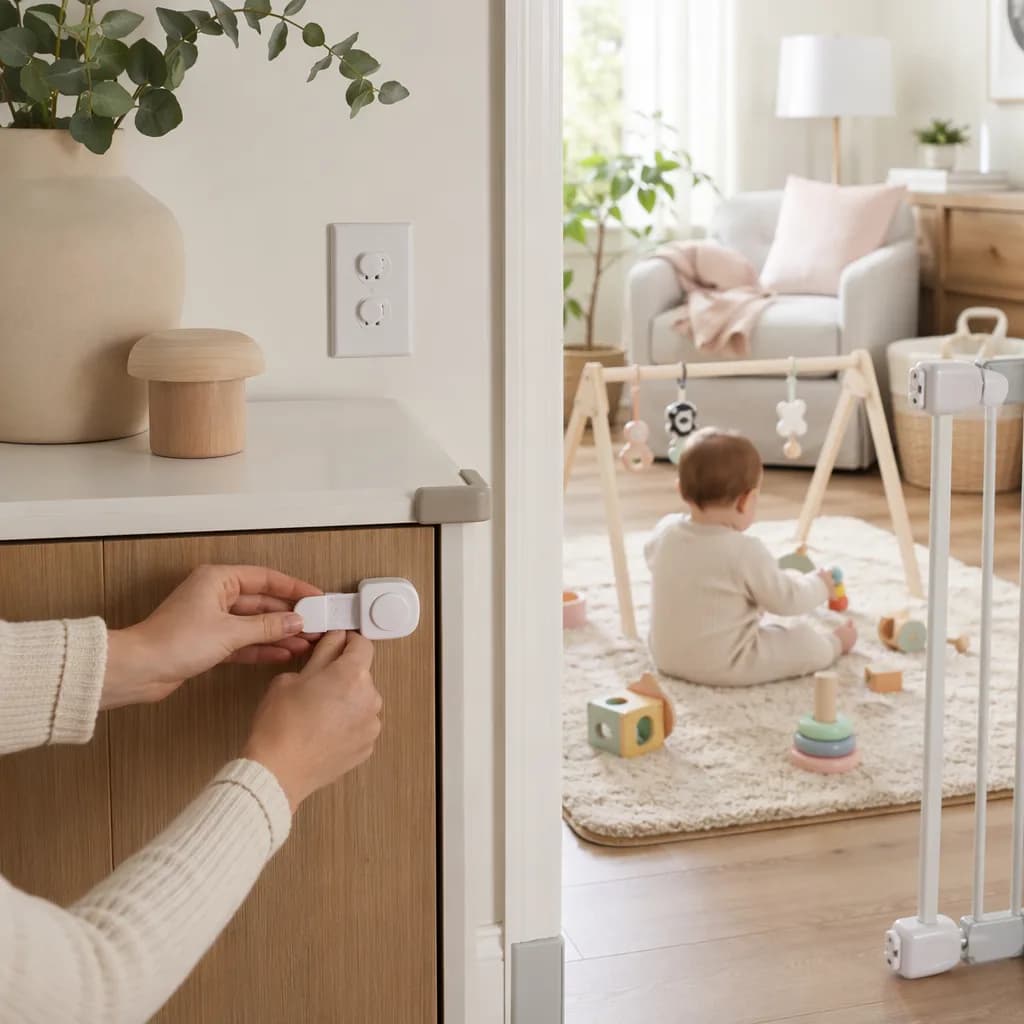
Start With a Whole-Home Babyproofing Checklist
Babyproofing feels much easier when we treat it as an ongoing project, not a one-time weekend sprint. Ideally, we start before baby is crawling, or even earlier, if we have the time and energy, then do another sweep as they begin pulling up, cruising along furniture, and walking. Each new skill changes what they can reach, yank, climb, or taste.
A helpful first step is to get down on our hands and knees and look at each room from baby’s eye level. From there, we can spot the things we might miss standing up: tiny choking hazards on the floor, sharp table corners, dangling cords, reachable outlets, low drawers, and furniture that suddenly looks very climbable. It’s a little humbling, but it works.
Across the whole home, we’ll want to cover unused electrical outlets, secure or hide cords, anchor furniture and TVs that could tip, and lock away hazardous items like medicines, cleaning supplies, chemicals, matches, and lighters. Smoke detectors should be installed throughout the home, and carbon monoxide detectors should be placed in bedrooms. It’s also a good habit to check alarms regularly and keep batteries updated.
We can also set up simple emergency basics: post important contacts where caregivers can find them, keep a stocked first-aid kit in an easy-to-reach spot, have a fire extinguisher available, and make sure exits stay clear. Whether we’re decorating a nursery for an Olivia, a Lucía, or any curious little explorer, these whole-home steps help create a safer place to grow.
Nursery and Bedroom Safety
The nursery is where we want everything to feel calm, cozy, and safe, whether we’re setting it up before baby arrives or doing a second sweep once they’re rolling, crawling, or pulling up.
Start with the crib. A safe sleep setup means using a firm mattress with a fitted sheet only. Keep loose blankets, pillows, bumpers, and toys out of the crib so the sleep space stays clear and simple. It can still feel sweet and personal in other ways, name art, a soft rug, or a little shelf with keepsakes inspired by a favorite name like Olivia or Lucía.
Next, look at the crib’s placement. Keep it away from windows, blinds, curtains, cords, heaters, and shelves. As babies grow, they get surprisingly good at reaching, grabbing, and pulling, so anything near the crib can become tempting fast.
Furniture deserves a careful check too. Anchor dressers, bookshelves, changing tables, and any piece your child might try to climb. Keep drawers closed and latched when needed, since open drawers can become little “steps” for curious toddlers.
At the changing table, keep diapers, wipes, cream, and other supplies within adult reach, but out of your baby’s reach. That way we’re not turning away to grab something, and baby isn’t able to explore items that aren’t safe to handle.
Finally, take a close look at window coverings. Cordless options are safest, but if replacing blinds or shades isn’t possible, use cord cleats or tie cords well out of reach to help prevent strangulation hazards.
Kitchen Babyproofing Checklist
The kitchen is one of those rooms where we do so much everyday living, cooking, snacking, unloading bags, making coffee, that hazards can sneak into plain sight. A little kitchen babyproofing helps us create a safer space before our curious little one starts opening, grabbing, and taste-testing everything.
Start with cabinets and drawers. Install childproof locks on any storage areas that hold cleaning products, sharp tools, plastic bags, alcohol, breakables, or anything else we wouldn’t want in tiny hands. If we keep these items low, locks are especially important; if possible, we can also move the riskiest items up high and out of reach.
At the stove, use stove knob covers so little hands can’t turn knobs. When cooking, turn pot handles inward and use the back burners when we can. It’s a small habit that can make the stove area less tempting and harder to reach.
Next, look at the “interesting” places toddlers love: the trash can, dishwasher, refrigerator, and pantry. If any of these contain hazards, like sharp utensils in the dishwasher, breakables in the pantry, or tempting items in the trash, secure them with appropriate locks or latches.
Counters and floors deserve a quick sweep, too. Keep small foods, magnets, batteries, and other choking hazards off low surfaces and picked up from the floor. Babies can be impressively fast when they spot something tiny.
Finally, tuck appliance cords toward the back of the counter and unplug appliances when they’re not in use. Coffee makers, mixers, toasters, and slow cookers are much safer when cords aren’t dangling within reach.
As we babyproof, we might be labeling snack bins or daydreaming about future lunchbox notes for Olivia or Lucía, and that’s the sweet part. We’re making room for all the ordinary, beautiful family moments to happen more safely.
Living Room and Family Room Safety
The living room is often where we relax, feed, play, and watch our little ones practice every new skill, rolling, scooting, pulling up, and eventually climbing. A good first step is to get down to baby level and look around from there. It’s amazing how different the room feels when cords, corners, and tiny objects are suddenly right in view.
Start with the big, heavy pieces. Anchor TVs, media consoles, bookshelves, and tall furniture securely to wall studs so they can’t tip forward if a child pulls or climbs. If we have a flat-screen TV, we can mount it to the wall or use safety straps. Tall or wobbly floor lamps are best placed behind heavier furniture where little hands can’t tug them over.
Next, soften the sharp spots. Add corner guards to coffee tables, low shelves, and sharp table edges, and pad hard hearth edges if we have a fireplace. Around fireplaces, exercise equipment, or any other high-risk area, safety gates can help create a clear boundary while still letting the room function for the whole family.
Cords deserve a careful sweep, too. Hide or secure electrical cords, charging cables, and power strips behind furniture or with cord covers, and use outlet covers on unused outlets. We’ll also want to keep remotes, button batteries, coins, small toys, and decorative items off low surfaces and out of reach.
As our baby grows, we’ll keep reassessing. The curious energy of an Olivia or a determined little Lucía can turn yesterday’s “safe enough” shelf into today’s irresistible adventure.
Bathroom Babyproofing Checklist
Bathrooms deserve a little extra attention because water, hard surfaces, and everyday products all live in one small space. The biggest rule we follow: never leave a baby or toddler unattended near water, including tubs, toilets, buckets, or sinks. Even if we’re “just grabbing a towel,” it’s safest to bring baby with us or have everything ready before bath time begins.
A few simple habits can make the bathroom much calmer:
- Keep bathroom doors closed when the room isn’t in use, especially once little ones can crawl, scoot, or toddle.
- Install toilet locks so curious hands can’t lift the lid or reach into the bowl.
- Use non-slip mats both inside the tub and on the bathroom floor to help reduce slipping during splashy baths and post-bath wiggles.
- Test bath water before every bath, and set the water heater temperature to help reduce the risk of scalds.
- Lock up medications, razors, cosmetics, cleaning products, and toiletries in a cabinet with childproof locks. Even everyday items can be tempting to grab, open, or taste.
It can help to do a quick “baby’s-eye view” scan from the floor: What can be pulled down, opened, splashed in, or climbed on? That low basket of lotions or the shiny razor by the sink may suddenly look very interesting to a toddler.
And if we’re in the baby-name daydreaming stage while preparing the house, we might also enjoy exploring names like Olivia, meaning & origin or Lucía, meaning & origin between babyproofing tasks.
Stairs, Hallways, and Doorways
Stairs and doorways are natural adventure zones once babies start rolling, crawling, or toddling, so this is a great place for us to be extra thoughtful. Install baby gates at both the top and bottom of stairways, and use a hardware-mounted gate that screws into the wall at the top. Pressure-mounted gates can be easier to move around, but they shouldn’t be used at the top of stairs because they aren’t as secure.
At the bottom of the stairs, choose a sturdy gate your child can’t dislodge, but that we can still open and close easily. If a gate feels annoying to use, we’re much more likely to leave it open “just for a second,” which is usually when little explorers make their move.
Keep stairways and hallways clear of toys, shoes, cords, laundry, and other clutter so no one trips while carrying the baby. Doorways may also need a little help: door knob covers, pinch guards, and locks can keep children out of off-limits rooms and help protect tiny fingers from getting caught in hinges or closing doors.
Finally, check railings and banisters from your child’s level. Block any openings wider than 4 inches, and watch for gaps or footholds a child could squeeze through or try to climb. It’s the same kind of careful noticing we bring to choosing a baby name, whether we’re reading about Olivia, meaning & origin or Lucía, meaning & origin: small details can matter.
Laundry Room, Garage, and Utility Areas
Laundry rooms, garages, and utility spaces tend to collect the things we really don’t want little hands exploring. A good first step is to lock up anything hazardous: detergents, laundry pods, bleach, cleaning supplies, chemicals, tools, paint, pesticides, and automotive products. If it would be dangerous to taste, spill, spray, or drop, we want it behind a childproof lock or stored well out of reach.
For washers and dryers, keep doors closed whenever they’re not in use. If your child is especially curious, appliance locks can add an extra layer of protection and help prevent climbing or hiding inside. It’s also worth making sure storage chests or similar containers in these areas have air holes and safe hinges if a child could possibly get inside.
Heavy items should live low, not overhead. Store bulky containers, toolboxes, and bins on lower shelves, and secure shelving units to the wall to help prevent tip-overs. The same goes for tall cabinets or freestanding storage, if it can topple, we anchor it.
We’ll also want to block access to water heaters, furnaces, electrical panels, and utility sinks. Baby gates, locked doors, or secured barriers can help keep these “grown-up only” zones safely off-limits.
Finally, check the garage entry points. Keep garage doors, remote controls, and doors into the house secured so your little explorer can’t wander into unsafe areas. Whether we’re naming labels for storage bins or daydreaming about baby names like Olivia or Lucía, a few simple safeguards here can make these hardworking spaces much less stressful.
Outdoor Spaces and Entry Points
Outdoor areas can feel full of fresh air and freedom, but once we see them from a baby’s-eye view, decks, porches, balconies, and entryways can reveal a few sneaky hazards. Start by checking railings for openings wider than 4 inches, and block unsafe gaps with sturdy material if needed. Move chairs, benches, planters, or storage boxes away from railings so little climbers don’t get a boost.
Pools, hot tubs, sheds, gates, and outdoor storage areas should stay securely locked. We also want to keep sharp tools, matches, lighters, fireplace tools, and chemicals well out of reach, along with small items like coins, batteries, or anything else that could become a choking hazard. Empty buckets, basins, or any container with standing water where a baby could reach it.
Windows near outdoor spaces deserve attention too, especially above the first floor. Keep furniture away from windows, lock windows when they’re closed, and use window stops so they can’t open more than 4 inches, or snug window guards with bars no more than 4 inches apart.
Finally, create a clearly defined safe play zone away from driveways, grills, fire pits, stairs, and doors that open to unsafe areas. A gate can help us make that boundary feel simple. And if we’re daydreaming while we work, maybe about names like Olivia or Lucía, that little pause can make the checklist feel lighter.
Review and Update Babyproofing as Your Child Grows
Babyproofing works best when we treat it as an ongoing rhythm, not a one-time weekend project. Our babies change quickly, and each new skill can open up a new “wait, how did you reach that?” moment. A setup that worked beautifully for a newborn may need a second look once rolling, scooting, crawling, pulling up, climbing, or opening doors and drawers enters the picture.
A simple monthly safety walk-through can help us stay ahead. We can get down to baby level, check that cabinet locks still latch, gates are secure, furniture anchors are tight, outlet covers and cord solutions are still in place, and smoke and carbon monoxide alarms are working. It’s also a good time to look for new reachable hazards on low tables, floors, bathroom counters, and kitchen drawers.
As our child grows, we may need to adjust the checklist just like we adjust routines, clothes, and even name lists we once loved, whether that was Olivia, meaning & origin, Lucía, meaning & origin, or another favorite.
And because safety depends on everyone being on the same page, it helps to gently remind grandparents, babysitters, and other caregivers about our household rules: which doors stay closed, which cabinets are off-limits, how gates work, and where emergency items are kept.
Frequently Asked Questions
When should I start babyproofing my home?
Start before your baby crawls, usually around 4 to 6 months, and update safety measures as they become mobile.
What is the most important babyproofing step?
Anchoring furniture and TVs is one of the most important steps because tip-overs can cause serious injuries.
Do I need baby gates at both the top and bottom of stairs?
Yes. Use a hardware-mounted gate at the top of stairs and a secure gate at the bottom.
How do I babyproof electrical outlets?
Use outlet covers or sliding outlet plates and keep cords, power strips, and chargers out of reach.
What should I lock up for home safety with a baby?
Lock up medicines, cleaners, detergents, sharp tools, batteries, alcohol, chemicals, and any choking hazards.
Frequently asked questions
When should I start babyproofing my home?
What are the most important babyproofing steps?
How do I babyproof a nursery?
References
Sources
External research this article was grounded in.
- Babyproofing your house: A room by room checklist | BabyCenterbabycenter.com
- The Ultimate Room-by-Room Guide to Babyproofing Your Home – Bambi Babybambibaby.com
- Amazon.co.jp: BabyProofing Your Home in One Weekend: The Complete Room-by-Room Checklist for Babies & Toddlers : Engelbrecht, Jaco: Foreign Language Booksamazon.co.jp
- Babyproofing Guide: Checklist, Safety & Expert Tips - Consumer Reportsconsumerreports.org
Related reading
More from the journal → safety
Baby Proofing Checklist Before Crawling Begins
A calm room-by-room baby proofing checklist to help you spot choking hazards, sharp corners, cords, outlets, furniture tip risks, and more before crawling starts.
15 min readAug 3, 2026- safety
Baby Bath Safety: Temperature, Setup, Supervision
Simple baby bath safety tips for water temperature, setup, and supervision, so bath time stays warm, calm, and safe.
11 min readAug 3, 2026 - safety
How to Choose a Safe Newborn Car Seat
Choosing a newborn car seat? Start with rear facing fit, safe harness setup, labels, dates, and recall checks before that first ride home.
10 min readAug 3, 2026