
Best Convertible Car Seats for Safer Family Rides
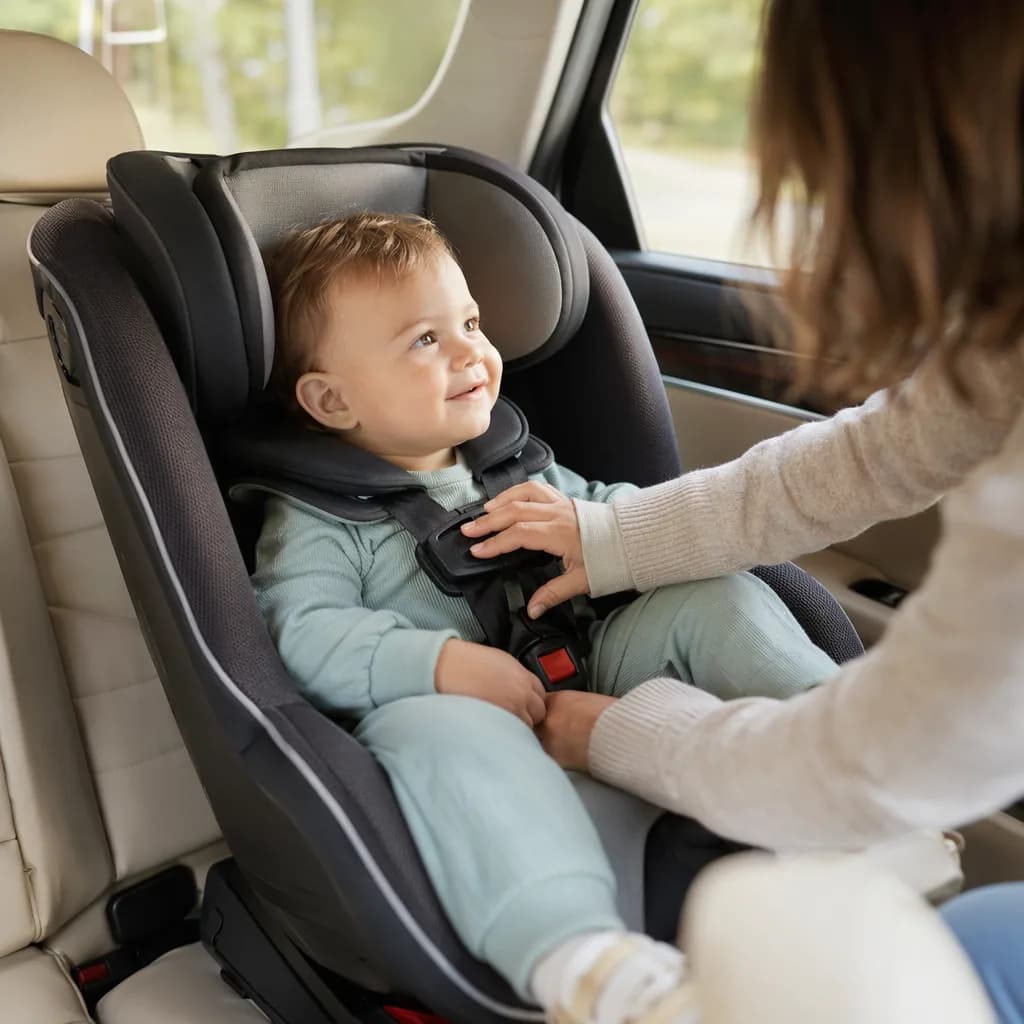
Best convertible car seats at a glance
Here’s the quick parent-to-parent version before you start comparing every buckle, cup holder, and recline angle during nap time.
| Family need | Top pick | Price range | Rear-facing weight limit | Forward-facing weight limit | Seat width | Installation type | Standout feature |
|---|---|---|---|---|---|---|---|
| Best overall | Graco 4Ever DLX | About $330 | 40 lbs | Check manual | 19.3 in | LATCH or vehicle belt | Strong crash test analysis and easy everyday use |
| Best for small cars | Graco SlimFit3 LX 3-in-1 | Lower than 4Ever | Check manual | Check manual | About 3 in narrower than 4Ever | Check manual | Better fit for tight back seats |
| Best budget | Graco Extend2Fit 3 in 1 | Less than 4Ever | Check manual | Check manual | Check manual | Check manual | Similar crash test result to the 4Ever for less |
| Easiest install | Romer Veni | About $600 | 50 lbs | Check manual | 17.2 in | LATCH or vehicle belt | Very easy installation with an effective lockoff |
| Best extended rear-facing | Romer Veni | About $600 | 50 lbs | Check manual | 17.2 in | LATCH or vehicle belt | Higher rear-facing limit |
| Best for travel | Graco 4Ever DLX | About $330 | 40 lbs | Check manual | 19.3 in | LATCH or vehicle belt | Lighter than average at 21.8 lbs |
| Easiest to clean | Check fabric and manual first | Varies | Check manual | Check manual | Check manual | Check manual | Removable covers matter on real-life snack days |
The safest seat isn’t always the priciest one. It’s the one that fits your child, fits your car, and can be installed correctly every single ride.
If you’re saving baby name tabs between car seat reviews, we’ve been there. You might like Aurora: meaning & origin or Tanmay Suresh Upadhyay: meaning & origin for a quieter scroll later.
How we chose these car seat reviews
Choosing a convertible car seat can feel oddly high stakes, because it is. So we looked at the things that matter in a real family car, not just what looks good on a product page.
We considered crash test performance data when it was available, along with how easy each seat is to install correctly using LATCH or a vehicle belt. We also paid close attention to daily use: buckling a squirmy toddler, tightening and loosening the harness, adjusting the headrest, and getting the straps to sit right without a wrestling match.
Comfort matters too. A seat with supportive padding, softer fabric, and enough room for growing legs can make errands and road trips less miserable for everyone. We also looked at cleaning, because snacks happen. So do muddy shoes, mystery crumbs, and the occasional car nap accident.
All recommended car seats sold in the U.S. must meet federal safety standards. The real-life differences parents tend to feel are fit, usability, and consistency. Can you install it tightly every time? Can grandparents buckle it without confusion? Does it fit your back seat without turning the front row into a knees-to-dashboard situation?
That last piece is huge. A seat can have excellent safety features and still be the wrong pick if it blocks the front passenger seat in a compact sedan. The best choice is the one that fits your child, your vehicle, and your daily routine.
And because parenting decisions rarely happen one at a time, we know you might be choosing a car seat while also comparing baby names like Aurora: meaning & origin or Tanmay Suresh Upadhyay: meaning & origin. One careful choice at a time is plenty.
Best overall convertible car seat
Our top overall pick is the Graco 4Ever DLX, especially for parents who want one dependable seat for daily use from babyhood into the preschool years. BabyGearLab named it their favorite seat for most families, and the reasons are pretty practical: strong crash test analysis, straightforward installation, easy everyday use, and a price that sits below the group average in their testing.
The 4Ever DLX has a rear-facing passenger weight limit of 40 pounds, which gives many kids room to stay rear-facing for a good stretch. For forward-facing limits, check the label and manual for the exact limits for your model and your child’s size, since that’s the number you’ll actually use in the car.
Installation is one of the places this seat earns its keep. BabyGearLab found the LATCH install straightforward, and the seat also scored well for ease of use. That matters on a Tuesday morning when you’re buckling a wiggly toddler while someone is asking for a snack and you’re already late.
A few everyday details are worth checking in person if you can. The research notes that the fabric feels rougher, so if your child is sensitive to texture, run your hand over it before buying. Details like recline positions, no-rethread harness adjustment, cup holders, and cleaning steps can vary by model version, so confirm those in the product manual or listing before you click buy. Those small things make a big difference after the first spilled pouch.
The honest drawback: it’s not a narrow seat. BabyGearLab measured it at 19.3 inches wide, so fitting three car seats across one row may be tough. Still, for many families, the Graco 4Ever DLX hits the sweet spot: safe-feeling, usable, and not overly fussy.
And if you’re still in the baby-planning stage, maybe with name tabs open too, we’ve got gentle reads on Aurora: meaning & origin and Tanmay Suresh Upadhyay: meaning & origin.
Best convertible car seat for small cars
Small cars make car seat shopping feel very real, very fast. In a Honda Civic, Toyota Corolla, or any back seat with limited legroom, a seat that looks reasonable online can suddenly push the front passenger’s knees into the glove box.
For compact cars, we’d look closely at four things: narrow width, front-to-back space, recline range, and whether the seat can sit securely in the center position. Width matters if you have another child in the back, a frequent grandparent passenger, or dreams of fitting three seats across. Front-to-back space matters because rear-facing convertible seats can take up more room, especially at a newborn recline angle. A seat with a useful recline range can sometimes make the difference between “this works” and “no one can sit in front.”
BabyGearLab measured the Graco 4Ever DLX at 19.3 inches wide and 25.3 inches front to back, and noted that while it’s a strong all-around pick, three-across may be harder because it isn’t especially narrow. The Romer Veni is narrower, measured at about 17 inches wide, and BabyGearLab called out its very easy installation, which can be a huge relief in a tight back seat. The Graco SlimFit3 LX 3-in-1 is even narrower than the 4Ever in BabyGearLab’s comparison, but they also found it more challenging to install.
Center-seat installation can help preserve front-seat space and leave room for passengers, but it depends on your actual vehicle. Seat belt geometry, cushion slope, and headrest shape can all change how a car seat sits. If you can, test the seat in your own car before committing.
Three-across is realistic only in certain vehicles with the right seats and spacing. In many small cars, it’s more “possible with careful measuring” than “easy.” Kind of like choosing a name such as Aurora: meaning & origin or Tanmay Suresh Upadhyay: meaning & origin, the best fit is the one that works beautifully in your real life, not just on paper.
Best budget convertible car seat
A budget convertible car seat can be a very smart buy, especially if you need a second seat for a grandparent’s car or you’re trying to stretch baby gear money across diapers, daycare, and everything else.
The key is to look for a lower-priced seat that still feels easy enough to use every day. BabyGearLab names the Graco SlimFit 3-in-1 as its pick for a tighter budget, while the Graco Extend2Fit 3 in 1 costs less than the Graco 4Ever DLX and had a similar crash test result in their testing. Consumer Reports also makes a reassuring point for parents watching costs: you don’t have to compromise on safety to find a seat that fits your budget.
At this price, you may give up some of the nicer touches. The fabric might feel less soft. Installation may take more effort. You may not get a built-in lock-off, and the harness adjuster might not glide as smoothly as it does on a pricier seat. Those little annoyances matter, especially on a rainy preschool pickup when your child is suddenly stiff as a board.
Still, a good budget seat can shine where it counts. It can meet safety requirements, offer basic comfort, keep weight manageable enough for occasional vehicle swaps, and give you a practical lifespan as your child moves from rear-facing to forward-facing. That’s the kind of everyday value parents appreciate, like finding a name with staying power such as Aurora or Tanmay Suresh Upadhyay.
One caution: be careful with used seats. Don’t buy one unless you know its full history, expiration date, and whether it has ever been in a crash. A bargain isn’t a bargain if you’re guessing.
Best convertible car seat for extended rear-facing
Extended rear-facing is one of those choices that can feel inconvenient for a minute, then very reassuring once you understand the “why.” Consumer Reports points to the American Academy of Pediatrics’ recommendation to keep kids rear-facing for as long as possible, within the car seat’s limits. Their crash-test analysis also found that, by age 1, a rear-facing convertible seat can offer more protective space above a child’s head than many infant seats.
So for this category, don’t just look at the age range on the box. Compare the rear-facing weight limit first. Many convertible seats go to 40 pounds or more rear-facing, while the Romer Veni listed by BabyGearLab goes up to 50 pounds. The Graco 4Ever DLX lists a 40-pound rear-facing passenger weight limit and scored strongly in BabyGearLab’s crash-test analysis, while the Graco Extend2Fit 3 in 1 was noted as a lower-cost option with similar crash-test results and a comfy seating area.
Height room matters too, especially if you have a tall toddler. Picture a tall 2-year-old, maybe named Aurora, who still naps on every daycare pickup ride. You’ll want enough shell height for rear-facing use, plus a recline that helps keep her head from tipping forward once she’s asleep. A seat can have a generous weight limit, but if the recline feels awkward in your vehicle, daily rides may get frustrating fast.
Leg room and calf support are comfort features, not reasons to turn a child forward early. Bent legs are usually fine as long as your child still fits within the seat’s stated rear-facing limits. Some kids cross their legs, prop them up, or sit froggy-style without complaint.
For bigger toddlers, also check how easy it is to load them in. A rotating seat can help, while a narrow seat may matter more if Tanmay Suresh Upadhyay has siblings riding beside him. The best extended rear-facing seat is the one that fits your child, your car, and your everyday patience.
Easiest convertible car seat to install
An easy-to-install convertible car seat is the one you can get tight, level, and correct on a regular Tuesday morning, not just in the store demo.
Look for details that reduce guesswork: clear belt paths, built-in lock-offs, push-button LATCH connectors, recline indicators, and simple tensioning systems. BabyGearLab called the Romer Veni the easiest to install, with an effective lockoff and straightforward instructions. It scored especially well for both LATCH and seat belt installation, which matters because families often use both over the life of a seat.
That seat belt versus LATCH comparison is worth slowing down for. LATCH can feel simpler at first, especially with push-button connectors that click in cleanly. But as kids get heavier, many families switch to seat belt installation, so the belt path and lock-off design become more important. A seat that’s easy with LATCH but frustrating with the belt may not feel as helpful two years from now.
The Graco 4Ever DLX is another strong pick from BabyGearLab, with straightforward LATCH installation and easy everyday use. Consumer Reports also looks closely at fit-to-vehicle, ease of use, and crash performance, which is helpful because a seat can test well but still be annoying if it doesn’t fit your car cleanly.
A few mistakes are common and fixable: a loose installation, the wrong recline angle, twisted harness straps, a chest clip sitting too low, or using LATCH past the allowed weight. Keep the manual close, even if you’re usually the “I’ll figure it out” parent. I’ve absolutely been that parent, probably while half-reading Aurora: meaning & origin in another browser tab.
If something feels off, book time with a certified Child Passenger Safety Technician. A calm second set of trained eyes can be as reassuring as finally settling on Tanmay Suresh Upadhyay: meaning & origin.
Best convertible car seat for travel and grandparents
For a travel or grandparent car seat, I’d put “easy to install correctly” ahead of fancy fabric, cup holders, or every premium feature. A seat that sits in the closet most of the month still needs to go into the car without a wrestling match when Grandma is already holding a diaper bag and a snack cup.
Weight matters here. BabyGearLab measured the Graco 4Ever DLX at 21.8 pounds, lighter than the average convertible seat in its testing, and noted that it’s relatively short front to back at 25.3 inches. That can help in smaller cars, including rideshare vehicles where you don’t get to choose the back seat setup. The Romer Veni was praised for exceptionally easy installation with both LATCH and the vehicle belt, but at almost 28 pounds, it’s less appealing if someone will carry it through an airport or move it often.
If you’ll fly, check the seat’s own label and manual for airplane approval before you buy. Also think about the carry from the parking lot to the gate. A “great” travel seat that leaves your parent winded before boarding may not be great for your family.
For grandparents, simple beats deluxe. Clear belt paths, straightforward instructions, and an install that feels repeatable are worth more than plush extras. Consumer Reports focuses its convertible seat testing on fit-to-vehicle, ease of use, and crash performance, which are exactly the things that matter when a seat moves between cars.
If the seat will be used only a few times a month, measure the storage spot too. A narrow seat may tuck into a hall closet more easily. Name tabs can help if cousins share gear, especially in families with little ones named Aurora or Tanmay Suresh Upadhyay.
Safety features parents should understand before buying
Car seat safety language can get noisy fast. One brand may call a feature “side-impact protection,” another may give it a trademarked name, and a third may describe the same basic job in quieter wording. Try to compare what the feature actually does, not just what it’s called.
Side-impact protection usually means extra structure or padding around the head and torso area. Think of it as built-in help for keeping a child contained and cushioned if a crash comes from the side. Energy-absorbing foam has a similar everyday idea: it’s there to help manage crash forces, much like a bike helmet has foam inside.
Anti-rebound bars are easier to picture. They sit near the vehicle seatback when the car seat is rear-facing and are meant to limit how much the seat moves back toward the vehicle seat after the first motion of a crash. BabyGearLab specifically notes an anti-rebound bar on the Romer Veni, a seat they also found especially easy to install.
Load legs, where included, extend from the car seat base down to the vehicle floor. Their job is to give the seat another point of contact. Not every convertible seat has one, and not every vehicle floor allows one, so this is where the manual really matters.
Steel-reinforced frames and energy-absorbing materials sound reassuring, but don’t shop by buzzwords alone. Consumer Reports looks at fit-to-vehicle, ease of use, and crash performance together, which is a helpful reminder that a fancy feature doesn’t help much if the seat is hard to install correctly.
Also check the practical stuff before you buy. Look for the expiration date, understand the brand’s crash replacement rules, and register the seat so recall notices can reach you. If fabric choices matter to your family, check whether the model offers flame-retardant-free options.
Before installing, read both manuals: the car seat manual and your vehicle manual. It’s not exciting reading. Neither is comparing baby name tabs like Aurora: meaning & origin or Tanmay Suresh Upadhyay: meaning & origin at midnight, but this one really is worth the extra ten minutes.
How to pick the right convertible car seat for your child
Start with the child you have today, not the child the box seems to describe. Check your child’s age, height, weight, and torso length, then look closely at whether they’re still riding rear-facing. A convertible car seat can move from rear-facing to forward-facing as your child grows, and both Consumer Reports and BabyGearLab point to rear-facing fit as a key part of choosing well.
Torso length matters more than parents sometimes expect. Two children can weigh the same but fit very differently in the same seat because one carries more height in the torso. If your child’s shoulders are creeping close to the top harness slots, or their head is getting near the top of the shell, read the seat’s limits carefully before you buy.
Next, match the seat to your actual car. Not the roomy SUV in the product photos. Your back seat.
Think about front-to-back space if a tall adult sits in front. Check how many children ride back there, what kind of seat belts you have, and whether your vehicle headrests affect installation. If you need three-across, width becomes a big deal. BabyGearLab measured the Graco 4Ever DLX at 19.3 inches wide and noted that three across may be harder with it, while narrower options like the Graco SlimFit3 LX 3-in-1 may fit tight rows better.
Daily life counts too. If Grandma does daycare pickup twice a week, she needs a seat that’s easy for her to buckle correctly. If you’re loading a toddler in a dark preschool parking lot at 5:15 p.m., simple harness adjustments matter. Long road trips, snack crumbs, muddy shoes, and winter coats all change what “best” means for your family.
Cleaning is one of those features you don’t appreciate until you really, really need it. A removable, machine-washable cover can feel like a gift after one carsick morning on the way to visit cousins.
A quick side note from one parent brain to another: if you’re also in baby-name mode, it’s totally normal to have tabs open for car seats and names like Aurora: meaning & origin or Tanmay Suresh Upadhyay: meaning & origin at the same time. Parenting research has layers.
Before checkout, run through this list:
- Your child fits the rear-facing or forward-facing limits now, with room to grow.
- The seat fits your vehicle’s back seat without forcing the front seats too far forward.
- Installation looks manageable for the person who will install it most often.
- The harness is easy for your regular buckle-up routine.
- The width works for siblings, passengers, or three-across needs.
- The cover is easy to remove and clean.
- The price fits your budget without skipping the features you’ll use every day.
Convertible car seat mistakes that are easy to miss
Even careful parents miss small car seat details, especially on rushed mornings. A strap gets loosened for a sweatshirt, the cover comes off for cleaning, or the seat moves to Grandma’s car for one weekend. That’s usually when tiny setup problems sneak in.
A few common ones are worth checking:
- Harness straps that are too loose. If you can pinch extra webbing at the shoulder, tighten again.
- Chest clip sitting too low. Belly level is too low. It should sit at armpit level.
- Bulky coats under the straps. A puffy coat can make the harness seem snug when it really isn’t.
- Turning forward-facing too soon. Convertible seats are meant to let many children ride rear-facing longer, and Consumer Reports notes that rear-facing convertible seats give extra space above a child’s head during crash testing.
- Wrong recline angle. Use the recline guide on your specific seat.
- Loose installation. This one is common, and it matters.
For the one-inch movement test, hold the car seat right at the belt path, where the vehicle belt or LATCH strap runs through the seat. Give it a firm tug side to side and front to back. If it moves more than one inch at that spot, it needs to be tightened or reinstalled. Don’t test from the top of the seat, since that can make a solid install look loose.
If your child is forward-facing, use the top tether in most vehicles. It’s the strap that connects the top of the car seat to the vehicle’s tether anchor, helping limit forward movement.
Recheck everything after growth spurts, washing the cover, or moving the seat to another car. I’d do the same quick reset after a big life moment too, like bringing home a baby named Aurora or squeezing three kids across after debating names like Tanmay Suresh Upadhyay. Small checks add up.
Frequently Asked Questions
What is the best convertible car seat for most families?
The best convertible car seat for most families is one with high rear-facing limits, a simple installation system, easy harness adjustment, and a size that fits your vehicle well.
When should a baby move from an infant seat to a convertible car seat?
Move your baby when they reach the infant seat's height or weight limit, or sooner if you want a seat that stays installed in the car.
Are more expensive convertible car seats safer?
Not always. All car seats sold in the United States must meet federal safety standards. Higher-priced seats often add easier installation, nicer fabrics, and extra convenience features.
How long should a child ride rear-facing?
A child should ride rear-facing until they reach the rear-facing height or weight limit of their car seat. For many kids, that lasts well past age 2.
Can convertible car seats be used for newborns?
Some can be used from birth, but the fit matters. Check the seat's minimum weight, newborn insert rules, harness height, and recline angle.
What is the safest place to install a convertible car seat?
The back seat is safest. The center seat can be a good choice if the car seat installs tightly there and your vehicle manual allows it.
Is LATCH safer than a seat belt installation?
No. A correct seat belt installation and a correct LATCH installation are both safe. Use the method that gives you the tightest allowed install.
How do I know if my convertible car seat is installed tightly enough?
Hold the seat at the belt path and pull side to side and front to back. It should move less than one inch.
Frequently asked questions
What is the safest convertible car seat?
When should my child switch from rear-facing to forward-facing?
Are convertible car seats good for newborns?
Can I install a convertible car seat with both LATCH and the seat belt?
How do I know if my car seat is installed tightly enough?
References
Sources
External research this article was grounded in.
- Download apps to your Android device - Android Helpsupport.google.com
- Best Convertible Car Seats | Crash Testedbabygearlab.com
- Best Convertible Car Seats of 2026, Lab-Tested and Reviewed - Consumer Reportsconsumerreports.org
- Tested: Best Convertible Child Car Seats of 2026caranddriver.com
Related reading
More from the journal → baby-products
Calm Nursery Setup for Sleep and Daily Baby Care
Set up a calm nursery around two daily jobs: safe sleep and easy baby care, with simple zones, soft light, clear storage, and less clutter.
14 min readAug 1, 2026 baby-products
Best Baby Monitor: Audio, Video, Wi-Fi Choices
Compare audio, video, and Wi-Fi baby monitors by home size, sleep setup, privacy, range, and the features that actually help at 2 a.m.
13 min readJul 29, 2026 baby-products
Pacifier Pros and Cons by Age, Sleep, and Weaning
Pacifier pros and cons by age, sleep, feeding, and weaning, with calm tips on when to offer one and when to start setting limits.
15 min readJul 28, 2026