
Japanese Baby Names: Meanings, Kanji, Pronunciation
How Japanese Baby Names Work
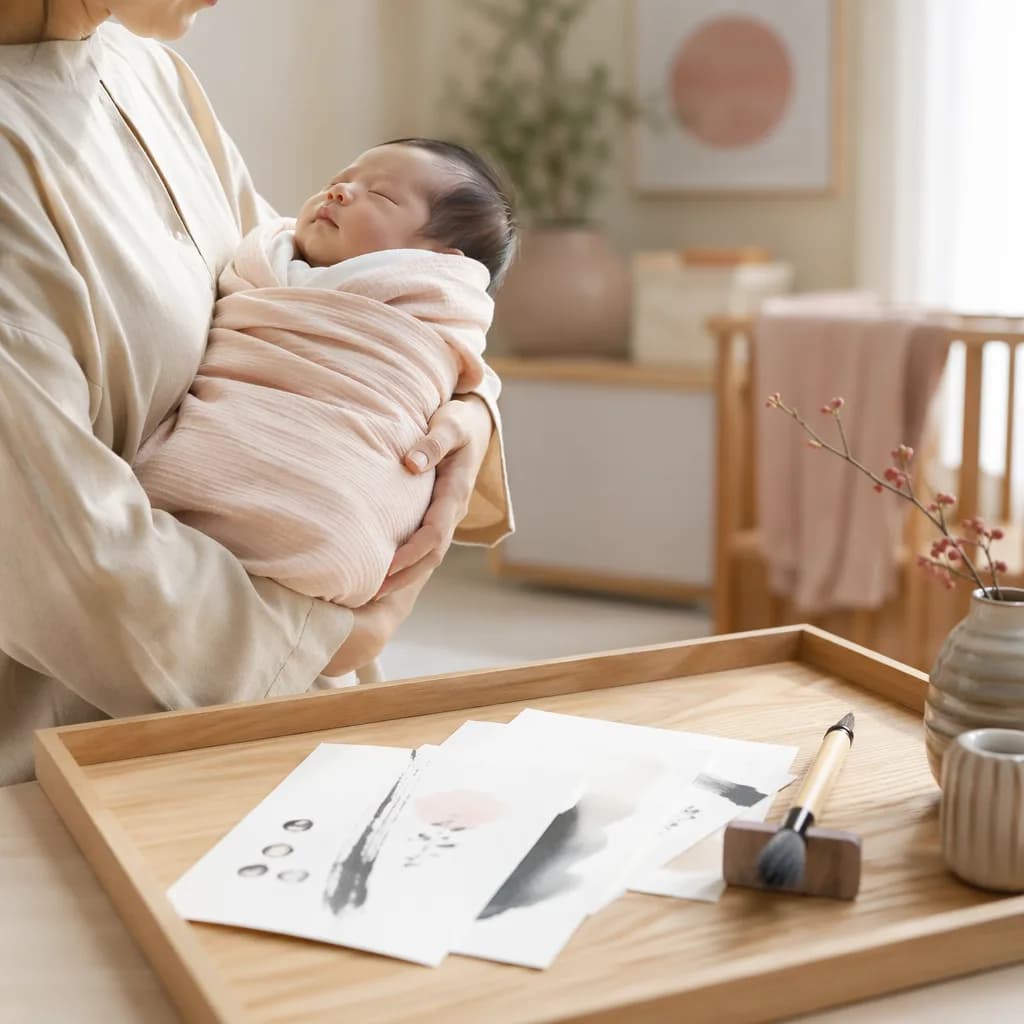
Japanese baby names often carry three layers at once: how the name sounds, what it means, and which kanji are chosen to write it. That last piece matters a lot. Japanese writing can use kanji, hiragana, or katakana, and many given names use kanji because each character brings its own meaning and visual feeling.
So one spoken name can have several different kanji spellings, and those spellings can change the meaning. A name that sounds simple on the playground may have a very intentional meaning on paper.
Take Haru, for example. Depending on the kanji, it can connect to ideas like spring, sunlight, or clear weather. Same sound. Different feeling. That’s why Japanese name lists often show the reading in hiragana alongside the kanji, so you can see both pronunciation and meaning clearly.
Families may choose names for beauty, season, nature, strength, virtue, or a hope they hold for their child. You’ll see this in names inspired by light, blossoms, the moon, the ocean, calm, honesty, or radiance. It’s a little like the meaning-first approach parents may love in Biblical Baby Names With Meanings and Nicknames, while pronunciation can feel as central as it does with French Baby Names: Chic Choices With Pronunciation or Irish Baby Names with Meanings and Pronunciation.
Name order is another helpful detail. In Japan, the family name comes first, then the given name. Tanaka Haruto would mean Tanaka is the family name and Haruto is the given name. In English contexts, that’s usually reversed to Haruto Tanaka, similar to how we present full names in many Western naming guides like Italian Baby Names with Meanings and Nicknames. If you’re comparing full-name meaning across cultures, something like Tanmay Suresh Upadhyay: meaning & origin can also be a useful reminder that order, sound, and family context all shape how a name feels.
Japanese Name Pronunciation Basics for Parents
Japanese pronunciation is usually kinder to parents than it first looks, especially once you learn the five basic vowel sounds. They stay fairly steady, which is a big help.
Think of them this way:
- a sounds like a in father
- i sounds like ee in machine
- u sounds like oo in flute, but shorter and lighter
- e sounds like e in get
- o sounds like o in go
Japanese is described as a mora-timed language, which means each sound beat tends to be clear and evenly spoken. So Naomi is closer to Na-o-mi, with three neat beats, not the English-style Nay-oh-mee. The same idea helps with names like Kaito: try Ka-i-to, not one blended swoop.
The Japanese r can surprise English speakers. It’s softer than our usual r, and it sits somewhere between r, l, and d. So a name like Ren shouldn’t sound like a heavy English “wren.” It’s lighter, with just a quick tap.
Long vowels matter too. You’ll often see them written with macrons, such as Yūma or Sōta. That mark means you hold the vowel a little longer. Sōta is not quite the same as Sota, and Yūma has a longer u sound than Yuma. With a name like Riko, adding another vowel would change the rhythm: Riiko would have a longer i sound.
Here’s the practical parent part: macrons like ō and ū are often dropped in English paperwork. So if you love Sōta, you may need to decide whether you’ll use Sōta day to day, simplify it to Sota, or choose another spelling that feels easier for your family.
Before you settle on a name, listen to it if you can. NHK’s Japanese lessons include audio, text, and basic conversation practice, which can be helpful for hearing real sounds. A native speaker is even better.
If pronunciation is a big part of your naming style, you might also like our guides to French baby names, Irish baby names, Italian baby names, and Biblical baby names. For a different kind of name breakdown, see Tanmay Suresh Upadhyay: meaning & origin.
Popular Japanese Girl Names With Meanings
Japanese girl names can feel short and gentle in English, but the kanji can carry a very layered meaning. A name like Hana looks simple on a birth announcement, yet 花 connects it directly to “flower” or “blossom.”
Many Japanese girl names use kanji linked to flowers, light, love, beauty, harmony, nature, or fresh beginnings. The reading matters, but so does the written form. Japanese names are often written with kanji, and the pronunciation is commonly shown in hiragana, which helps families see both sound and meaning at once.
| Name | Common kanji | Meaning | Pronunciation |
|---|---|---|---|
| Aoi | 葵 | Hollyhock, blue | ah-oh-ee |
| Hina | ひな | Meaning varies by kanji choice | hee-nah |
| Sakura | 桜 | Cherry blossom | sah-koo-rah |
| Yui | 結衣 | Tie together, garment | yoo-ee |
| Mei | 芽依 | Sprout, reliant | may |
| Hana | 花 | Flower, blossom | hah-nah |
| Rin | 凛 | Dignified, cold | reen |
| Mio | 澪 | Beautiful waterway | mee-oh |
| Akari | あかり | Meaning varies by kanji choice | ah-kah-ree |
| Ichika | 一花 | One flower | ee-chee-kah |
Aoi is a lovely example of how Japanese names can sit close to nature. With 葵, it connects to hollyhock and blue, and it’s listed as a girl and unisex name. That flexibility is part of the charm for some families. A name may lean feminine, masculine, or gender-neutral depending on the kanji, the sound, and family preference.
Rin is another name parents often pause over. It’s short, clear, and strong. With 凛, the meaning is “dignified” and “cold,” giving it a crisp, graceful feeling. Some short Japanese names can feel especially modern because they’re easy to say across languages, while still holding meaning in their written form.
If you love floral names, Sakura and Hana are easy favorites. Sakura means “cherry blossom,” while Hana means “flower” or “blossom.” Ichika, meaning “one flower,” has that same soft image but with a more distinctive rhythm.
For parents who like names with a feeling of connection, Yui is sweet without being frilly. Its kanji 結衣 includes the idea of tying together, paired with garment. Mei, with 芽依, brings to mind a sprout and reliance, which gives it a tender beginning-of-life feeling.
If you’re comparing naming styles across cultures, you might also enjoy our lists of French baby names with pronunciation, Irish baby names with meanings and pronunciation, or Italian baby names with meanings and nicknames. And if meaningful names are your favorite kind, our Biblical baby names with meanings and nicknames list has that same thoughtful feel. For a closer look at how layered personal names can be, see Tanmay Suresh Upadhyay: meaning & origin.
Popular Japanese Boy Names With Meanings
Japanese boy names often feel bright, grounded, and full of motion. You’ll see meanings tied to sunlight, sky, ocean, land, trees, strength, sincerity, wisdom, and greatness. That’s part of what makes them so appealing for parents who want a name with a clear image behind it, like Kaito with an ocean feeling, or Haruto with sunlight and soaring built right in.
Japanese names are often written with kanji, and the kanji matters. The same sound can have different meanings depending on the characters chosen. Ren is a lovely example: it can be connected with lotus, love, or a sense of connection depending on the kanji. So if you fall for the sound of a name, it’s worth looking closely at the spelling too.
| Name | Common kanji | Meaning | Pronunciation |
|---|---|---|---|
| Haruto | 陽翔 | Sunlight, soar | HAH-roo-toh |
| Sōta | 蒼太 | Blue, big, great | SOH-tah |
| Ren | 蓮 | Lotus, love | REN |
| Minato | 湊 | Harbor, port | MEE-nah-toh |
| Yūto | 悠斗 | Calm, big dipper | YOO-toh |
| Riku | 陸 | Land, shore | REE-koo |
| Daiki | 大輝 | Great radiance | DYE-kee |
| Kaito | 海斗 | Ocean, big dipper | KYE-toh |
| Itsuki | 樹 | Timber trees | EE-tsoo-kee |
| Yūma | varies by kanji | Meaning depends on the characters chosen | YOO-mah |
A few sound patterns show up often in boys’ names. Endings like to, ta, ki, and ma are common in boy names, as you can hear in Haruto, Sōta, Yūto, Daiki, Itsuki, and Yūma. Still, an ending doesn’t make a name automatically male every time. Japanese naming can be more flexible than that, especially with shorter nature-inspired names and names that have multiple kanji choices.
If you like names with a strong visual meaning, Kaito has that wide-open ocean feeling, while Riku feels steady and earthbound. Daiki is bold, with “great radiance,” and Minato has a calmer image: a harbor, a safe place to arrive. Itsuki feels rooted and natural because of its tree meaning.
For parents comparing name styles across cultures, it can help to look at how meanings work in other traditions too. You might enjoy Biblical Baby Names With Meanings and Nicknames, French Baby Names: Chic Choices With Pronunciation, Irish Baby Names with Meanings and Pronunciation, or Italian Baby Names with Meanings and Nicknames. And if you like seeing how layered names can become across languages, Tanmay Suresh Upadhyay: meaning & origin is another thoughtful example.
Gender-Neutral Japanese Names to Consider
Japanese names can feel wonderfully spare in sound, but the meaning often lives in the kanji. That’s why one short name can have several possible meanings, depending on the characters parents choose.
Here are some gender-neutral Japanese names to keep on your list:
- Aoi (ah-oh-ee): Listed as a unisex first name, with meanings tied to “hollyhock” and “blue.”
- Haru (hah-roo): A gentle, simple sound. The meaning depends on the kanji chosen, so this is one to check carefully.
- Ren (rehn): A unisex name meaning “lotus” or “love.”
- Nao (nah-oh): Listed as a boy name meaning “honest” or “direct,” though its short sound may read more neutral to English-speaking families.
- Sora (soh-rah): A unisex name meaning “sky” or “heaven.” Another listing gives “sky” and “emptiness.”
- Hinata (hee-nah-tah): Listed as a unisex name with meanings connected to “sun” and “hollyhock.”
- Rio (ree-oh): A bright, easy-to-say choice in English. Since meaning depends on kanji, check the exact characters before settling on it.
- Tsubasa (tsoo-bah-sah): A unisex name meaning “wings.”
- Rui (roo-ee): Short and soft in sound. Look closely at the kanji and current usage if cultural accuracy matters to you.
- Kei (keh-ee): Crisp and compact. Like Haru and Rui, its meaning and gender feel can shift with the chosen kanji.
One thing we’d keep in mind: a name may look gender-neutral to English speakers but feel more common for boys or girls in Japan. Gender feel can change with the kanji, the sound, the era, and regional naming trends.
If you’re comparing names across cultures, you might also like our lists of French baby names with pronunciation, Irish baby names with meanings and pronunciation, or Italian baby names with meanings and nicknames. For a different style of meaningful naming, Biblical baby names can be lovely too.
Beautiful Japanese Names Inspired by Nature
Nature names can feel especially tender in Japanese because the kanji often gives the name a picture you can hold in your mind. A sound isn’t just a sound. It may carry an image of a flower, the sky, a harbor, a tree, or light shining through a room.
Japanese names are often written with kanji, hiragana, or katakana, and many given names use kanji for meaning and visual beauty. That’s why two names that sound simple can feel rich once you see the characters behind them. If you love meaningful names from other traditions too, you might also like Biblical Baby Names With Meanings and Nicknames, French Baby Names: Chic Choices With Pronunciation, or Irish Baby Names with Meanings and Pronunciation.
Flowers and blossoms
- Sakura (さくら): cherry blossom. Sakura feels closely tied to spring and fresh starts because of cherry blossoms. It has that soft, hopeful feeling of something beautiful arriving after winter.
- Hana (はな): flower or blossom. Simple, bright, and easy to picture.
- Aoi (あおい): hollyhock or blue, depending on the kanji and reading used.
- Misaki (みさき): beautiful blossom.
Seasons and seasonal feeling
- Natsuki: a lovely option to consider if you’re drawn to summer imagery, though you’ll want to check the specific kanji because meanings can change.
- Aki: often chosen for its clean, seasonal sound. As with many Japanese names, the kanji matters.
- Koharu (こはる): heart, spring, or little spring depending on the kanji shown.
Sky, wind, and open air
- Sora (そら): sky, heaven, or emptiness. It’s listed as a unisex name, which gives it a gentle flexibility.
- Tsubasa (つばさ): wings.
- Kaze (かぜ): wind.
- Nagi (なぎ): calm or lull.
Water and sea names
- Minato (みなと): harbor or port.
- Kaito (かいと): ocean, big dipper.
- Mio (みお): beautiful waterway.
- Izumi (いずみ): fountain or spring.
Light, glow, and warmth
- Hikari (ひかり): light, to shine, honor.
- Hikaru (ひかる): to shine or radiate.
- Hotaru: a sweet nature name to explore if you like glowing nighttime imagery. Check the kanji before falling in love with it.
Trees and leaves
- Kaede (かえで): maple leaf.
- Haruki (はるき): spring tree.
- Itsuki (いつき): timber trees.
If you’re comparing names across cultures, Italian Baby Names with Meanings and Nicknames has that same warm, meaning-first feel. And if you enjoy tracing a name’s full story, Tanmay Suresh Upadhyay: meaning & origin is a good example of how layered a name can be.
Kanji Choices and Why They Matter
Kanji are where Japanese names get especially layered. A name isn’t just a sound. The characters can carry meaning, visual style, stroke count, and sometimes a parent’s hope for the kind of life their child will have.
That’s why two children can share the same spoken name but have names that feel quite different on paper. Japanese writing commonly combines kanji with kana, and many given names use kanji because each character brings its own meaning and look. If you’ve been comparing meaning-rich names from other traditions, like Biblical Baby Names With Meanings and Nicknames or Irish Baby Names with Meanings and Pronunciation, kanji adds another layer: the written form matters as much as the sound.
Here are a few examples of readings where the kanji choice can change the feeling of the name:
| Reading | Possible kanji style | Meaning or feeling to check |
|---|---|---|
| Haruka | Different kanji combinations may be used | Often chosen for a soft, expansive, or seasonal feeling, depending on the characters |
| Yuki | 雪 or 幸 | Snow, happiness, or fortune, depending on the kanji |
| Aoi | 葵 or 碧 | Hollyhock, blue, or blue-green tones, depending on the kanji |
| Ren | 蓮 | Lotus, and in some name listings, love |
| Hina | Different kanji combinations may be used | Often needs careful review because the tone depends heavily on the characters |
This is the part where a name can look lovely in a list but still need a second look. Some kanji are common and easy for Japanese speakers to read. Others are rare, poetic, or visually striking, but they may be misread more often or feel less natural in daily life. Think about a teacher calling the name from a class list, or a grandparent writing it on an envelope. Those small moments matter.
If you’re registering a baby in Japan, there are rules around which characters can be used for official birth registration. Parents outside Japan may not be bound by those same rules, but it’s still wise to check the characters carefully before falling in love with a spelling.
A fluent Japanese speaker can help with three things that online lists can’t always catch: meaning, tone, and naturalness. They can tell you if the kanji feels gentle, old-fashioned, bold, unusual, or hard to read. That kind of feedback is especially helpful if you also love names from other languages, such as French Baby Names: Chic Choices With Pronunciation or Italian Baby Names with Meanings and Nicknames, where sound and style carry their own cultural cues.
And if you enjoy seeing how full names carry meaning across cultures, you might also like this name breakdown for Tanmay Suresh Upadhyay: meaning & origin. Names hold stories. Kanji simply lets the story show on the page.
How to Choose a Japanese Name Respectfully
Choosing a Japanese baby name can feel exciting because so many names carry layered meaning through sound, kanji, and imagery. It’s also a place to slow down. A name like Hikari can mean “light,” while Sora can mean “sky” or “heaven,” depending on the writing and context. That kind of beauty deserves a careful look, not a quick pick from a favorite list.
Start with your connection. Do you have Japanese heritage, family in Japan, a meaningful tie to the language, or a story that makes the name feel personal? If so, let that guide you. If not, you can still appreciate Japanese names, but it helps to be honest with yourself about why a name feels right. We’d give the same advice for any culturally rooted name, whether you’re browsing Biblical baby names, French baby names, Irish baby names, or Italian baby names.
Pronunciation matters too. Japanese is written with kanji and kana, and the reading is often shown in hiragana. If your child may use the name in both English and Japanese-speaking settings, say it out loud in both. Ask: Will English speakers stumble over it every day? Will Japanese speakers recognize the intended reading? A name can be simple on paper and still need a little practice in real life.
Please don’t choose a name only because it sounds cute. Check the kanji. Japanese names are often chosen for the meaning and visual beauty of the characters, and different kanji can share the same reading while carrying different meanings. For example, a short name may look easy in roman letters, but the kanji choice can completely change the feeling of it.
Also think about pop culture. Some anime or celebrity names may feel strongly tied to a character or public figure. That’s not always a problem, but context matters. A name your teenager has to explain constantly may feel different from a sweet newborn name you loved on a show.
A quick parent checklist:
- Sound: Do you love saying it?
- Meaning: Have you checked what it means?
- Kanji: Do you understand the characters and their feeling?
- Spelling: Is the romanized version clear?
- Pronunciation: Can family say it with care?
- Cultural fit: Does your connection feel respectful and thoughtful?
- Paperwork: Will the spelling work on birth records, school forms, and passports?
Names carry stories. Even a full name like Tanmay Suresh Upadhyay has layers of meaning and origin, and Japanese names deserve that same gentle attention.
Japanese Baby Name Ideas by Meaning
If you’re searching for Japanese names with meanings, kanji is the place to slow down. The same spoken name can sometimes be written different ways, and each kanji choice can change the feeling of the name. So for each idea below, we’ve included one likely kanji option, a simple meaning, and a plain pronunciation guide.
Names meaning light, brightness, or radiance
- Hikari (光), “light, to shine, honor.” Pronounced Hee-kah-ree. A gentle, luminous choice often listed for girls and also used as unisex.
- Hikaru (光), “to shine, radiate.” Pronounced Hee-kah-roo. A bright unisex name with a clean, simple sound.
- Daiki (大輝), “great radiance.” Pronounced Dah-ee-kee. A strong boy name with a warm, glowing meaning.
- Akira (明), “bright, clear.” Pronounced Ah-kee-rah. A crisp unisex option if you like names that feel open and sunny.
Names connected to love and the heart
- Ren (蓮), “lotus, love.” Pronounced Rehn. Short, calm, and unisex.
- Noa (乃愛), “my love.” Pronounced Noh-ah. A soft girl name with a tender meaning.
- Koharu (心春), “heart, spring.” Pronounced Koh-hah-roo. A girl name that feels affectionate and seasonal at once.
If meaning is your favorite way to choose, you might also enjoy comparing styles across cultures, like Biblical Baby Names With Meanings and Nicknames or Italian Baby Names with Meanings and Nicknames.
Flower and blossom names
- Hana (花), “flower, blossom.” Pronounced Hah-nah. Simple and sweet.
- Sakura (桜), “cherry blossom.” Pronounced Sah-koo-rah. A classic nature name with a very recognizable floral image.
- Misaki (美咲), “beautiful blossom.” Pronounced Mee-sah-kee. A pretty girl name with a graceful sound.
- Ichika (一花), “one flower.” Pronounced Ee-chee-kah. Delicate, but not fussy.
Ocean, water, and harbor names
- Kaito (海斗), “ocean, big dipper.” Pronounced Kah-ee-toh. A boy name with a wide, adventurous feel.
- Mio (澪), “beautiful waterway.” Pronounced Mee-oh. A soft unisex name with a flowing sound.
- Minato (湊), “harbor, port.” Pronounced Mee-nah-toh. A boy name that feels steady and protective.
- Izumi (泉), “fountain, spring.” Pronounced Ee-zoo-mee. A unisex name with a fresh water meaning.
Sky, wind, and open-air names
- Sora (空), “sky, heaven” or “sky, emptiness.” Pronounced Soh-rah. A peaceful unisex favorite.
- Tsubasa (翼), “wings.” Pronounced Tsoo-bah-sah. A unisex name with lift and movement.
- Kaze (風), “wind.” Pronounced Kah-zeh. Simple, airy, and nature-inspired.
- Nagi (凪), “calm, lull.” Pronounced Nah-gee. A quiet unisex name with a still, gentle feeling.
For more pronunciation-friendly lists, see French Baby Names: Chic Choices With Pronunciation and Irish Baby Names with Meanings and Pronunciation.
Strength, courage, and noble-feeling names
- Ryuu (龍), “dragon, imperial.” Pronounced Ryoo. A bold boy name with a powerful image.
- Takashi (隆), “noble, prosperous.” Pronounced Tah-kah-shee. Traditional and grounded.
- Kenji (健二), “healthy, second son.” Pronounced KeHN-jee. Friendly and sturdy.
- Hayato (隼人), “falcon person.” Pronounced Hah-yah-toh. Sharp, swift, and energetic.
Wisdom, clarity, and thoughtful names
- Reo (怜央), “wise center.” Pronounced Reh-oh. A unisex name with a modern feel.
- Shin (信), “trust, faith.” Pronounced Sheen. Short and serious in the best way.
- Nao (直), “honest, direct.” Pronounced Nah-oh. A boy name that feels clear and sincere.
Spring and warm-season names
- Haruki (春樹), “spring tree.” Pronounced Hah-roo-kee. A boy name with gentle strength.
- Koharu (小春), “little spring.” Pronounced Koh-hah-roo. A sweet girl name with a soft seasonal meaning.
- Hinata (陽葵), “sun and hollyhock.” Pronounced Hee-nah-tah. Listed for girls and unisex, with a bright botanical feel.
- Natsu (夏), “summer.” Pronounced Naht-soo. A warm, simple unisex choice.
One last parent-to-parent note: if you fall for a sound first, check the kanji before you commit. That’s where the meaning lives. For a different kind of name-meaning example, you can also peek at Tanmay Suresh Upadhyay: meaning & origin.
Frequently Asked Questions
What are the most popular Japanese baby names?
Popular Japanese baby names change each year, but names like Aoi, Sakura, Yui, Haruto, Ren, and Minato are often loved for their sound and meanings.
Can one Japanese name have more than one meaning?
Yes. Many Japanese names have the same pronunciation but different kanji, so the meaning can change based on the characters chosen.
What are easy Japanese names to pronounce in English?
Names like Hana, Mei, Aoi, Ren, Sora, Yui, and Riku are usually easier for English speakers because they are short and vowel-based.
Are Japanese names written family name first?
In Japan, the family name usually comes first and the given name comes second. In English-speaking countries, the order is often reversed.
What do macrons mean in Japanese name pronunciation?
Macrons, like ō and ū, show a long vowel sound. For example, Sōta has a longer o sound than Sota.
Are Japanese girl names and boy names always separate?
No. Some names, such as Aoi, Haru, Ren, Sora, and Nao, can be used across genders depending on kanji and naming trends.
Should I use kanji for my baby's Japanese name?
You can, but it helps to have the kanji checked by someone fluent in Japanese so the meaning, reading, and natural feel are right.
Frequently asked questions
How do Japanese baby names get their meanings?
Can one Japanese name have more than one kanji spelling?
Are Japanese baby names hard to pronounce in English?
What do macrons mean in names like Sōta or Yūma?
Do Japanese family names come before given names?
References
Sources
External research this article was grounded in.
- Japanese language - Wikipediaen.m.wikipedia.org
- Easy Japanese Learn Japanese | NHK WORLD-JAPANwww3.nhk.or.jp
- Japanese Names Dictionary | Names, Kanji & Meaningsjapanesenamesdictionary.com
- Top Japanese Names in 2021: What Are New Parents Naming Their Children? - Kokoro Mediakokoro-jp.com
Related reading
More from the journal → culture
Biblical Baby Names: Meanings, Origins, Rare Picks
A warm guide to biblical baby names, with meanings, origins, familiar favorites, rare picks, and faith-filled choices for boys and girls.
16 min readAug 3, 2026- culture
Irish Baby Names: Meanings, Pronunciations, Favorites
A warm guide to Irish baby names, with meanings, pronunciation help, and parent-friendly notes on names like Liam, Saoirse, Maeve, Finn, and Aoife.
18 min readAug 3, 2026 - culture
Irish Baby Names: Meanings, Pronunciation Tips
Irish baby names with meanings, pronunciation tips, spelling notes, and parent-friendly examples like Aoife, Saoirse, Niamh, Maeve, and Róisín.
15 min readAug 3, 2026