
Pacifier Safety and Weaning: A Parent's Practical Guide
Pacifier safety basics parents should know first
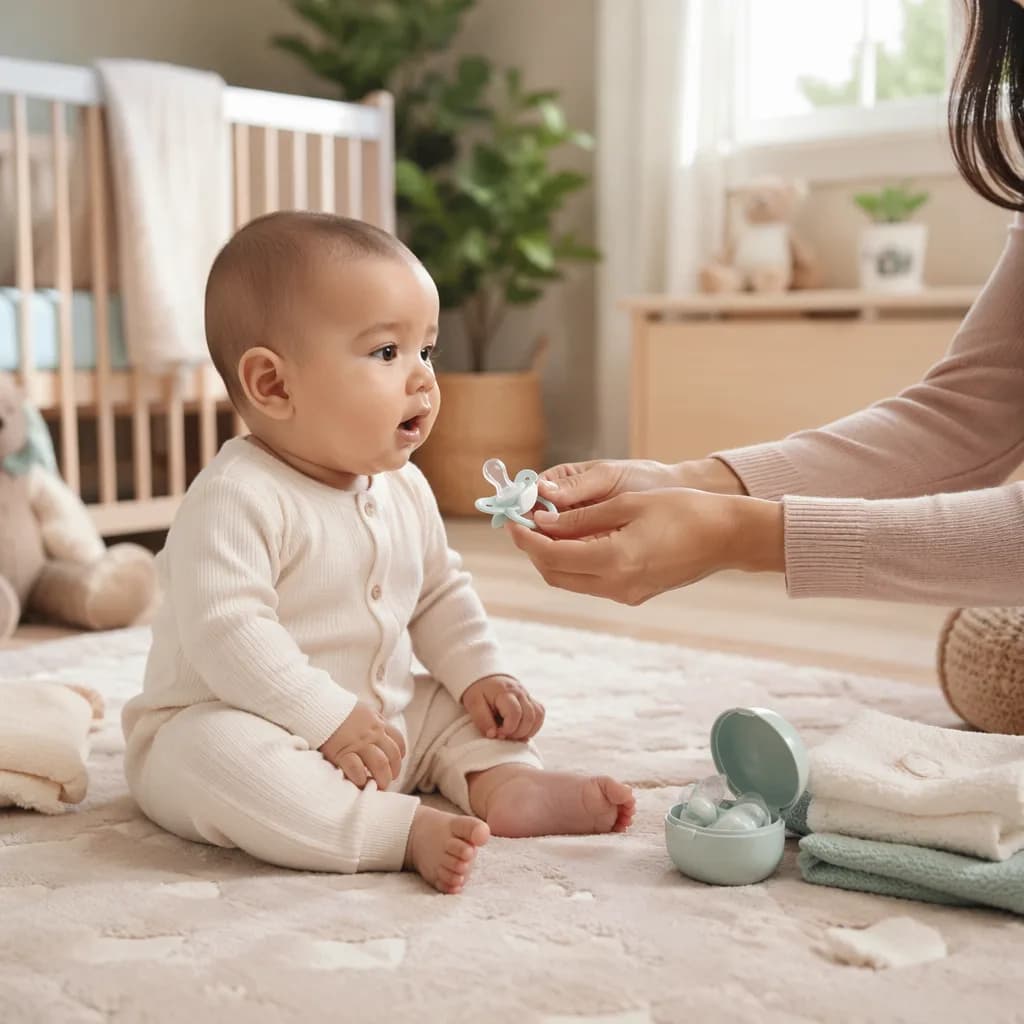
A pacifier can be a genuinely helpful soothing tool, especially in those early weeks when sucking helps a baby settle. The safest setup is simple: choose a one-piece pacifier with no detachable parts, a firm shield, and ventilation holes. The shield matters because it helps keep the whole pacifier from going into your baby’s mouth, and the holes help reduce trapped moisture against the skin.
Size matters too. Use the age range on the package, and move up when your baby outgrows it. A newborn pacifier is made for a tiny mouth. It shouldn’t be used for an older baby who can fit too much of it inside their mouth.
Check pacifiers often, the same way you’d do a quick buckle check after reading Car Seat Safety Basics Every Parent Should Know. Toss it if you see cracks, a sticky texture, discoloration, a stretched nipple, loose parts, or a shield that looks bent, split, or damaged. Here’s a real-life rule that saves second-guessing: if the nipple looks cloudy and tacky after a run through the dishwasher, throw it away, even if it was expensive.
Never tie a pacifier around a baby’s neck, wrist, crib rail, stroller bar, or car seat strap. Cords and ribbons can strangle. If you use a clip, keep it short and only use it when your baby is awake and supervised.
Pacifier safety fits right alongside the everyday basics, like Safe Sleep for Babies: Newborn and Infant Checklist and Baby Bath Safety: Temperature, Support, and Slips. Small habits add up.
When to introduce pacifier use
A common, very reasonable question is: can a newborn use a pacifier right away?
For many bottle-fed babies, yes. A pacifier can often be offered from birth because bottle-feeding is already using an artificial nipple, and research material notes that bottle-fed babies may be more likely to want extra sucking for comfort. For breastfed babies, many families do best waiting until feeding is going well, often around the time latch and milk supply feel more settled.
What does “going well” look like? A comfortable latch is a big clue. So is steady weight gain, frequent wet diapers, and feeds that feel manageable instead of tense or painful every time. If you’re unsure, it’s okay to ask your pediatrician, midwife, or lactation support before adding a pacifier.
One clear rule: don’t use a pacifier to stretch out time when a newborn is hungry. If your baby is rooting, sucking on fists, turning toward your chest, or getting increasingly upset, offer a feed first.
Pacifiers can soothe. They can help some babies settle for sleep, and many parents use them as part of a calm routine alongside basics like the ones in our Safe Sleep for Babies: Newborn and Infant Checklist. But they don’t replace cuddling, feeding, diaper changes, burping, or checking whether your baby seems unwell.
And if your baby keeps spitting it out? Don’t force it. Some babies love pacifiers. Some simply don’t. Both are normal. Keep the same practical mindset you’d use with Baby Bath Safety: Temperature, Support, and Slips: gentle, attentive, and responsive to the baby in front of you.
Safe pacifier use during sleep
Offering a pacifier at nap time and bedtime may help lower the risk of sleep-related infant death, according to safe sleep guidance. It can be a simple part of the sleep routine: fresh diaper, sleep sack, calm cuddle, pacifier, then into the crib.
The pacifier doesn’t replace the basics, though. Your baby should still sleep alone, on their back, on a firm, flat surface. Keep the sleep space clear: no pillows, loose blankets, bumpers, stuffed animals, or soft extras. If you want a full room-by-room reminder, this safe sleep checklist is a helpful one to keep handy.
If the pacifier falls out after your baby is asleep, you don’t need to put it back in. Really. No need to hover over the crib doing pacifier duty all night. If your baby wakes and wants it again, you can offer it, but once they’re sleeping, let it be.
One safety rule matters a lot here: don’t attach anything to the pacifier during sleep. No clip, ribbon, cord, stuffed animal, or teether. Those items can create risks in the crib, even if they seem convenient during the day.
Also skip anything sweet or medicinal on the pacifier unless a clinician specifically tells you to use it that way. That means no honey, juice, sugar, sweeteners, or medicine dabbed onto it.
Pacifier safety is like other baby safety habits, such as checking straps before a drive using car seat safety basics or keeping one steady hand during baths with these baby bath safety tips. Small routines make a big difference.
How to clean and store pacifiers
Pacifiers spend a lot of time on the floor, in the stroller, and somehow under the couch. A simple cleaning routine helps keep them safer without making your day harder.
For babies under 6 months, sterilize pacifiers often, or boil them according to the maker’s directions. Younger babies are still getting used to the world, and frequent sterilizing is a good habit during those early months. After 6 months, many families switch to washing pacifiers with hot, soapy water, or using the dishwasher if the pacifier is labeled dishwasher-safe.
Try not to “clean” a dropped pacifier by putting it in your own mouth. It’s tempting, especially at the park with no sink nearby, but saliva can pass along cavity-causing bacteria and viruses. A clean spare is the better rescue plan.
After washing, do a quick squeeze test. Pinch the nipple and check whether any water is trapped inside. If water squirts out or stays inside, let it drain and dry fully, since trapped moisture can give germs a place to grow.
Keep extras in a clean container, not rolling around loose at the bottom of the diaper bag next to snack crumbs, wipes, and mystery fuzz. If you’re packing for daycare, label each pacifier and send backups so caregivers don’t feel stuck or tempted to share between children.
It’s the same kind of small, repeatable routine we use for safe sleep, bath time, and car seats: boring little checks that quietly do a lot.
Pacifiers, teeth, and speech concerns
A pacifier in infancy isn’t automatically a problem. Many babies use one for comfort, sleep, or stressful moments, and occasional use is usually less concerning than heavy sucking that continues into the toddler and preschool years.
The bigger concerns show up when the habit lasts too long or happens for many hours a day. With long-term frequent sucking, the front teeth may start to tip forward, the bite may stay open so the front teeth don’t meet, or the roof of the mouth may be affected by steady pressure. Research also links prolonged pacifier habits with higher risk of bite problems, tongue resting in the wrong position, and later articulation difficulties.
There’s a speech piece too. If a toddler has a pacifier in their mouth during awake play, they have fewer chances to babble, copy sounds, practice words, and chat face-to-face with you. That doesn’t mean every pacifier-loving child will have speech trouble. It just means the mouth needs open, free time to practice.
Before full weaning, gentle limits can help. You might keep the pacifier for sleep, car rides, or illness, then put it away during play, meals, books, and outdoor time. If car naps are part of your life, pair that limit with safe routines from Car Seat Safety Basics Every Parent Should Know. For bedtime, it can sit alongside your usual Safe Sleep for Babies: Newborn and Infant Checklist.
If your child is still using a pacifier often after age 2 or 3, ask your pediatric dentist or pediatrician. A calm check-in can help you choose the next step without panic.
Pacifier weaning methods that feel manageable
There are two main ways to say goodbye to the pacifier: gradual weaning or going cold turkey.
Gradual weaning usually feels gentler for children who use the pacifier for sleep, comfort, and big feelings. It gives them time to practice other calming habits. Cold turkey can work better for families who know that limits make their child more upset, or for toddlers who do best with one clear change instead of many small ones.
Neither choice makes you a “better” parent. Pick the one you can stay calm and consistent with.
A gradual plan can look like this:
- Start with sleep only. During the day, keep the pacifier out of sight and say, “The paci is for sleeping now. You can hold your bear while we read.”
- Remove it from daytime outings. Try not to bring it in the stroller, car, or diaper bag. If car rides are hard, use another steady comfort, the same way you’d build a repeatable safety habit from Car Seat Safety Basics Every Parent Should Know.
- Choose the final bedtime change. Pick a night when life is fairly normal, then replace the pacifier with the same few steps every time: pajamas, book, song, cuddle, bed.
Comfort replacements help because sucking has often been your child’s quickest way to settle. Try a bedtime song, rocking, a back rub, or a predictable tuck-in routine. For children old enough to sleep safely with one, a lovey can become the new “I’m safe” object. If you’re still sorting out what belongs in the crib, this Safe Sleep for Babies: Newborn and Infant Checklist is a helpful place to check.
One thing to skip: cutting the pacifier tip. A damaged pacifier can break down, and loose pieces can become a choking hazard.
Setbacks are normal. Teething, illness, travel, or a new sibling can make a child cling harder to the pacifier. If everyone is exhausted and your child is clearly overwhelmed, it may be kinder to pause for a week, keep the boundary small, and try again when the house feels steadier.
What to avoid with pacifiers
Pacifiers look simple, but a few small choices matter.
Avoid pacifiers with detachable decorations, beads, rhinestones, glued-on pieces, or novelty parts. If something can break off, it can become a choking risk. The safest option is plain, sturdy, and age-appropriate, with no extra bits added for style.
Don’t use a bottle nipple as a pacifier. A nipple can separate from the ring, and that’s dangerous for a baby. It’s one of those shortcuts that seems harmless in a tired moment, but it isn’t worth the risk.
Skip anything sweet on the pacifier, including sugar, syrup, honey, or juice. A pacifier is for sucking and soothing, not for feeding flavor into the mouth.
Also, don’t share pacifiers between children, even siblings. Keep them separate, just like we do with toothbrushes.
Pay attention to recalls, especially if a pacifier has a breakable shield or small parts. It’s the same mindset we use for bigger safety checks, like reviewing car seat safety basics every parent should know or keeping a safe sleep checklist nearby in the newborn months.
And for toddlers, try not to let the pacifier live in their mouth all day. If it’s getting in the way of talking, eating, or play, it may be time to set clearer pacifier boundaries.
When to call the pediatrician or dentist
Most pacifier bumps are ordinary parenting stuff. A baby wants it more during a rough night, a toddler asks for it after daycare, and we wonder if we’re helping or making things harder.
Call the pediatrician if pacifier use seems connected to poor feeding, slow weight gain, repeated choking or gagging, mouth sores, or any breathing concerns. Those are not “wait and see for months” issues. They’re worth a real conversation, especially if the pacifier is becoming the only way your baby can settle or feed calmly.
For babies born preterm or babies in the NICU, follow the care team’s pacifier guidance. In clinical care, pacifiers may be used to support immature oral-motor patterns and calm fragile infants, so the advice can be different than it is for a full-term newborn at home.
If your toddler uses a pacifier heavily and often has ear pain or fluid issues, ask the pediatrician whether ear infections could be part of the picture.
A pediatric dentist can help if teeth seem to be shifting, the bite doesn’t close, or your child is still using a pacifier past age 3. You can also pair this check-in with other safety habits, like reviewing safe sleep basics, car seat safety, and bath safety.
Frequently Asked Questions
Are pacifiers safe for newborns?
Yes, pacifiers can be safe for newborns when they are the right size, in good condition, and not attached to cords or clips during sleep.
When should I introduce a pacifier if I am breastfeeding?
Many parents wait until breastfeeding is going well, often around 3 to 4 weeks, but your baby's latch, weight gain, and feeding comfort matter more than the exact date.
Can a baby sleep with a pacifier?
Yes. Offer a clean, plain pacifier at naps and bedtime, but don't attach it to a clip, ribbon, stuffed animal, or clothing while the baby sleeps.
Do I need to put the pacifier back in after it falls out?
No. If your baby is asleep and the pacifier falls out, you don't need to replace it.
How often should pacifiers be replaced?
Replace pacifiers right away if they are cracked, sticky, torn, discolored, or loose. Many families replace them every few weeks with regular use.
Is it safe to cut a pacifier to help with weaning?
No. Cutting a pacifier can create loose pieces and choking risks. Use a gradual limit-setting plan or a clear goodbye instead.
What age should pacifier weaning start?
Many families start limiting pacifier use around 12 to 18 months and work toward stopping by age 2 to 3, especially if dental or speech concerns appear.
Can pacifiers cause dental problems?
Long, frequent pacifier use can affect tooth position and bite, especially after toddlerhood. Occasional infant use is usually less concerning.
Frequently asked questions
Can a newborn use a pacifier right away?
Is it safe for my baby to sleep with a pacifier?
How often should I replace a pacifier?
What's the safest way to use a pacifier clip?
When should we start weaning from the pacifier?
References
Sources
External research this article was grounded in.
- How and When to Wean Your Baby from a Pacifier? A Practical Guide for Parents - EpozytywnaOpiniaepozytywnaopinia.pl
- Newborn pacifier: science, comfort, safety & expert tips for parentsheloa.app
- Troubleshoot streaming & video issues - Computer - YouTube Helpsupport.google.com
- How Safe Is Your Baby's Pacifier? - Consumer Reportsconsumerreports.org
Related reading
More from the journal → safety
Baby Proofing Checklist Before Crawling Begins
A calm room-by-room baby proofing checklist to help you spot choking hazards, sharp corners, cords, outlets, furniture tip risks, and more before crawling starts.
15 min readAug 3, 2026- safety
Baby Bath Safety: Temperature, Setup, Supervision
Simple baby bath safety tips for water temperature, setup, and supervision, so bath time stays warm, calm, and safe.
11 min readAug 3, 2026 - safety
How to Choose a Safe Newborn Car Seat
Choosing a newborn car seat? Start with rear facing fit, safe harness setup, labels, dates, and recall checks before that first ride home.
10 min readAug 3, 2026