
Rear Facing Car Seat Guidelines for Safer Rides
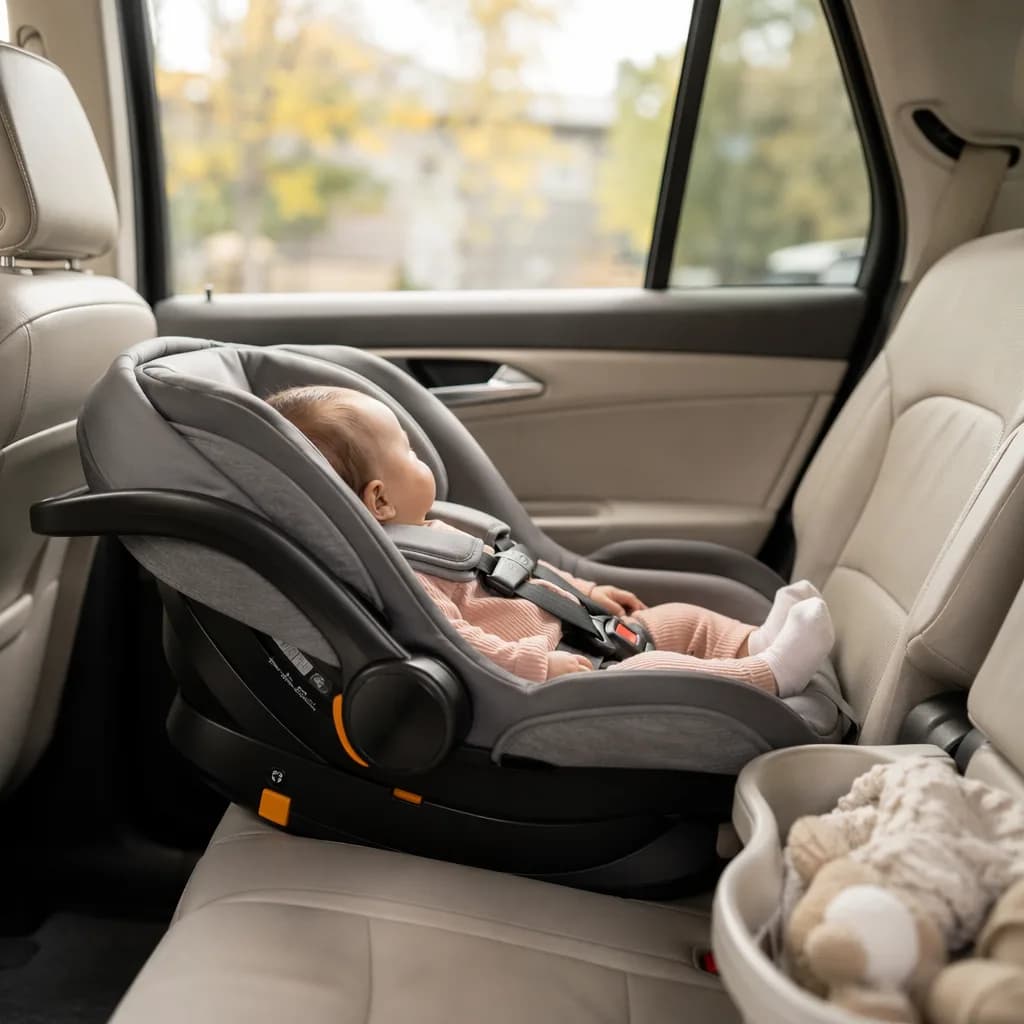
What Is a Rear Facing Car Seat?
A rear facing car seat is a child car seat that positions little ones so they face the back of the vehicle rather than the front. It can feel a bit unfamiliar at first, especially when we’re eager to see their face in the rearview mirror, but this setup is designed with babies and young toddlers in mind.
In a crash, a rear-facing seat helps support a child’s head, neck, and spine by spreading the force across the back of the car seat. Because babies and toddlers are still growing, that extra support matters during everyday rides and unexpected moments on the road.
There are a few main types we’ll usually come across. Infant-only seats are made for younger babies and are often portable. Convertible seats can switch from rear facing to forward facing as a child grows. All-in-one seats are designed to move through multiple stages, depending on the model.
For babies and young toddlers, rear facing is considered the safest position. Whether we’re bringing home a newborn named Olivia, heading out with a curious toddler like Lucía, or simply doing the school run with siblings, rear facing helps make those early rides feel a little more secure.
How Long Should a Child Stay Rear Facing?
The safest answer should come from your child’s car seat manual and current child-passenger safety guidance: we want children to stay rear facing for as long as their specific seat allows, based on the manufacturer’s height and weight limits, not age alone.
As parents, it’s easy to focus on birthdays as the big milestone. We remember when little Olivia took her first steps, or when we picked a name like Olivia, meaning & origin and imagined all the growing-up moments ahead. But with car seats, a child’s size and the seat’s limits matter more than the number of candles on the cake.
Many families hear “age 2” as a rear-facing benchmark, and it can be a helpful minimum to keep in mind. But if your child still fits rear facing within the seat’s stated height and weight range, staying that way longer is often the preferred approach. The key is checking the label and manual for your exact seat, because each model can have different limits.
We also want to avoid switching forward facing just because a child seems “big” or because their legs look bent. Instead, we can look at the full picture: height, weight, head position, harness fit, and the seat manufacturer’s rules. If your little Lucía is still within those limits, maybe after we lovingly chose Lucía, meaning & origin, there may be no need to rush the next stage.
When in doubt, we can pause, read the manual, and ask a certified car seat technician for help with fit and installation. Small checks can make every ride feel more confident.
Rear Facing Car Seat Height and Weight Limits
Rear-facing height and weight limits can feel like one more tiny detail in a very full parenting day, but we can keep it simple: the limits that matter most are the ones for the exact car seat we’re using.
Start by checking the seat itself. Most car seats include a label on the side or back with the approved height and weight range. The manual should repeat those limits and may also explain how to measure fit as a child grows. If we’re passing a seat between siblings, cousins, or friends, maybe while comparing baby names like Olivia, meaning & origin or Lucía, meaning & origin, it’s still worth checking the label and manual again, because each model can be different.
Infant seats and convertible seats often have different rear-facing ranges. Infant seats are designed for the earliest stage and are usually outgrown sooner, while convertible seats are made to last through more than one stage and may allow rear-facing for longer. Rather than relying on a general age or size, we’ll want to follow the specific limits for that seat.
A child may have outgrown rear-facing when they exceed the stated height or weight limit, or when the manual says there is no longer enough space above the child’s head. If we notice either of those signs, it’s time to review the next safe setup.
It can be tempting to turn a child forward-facing as soon as they seem bigger or more curious, but we shouldn’t rush that switch before they reach the rear-facing limit for their seat. The seat’s own guidance is our best guide.
How to Install a Rear Facing Car Seat Safely
When we’re setting up a rear facing car seat, the goal is simple: a calm, secure ride where our child is positioned as safely as possible. A good first step is choosing the back seat whenever we can, since this is generally treated as the safest place for children to ride. If we’re moving seats between cars, or installing for a new baby like an Olivia, meaning & origin or Lucía, meaning & origin, it helps to slow down and treat each installation like a fresh setup.
Before tightening anything, we’ll want to read both the car seat manual and the vehicle owner’s manual. The car seat manual explains how that specific seat should be used, while the vehicle manual shows which seating positions and installation methods are allowed in that car.
Most rear facing seats can be installed using either the vehicle seat belt or the LATCH system. We should choose one method and use it correctly, rather than using both at the same time, unless the car seat manufacturer and vehicle manufacturer clearly allow it. Using one approved method helps us get a snug, reliable installation without guessing.
Once the seat is installed, we can check it at the belt path, the spot where the seat belt or LATCH strap runs through the car seat. With a firm tug side to side and front to back, the seat should move less than one inch at that belt path. If it shifts more than that, we can loosen it, press down into the seat, and tighten again.
The recline angle matters too. Infants usually need a more reclined position to help keep their head and airway supported, while older toddlers may be able to sit a bit more upright if the seat allows it. The angle indicator or recline guide on the car seat is there to help us match the position to our child’s stage.
When possible, we can also have the installation checked by a certified Child Passenger Safety Technician. It’s a reassuring extra step, especially when we’re using a new seat, a new vehicle, or just want a second set of trained eyes.
Rear Facing Harness and Fit Checklist
When we’re getting ready for a ride, a quick harness check can help us feel more confident before we pull away. Because every car seat is designed a little differently, we’ll always want to follow the manufacturer’s manual for the exact fit rules for our child’s seat.
For a rear-facing seat, check the harness strap position according to your manual. If the seat’s instructions say the straps should be at or below your child’s shoulders, make sure they sit there before buckling. This helps the harness fit the way that specific seat was designed to work.
Next, buckle your child in and tighten the harness so it lies flat, without twists. A simple snugness check is the “pinch test”: try to pinch the harness webbing at your child’s shoulder. If you can pinch extra strap between your fingers, it may need to be tightened. If your fingers slide off the webbing, the fit is usually snug.
Then check the chest clip. If your manufacturer’s instructions call for armpit level, place it across the chest at that height, not down on the belly or up near the neck.
Bulky coats, thick sweaters, or padded outfits can get in the way of a close harness fit, so we’re better off dressing in thinner layers and adding warmth over the buckled harness if needed.
Finally, use only inserts, pads, covers, or accessories approved by your car seat’s manufacturer. It’s one of those small details that can feel easy to overlook, especially when we’re juggling school bags, snacks, and name-label decisions like Olivia, meaning & origin or Lucía, meaning & origin, but it keeps the seat set up as intended.
When to Switch From Rear Facing to Forward Facing
We know this milestone can feel confusing, especially when our little one suddenly looks “too big” for the seat that once seemed huge. The simplest rule to keep coming back to is this: we should switch from rear facing to forward facing only after our child reaches the maximum rear-facing height or weight limit listed for their car seat.
It is very common for toddlers’ legs to bend, rest against the vehicle seat, or sit crossed while rear facing. That can look uncomfortable to us, but leg position on its own is usually not a safety reason to turn the seat around. Many children naturally bend and tuck their legs in everyday play, and rear facing is still based on whether they fit within the seat’s stated limits.
If our child outgrows an infant seat before they are ready to face forward, we may need to move to a convertible car seat. A convertible seat can often be used rear facing first, then changed to forward facing later, which helps us avoid turning the seat too soon just because the infant carrier stage is over.
When the time does come to forward-face, the setup changes. We’ll need to adjust the harness according to the car seat manual, paying close attention to the correct harness position for forward-facing use. We’ll also want to use the top tether if the seat and vehicle allow it, because forward-facing installation is designed with that tether as part of the setup.
Like choosing a name we love, whether we’re drawn to Olivia, meaning & origin or Lucía, meaning & origin, this is one of those parenting choices where careful fit matters more than rushing the next step.
Common Rear Facing Car Seat Mistakes to Avoid
Even when we’re doing our best, car seat details can be easy to miss, especially on busy mornings or when we’re moving seats between vehicles. Here are some common rear-facing car seat mistakes we can watch for.
- Turning the child forward-facing too early
It can feel exciting when our child seems “big enough,” but turning forward-facing too soon is one of the key mistakes to avoid. We’ll want to follow the car seat’s rear-facing limits and keep checking the manual as our child grows.
- Using the wrong recline angle
Rear-facing seats need to sit at the correct recline angle for the child’s age, size, and seat model. Many seats include an angle indicator, so it’s worth taking a moment to check it during installation.
- Loose installation or loose harness straps
A car seat that shifts too much, or harness straps that aren’t snug, may not fit the way intended. Before each ride, we can do a quick check: seat secure, harness snug, no bulky layers interfering.
- Placing the chest clip too low
The chest clip should sit where the car seat instructions say it belongs. A clip that slides down toward the belly is a common thing to correct before heading out.
- Using aftermarket accessories that were not tested with the seat
Cute strap covers, inserts, mirrors, or cushions can be tempting, especially when we’re personalising everything from the nursery to a name list like Olivia, meaning & origin. But if an accessory wasn’t tested with the car seat, it’s best to skip it unless the manual allows it.
- Installing a rear-facing seat in front of an active airbag
Rear-facing seats should not be placed in front of an active airbag. If we’re unsure about the vehicle setup, the car manual and car seat manual are our first stops.
- Continuing to use an expired, recalled, or crash-damaged car seat
Hand-me-downs can feel practical, just like passing along a beloved name such as Lucía, meaning & origin, but car seats need extra caution. We should check the expiration date, recall status, and crash history before using one.
Rear Facing Car Seat Safety by Age and Stage
Rear-facing car seat safety can feel like one of those parenting topics where we want a simple age-based answer, but the safest next step always comes back to the same essentials: our child’s size and the car seat manual. For newborns and infants, we can think of rear-facing as the starting point, then carefully check that the seat is being used within the manufacturer’s stated height and weight limits.
As babies grow into toddlers, it’s natural to wonder when it’s time to turn the seat around. If a toddler still fits within the rear-facing limits of their car seat, many families choose to keep using that setup for longer. This stage is less about a birthday and more about whether the child still fits the seat as the manual describes.
Older toddlers and preschoolers may also continue riding rear-facing when they are in seats designed with higher rear-facing limits. For a child like Olivia or Lucía, the right choice depends on their current height, weight, and how those measurements compare with the seat’s instructions, not simply their age or what other children are doing.
At every stage, we can make this feel more manageable by checking the same few things: the car seat’s labels, the instruction manual, and our child’s latest measurements. When those pieces line up, we can feel more confident that we’re using the seat the way it was designed to be used.
Frequently Asked Questions
What is the safest direction for a baby’s car seat?
Rear facing is the safest direction for babies because it better supports the head, neck, and spine during a crash.
When can my child face forward in a car seat?
Your child can face forward only after reaching the rear-facing height or weight limit listed by the car seat manufacturer.
Is it okay if my child’s legs are bent in a rear facing car seat?
Yes. Bent or crossed legs are common and usually not a reason to turn a child forward-facing.
Should a rear facing car seat go behind the driver or passenger?
The safest spot is the back seat in a position where the car seat can be installed tightly and used correctly every ride.
Can I use LATCH and the seat belt together?
Usually no. Use either LATCH or the seat belt unless both the vehicle and car seat manuals specifically allow using both.
Frequently asked questions
How long should a child stay in a rear facing car seat?
When is a rear facing car seat outgrown?
Is it okay if a child’s legs are bent in a rear facing car seat?
Where can parents get help with car seat installation?
References
Sources
External research this article was grounded in.
- Car Games 🚗 Play on CrazyGamescrazygames.com
Related reading
More from the journal → safety
Baby Proofing Checklist Before Crawling Begins
A calm room-by-room baby proofing checklist to help you spot choking hazards, sharp corners, cords, outlets, furniture tip risks, and more before crawling starts.
15 min readAug 3, 2026- safety
Baby Bath Safety: Temperature, Setup, Supervision
Simple baby bath safety tips for water temperature, setup, and supervision, so bath time stays warm, calm, and safe.
11 min readAug 3, 2026 - safety
How to Choose a Safe Newborn Car Seat
Choosing a newborn car seat? Start with rear facing fit, safe harness setup, labels, dates, and recall checks before that first ride home.
10 min readAug 3, 2026