
Simple Postpartum Meal Plan for Recovery and Energy
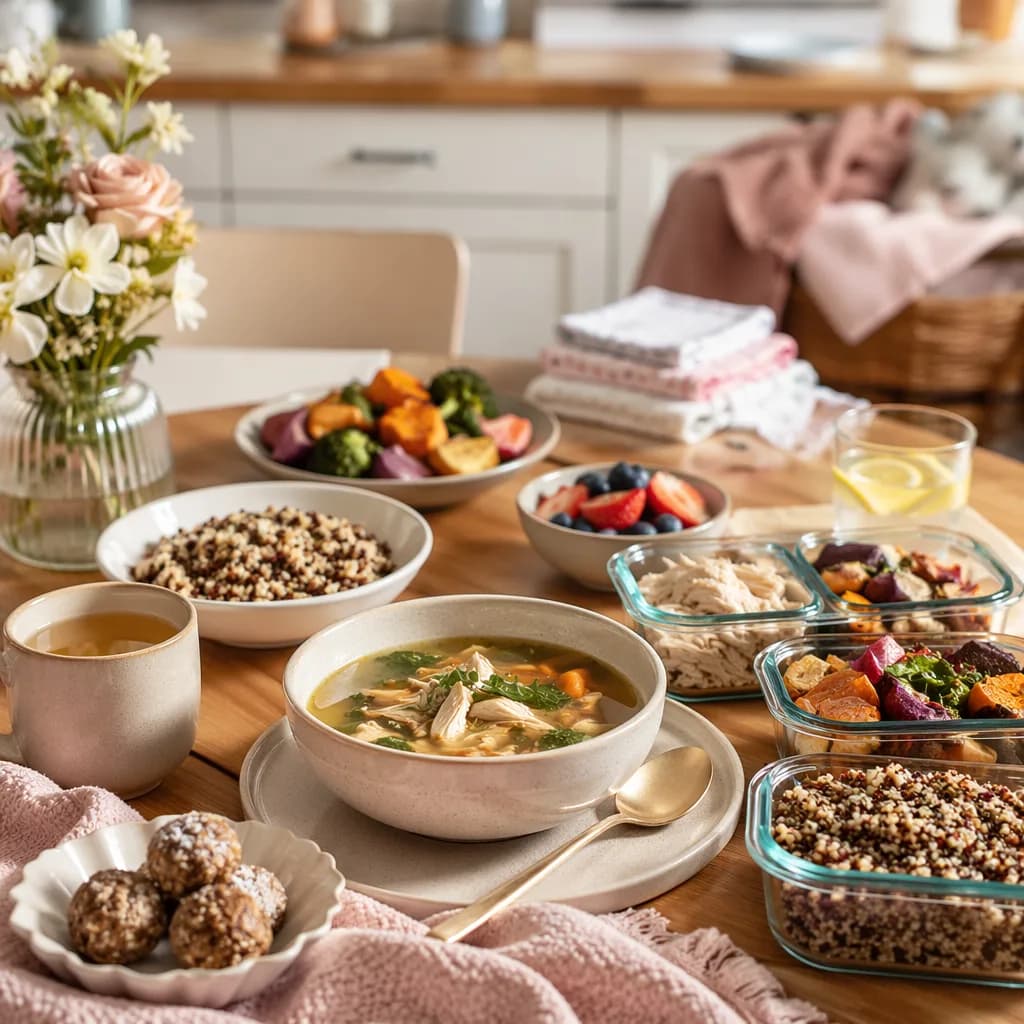
What a postpartum meal plan should do for you
A good postpartum meal plan isn’t about dieting or getting everything “right.” It’s about helping your body do the huge jobs it’s already doing: tissue healing, steady energy, digestion, mood support, and milk production if you’re breastfeeding.
Your meals should make life easier, not more complicated.
The core nutrients to keep coming back to are protein, iron, omega-3 fats, fiber, calcium, vitamin D, fluids, and enough calories. Protein helps with repair. Iron-rich foods can help replenish what’s lost through pregnancy and birth. Fiber supports digestion, which can be especially welcome in the first weeks. Fluids matter too, particularly if you’re nursing or sweating through those hormonal shifts.
A simple plate formula helps when your brain is tired: protein, slow carb, healthy fat, fruit or vegetable, plus a drink.
For example: scrambled eggs, whole grain toast, avocado, berries, and water or warm tea. It’s filling, gentle, and realistic enough to eat one-handed while the baby naps on you.
If you’re still sorting out what recovery looks like day by day, Postpartum Recovery: What to Expect in First 6 Weeks can help. Food is one piece of care, alongside rest, help, and small routines like the ones in Postpartum Self Care Habits for the First Weeks.
And if exhaustion or worry feels bigger than food can fix, you’re not failing. Read New Parent Burnout: Signs, Causes, and Small Fixes or Postpartum Anxiety Signs: When Worry Feels Too Big when you have a quiet minute. Even tiny things, like naming hopes for your baby through Tanmay Suresh Upadhyay: meaning & origin, can feel grounding in a blurry season.
Start with a 3-day postpartum meal plan
A three-day plan is much kinder than trying to map out a whole month while you’re healing, feeding a baby, and sleeping in scraps. Postpartum recovery already asks a lot of your body, especially in the first six to eight weeks, so food should feel steady and doable, not like another project.
Think warm, soft, filling, and easy to eat with one hand. A bowl of soup you can sip between baby snuggles counts. So does toast you eat standing at the counter.
Leftovers are part of the plan, not a backup.
Day 1
Breakfast: Overnight oats with milk, chia seeds, banana, and peanut butter. Eat cold or warm it up if that feels better.
Snack: Yogurt with granola and berries.
Lunch: Turkey and rice soup with soft carrots and broth. Make extra for tomorrow.
Snack: Peanut butter toast, cut into strips so it’s easy to grab.
Dinner: Salmon bowl with rice, avocado, and steamed spinach. Use microwave rice if that’s what gets dinner on the table.
Day 2
Breakfast: Warm oatmeal with cinnamon, chopped dates, and a spoonful of nut butter.
Snack: Yogurt with granola, again. Repeating meals is allowed.
Lunch: Leftover turkey and rice soup. Add extra broth if you want it softer and easier to eat.
Snack: Apple slices with peanut butter, or toast if you’re too tired to slice anything.
Dinner: Lentil stew with soft potatoes and carrots. Serve with bread for dipping.
Day 3
Breakfast: Overnight oats with berries and Greek yogurt.
Snack: Peanut butter toast and a glass of water nearby.
Lunch: Leftover lentil stew in a mug or bowl. Warm food can feel especially grounding when the day is choppy.
Snack: Yogurt with granola.
Dinner: Salmon rice bowl, or leftover soup if that sounds easier.
If feeding yourself feels oddly hard right now, you’re not failing. Fatigue is common after birth, and caring for a newborn can be deeply demanding. Keep the plan visible on the fridge, and let someone else reheat the soup. For more gentle ways to protect your energy, you might like Postpartum Self Care Habits for the First Weeks or New Parent Burnout: Signs, Causes, and Small Fixes.
Easy postpartum meals to keep on repeat
The best postpartum meals are the ones you can actually eat while holding a baby, answering a text from your pediatrician, or realizing it’s 2 p.m. and breakfast never happened. Think simple, filling, and ready fast.
Stock the freezer with meals that reheat well and feel comforting:
- Chicken soup with noodles, rice, or potatoes
- Beef and bean chili
- Baked oatmeal cut into squares
- Breakfast burritos with eggs, beans, cheese, or veggies
- Turkey meatballs you can add to pasta, rice, or toast
- Veggie lasagna in single-serving portions
Then make the fridge do some quiet heavy lifting. A few basics can turn into meals without much thinking:
- Hard-boiled eggs
- Cooked rice
- Washed berries
- Hummus
- Cut vegetables
- Shredded chicken
- Greek yogurt
For the days when reheating feels like too much, keep no-cook meals on your list. Tuna crackers with fruit works. So does a cottage cheese bowl with berries and toast, a rotisserie chicken wrap, a smoothie pack blended with milk or yogurt, or cheese with whole-grain toast. None of it has to look impressive. It just has to get food into you.
One tiny rule helps: choose meals that can be eaten cold, reheated quickly, or held in one hand. A breakfast burrito you can eat over a napkin may help more than a beautiful meal that needs a knife, fork, and ten quiet minutes.
Postpartum recovery is demanding, and food is only one piece of it. If meals keep slipping because you’re exhausted or overwhelmed, you’re not failing. You may also find it helpful to read about postpartum self care habits for the first weeks, what’s typical in postpartum recovery during the first 6 weeks, and gentle fixes for new parent burnout.
How to prep before baby arrives
You don’t need to fill the entire freezer to feel prepared. Aim for 6 to 10 freezer meals you’ll actually want to eat when you’re tired, sore, and holding a baby at 2 p.m. A tray of baked pasta, a few bags of chicken soup, breakfast burritos, and a simple rice and bean casserole can carry you through the hardest moments without turning your kitchen into a storage unit.
Label every meal before it goes in the freezer. Write the date, reheating directions, and any toppings needed, like shredded cheese, avocado, tortillas, or fresh herbs. Future-you will not want to guess if something needs 30 minutes covered or an hour from frozen.
A small postpartum pantry helps too. Stock oats, nut butter, broth, canned beans, rice, pasta, trail mix, and electrolyte packets. These are the “someone needs food now” basics. Oats with nut butter. Brothy rice with beans. Pasta with whatever sauce is left. Simple counts.
Set up one snack basket near your bed or nursing chair with granola bars, nuts, dried fruit, crackers, and a full water bottle. Postpartum recovery can bring deep fatigue, hunger, and big hormonal shifts, so having food within arm’s reach is a kindness, not a luxury. If you’re planning the first few weeks, this pairs well with gentle ideas from Postpartum Self Care Habits for the First Weeks and Postpartum Recovery: What to Expect in First 6 Weeks.
When people ask how they can help, give them a specific job: “Could you bring chicken soup on Tuesday?” or “Breakfast burritos would be amazing.” Specific asks reduce decision fatigue, which matters when you’re watching for new parent burnout or worry that feels bigger than usual, like the signs described in Postpartum Anxiety Signs: When Worry Feels Too Big.
Postpartum nutrition for breastfeeding and bottle feeding
No matter how your baby is fed, your body still needs steady food and fluids after birth. You’re healing tissue, recovering from blood loss, dealing with hormone shifts, and running on broken sleep. That takes fuel.
If you’re breastfeeding, hunger and thirst can feel surprisingly intense. Keep water where you usually feed the baby, and try to pair snacks with protein so you’re not living on crackers at 2 a.m. Many breastfeeding parents need extra calories and protein to support recovery and milk production, so this isn’t the time to cut back hard or skip meals.
A few breastfeeding-friendly meals that actually feel doable:
- Oatmeal with walnuts and milk, plus fruit if you have it
- Eggs with roasted sweet potatoes
- Chicken soup with rice or noodles
- Salmon rice bowls with avocado or olive oil
- Smoothies made with Greek yogurt, berries, and nut butter
If you’re bottle feeding, nutrition still matters just as much. The goal isn’t dieting. It’s stable blood sugar, healing, and convenience. Think easy meals you can eat one-handed: turkey sandwiches, leftover soup, yogurt with granola, hummus with pita, or a rice bowl from whatever is in the fridge. Small, regular meals can also help when fatigue starts to pile up, something we talk about more in New Parent Burnout: Signs, Causes, and Small Fixes.
Keep following your clinician’s advice about iron, vitamin D, prenatal vitamins, or any other supplements, especially if you had significant blood loss, a C-section, or low levels during pregnancy. And if food feels hard because worry is crowding everything out, Postpartum Anxiety Signs: When Worry Feels Too Big may help you name what’s happening.
For a wider look at healing, see Postpartum Recovery: What to Expect in First 6 Weeks, and for tiny routines that support eating and rest, try Postpartum Self Care Habits for the First Weeks.
Build meals around protein, fiber, and fluids
Postpartum meals don’t need to be fancy. They need to be steady, filling, and easy to repeat when you’re tired.
Start with protein. Your body is repairing tissue after birth, and protein gives it the building blocks to do that work. It also helps keep hunger calmer, which matters when meals get delayed because the baby wakes up right as you sit down. Good options include eggs, chicken, fish, beef, tofu, lentils, beans, Greek yogurt, cottage cheese, and nut butter.
A real-life plate could be toast with eggs and avocado, Greek yogurt with berries and chia seeds, or a bowl of rice with chicken, vegetables, and beans. Simple counts.
Fiber deserves a spot too, especially in the first weeks. Postpartum constipation is common after birth, and it can feel worse if you had pain medicine or you’re taking iron supplements. Fiber helps keep digestion moving. Try oats, berries, pears, beans, lentils, vegetables, chia seeds, and whole grains. If your appetite is small, add fiber gently instead of suddenly loading up.
Fluids are the quiet helper. Keep a water bottle with a straw near the place you feed the baby or rest. Herbal tea, broth, milk, smoothies, and electrolyte drinks if recommended can all help you stay hydrated without making it feel like another chore.
If feeding yourself feels harder than expected, you’re not failing. The early weeks are a lot, physically and emotionally. For a bigger picture of healing, see Postpartum Recovery: What to Expect in First 6 Weeks, and for tiny doable routines, Postpartum Self Care Habits for the First Weeks can help. If exhaustion or worry starts taking over, New Parent Burnout: Signs, Causes, and Small Fixes and Postpartum Anxiety Signs: When Worry Feels Too Big are worth keeping close. And if you’re feeding a baby while scrolling name ideas at 2 a.m., Tanmay Suresh Upadhyay: meaning & origin is there too.
A simple grocery list for postpartum recovery
Postpartum food doesn’t need to be fancy. It needs to be easy to grab, filling enough to carry you through a nap window, and gentle on a tired brain. Convenience foods are allowed. Truly. A frozen lasagna with a bagged salad can be a very good postpartum dinner.
Here’s a simple list to build from:
- Proteins: rotisserie chicken, eggs, canned beans, ground beef or turkey for meat sauce, tuna or salmon packets, hummus, tofu, pre-cooked chicken sausage.
- Grains and starches: microwave rice, tortillas, pasta, oats, bread, frozen waffles, potatoes, sweet potatoes, crackers.
- Fruits and vegetables: frozen vegetables, bagged salad, baby carrots, bananas, apples, berries, oranges, steam-in-bag broccoli, pre-cut fruit.
- Fats: avocado, olive oil, nut butter, trail mix, cheese, full-fat yogurt if you like it.
- Dairy or alternatives: Greek yogurt, milk, fortified non-dairy milk, cottage cheese, shredded cheese.
- Pantry helpers: soup broth, canned chili, canned tomatoes, salsa, marinara, instant oatmeal, granola, broth-based soups.
- Snacks: oat muffins, yogurt cups, cheese and crackers, boiled eggs, smoothies, peanut butter toast, granola bars.
A few comfort meals can do real work here: pasta with meat sauce, a baked potato topped with chili, or warm muffins made with oats. These are the kinds of foods that help when you’re healing, feeding a baby, and trying to remember where you left your water bottle.
If meals feel like one more impossible task, that’s a signal to simplify, not to try harder. You might also like these small, realistic ideas for postpartum self care in the first weeks, especially if food, sleep, and recovery are all blending together. And if the tiredness starts feeling deeper than normal newborn exhaustion, read through new parent burnout signs and small fixes.
What to do when cooking feels impossible
Some days, “meal plan” means you ate something with one hand while the baby slept on your chest. That counts.
Keep a backup formula in your head: protein plus carb plus produce. Nothing has to be cooked. Try Greek yogurt with granola and berries, peanut butter banana toast, hummus pita with cucumbers, or soup with crackers. If you have a tiny bit more energy, eggs with microwave rice can become a real meal in five minutes.
If the day keeps disappearing into feeding, diapers, and naps, set phone reminders to eat. Not because you’re doing anything wrong, but because newborn care can blur time completely. A quiet alarm at 9, 12, 3, and 6 can be the nudge that gets a snack into your hand before you’re shaky and overwhelmed.
Use the help. Grocery delivery, meal trains, frozen meals, cut fruit, rotisserie chicken, bagged salad, and family members who can wash grapes or make toast are all valid postpartum supports. No guilt. Your body is healing, and if you’re lactating, it may also be making milk. Food is care, not another test to pass.
If exhaustion is starting to feel bigger than normal tired, this piece on new parent burnout may help you sort out what’s going on. For more gentle basics, see postpartum self care habits and what to expect in the first 6 weeks of postpartum recovery.
Call your clinician if you can’t keep food down, feel dizzy, have severe fatigue, heavy bleeding, or mood symptoms that feel scary or unmanageable. Big worry can show up postpartum too, and postpartum anxiety signs are worth taking seriously.
And if your brain needs a sweet, low-stakes break while you’re nap-trapped, browsing a name story like Tanmay Suresh Upadhyay absolutely counts as rest.
Frequently Asked Questions
What should be in a postpartum meal plan?
Aim for protein, slow carbs, healthy fats, fruits or vegetables, and plenty of fluids at most meals.
How many meals should I eat postpartum?
Many new moms feel best with three meals and two or three snacks, especially during breastfeeding.
What are the best easy postpartum meals?
Good options include soup, oatmeal, egg burritos, rice bowls, smoothies, chili, pasta with meat sauce, and yogurt bowls.
Can I make a postpartum meal plan if I did not prep before birth?
Yes. Start with 3 days, use shortcuts like rotisserie chicken and frozen vegetables, and repeat simple meals.
What foods help with postpartum recovery?
Protein-rich foods, iron-rich foods, omega-3 fats, fiber-filled carbs, fruits, vegetables, and fluids all support recovery.
Do I need different meals if I am breastfeeding?
You may need more food and fluids, but the basic meal structure stays the same: protein, carbs, fats, produce, and drinks.
Frequently asked questions
What should I eat in the first week postpartum?
Do I need a special meal plan if I'm breastfeeding?
What are easy postpartum meals someone can bring me?
How can I eat well when I'm too tired to cook?
References
Sources
External research this article was grounded in.
- BuildNow GG 🕹️ Play on CrazyGamescrazygames.com
- Postpartum: Stages, Symptoms & Recovery Timemy.clevelandclinic.org
- Postpartum Meal Plan: 6-Week Nutrition Foundations & 7-Day Guide | TPNLtheprenatalnutritionlibrary.com
Related reading
More from the journal → wellness
Postpartum Anxiety: Signs, Support, and Help
Postpartum anxiety can feel like constant worry, checking, panic, or racing thoughts. Here’s how to spot signs and know when to get support.
11 min readAug 3, 2026- wellness
Baby First Cold: Comfort Tips and Doctor Red Flags
Baby’s first cold can feel scary. Here’s how to ease congestion, support feeds, and spot the doctor red flags you shouldn’t wait on.
9 min readAug 3, 2026 - wellness
Postpartum Self-Care: Small Ways to Feel Like You Again
Postpartum self-care can be tiny and still count. Start with food, water, rest, hygiene, pain relief, and asking for help when you need it.
12 min readAug 3, 2026