
Tummy Time by Age: Positions, Timing, Daily Tips
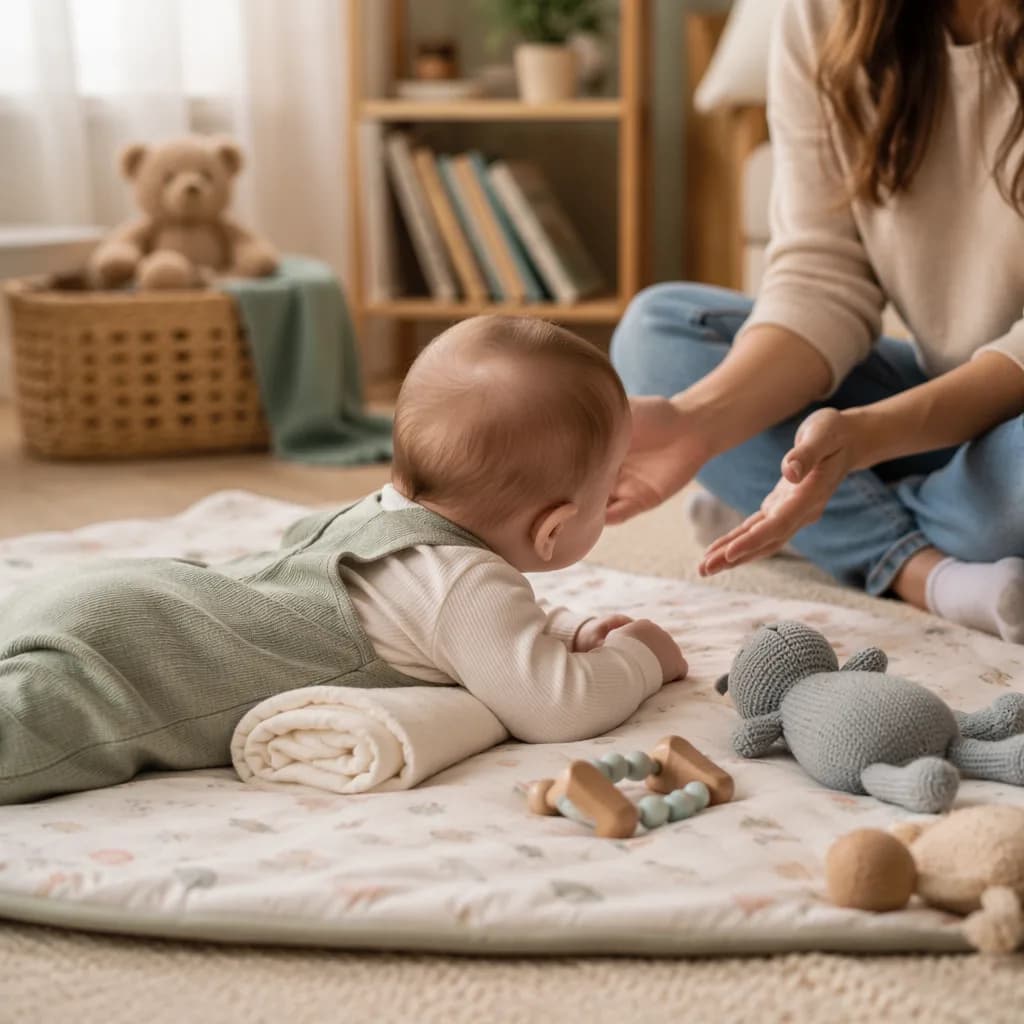
Tummy time by age: a quick guide
Tummy time by age simply means adjusting belly-down play to what your baby can handle right now. Tummy time is supervised time when baby is awake, alert, and placed on their belly. It might happen on your chest, across your lap, or on a firm, flat floor space.
Age matters because a newborn may only manage a minute or two before fussing, while an older baby may happily play longer, reach for toys, and practice bigger movements. The question of how long tummy time should last changes as baby gets stronger, especially as baby neck strength improves.
| Age | How long tummy time | Main goal |
|---|---|---|
| Newborn | 1-2 minutes at a time, a few times daily | Turn head side to side, get used to the position |
| 1-2 months | Short sessions, gradually working toward 15-30 minutes total per day by 2 months | Lift head briefly, build neck and shoulder strength |
| 3-4 months | Several short play sessions across the day | Push up on forearms, lift head higher, track your face or a toy |
| 5-6 months | Work toward at least 60 minutes total per day by 6 months | Reach for toys, shift weight, begin pivoting |
| Older babies | Keep going daily until baby can crawl | Prepare for crawling with stronger arms, back, and core |
Those little pushes and wobbly head lifts are doing real work. Tummy time helps build the muscles babies use for rolling, sitting, crawling, and eventually walking. If rolling is on your mind, here’s more on when babies roll over and what signs to watch for. For the next big movement stage, you may also like when babies crawl and how it usually unfolds.
Keep it positive. Stop before baby gets too upset, try again after a diaper change, and get down face-to-face. Your smile is often the best toy in the room.
Tummy time for newborns: tiny sessions count
Tummy time can start in those first days at home, as long as your newborn is awake, supervised, and content. Think of it as tiny practice, not a workout. One calm minute counts.
Start with 1-2 minutes at a time, a few times a day. You might try chest-to-chest right after a diaper change, with your baby lying tummy-down on your chest while you recline and talk softly. Or place baby across your lap while you sit on the couch, with one hand gently resting on their back or bottom so they feel steady. If everyone is calm, you can also try a firm blanket or play mat on the floor, which gives baby the most room to move as they grow.
Newborns are often sleepy, gassy, or simply not in the mood. That’s normal. If baby starts to fuss, stop, cuddle, and try again later instead of pushing through. We want tummy time to feel safe and familiar, so a sweet 60-second try that ends with a snuggle is still a win.
The goal builds slowly. Short sessions can become a few minutes after diaper changes or baths, then more time across the day as baby gets stronger. Tummy time helps build the neck, shoulder, back, and core muscles babies use later for milestones like rolling, sitting, crawling, and walking. If you’re already wondering what comes next, you may like reading about when babies roll over or the early signs in when babies crawl.
One safety point matters every single time: tummy time is only for awake play while you’re watching. It’s never for sleep. If baby dozes off during tummy time, gently roll them onto their back and place them on a safe sleep surface. Back to sleep, tummy to play.
How long tummy time should last at each stage
Start tiny, then add time as your baby gets stronger. A newborn might only manage 1-2 minutes at first, and that still counts.
For many families, tummy time works best in short, repeatable pieces across the day. Try a minute or two after a diaper change, or a quick chest-to-chest session when baby is awake, calm, and alert. By 1-2 months, some babies can handle 3-5 minutes at a time. Pathways notes that babies can gradually work toward 15-30 total minutes per day by 2 months, then at least 60 total minutes per day by 6 months.
Here’s a simple way to think about it:
- Newborns: 1-2 minutes at a time, a few times daily
- 1-2 months: 3-5 minutes at a time, building toward more total daily minutes
- 3-4 months: 10-15 minutes at a time if baby is comfortable
- Older babies: longer play sessions, split throughout the day, until baby is crawling
You don’t need one long session. Five calm minutes here and there can be much better than pushing through one miserable stretch. Tummy time helps build the neck, shoulder, back, and core muscles babies use for later skills like rolling, sitting, crawling, and walking. If you’re watching for rolling next, this guide on when babies roll over can help you spot the early signs.
Baby may be ready for more time when they lift their head, look side to side, push through their arms, and stay calm while playing. Pause if they’re crying hard, pressing their face down, looking tired, arching away, or turning away over and over.
Keep it supervised, on a firm flat surface, and remember: back to sleep, tummy to play. As tummy time gets easier, you’ll start seeing the strength that supports later movement, including the early stages of crawling.
Tummy time positions that work in real life
Tummy time doesn’t have to mean placing a brand-new baby flat on the floor and hoping for the best. The floor is the long-term goal because it gives babies room to move, but there are several safe ways to help your baby get used to being on their belly while they’re awake and watched.
For newborns, chest-to-chest is often the gentlest place to begin. Lie back a little, place baby tummy-down on your chest, and talk or sing so they have a reason to lift their head toward your face. It counts. It also feels less startling than the floor for many babies.
As baby starts trying those early head lifts, tummy across your lap can work well. Sit down, lay baby belly-down across your thighs with their head turned to one side, and keep a steady hand on their bottom or back. This can be a nice after-diaper-change option, especially if floor time is still getting big feelings.
The football hold is another real-life favorite. Hold baby tummy-down along your forearm, with one hand supporting their belly and your other hand supporting their head and neck. Keep them close to your body. It gives them belly practice while they still feel held.
For early floor practice, try supported tummy time with a small rolled towel under the chest, with baby’s arms forward and elbows under or near the shoulders. Stay right there. This little lift can make it easier for baby to look around and practice head control.
Then comes floor play on a firm mat or clean blanket. This is where reaching, pushing up, and rolling practice can happen over time. If you’re watching for the next skills, you might like When Do Babies Roll Over? Timing, Signs, and Safety or When Do Babies Roll Over? Signs and Safe Practice.
A simple setup: place a black-and-white board book about six inches in front of your 2-month-old during a 3-minute floor session. Get down at eye level, smile, and say what you see. Those tiny face-to-face moments support connection and early communication too, the same kind of back-and-forth that later shows up in early words and milestones.
Safety stays simple: keep baby awake, stay within arm’s reach, use a firm, flat surface, and avoid soft pillows, beds, or couches for independent tummy time. If baby falls asleep, roll them gently onto their back. As strength builds, tummy time becomes part of the path toward bigger movement, including the stages covered in When Do Babies Crawl? Signs, Stages, and Tips.
Building baby neck strength without pressure
Tummy time is simple, but it asks a lot of a baby’s body. When your baby is awake and watched, time on the tummy helps build neck and head control, shoulder strength, back and core muscles, and the trunk control they’ll use later for rolling, sitting, crawling, and walking.
It also gives them a new view of the room. From the floor, your baby can practice visual tracking as they lift their head to follow your face, a rattle, or a favorite toy. That’s a lot of work for someone so small.
In the early days, you might see just a tiny head lift. Then maybe they turn toward your voice. Later, they may push up on their forearms, lift their chest a little higher, or reach with one hand while the other arm helps hold them steady. These small moments matter. They’re little practice reps, not a test.
Keep it easy and familiar. Get down face-to-face on the floor and smile. Sing one short song, like the same verse after each diaper change. Place a toy slightly to one side so your baby has a reason to turn their head. A baby-safe mirror can work beautifully too, because babies often love looking at faces, including their own.
Some babies fuss quickly in tummy time, and that doesn’t mean you’re doing anything wrong. Start with short tries, even 2-5 minutes, a few times a day. You can stop before your baby gets really upset, then try again later. Repetition helps babies get more comfortable, and every minute counts.
This practice supports the same muscles babies use for early movement milestones, but there’s no need to rush the calendar. If you’re watching for what may come next, you might like When Do Babies Roll Over? Timing, Signs, and Safety or When Do Babies Crawl? Signs, Stages, and Tips. For a gentler practice-focused read, see When Do Babies Roll Over? Signs and Safe Practice. And since tummy time is also a sweet time for face-to-face sounds and connection, When Do Babies Start Talking? Words and Milestones may be helpful too.
What to do if your baby hates tummy time
First, take a breath. Fussing during tummy time is very normal, especially in the early weeks. This position is new, and it takes real effort for a baby to lift that heavy little head, even for a few seconds.
Start small. Try tummy time right after a diaper change or after a bath, when your baby is awake, calm, and more likely to be curious. If your baby just ate, wait 20-30 minutes before putting them on their tummy so their belly feels more comfortable.
Shorten the session if you need to. One calm minute is better than ten miserable minutes. You can always try again later.
If the floor brings instant tears, skip the floor for now. Lie back and place your baby tummy-down on your chest, face-to-face. Talk softly, sing the same little song each time, or make silly faces. Your face and voice are often more interesting than any toy, and this still helps your baby get used to being on their stomach while feeling secure.
You can also change the position. Try tummy-down across your lap with a steady hand on their bottom, or hold them tummy-down in a football carry with their head and neck supported. Once they’re more comfortable, move toward short sessions on a firm, flat surface like a clean blanket or play mat.
A small mirror, rattle, or high-contrast toy can help, but don’t underestimate simple connection. Getting down at eye level encourages your baby to lift their head, look toward you, and practice the muscles they’ll use later for skills like rolling and crawling. If you’re watching for what comes next, these guides on when babies roll over and when babies crawl can help you know what to expect.
Check in with your pediatrician if your baby always seems uncomfortable, has trouble turning their head both ways, spits up forcefully, or seems unusually stiff or floppy. You’re not overreacting. Sometimes a little extra support makes tummy time feel much better for everyone.
Easy ways to fit tummy time into the day
Tummy time works best when it’s tied to things you already do. After a diaper change, lay baby tummy-down on a clean blanket for a minute or two. After getting dressed, try tummy-to-chest while you sit back and talk to them. Before bath time, add a short floor play session. During regular play on the floor, roll baby gently onto their tummy and get down where they can see your face.
For a young baby, think tiny and repeatable. Three 2-minute sessions can feel much more doable than one long stretch, especially if baby is still getting used to the effort. If they fuss, you can stop and try again later. Keeping it positive matters.
A simple cue helps. Place a small rattle, soft toy, or board book near the changing area, just out of reach of curious hands. After the diaper is on, that little book becomes your reminder: “Let’s do our tummy minute.” You can use a mirror or high-contrast card too, especially if baby likes looking and tracking with their eyes.
Share the habit with anyone who cares for baby. Partners can do tummy-to-chest after work. Grandparents can try lap soothe. Daycare providers can build short supervised sessions into awake play. Tummy time supports the strength babies use for skills like rolling, sitting, and crawling, so it naturally connects with questions like when babies roll over and when babies crawl.
And remember, tummy time isn’t the only awake-time movement babies need. They also benefit from being held upright, carried, talked to, and given safe space to move freely. Those face-to-face moments count for connection too, just like early back-and-forth sounds before first words begin.
Tummy time safety basics
Tummy time is for awake play, not sleep. The safest rule is simple: baby is on their tummy only when they’re awake, calm, and being watched closely by an adult.
Use a firm, flat surface, like a clean blanket or play mat on the floor. The floor gives baby room to move, stretch, and slowly build the neck, shoulder, back, and core strength they’ll use later for skills like rolling, sitting, and crawling. If you’re watching for early movement changes, our guide to when babies roll over can help you know what to expect.
Sleep is different. Back for every sleep, tummy for awake play. If baby nods off during tummy time, stop the session and gently move them to a safe sleep space on their back. It’s not a failed tummy time session. It’s just a sleepy baby.
Be extra careful with soft or raised surfaces. Don’t place baby belly-down on soft bedding, adult beds, couches, nursing pillows, or loungers unless you have hands-on supervision the whole time. Babies can sink, slump, or roll in ways that make these spots risky. A two-minute floor session after a diaper change is often safer and easier than trying to make a long session happen on the couch.
If baby was premature, spent time in the NICU, or has a medical condition, ask your pediatrician for tailored advice before starting or changing tummy time routines.
As baby grows stronger, tummy time connects naturally to bigger milestones. You may start noticing little pushes, weight shifts, and reaching that lead toward rolling and crawling, which we cover in safe rolling practice and crawling signs and stages.
Frequently Asked Questions
When should I start tummy time with my baby?
You can usually start tummy time in the newborn days, as long as baby is awake, supervised, and placed in a safe position.
How long tummy time should a newborn do?
A newborn may only do 1-2 minutes at a time. Try a few short sessions each day and build slowly.
What are the best tummy time positions for a fussy baby?
Try chest-to-chest, across your lap, or supported tummy time with a small rolled towel under the chest.
Does tummy time help baby neck strength?
Yes. Tummy time helps babies practice lifting and turning the head, which supports neck, shoulder, and upper body strength.
What if my baby cries during tummy time?
Pause, comfort your baby, and try again later with a shorter session or a different position. Forcing it usually makes it harder.
Can tummy time happen on my chest?
Yes. Chest-to-chest tummy time is a great option, especially for newborns, as long as you’re awake and watching closely.
Is tummy time safe after feeding?
It’s often better to wait 20-30 minutes after a feeding, especially if your baby spits up easily.
When should I ask the doctor about tummy time trouble?
Ask if your baby seems very stiff or floppy, can’t turn the head both ways, seems in pain, or always cries hard during tummy time.
Frequently asked questions
When should I start tummy time with my newborn?
How long should tummy time last by age?
What if my baby hates tummy time?
Can tummy time happen on my chest?
Is tummy time safe if my baby falls asleep?
References
Sources
External research this article was grounded in.
- Pathways.org | Tummy Time: Essential Guide for Parentspathways.org
- Stomach: Anatomy, Function, Diagram, Parts Of, Structuremy.clevelandclinic.org
- Benefits of Tummy Time | Safe to Sleep®safetosleep.nichd.nih.gov
- Tummy time chart and positions by age: how much, when, and how | Huckleberryhuckleberrycare.com
- Tummy Time Chart by Age: A Parent's Complete Guide - Mothers Always Rightmothersalwaysright.com
- Tummy Time Guide — Age-by-Age Plan From Birth to 6 Months | BabyBloom | BabyBloombabybloomtips.com
Related reading
More from the journal → development
When Do Babies Laugh? Milestones and Play Ideas
Most babies laugh around 3 to 4 months. Learn what early giggles mean, what can encourage them, and when to check in with your pediatrician.
8 min readAug 3, 2026- development
When Do Babies Start Babbling? Sounds and Stages
Most babies start babbling around 4 to 6 months, then build toward ba-ba and da-da sounds as speech skills grow.
11 min readAug 3, 2026 - development
When Do Babies Roll Over? Timing, Practice, Safety
Rolling can look wobbly at first. Learn what early practice looks like, how tummy time helps, and what safety changes once baby starts to roll.
11 min readAug 3, 2026