
When Do Babies Roll Over? Timeline and Safety Tips
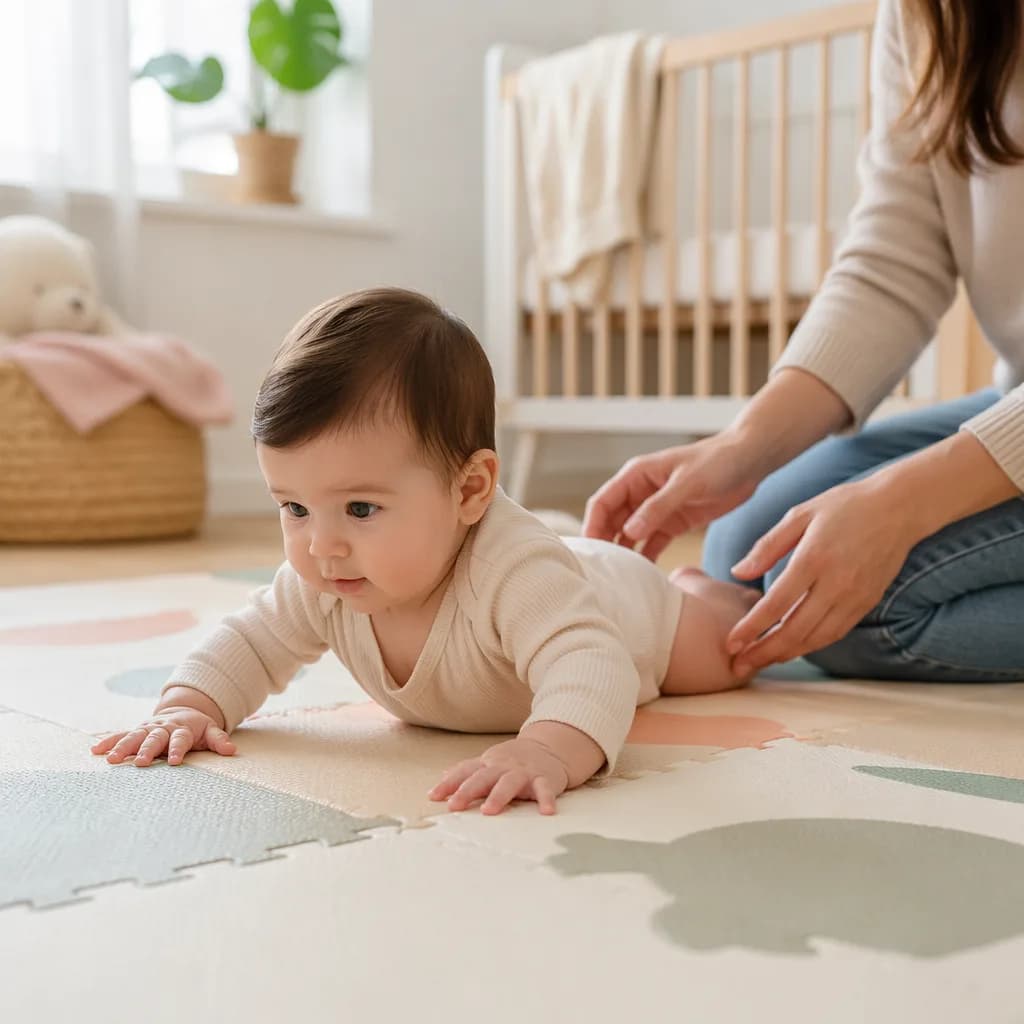
When do babies roll over?
Many babies roll from tummy to back around 3 to 5 months, then learn the harder back-to-tummy roll around 5 to 7 months. The broader window is flexible, though. The rolling over milestone often falls somewhere between 4 and 6 months, and some babies get there a little earlier or later.
That range can still be normal.
The first roll often looks accidental, especially during tummy time. Your baby lifts that heavy little head, pushes up on their forearms, wobbles to one side, and suddenly tips from belly to back. They may look shocked. You may be shocked too. Over time, those surprise flips turn into more controlled movement as neck, shoulder, and core strength build.
Back-to-tummy rolling usually takes more effort. It asks for stronger core muscles and more coordination, which is why some babies get briefly “stuck” on their belly and fuss for help. Regular floor play helps them practice those tiny weight shifts. If you’re tracking what tends to come next, our guide to when babies crawl can help you see the bigger movement picture without rushing it.
If your baby was born early, their pediatrician may talk with you about using adjusted age for milestones. That can give a more realistic timeline.
A gentle check-in is wise if your baby has no head control by 4 months or isn’t showing progress toward rolling by 6 months. Not panic. Just ask. For a calmer way to watch patterns over time, you might like our Baby Milestones Guide.
Which way do babies usually roll first?
Most babies roll from tummy to back first, and honestly, it can look a little accidental at the beginning. During tummy time, your baby lifts that heavy little head, shifts weight to one side, and gravity does some of the work. One second they’re pushing up, the next they’ve tipped over onto their back with a surprised face.
Rolling from back to tummy usually asks for more effort. Your baby has to use the neck, shoulders, core, and hips together, which is a bigger job than a simple weight shift. This is why some babies get halfway there, then fuss because one arm is stuck or their belly won’t quite follow.
You might see the practice before the roll: rocking side to side, grabbing feet, arching the back, pushing up on straight arms, or twisting hard to reach a toy just out of grasp. These little moves matter. They’re the warm-up.
Some babies do roll back to tummy first, and that can still be normal. Milestones don’t always follow a tidy order. If you’re trying to keep the bigger picture in mind, our Baby Milestones Guide: Track Progress Without Stress can help you watch progress without turning every playmat moment into a test.
Signs your baby is getting close to rolling
Before the first full roll, babies usually give us little clues. They’re building the neck, shoulder, and core strength they’ll need, often during ordinary floor play.
You may notice signs like:
- Lifting their head during tummy time, even for a few seconds at first
- Turning their head both ways to look at your face, a toy, or a sound
- Pushing up more strongly through their forearms while on the belly
- Starting to press into their hands with straighter arms
- Rocking on their belly, almost like they’re testing momentum
- Rolling onto one side during floor play or even mid diaper change
- Reaching across their body for a toy, which helps shift their weight
- Grabbing their feet, often around month four, which gives those little core muscles a real workout
That cross-body reach is an easy one to spot. If your baby is lying on their back and a soft rattle is near their left shoulder, they may reach over with the right hand and start twisting through the middle. That twist matters.
A little fussing can happen here. Rolling takes effort, and short bursts of frustration are often just your baby working hard. Keep practice safe and supervised, give breaks, and use a calm voice or a favorite board book. If you like using everyday routines for development, reading to your baby can become part of cozy floor time, too.
For a broader look at what comes next, our baby milestones guide can help you track progress without turning it into a race.
How to help baby roll over during play
Start on the floor. Always practice rolling on a firm floor mat, never on a couch, bed, changing table, or any raised surface. Babies can surprise us fast, especially once they’re rocking side to side or reaching for toys.
Keep practice tiny and doable. A few minutes of tummy time rolling practice, about 2 to 5 minutes several times a day, is plenty for many babies. You’re looking for curious effort, not a workout. If your baby is tired, hungry, or crying hard, pause and try again later.
Here’s a simple way to help.
Place a favorite crinkly toy just off to one side during tummy time. Not far. Just enough that your baby turns their head, reaches across the body, and shifts weight toward one shoulder. That little weight shift is the beginning of the roll. You can slowly move the toy in an arc around their head, which encourages sideways reaching and those small wiggles that build core strength.
If they get close but seem stuck, gently help the top leg cross over the body. Then wait. Give your baby a moment to finish the movement instead of doing the whole roll for them. Sometimes they’ll flop over and look shocked. Sometimes they’ll stop halfway and fuss. Both are normal parts of practice.
Try both sides, too. Put the toy on the right for one round, then the left for the next. Babies can start to prefer one direction, and giving both sides a chance keeps floor play balanced.
Rolling is one of those milestones that can make parents suddenly wonder what comes next. If you like having a calm big-picture view, our Baby Milestones Guide: Track Progress Without Stress can help. And once your baby starts moving with more purpose, you may also want to peek ahead at When Do Babies Crawl? Timeline, Signs, and Tips for Parents. Between practice rounds, quiet connection counts too, even something as simple as Reading to Your Baby: When to Start and Why It Matters.
Tummy time tips that make rolling easier
Tummy time is where rolling practice quietly begins. When your baby lifts their head, pushes through their arms, and wiggles their hips, they’re building the neck, shoulder, back, and core strength needed for that first roll.
A good time to try it is after a diaper change or a nap, when your baby is alert but not already worn out. Keep it simple. Place your baby tummy-down on your chest while you recline, over a rolled towel tucked under their chest, or flat on a play mat with a toy just off to one side.
Then get low.
Instead of hovering above, lie down face-to-face so your baby has something comforting to look at. A rattle, a soft mirror, or even your voice can encourage them to turn their head and shift weight to one side. That little side lean is often where tummy time rolling starts, and sometimes it turns into a surprise flip before anyone is ready.
If your baby hates tummy time, shorter is better. Try tiny sessions repeated often, even just a brief stretch after a diaper change. You’re not trying to force a milestone. You’re giving their body chances to practice.
As rolling becomes more intentional, you may start noticing how one skill leads into the next. Our Baby Milestones Guide: Track Progress Without Stress can help you keep perspective, and later on, those same floor-play muscles will support the next big movement in When Do Babies Crawl? Timeline, Signs, and Tips for Parents.
Rolling over baby safety at sleep time
Once rolling shows up, sleep rules can feel confusing fast. The key rule stays the same: always place your baby on their back to sleep, even after they’ve learned to roll.
If your baby rolls independently onto their tummy during sleep, you usually don’t need to keep flipping them back. The big conditions are that they’re not swaddled and their sleep space is safe. Rolling with arms trapped is the concern, which is why the swaddle needs to go at the first signs of rolling. That may be around 8 weeks for some babies, or sooner if you see them trying to turn, rocking side to side, or pushing hard during floor play.
A safe sleep setup is simple and boring, which is exactly what we want. Use a firm, flat mattress with a fitted sheet only. Keep pillows, loose blankets, bumpers, loungers, stuffed animals, and positioners out of the sleep space. If your baby seems chilly or likes that cozy feeling, a wearable sleep sack with arms free is a safer choice once rolling starts.
Rolling can also mess with sleep for a few nights. Babies love practicing new skills in the crib, especially right when you were hoping they’d settle. You might hear grunting, see them stuck on their belly, or find them wide awake and proud at 2 a.m. It’s frustrating, but it’s also common during new movement stages.
During the day, keep giving your baby floor time so those neck and core muscles get stronger. If you like tracking what’s coming next without spiraling into comparison, our Baby Milestones Guide: Track Progress Without Stress can help. And when rolling starts turning into scooting and rocking, you may want to peek ahead at When Do Babies Crawl? Timeline, Signs, and Tips for Parents.
What changes once baby can roll?
Rolling can show up fast. Your baby may do it once by accident during tummy time, then suddenly try it again on the changing pad when you’re reaching for a wipe.
That’s why supervision changes right away, even if rolling has only happened one time. During diaper changes, keep one hand on your baby at all times. If they’re extra wiggly, tired, or you need both hands, move the diaper change to the floor. It’s not fancy, but it’s safe.
Couches, adult beds, and nursing pillows also become risky very quickly. A baby who couldn’t move much yesterday can roll toward an edge today, and those soft, raised spots don’t give you much time to react.
Floor play may need a little more space now, too. Some babies travel by rolling before they crawl, which can feel surprising the first time you set them on a play mat and find them halfway toward the coffee table. If you’re already curious about what comes next, our guide on When Do Babies Crawl? Timeline, Signs, and Tips for Parents can help you picture the next stage without rushing it.
Do a quick room check before playtime: cords, small objects, pet bowls, and older siblings’ tiny toys can all become interesting once your baby can roll toward them. A simple basket for small toys can save a lot of stress.
This stage is exciting. It’s also one of those moments where your mental checklist updates overnight, which is exactly why a calm Baby Milestones Guide: Track Progress Without Stress can be so reassuring.
When to ask the pediatrician about rolling
Most babies roll over somewhere in the 4 to 6 month window, and some need a little more practice on the play mat. Still, it’s reasonable to ask your pediatrician if your baby isn’t rolling either way by around 6 months, especially if you’re not seeing many signs of progress, like pushing up, rocking side to side, grabbing feet, or turning to track a toy.
A quick check doesn’t mean something is wrong.
Call sooner if you notice a very stiff body, a very floppy body, strong head lag, or your baby using one side much more than the other. For example, if they always reach with the right hand and seem to ignore toys placed on the left, that’s worth mentioning. Loss of a skill is another reason to call sooner. If your baby was pushing up well or starting to roll and then stops doing it, trust your gut and ask.
Many babies simply need time, floor play, and more chances to build neck and core strength. A pediatrician can also look for early clues related to strength, vision, or muscle tone, which is one reason those check-ins can be so helpful.
If tracking milestones makes you anxious, our Baby Milestones Guide: Track Progress Without Stress can help you watch patterns without turning every day into a test. And once rolling leads to scooting, you may want to read When Do Babies Crawl? Timeline, Signs, and Tips for Parents.
Frequently Asked Questions
What age do babies roll over for the first time?
Many babies first roll from tummy to back around 3 to 5 months. Back to tummy often happens closer to 5 to 7 months.
Is it normal for a 2 month old to roll over?
A true controlled roll at 2 months is less common, but some babies accidentally flip during tummy time. Keep sleep and changing areas extra safe.
Should I worry if my baby is not rolling at 4 months?
Not always. Many 4 month olds are still building strength. Look for progress with head control, tummy time, side rolling, and reaching.
How can I help baby roll over without forcing it?
Use short tummy time sessions, place a toy to the side, and gently help baby shift one leg across the body. Stop if baby gets upset.
Do I need to stop swaddling when baby starts rolling?
Yes. Stop swaddling at the first signs of rolling so baby’s arms are free for safer movement during sleep.
What if my baby rolls onto the stomach while sleeping?
Still place baby on the back at bedtime. If baby rolls independently, you usually do not need to reposition them if the crib is safe and baby is unswaddled.
Do babies roll tummy to back or back to tummy first?
Tummy to back often comes first, but some babies roll back to tummy first. Both patterns can be normal.
Can too much time in swings or seats delay rolling?
It can reduce floor practice time. Babies need supervised time on a firm surface to build the strength and coordination used for rolling.
Frequently asked questions
When do babies usually start rolling over?
Which way do babies roll first?
When should I ask the pediatrician about rolling?
What safety changes should I make when my baby starts rolling?
References
Sources
External research this article was grounded in.
- When Do Babies Roll Over? Key Milestones & Tipsfindraya.com
- DO | English meaning - Cambridge Dictionarydictionary.cambridge.org
- When Do Babies Roll Over? How to Encourage It | Pamperspampers.com
- At what age does a baby roll over? timeline, milestones & expert tipsheloa.app
Related reading
More from the journal → development
When Do Babies Laugh? Milestones and Play Ideas
Most babies laugh around 3 to 4 months. Learn what early giggles mean, what can encourage them, and when to check in with your pediatrician.
8 min readAug 3, 2026- development
When Do Babies Start Babbling? Sounds and Stages
Most babies start babbling around 4 to 6 months, then build toward ba-ba and da-da sounds as speech skills grow.
11 min readAug 3, 2026 - development
When Do Babies Roll Over? Timing, Practice, Safety
Rolling can look wobbly at first. Learn what early practice looks like, how tummy time helps, and what safety changes once baby starts to roll.
11 min readAug 3, 2026