When Do Babies Start Crawling? Milestones Explained

What age do babies usually start crawling?
If your baby is going to crawl, it typically happens between 8 and 12 months. It can happen a little earlier or a little later too, according to Tomitra Latimer, MD, of Lurie Children’s.
That range matters. Crawling isn’t a single deadline on the calendar, and it’s no longer listed by the CDC as a developmental milestone because not every baby does it. A milestone, in that system, is a skill that 75% of babies typically have at a certain age. Crawling doesn’t fit neatly because some babies skip it altogether.
Some go from sitting to pulling up. Some start cruising, which means standing and taking steps while holding onto furniture or another steady object. And some seem to do a little bit of everything for a while.
Picture a 9-month-old army crawling across the rug toward a crinkly toy. Belly down, forearms working hard, legs kicking in a slightly chaotic rhythm. That baby may not be doing a classic hands-and-knees crawl, but they’re still building useful arm strength, trunk support, coordination, and confidence.
Crawling also connects with other physical skills your baby has been practicing for months: lifting the head and upper body, rolling, sitting without support, reaching for toys, and pushing up on the hands during tummy time. These pieces help babies move, whether that movement looks like scooting, commando crawling, cruising, or walking later on.
And while you’re tracking all these firsts, you may also be saving sweet little details in baby books, from first movements to name meanings like Aurora: meaning & origin or Tanmay Suresh Upadhyay: meaning & origin. The big picture is simple: babies don’t all move on the same timetable.
Early signs your baby may crawl soon
Before crawling shows up, you’ll often see little “practice moves” on the floor. They can look random at first, but they’re your baby’s arms and trunk getting stronger, which Dr. Tomitra Latimer says are key for crawling, scooting, pulling up, cruising, and walking.
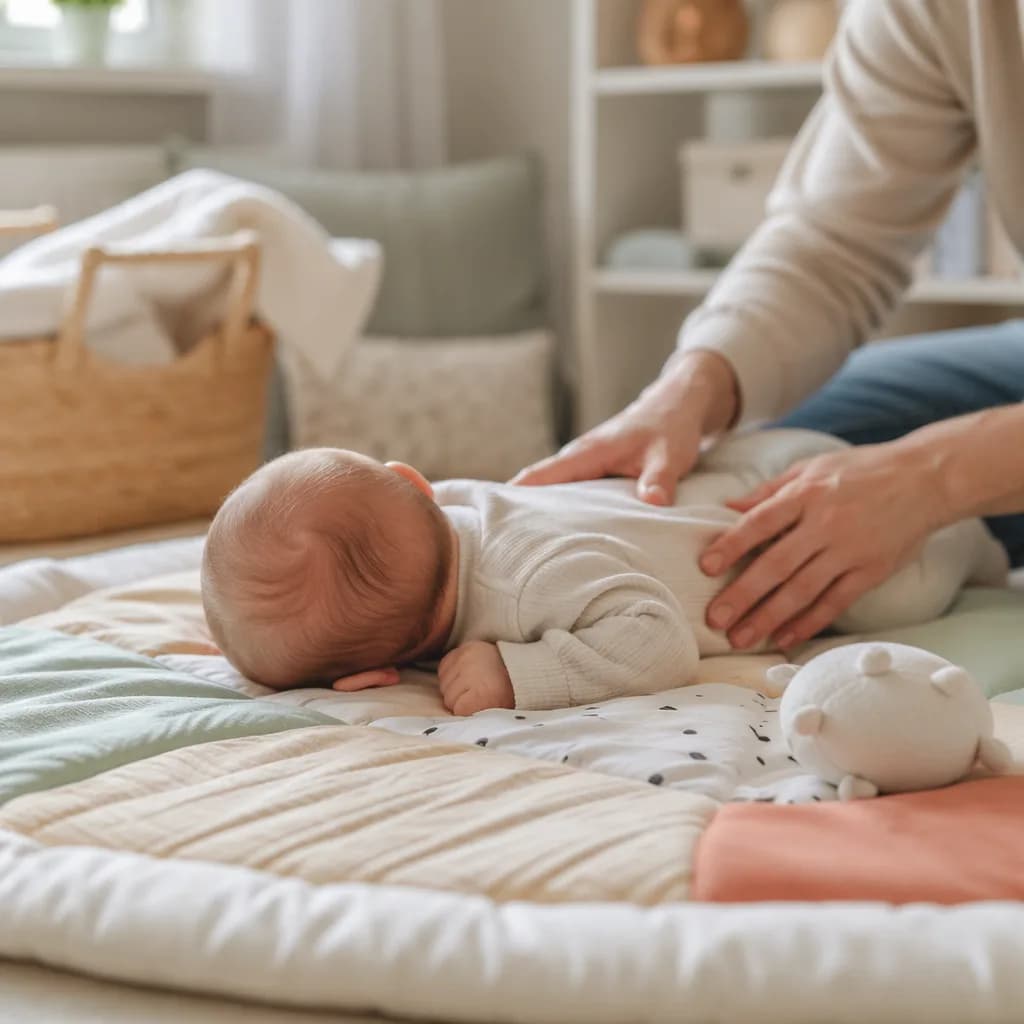
One early sign is pushing up on hands during tummy time. Your baby may lift their head and chest, wobble a bit, then flop back down. That’s work. Hard work.
You might also see rocking back and forth on hands and knees, almost like they’re revving an engine but not going anywhere yet. Some babies pivot in a circle while lying on their belly, turning toward your face, a noise, or a bright toy. Others scoot backward before they figure out forward movement. This can be funny and frustrating, especially when the toy gets farther away instead of closer.
Reaching is another big clue. If your baby stretches for a toy just out of grasp and shifts weight from one arm to the other, they’re practicing the balance and strength that movement needs. Try placing a favorite toy nearby while you sit on the floor with them. A soft board book, a rattle, or even a name card you’re saving from a baby list like Aurora: meaning & origin or Tanmay Suresh Upadhyay: meaning & origin can become the thing they want badly enough to reach for.
And yes, frustration can be part of it. Their desire to move may arrive before the skill does. Stay close, cheer them on, and keep the space safe.
Crawling styles that still count
Crawling doesn’t always look like the classic baby-on-hands-and-knees picture. Some babies do that classic crawl, with hands and knees moving across the floor. Others stay low and pull themselves forward with their forearms, often called army crawling or belly crawling.
You might also see a bear crawl, where your baby’s hands and feet are on the floor but their knees stay lifted. It can look a little wobbly at first, like a tiny workout. Bottom scooting counts too: your baby sits upright and uses their arms to move across the room. Some babies mostly roll to get where they want to go, especially when they’ve spotted something interesting just out of reach, like a soft book or a toy with music.
All of these patterns can fit within normal movement development. Dr. Tomitra Latimer notes that babies don’t all crawl the same way, and some skip crawling altogether and move toward pulling up, cruising, or walking. What we’re usually watching for is steady strength building: arms pushing up, trunk support improving, and movement that uses both sides of the body.
If you’re sitting on the floor reading baby name ideas like Aurora: meaning & origin or saving a longer favorite like Tanmay Suresh Upadhyay: meaning & origin, place a bright toy nearby and let your baby practice reaching, shifting, and moving toward you. Keep it safe. Keep it playful.
How crawling fits with other baby physical milestones
Crawling is one piece of a bigger movement picture, and it doesn’t always arrive in the neat order we expect. Some babies crawl between 8 and 12 months. Some crawl a little earlier or later. Some skip crawling and go straight to pulling up, standing, and cruising along furniture.
Before any of that, babies need strength through the arms and trunk (the chest, belly, and pelvis). Head control is part of that early foundation. When your baby can lift their head and upper body, they can look around, notice you, and begin shifting their weight in small, wobbly ways.
Rolling often shows up as babies are learning how their bodies move on purpose. One day they’re on their back, the next they’ve tipped themselves onto their side reaching for a toy, like a tiny determined explorer named Aurora trying to get closer to something shiny.
Sitting without support matters too. It gives babies practice using their trunk for balance, which they’ll need for scooting, crawling, pulling up, and eventually walking. By 9 months, babies should be able to pull themselves to a sitting position and sit by themselves.
Tummy time helps build the arm strength babies use for movement. When they push up, they’re working hard through their upper body. Those little presses into the floor help prepare them for weight bearing on their hands, whether they end up doing a classic hands-and-knees crawl, a commando crawl, a bear crawl, or a scoot.
Getting onto hands and knees lets babies practice coordination: arms, trunk, balance, repeat. It’s hard work.
Pulling to stand may happen before, during, or after crawling. A baby like Tanmay Suresh Upadhyay might crawl first, while another might prefer cruising along the couch. Both can be part of typical development.
Simple ways to encourage crawling at home
Crawling starts with strength, curiosity, and practice. If your baby is going to crawl, it often happens between 8 and 12 months, but some babies skip crawling and go straight to pulling up, cruising, and walking. So this isn’t about “making” crawling happen. It’s about giving your baby friendly chances to move.
Start with short, frequent tummy time while your baby is awake and supervised. A few cheerful minutes can be plenty, especially if your baby is tired or fussy. Tummy time helps babies use the arm strength and trunk support they need for many kinds of movement, including scooting, crawling, pulling up, and cruising.
Try placing a favorite toy just beyond reach. Close enough to feel possible. Far enough to invite a little effort. A crinkly soft book, a bright rattle, or even a board book you’ve been reading can work well. If you’re browsing baby-name meanings during floor time, something gentle like Aurora: meaning & origin might even become part of the story you tell while they wiggle toward you.
Then get down on the floor face-to-face. Babies love faces, and sometimes a parent’s smile is more motivating than any toy. Lie nearby, talk, sing, or play peekaboo. Keep it light. If your baby turns away or gets frustrated, pause and try again later.
A firm, safe floor surface usually works better than a slippery blanket that bunches under tiny knees and hands. Think clear space, no sharp edges nearby, and room to experiment. Babyproof early, before movement really takes off: cover outlets, latch low cabinets, gate stairs, and secure furniture that could topple.
Limit long stretches in bouncers, swings, and seats when you can, so there’s more time for open floor play. And don’t push your baby into hands-and-knees crawling if they resist. Some babies bear crawl, scoot, commando crawl, crab crawl, or skip crawling altogether.
If you’re worried, bring it up at a well-child visit. Your pediatrician can watch how your baby moves, reaches, sits, and uses their arms. And if you need a calm little reading break afterward, Tanmay Suresh Upadhyay: meaning & origin is there for a quiet scroll.
Babyproofing before crawling starts
Babyproofing is best started before crawling actually happens. Once your baby’s rocking, scooting, or rolling starts to look purposeful, it’s time to look at your home from their height.
Get down on your hands and knees and slowly move through the rooms where your baby spends time. You’ll notice things that are easy to miss from adult height: dangling cords, pet bowls, tiny crumbs, sharp furniture corners, and the older sibling toy that somehow ended up under the couch. A coin near the bookshelf or a hair tie by the changing table can suddenly become very interesting to a baby who’s learning to reach and grab.
Pay close attention to anything your baby could pull on or pull up against. Anchor furniture and TVs to the wall before those early standing attempts begin, because babies use their arms and trunk strength for pulling up, cruising, and walking too. Low shelves, dressers, and media stands deserve a second look.
A few practical steps help right away:
- Put safety gates at the top and bottom of stairs.
- Use gates to block rooms that are off-limits.
- Cover electrical outlets with protectors.
- Secure loose cords so they can’t be tugged or wrapped.
- Move choking hazards out of reach, including coins, button batteries, hair ties, and small toys from older children.
If you’re setting up a nursery or play space while choosing a name like Aurora or Tanmay Suresh Upadhyay, think of safety as part of the same nesting work. A safe space lets your baby practice moving with room to explore.
When to ask your pediatrician
If your baby isn’t crawling, try not to panic. Some babies skip crawling and go straight to pulling up, standing, and cruising while holding furniture. Dr. Tomitra Latimer explains that babies don’t all move through milestones in the same order, which is one reason crawling is no longer listed by the CDC as a developmental milestone.
Still, your gut matters.
Ask your pediatrician for guidance if your baby shows no real interest in moving by around 10 to 12 months, especially if they’re not trying to scoot, pivot, reach, roll, pull forward, or shift their body toward a toy or your face. It’s also worth bringing up anything that looks uneven, like strongly favoring one side, dragging one arm or leg, or moving in a way that seems unusually stiff or floppy.
You’ll also want to talk with your child’s doctor about missed physical milestones. By 9 months, babies should be able to lift their head and upper body, pull themselves into a sitting position, sit by themselves, and use their hands and arms to reach, grab, and move objects from one hand to the other. Those skills matter whether your baby crawls or not.
Call sooner if your baby loses a skill they previously had. For example, if they were sitting steadily and suddenly can’t, don’t wait for the next routine visit.
At a well-child visit, your pediatrician can look at your baby’s strength, muscle tone, coordination, vision, and overall development. If extra support is needed, it doesn’t have to feel scary. Physical therapy for babies is often practical and play-based, with floor time, reaching games, and simple positioning tips you can use at home.
And if you’re up late reading while your baby practices tummy time, a sweet name page like Aurora: meaning & origin or Tanmay Suresh Upadhyay: meaning & origin can be a gentle little break.
Frequently Asked Questions
What is the average age for the baby crawling milestone?
Most babies crawl between 7 and 10 months, but normal timing can vary by several months.
Is it normal if my baby crawls backward first?
Yes. Many babies push backward before they figure out how to move forward.
Do babies have to crawl before they walk?
No. Some babies skip hands-and-knees crawling and go straight to pulling up, cruising, or walking.
What if my 9-month-old is not crawling yet?
That can still be normal, especially if your baby is rolling, sitting, reaching, and showing interest in movement.
Can too much time in seats delay crawling?
Long stretches in seats, swings, or bouncers can reduce floor practice, so supervised floor time helps.
When should I worry about my baby not crawling?
Ask your pediatrician if your baby is not trying to move by 10 to 12 months, favors one side, seems very stiff or floppy, or loses skills.
Frequently asked questions
When do babies usually start crawling?
What are signs my baby may crawl soon?
Do all crawling styles count?
Should I worry if my baby doesn’t crawl?
References
Sources
External research this article was grounded in.