Quick facts
Last updated June 2026
What it means
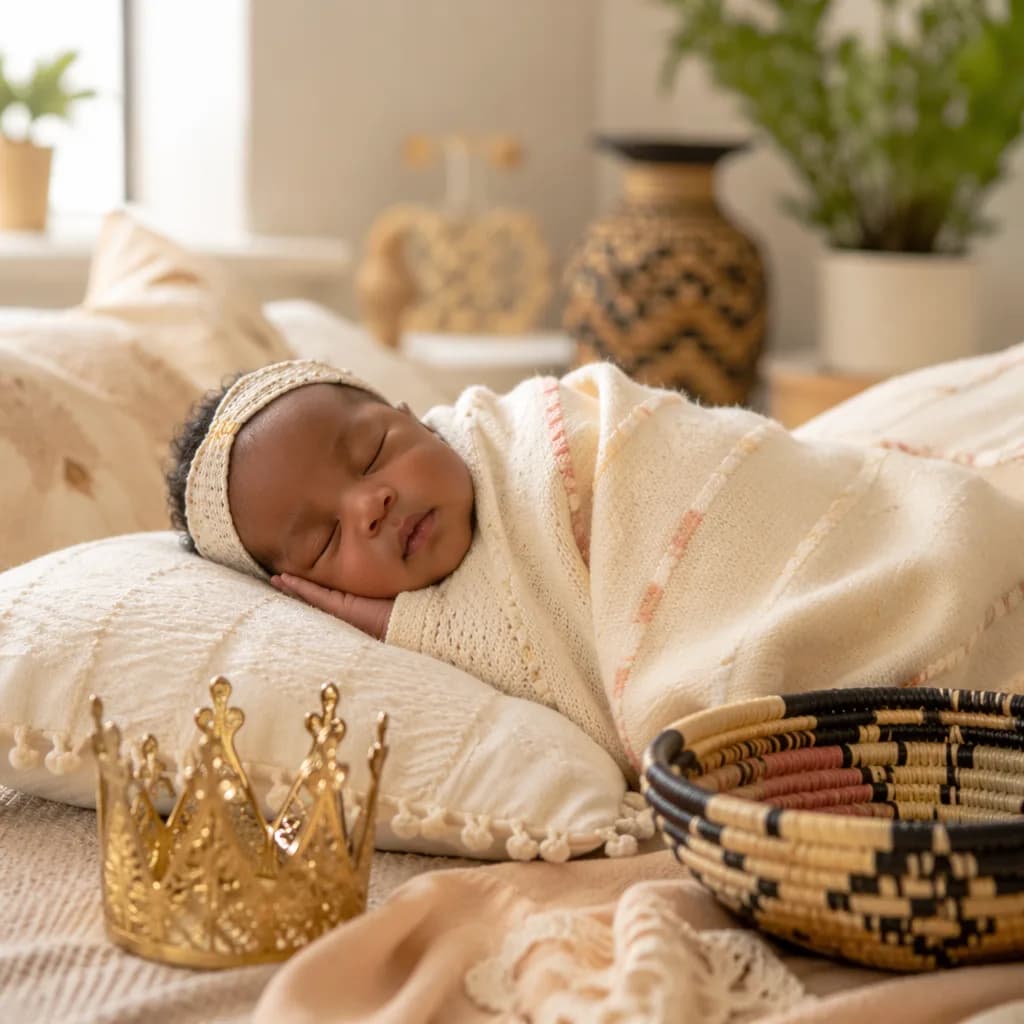
“Adetokunbo is a Yoruba unisex name meaning “the crown or royalty from across the seas” or “the crown or royalty from a foreign land.” The full name, Adetokunbo Oluwadunsin Afolayan, carries a distinctly Yoruba sound and a strong sense of family, faith, and heritage.”
Adetokunbo Oluwadunsin Afolayan is a long, layered Yoruba name with a beautiful lead meaning. The sourced meaning for Adetokunbo is “the crown or royalty from across the seas,” or “the crown or royalty from a foreign land.” That image is tender and grand at the same time: a child connected to royalty, arrival, distance, and belonging. For a parent, it can feel like a name that says, “You came to us with honor, and your story reaches beyond one place.” The name Adetokunbo is described as both a surname and a given name of Yoruba origin. It is built from Adé, meaning “crown” or “royalty,” and Tòkunbọ̀, from a phrase meaning roughly “came by sea and arrived.” The source notes that it is often applied to Yoruba children or people born outside Africa, or connected in some way with life abroad. That makes it especially meaningful for families with diaspora ties, return stories, migration stories, or a child whose identity is rooted in more than one country. Oluwadunsin and Afolayan also sit comfortably within Yoruba naming style, although the provided sources do not give verified meanings for those two parts. Because of that, it’s safest to treat the full name as a culturally Yoruba name whose verified meaning comes from Adetokunbo. In everyday family life, a name this full may be used with warmth and formality at ceremonies, on documents, or during proud introductions, while shorter forms like Ade, Tokunbo, Toks, Dunsi, or Afo may come out at home. What stands out most is the feeling of return and recognition. Adetokunbo doesn’t sound casual. It has weight. It tells a child they are part of a story that crossed water, carried memory, and still arrived with dignity.
Why parents love it
Parents may love Adetokunbo Oluwadunsin Afolayan because it sounds like a name with a full story behind it. It isn’t light or trendy. It has presence. Adetokunbo’s verified meaning, “the crown or royalty from across the seas” or “from a foreign land,” can feel especially tender for families living outside Nigeria, raising children between cultures, or honoring a family path that crossed borders. There’s something powerful about giving a child a name that doesn’t hide that story. It says arrival matters. Heritage matters. This child belongs here, and also carries something from elsewhere. It’s also practical in its own way. The full name is formal and impressive, while the nickname options are friendly. Ade is simple. Tokunbo feels complete. Toks is easy on the playground. Dunsi and Afo offer other family-style choices. If you want a name that feels Yoruba, dignified, and deeply personal, this one gives you a lot to hold onto. It can grow with a child from a tiny hospital bracelet to a graduation program, a passport, a wedding invitation, or a nameplate on an office door.
Heritage
In Yoruba naming culture, names often carry meaning beyond sound. They can point to family history, birth circumstances, hopes, faith, place, and the way a child is received by the wider family. Adetokunbo fits that pattern beautifully because its verified meaning is tied to arrival from across the sea or from a foreign land. For Yoruba families in the diaspora, it can speak to something very real: a child born abroad, a family with roots in southwestern Nigeria, or a life that bridges home and elsewhere. The “Adé” element matters too. In Yoruba names, Adé means “crown” or “royalty,” and it appears in many Yoruba names. That doesn’t have to mean a child is literally royal. For many families, crown imagery can suggest dignity, blessing, inheritance, or the hope that a child will carry themselves with honor. Yoruba names are also strongly oral. Tone, accent marks, and pronunciation matter because Yoruba is tonal, and small sound changes can affect meaning. In English-speaking settings, the diacritics are often left off, so Adétòkunbọ̀ becomes Adetokunbo. That’s practical for forms and school rosters, but families may still teach the full tonal pronunciation at home. There are no universal taboos attached to the name in the provided sources. The main cultural care point is respect: say it fully when asked, don’t shorten it without permission, and understand that a long Yoruba name may be carrying family history, not just style.
Not enough popularity data to chart yet.
The crown meaning in Adetokunbo gives the name a composed, honorable feeling.
Its Yoruba origin and connection to arrival from abroad can feel grounding for a child with a rich family story.
A name linked with crossing seas and arriving in a new place naturally suggests flexibility and strength.
The length and layered sound of the full name give it a reflective, meaningful quality.
Adetokunbo carries a sense of heritage that can help a child feel proud of where they come from.
Original
Adétòkunbọ̀ Oluwadunsin Afolayan
Transliterations
Grace adds a familiar, gentle English-language middle that balances the longer Yoruba names.
James is short and classic, which helps the full name feel clear on forms and introductions.
Pearl echoes the name’s sea imagery in a soft, subtle way.
Miles has a travel feeling that pairs nicely with Adetokunbo’s meaning of arrival from across the sea.
Hope keeps the middle spot simple while adding warmth and optimism.
Pair two names and see how they sound, flow, and feel together.
Generate a soothing personalised bedtime story starring your child.
Reveal the life-path and destiny numbers hidden in a baby name.
Playful, name-based personality sketch to share with friends.
No stories for Adetokunbo Oluwadunsin Afolayan yet. Be the first!