Quick facts
Last updated June 2026
What it means
“Atara is a Hebrew girl name meaning "crown" or "diadem." It comes from the Hebrew עֲטָרָה or עטרה, a word tied to honor, beauty, and something worn with dignity.”
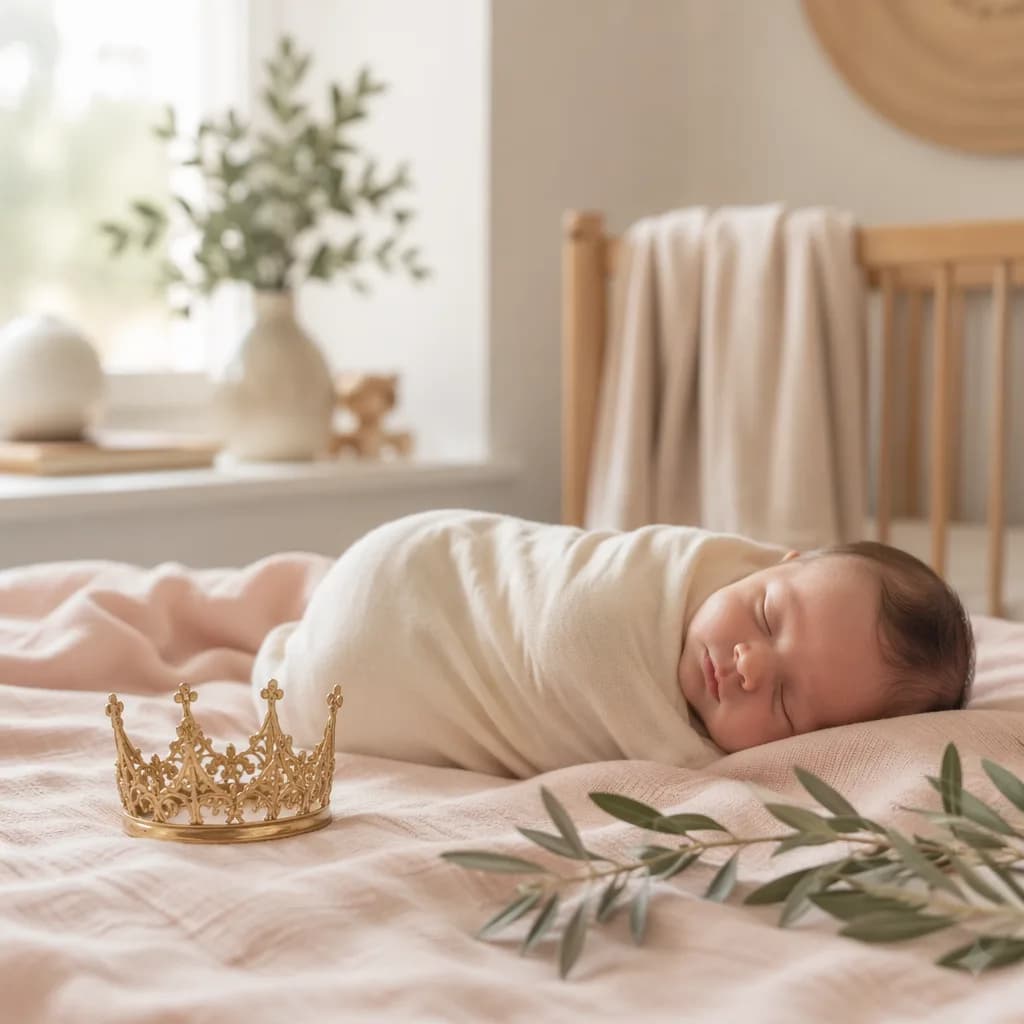
Atara is one of those names that feels gentle at first, then stronger the longer you sit with it. Its Hebrew meaning is usually given as "crown" or "diadem," from עֲטָרָה, and that meaning gives the name a quiet sense of honor. Not flashy. Not loud. More like the small gold crown in a storybook that tells you someone is cherished, capable, and seen. Behind the Name identifies Atara as the Hebrew form of Atarah, with usage in Hebrew and Biblical Hebrew. ALMO also lists Atara, written עטרה, as a Hebrew biblical girl name meaning "crown" or "diadem." Those two meanings are very close, but they carry slightly different feelings. A crown can suggest dignity, responsibility, and beloved status. A diadem feels more delicate, almost like a jeweled band. For parents, that can make Atara feel both regal and tender. The biblical connection adds another layer. ALMO notes that Atara appears in the Bible as the wife of Jerahmeel from the tribe of Judah. That doesn't make the name as instantly familiar as Sarah, Leah, or Miriam, but it does place it within the long naming tradition of Hebrew scripture. It has roots. In English-speaking families, Atara has an accessible rhythm: ah-TAH-rah. It looks simple on paper, with five letters and open vowel sounds, but it still feels distinctive. It isn't a name you hear in every preschool cubby row. A child named Atara might occasionally explain the pronunciation once, but the spelling is tidy and memorable. Atara also works nicely for families who want a Hebrew name with a clear meaning and a graceful sound. It has the softness of names like Amara and Adara, but its meaning gives it a firmer backbone. A crown isn't just pretty. It marks value, identity, and belonging.
Why parents love it
Parents are often drawn to Atara because it gives you a lot in a small package. Five letters. Three clear syllables. A meaning that lands right away: "crown" or "diadem." That can feel especially sweet for a daughter, because the name says she is cherished without making her name sound overly frilly. Atara also has that rare mix of ancient and fresh. It is rooted in Hebrew and Biblical Hebrew, and ALMO notes its biblical use as the name of the wife of Jerahmeel from the tribe of Judah. Still, in many English-speaking classrooms, it will sound new. That means your child gets a name with history, but she probably won't be one of four Ataras in her grade. It fits many styles, too. If you like Talia, Amara, Adara, or Eliana, Atara may sit beautifully on your list. It has the same open, musical sound, but the crown meaning gives it a little more weight. I also love that it grows well. Atara works for a toddler in rain boots, a teen signing her artwork, and an adult introducing herself in a meeting. It has sweetness, but it doesn't stay babyish.
Heritage
Atara sits in a meaningful place for many Jewish and Hebrew-name-loving families because it is both a word name and a biblical name. In Hebrew, עטרה means "crown" or "diadem," so the name can feel like a blessing spoken over a daughter: may she know her worth, carry herself with dignity, and be surrounded by love. That is a tender thing to put into a name. ALMO identifies Atara as biblical and notes its appearance as the wife of Jerahmeel from the tribe of Judah. This is not one of the best-known biblical women, so the name may feel more tucked away than familiar favorites like Hannah or Abigail. For some parents, that is exactly the appeal. It has scriptural roots without sounding heavily used. In Jewish naming, meanings often matter. A name connected with a crown can suggest honor, beauty, and responsibility. It may also remind some families of the way Hebrew names can carry both everyday word meaning and spiritual feeling. Atara can fit comfortably in a Hebrew-speaking, Jewish, interfaith, or meaning-focused family, as long as parents are thoughtful about the cultural source and pronunciation. There are no broad taboos attached to Atara in the sources provided. The main practical consideration is pronunciation. English speakers may try uh-TAR-uh or AH-tuh-ruh at first, so a parent who loves the Hebrew feel may want to gently model ah-TAH-rah.
Not enough popularity data to chart yet.
Because Atara means "crown" or "diadem," the name naturally suggests a child who is valued and carries herself with quiet pride.
The image of a diadem gives Atara a graceful, carefully made feeling, like something beautiful without being showy.
Its biblical Hebrew roots give the name a grounded quality that feels calm and lasting.
Atara is easy to say once heard, but uncommon enough in English-speaking settings to feel special.
Original
עֲטָרָה
Transliterations
Rose softens Atara with a familiar floral note while keeping the whole name graceful and easy to say.
Miriam gives the pairing a deeply traditional Hebrew feel and a strong, maternal warmth.
Noelle adds a gentle, melodic sound that balances Atara's bright second syllable.
Lielle keeps the Hebrew style and gives the full name a lilting, songlike finish.
Jane is crisp and classic, letting Atara's meaning and sound stay front and center.
Simone adds polish and depth, making the full name feel elegant without being fussy.
Pair two names and see how they sound, flow, and feel together.
Generate a soothing personalised bedtime story starring your child.
Reveal the life-path and destiny numbers hidden in a baby name.
Playful, name-based personality sketch to share with friends.
No stories for Atara yet. Be the first!