Quick facts
Last updated June 2026
What it means
“Capucine is a French girl name meaning “nasturtium,” a bright garden flower. In French, it is pronounced roughly ka-py-SEEN, with a soft, elegant finish.”
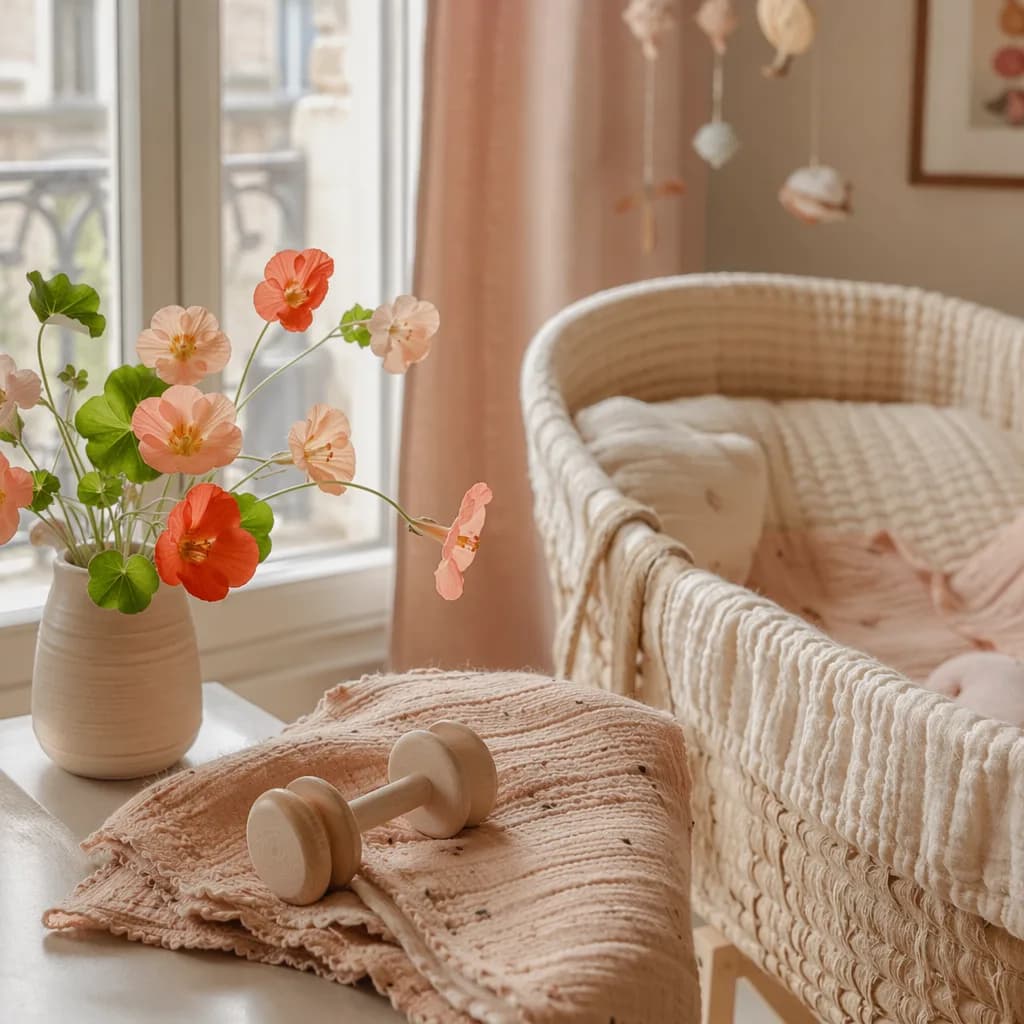
Capucine is one of those French flower names that feels polished without feeling fussy. Its direct meaning is “nasturtium,” the cheerful edible flower known for rounded leaves and vivid blooms, often in orange, yellow, and red. If you like botanical names such as Violet, Marguerite, Fleur, or Eglantine, Capucine sits in that same garden, but it has a more distinctly French sound. The name comes from the French word capucine, used for the nasturtium flower. English speakers often say cap-oo-SEEN, which is close enough for everyday use, though the French pronunciation has a rounded “u” sound that does not exist neatly in English. That little difference is part of the name’s charm. It gives Capucine a graceful, continental feel while still being readable once people have heard it once. As a meaning, “nasturtium” gives the name a sunny, spirited quality. Nasturtiums are not delicate hothouse flowers. They’re bright, useful, and wonderfully alive, the kind of plant a child might notice spilling over a garden wall. For parents, that can make Capucine feel like a name for a girl with color, confidence, and a bit of spark. Capucine also has a glamorous French association through the actress and model Germaine Hélène Irène Lefebvre, who used Capucine as her stage name. She was known for films including The Pink Panther and What’s New Pussycat? That connection adds a vintage cinema note, but the name itself still feels fresh because it has never been common in the United States. In France, Capucine has more everyday usability than it does in English-speaking countries. Source data places it at #61 in France in 2024, which suggests parents there hear it as stylish and familiar, not strange. For an English-speaking family, it’s rarer and more distinctive, a floral French name with warmth, brightness, and a little old-movie glamour.
Why parents love it
Parents choose Capucine because it has that rare mix of sparkle and substance. It is a real French name with a real botanical meaning, so it does not feel made up, but in English-speaking settings it still feels wonderfully unexpected. If you’ve ever loved the sound of Genevieve, Clementine, or Colette but wanted something less common, Capucine may be exactly the kind of name that makes you pause. The meaning helps, too. “Nasturtium” is bright and lively, not pale or precious. Picture a child in yellow rain boots pointing out orange flowers in a neighbor’s garden. That is the kind of energy Capucine carries: colorful, curious, a little bold. It also grows up well. Cappie or Cici can be sweet for a toddler, while Capucine has enough elegance for an adult signing a book, opening a gallery, teaching a class, or walking into an interview. The name asks for a quick pronunciation note in many English-speaking places, but once people hear it, they tend to remember it. If you want a girl name that feels French, floral, artistic, and uncommon without losing warmth, Capucine is a lovely choice.
Heritage
Capucine belongs to the French tradition of nature and flower names, but it has a slightly different mood from softer choices like Rose or Camille. Because it means “nasturtium,” it brings to mind a garden flower that is colorful, lively, and practical. Nasturtiums are often grown for their bright blossoms, and the name carries that same sunny garden feeling. There is no major religious requirement, feast day, or sacred tradition attached to Capucine in the source material. That can actually make it easier for many families. It reads as cultural and botanical rather than tied to one faith. A Catholic, Jewish, secular, or mixed-faith family could use it without feeling as if they’re borrowing a specifically religious name. In French-speaking settings, Capucine is recognizable as a feminine given name. Nameberry’s data lists it at #61 in France in 2024 and #98 in Belgium in 2020, so it has real usage in places where French names are at home. In the United States, it is much rarer. Nameberry notes that Capucine peaked for girls at #3419 in 1965 and does not show it in the US Top 1000. The main cultural caution is pronunciation. English speakers may pause at first, and some may say CAP-yoo-seen or cap-uh-SEEN. A quick “It’s cap-oo-SEEN, like the French flower name” usually clears it up. If you love French names and don’t mind teaching it once, Capucine offers a name that feels bright, cultured, and memorable.
Not enough popularity data to chart yet.
The nasturtium meaning gives Capucine a bright, garden-lit feeling, like a child who brings color into a room.
Its French sound and vintage actress association make the name feel naturally creative and expressive.
Capucine is familiar in French usage but rare in the United States, so it suits a child with a memorable presence.
The flower meaning keeps the name from feeling cold or overly formal, even though it sounds elegant.
With three clear syllables and a strong final sound, Capucine has a poised, self-possessed rhythm.
Original
Capucine
Rose is short and familiar, which balances Capucine’s rare, distinctly French style.
Elise keeps the French feeling soft and musical without making the full name too elaborate.
Mae gives the name a sweet, simple landing, especially with a longer surname.
Claire adds brightness and clarity, pairing beautifully with the flower meaning.
Margot has the same chic French feel and makes the full name sound stylish and grounded.
Noelle adds a gentle, festive note and works well if you want a clearly French pairing.
Pair two names and see how they sound, flow, and feel together.
Generate a soothing personalised bedtime story starring your child.
Reveal the life-path and destiny numbers hidden in a baby name.
Playful, name-based personality sketch to share with friends.
No stories for Capucine yet. Be the first!