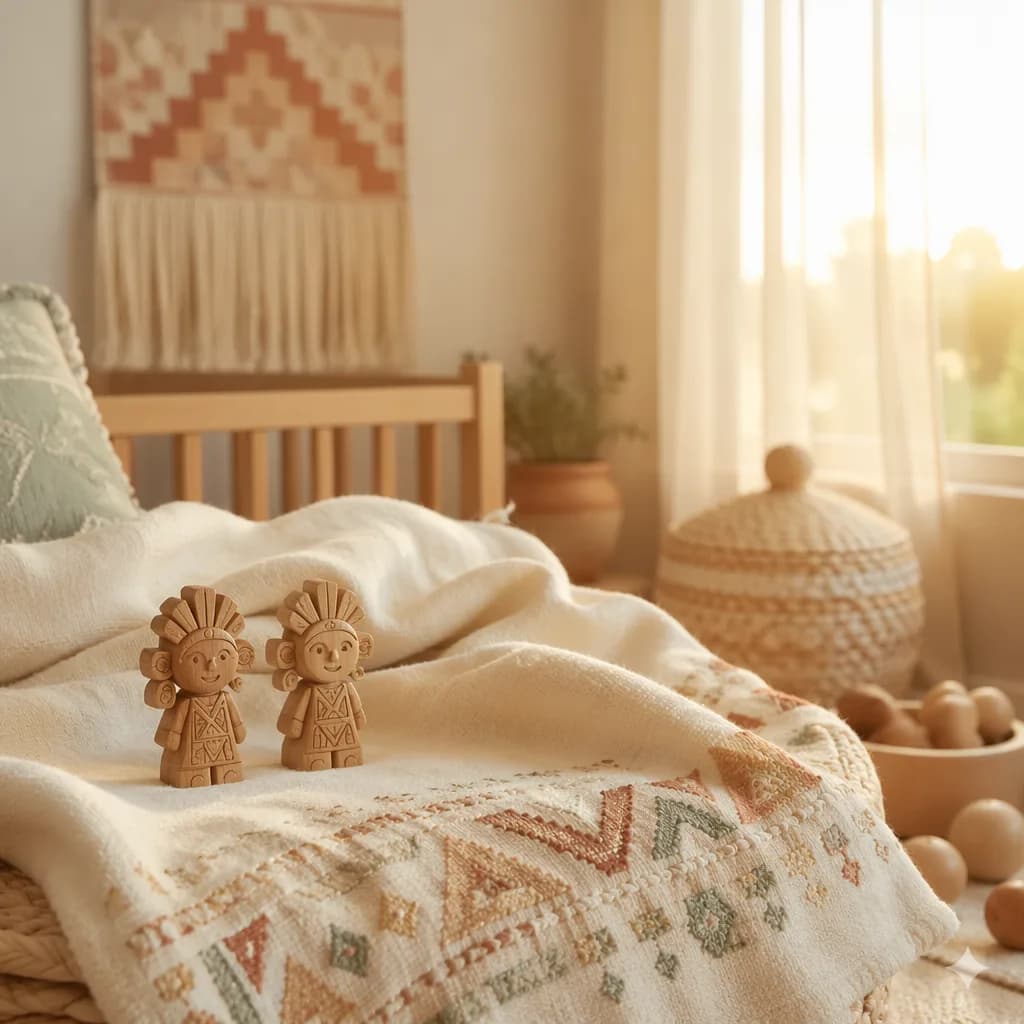
Quick facts
Last updated July 2026
What it means
“Hunahpu is best known as the name of a Maya Hero Twin in the K'iche' Maya story cycle recorded in the Popol Vuh. The exact etymology was not verified in the supplied sources, so its meaning is best treated with care rather than reduced to a simple phrase.”
Hunahpu is a rare and culturally weighty name, the kind that asks parents to slow down and learn before using it. It is most widely recognized through Maya tradition, especially the K'iche' Maya narrative commonly known through the Popol Vuh, where Hunahpu appears as one of the Hero Twins. Because the research excerpts supplied here do not verify a literal etymology, it would be irresponsible to present one as settled fact. For a baby-name page, the safest meaning is contextual: Hunahpu is a name tied to heroic myth, sacred storytelling, trial, cleverness, and renewal within Maya cultural memory. For parents, that makes the name feel very different from a name chosen only for sound. Hunahpu has a strong, bright rhythm: three syllables, a clear opening, and a memorable ending. It doesn't blend into current classroom favorites. If you imagine calling it across a playground, it has presence. It sounds ancient, direct, and alive. The broader origin is Indigenous American, specifically connected with Maya culture rather than a single broad Native American language family. That distinction matters. Native American is often used as a large umbrella, but the peoples, languages, and traditions of the Americas are incredibly varied. A Maya name is not interchangeable with a Navajo, Lakota, Cherokee, Quechua, or Nahuatl name. If your family has Maya heritage, Hunahpu may feel like a meaningful link to story, ancestry, and resilience. If your family does not, it is still possible to appreciate the name, but it is wise to approach it with humility, accurate context, and a willingness to teach your child where the name comes from. There are not many familiar spelling variants in everyday English use. You may see the name written without accent marks or special characters because English baby-name lists usually simplify Indigenous-language names into plain Latin letters. Hunahpu itself is already the most recognizable English spelling. Its rarity is part of its appeal, but it also means your child may often explain pronunciation and background. For some families, that is a beautiful built-in story. For others, it may feel like too much.
Why parents love it
Parents are drawn to Hunahpu because it has a story-filled presence you can feel right away. It is not soft background music. It is a name people notice, ask about, and remember. That can be a gift for the right child and the right family. Hunahpu gives you a chance to pass along a name with depth instead of choosing something only because it sounds current. Its connection with Maya heroic narrative gives it an atmosphere of courage, intelligence, and transformation. A parent might love that the name suggests a child who thinks carefully, gets back up, and meets hard things with a steady heart. It also pairs better than you might expect. With a familiar middle, such as James or Elias, Hunahpu feels grounded. With a warmer middle, such as Mateo or Rafael, it keeps a strong Latin American sound. For siblings, you might choose names that feel equally rooted or nature-bright: Ixchel for a sister, Balam for a brother, or simple word names like Sol and Rio if you want something easier beside it. The main reason to choose Hunahpu is not rarity alone. Rarity is nice, but meaning matters more. Choose it if you’re ready to honor its Maya context, say it confidently, and give your son a name with a real story attached.
Heritage
Hunahpu carries cultural significance because it is associated with Maya sacred narrative, not because it has been a common modern given name in English-speaking countries. The best-known context is the Hero Twins story preserved in the Popol Vuh, a major K'iche' Maya text. In that story tradition, the twins are linked with courage, wit, contest, death, return, and cosmic order. Those are big themes for a child’s name, and they deserve more than a quick one-line definition. For many Indigenous names, respect begins with specificity. Saying Hunahpu is “Native American” is a starting label, but it is too broad on its own. A more careful description is that the name is connected with Maya culture, especially K'iche' Maya tradition as known through the Popol Vuh. Parents who choose it may want to learn how Maya communities themselves speak about these stories today, because living cultures are not museum pieces. They have languages, families, faith practices, scholars, artists, and everyday life. There are also good reasons to be thoughtful about use. Names tied to sacred stories can feel deeply meaningful, but they can also feel sensitive when used without background or connection. If you have Maya ancestry, Hunahpu may honor a thread of identity that deserves to be spoken proudly. If you do not, consider how you will answer your child’s questions later: Why did you choose this name? What does it mean to the people it comes from? Did we learn from respectful sources? A practical example helps. If your son is named Hunahpu and a teacher asks about it, you might say, “It’s a Maya name known from the Hero Twins story in the Popol Vuh. We chose it because we love its connection to courage and cleverness, and we’re careful to describe its origin accurately.” That answer is simple, warm, and respectful.
Not enough popularity data to chart yet.
Hunahpu’s story association gives the name a brave, questing feeling without making it sound harsh.
The name fits a child you imagine solving problems with patience, humor, and a sharp eye.
Its ancient cultural roots give Hunahpu a steady feeling that is far from trendy.
Because Hunahpu is rare in everyday use, it leaves a strong impression after one hearing.
Choosing this name well means carrying its background with care, which gives it a thoughtful spirit.
Transliterations
James gives the rare first name a familiar, steady middle that is easy for many families to use.
Mateo has a warm Spanish-language feel and pairs smoothly with Hunahpu’s open vowel sounds.
Elias keeps the full name gentle and lyrical while still feeling strong.
Rafael adds a classic, graceful middle with a cross-cultural sound.
Kai is short and bright, which balances Hunahpu’s length and mythic weight.
Orion echoes the name’s big-story feeling without claiming the same cultural background.
Pair two names and see how they sound, flow, and feel together.
Generate a soothing personalised bedtime story starring your child.
Reveal the life-path and destiny numbers hidden in a baby name.
Playful, name-based personality sketch to share with friends.
No stories for Hunahpu yet. Be the first!