Quick facts
Last updated June 2026
What it means
“Marina is the feminine form of Marinus, a Roman family name later associated with the Latin marinus, meaning "of the sea." In Spanish, it has a clear, graceful sound: ma-REE-na.”
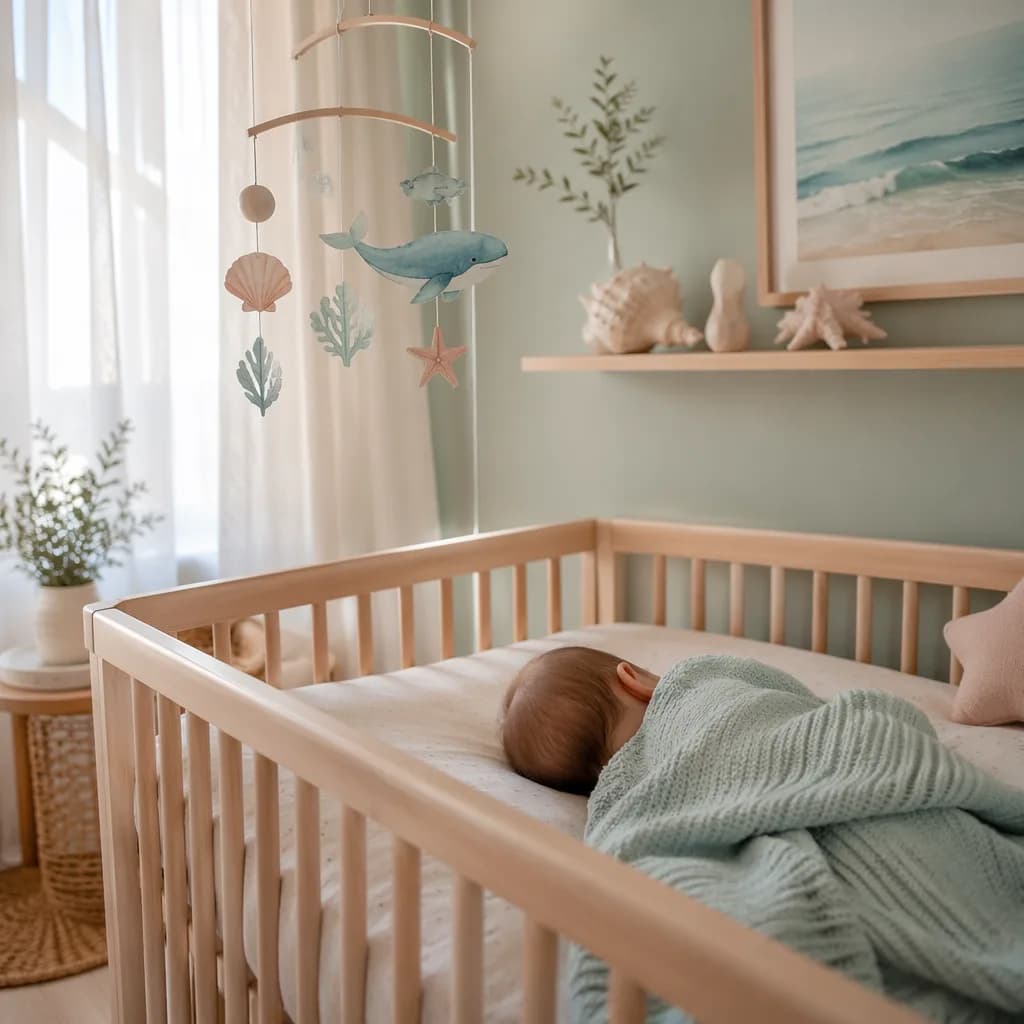
Marina is one of those names that feels both old and fresh, which is a lovely combination for a child. Its roots go back to Marinus, a Roman family name connected to Marius. The older meaning of Marius is uncertain. It may be linked with Mars, the Roman god of war, or with the Latin word maris, meaning "virile." Over time, though, Marina became closely associated with marinus, the Latin word meaning "of the sea," and that sea meaning is the one most parents recognize today. For a Spanish-speaking family, Marina has a natural rhythm: ma-REE-na, with the soft Spanish r in the middle. It is easy to say, easy to spell, and familiar across many languages. Behind the Name lists Marina as used in Spanish, Italian, Portuguese, Catalan, Greek, Russian, Romanian, Croatian, Serbian, Swedish, German, English, and more. That wide use gives the name a passport-like quality. A girl named Marina can move between cultures without her name feeling out of place. The name also has religious depth. Marina was borne by a few early saints, and Saint Margaret of Antioch is known as Marina in the Eastern Orthodox Church. That gives the name a quiet sacred history without making it feel overly formal. What many parents love most is the image Marina carries. "Of the sea" can suggest calm water, bright coastlines, salt air, and strength that doesn’t need to be loud. It’s feminine, but not frilly. Classic, but not tired. Marina feels like a name for a thoughtful child who might collect shells in her pocket, ask big questions, and grow into someone with steady confidence.
Why parents love it
Parents often choose Marina because it feels graceful without trying too hard. It has that rare mix of familiar and uncommon: people recognize it, but it usually doesn’t feel overused in a classroom. In Spanish, ma-REE-na is smooth and musical, with three clear syllables that are easy for grandparents, teachers, and little siblings to say. The sea meaning is a big part of the appeal. If your family has a beach memory you return to every summer, or if you simply love names with nature built in, Marina gives you that connection in a polished way. It doesn’t sound like a word name first. It sounds like a person’s name, then opens into the image of water, coast, and light. Marina also grows beautifully. It’s sweet on a toddler in sandals, serious enough on a college application, and elegant on an adult. Nicknames like Mari, Rina, and Ina give you options, but the full name is strong enough that she may never need one. For parents looking for a Spanish girl name with Latin roots, saintly history, and a calm coastal feeling, Marina is a lovely choice.
Heritage
Marina has a gentle Spanish elegance, but it belongs to a much wider cultural story. It is used in many European languages, including Spanish, Italian, Portuguese, Catalan, Greek, Russian, Romanian, Croatian, Serbian, German, Swedish, Dutch, and English. That matters for families with mixed heritage or international relatives, because Marina usually feels recognizable without needing much explanation. The name’s religious background is also meaningful. Sources note that Marina was borne by a few early saints, and in the Eastern Orthodox Church, Saint Margaret of Antioch is known as Saint Marina. For Christian families, this can give the name a subtle spiritual layer. It isn’t a name that shouts its religious ties, but the history is there if you want it. In Spanish and Latin American history, one famous and complicated bearer is Doña Marina, also known as La Malinche. According to the EBSCO excerpt, she was born Malinalli and became an interpreter, negotiator, and cultural intermediary for Hernán Cortés during the Spanish conquest of the Aztec Empire. Her legacy is debated, especially in Mexico, where she has been viewed in sharply different ways over time. For most parents, Marina is not defined by that history, but it is a real cultural association worth knowing. There are no broad taboos against using Marina. It reads as feminine, polished, coastal, and classic. In Spanish, it also has the everyday meaning connected to the sea or navy, so the name may feel especially fitting for families who love the ocean.
Not enough popularity data to chart yet.
Marina’s sea association gives it a peaceful, steady feeling, like someone who can bring the temperature down in a busy room.
The name has a reflective sound, soft at the edges but clear in the middle, which suits a child who notices details.
Because Marina works across many languages, it carries the feeling of someone comfortable in different places and groups.
Its Roman roots and saintly history give Marina more backbone than its gentle sound first suggests.
Original
Marina
Transliterations
Isabel adds a classic Spanish finish and balances Marina’s open, ocean-like sound.
Celeste keeps the imagery airy and blue without feeling too matchy.
Luz is short and bright, giving the full name a clean, memorable rhythm.
Sol feels warm beside Marina and creates a simple coastal image.
Beatriz brings a literary, traditional feel that makes Marina sound especially elegant.
Pair two names and see how they sound, flow, and feel together.
Generate a soothing personalised bedtime story starring your child.
Reveal the life-path and destiny numbers hidden in a baby name.
Playful, name-based personality sketch to share with friends.
No stories for Marina yet. Be the first!