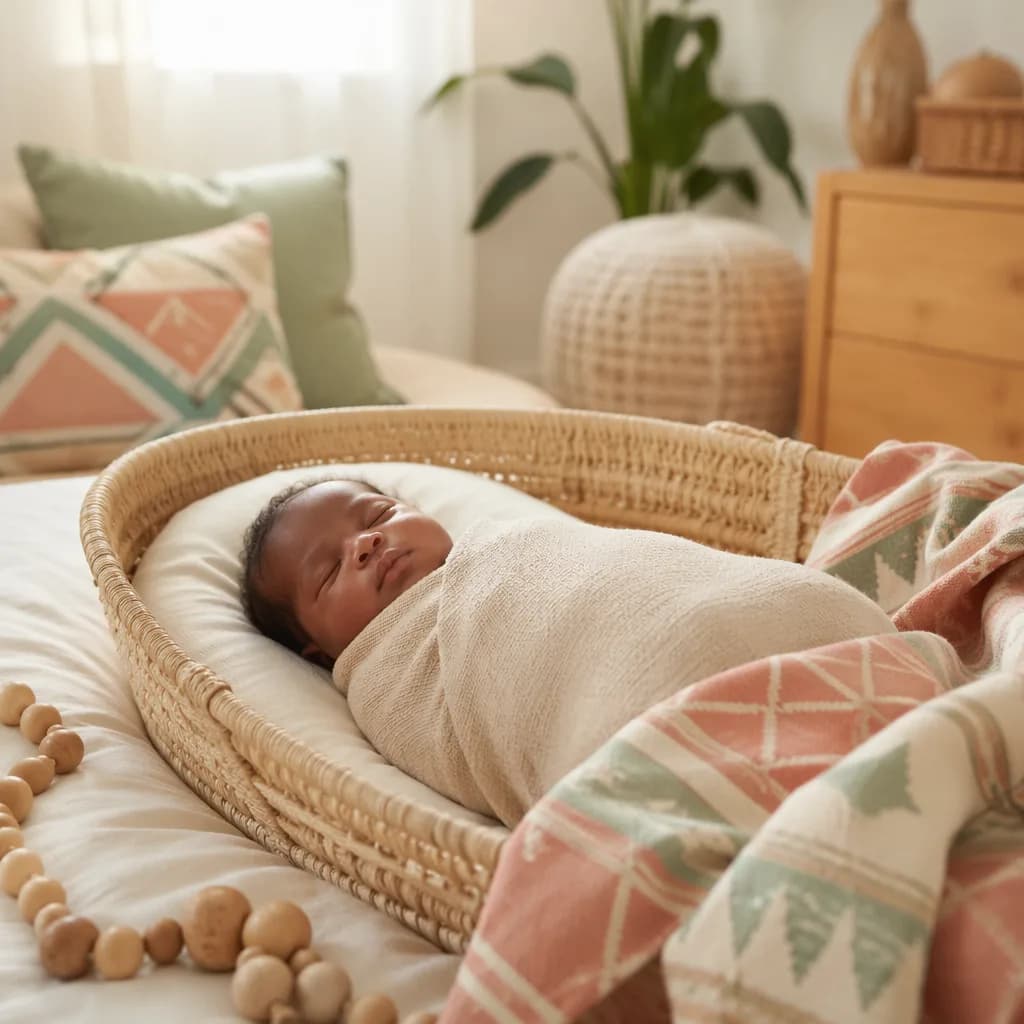
Quick facts
Last updated June 2026
What it means
“Morenike is a Yoruba feminine name meaning “I have found one to cherish” or “I am cherished.” It comes from Southwest Nigeria and carries a tender sense of being loved, nurtured, and gladly received.”
Morenike is a Yoruba girl’s name with a meaning that feels especially tender for a child: “I have found one to cherish” or “I am cherished.” The Yoruba form is often written with tone marks as Morẹ́nikẹ́, which helps show the sounds more accurately. In the source breakdown, the name is connected to mo, meaning “I,” rí, meaning “see” or “find,” ẹni, meaning “person,” and kẹ́, meaning “cherish,” “nurture,” “pet,” or “care for.” Put together, the name has the feeling of a parent looking at a child and saying, “Here is someone precious. Here is someone to care for.” That’s a lovely thing for a name to carry. It isn’t loud or showy. It’s affectionate, grounded, and full of family feeling. Morenike can suggest that a baby is welcomed with softness, gratitude, and attention, the kind of name that sounds like it was chosen after a long look at a newborn’s face. The name is Yoruba in origin, with roots traced to Southwest Nigeria. A related short form or variant seen in the source material is Renike, and other related forms include Morẹ́ni and Ọmọ́reni. These forms keep close to the same emotional center: affection, care, and being treasured within the family. In the full name Morenike Oluwaseun Akinrele, Morenike sits beautifully as the personal given name. Because the provided sources specifically document Morenike, the meaning here is grounded in that part of the name. The whole name has a strong Yoruba identity, and Morenike gives it a gentle first impression: cherished, cared for, and deeply wanted.
Why parents love it
Parents love Morenike because it says something every child deserves to hear: you are cherished. It’s affectionate without feeling fragile, meaningful without feeling heavy, and deeply rooted in Yoruba language and culture. The sound is lovely too. Morenike has four clear beats, moh-reh-NEE-kay, so it feels musical when you say it aloud. If you’re choosing Morenike Oluwaseun Akinrele, the first name gives the whole combination a warm emotional center. It feels like a name chosen with care, not pulled from a list in a hurry. It also offers sweet everyday options. Reni feels soft and modern. Nike is short and bright. Moreni keeps more of the full name’s shape. Morenike is especially appealing for parents who want a Yoruba name that travels well. In English-speaking settings, people may need a little help at first, but the pronunciation is friendly once they hear it. A teacher can learn it. A grandparent can sing it. A child can grow into it with pride. Most of all, Morenike gives a daughter a message she can carry for life: she is someone to cherish.
Heritage
Morenike belongs to the Yoruba naming tradition, where names often carry meaning, family feeling, and a sense of intention. The sourced origin places Morenike in Yoruba culture and Southwest Nigeria, and its meaning, “I have found one to cherish” or “I am cherished,” fits the warm, relational style many parents love in Yoruba names. It sounds like a blessing spoken over a child before she can understand the words herself. For many families, a name like Morenike is more than a pretty sound. It can express how a child is received: with care, delight, and a promise to nurture her. The element kẹ́, glossed in the source as “cherish,” “nurture,” “pet,” or “care for,” gives the name a very hands-on sort of love. Think of a parent smoothing a baby’s hair after feeding her at 2 a.m. That’s the feeling this name can carry. The tone-marked spelling, Morẹ́nikẹ́, also matters culturally because Yoruba is a tonal language. Tone marks help readers pronounce and understand names more precisely. In everyday use, many people write Morenike without the marks, especially in English-language settings, but families who use the marks may be preserving an extra layer of Yoruba sound and identity. No specific religious rule or taboo is documented in the provided sources for Morenike. What is supported is its Yoruba origin, feminine use, Southwest Nigerian connection, and affectionate meaning.
Not enough popularity data to chart yet.
Morenike’s meaning centers on cherishing and care, so it naturally suggests a warm, loving presence.
The Yoruba element kẹ́ is connected with nurturing and caring for someone, which gives the name a gentle protective feeling.
Its roots in Yoruba language and Southwest Nigeria give the name a strong sense of place and belonging.
The four-syllable rhythm of Morenike feels smooth, musical, and quietly elegant.
Because the name can mean “I am cherished,” it carries the feeling of a child who is deeply valued.
Original
Morẹ́nikẹ́ Oluwaseun Akinrele
Transliterations
Ayomide has a bright, joyful sound beside the affectionate softness of Morenike.
Temilade keeps the Yoruba feel strong and gives the full name a graceful, flowing rhythm.
Adeola is crisp and melodic, which balances Morenike’s longer four-syllable shape.
Simisola pairs gently with Morenike and gives the name a warm, lyrical finish.
Oluwaseun is part of the requested full name and sits naturally after Morenike in sound and style.
Pair two names and see how they sound, flow, and feel together.
Generate a soothing personalised bedtime story starring your child.
Reveal the life-path and destiny numbers hidden in a baby name.
Playful, name-based personality sketch to share with friends.
No stories for Morenike Oluwaseun Akinrele yet. Be the first!