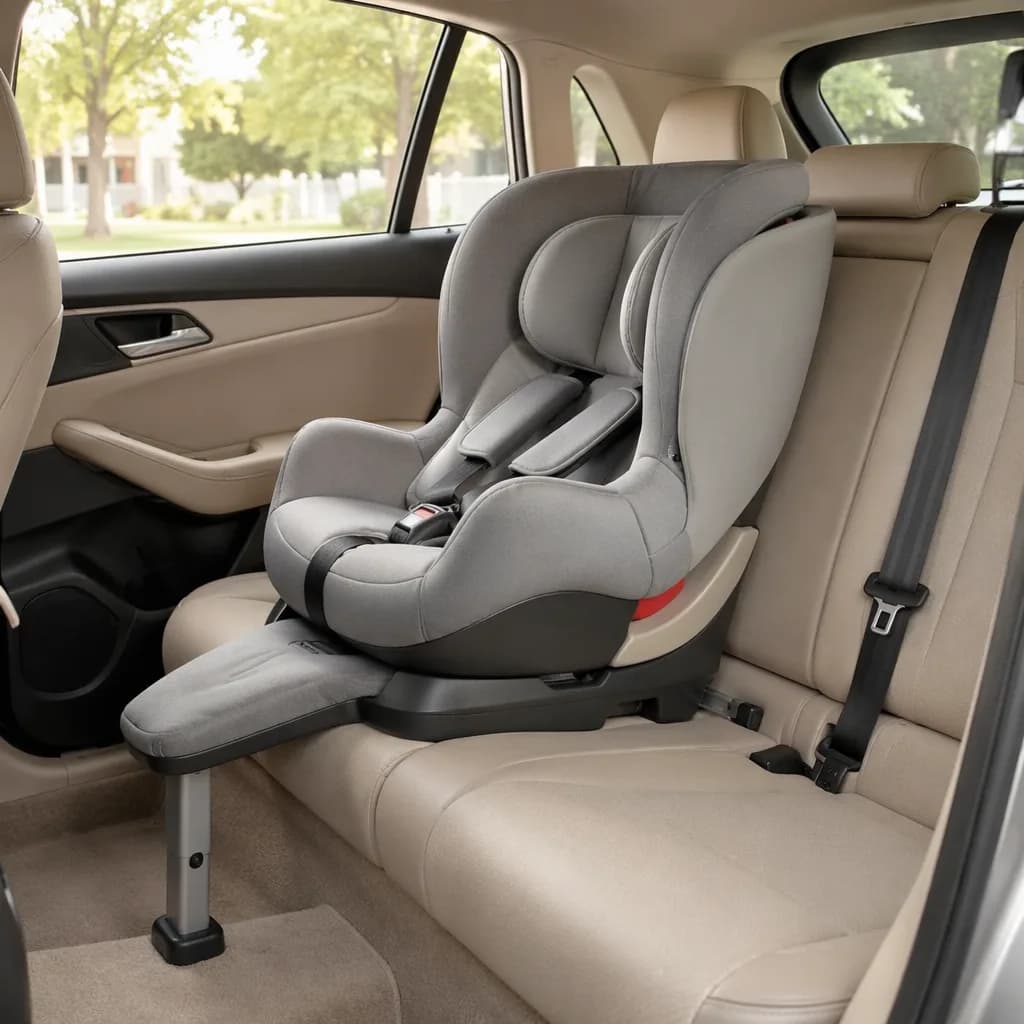
Specs at a glance
- expiration
- 10 years
- rearFacingUpTo
- 50 lb
- weightCapacity
- 65 lb
The Graco Extend2Fit is best understood as a convertible car seat for families who want to keep a child rear-facing longer before moving to forward-facing harness use. The provided specs list a 50 lb rear-facing limit, 65 lb overall weight capacity, and 10-year expiration, which makes it a long-use harnessed option rather than a short-term infant seat. Source excerpts highlight its extendable legroom panel and its focus on rear-facing comfort for growing toddlers. Review sources also praise its LATCH installation, comfort for the price range, and crash-test analysis results, while noting that it is not an all-in-one booster solution in the basic convertible form. It is a strong fit for parents prioritizing extended rear-facing, but families wanting one seat through booster age should compare versions carefully.
Our in-depth review
Bottom line
The Graco Extend2Fit is a strong choice for parents whose main priority is keeping a child rear-facing longer in a harnessed convertible seat. The provided specs list rear-facing use up to 50 lb, a 65 lb weight capacity, and a 10-year expiration. Those three facts shape the appeal of this seat: it is meant to last through important harnessed stages, especially for families who do not want to rush the forward-facing transition.
The source excerpts also point to why this seat has become popular. Car Seat VS describes the Extend2Fit as being built to go beyond many convertible seats that cap rear-facing use at 40 lb, and it specifically mentions an extendable legroom panel designed for growing toddlers. BabyGearLab, reviewing the Extend2Fit 3-in-1, praises the seat for better-than-average crash-test analysis results, simple LATCH installation with push-in connectors, comfort compared with others in its price range, and nicer quality.
That said, this is not a perfect seat for every family. The provided sources introduce some version confusion: one excerpt describes a 2-in-1 convertible seat focused on rear-facing and forward-facing harness stages, while other excerpts reference the Extend2Fit 3-in-1 and a 3-in-1 manual. Parents should not assume every Extend2Fit version has the same modes. The basic convertible model described by Car Seat VS is not presented as a booster solution, so families who want one seat to cover booster use should verify the exact model before buying.
What kind of car seat is it?
Based on the product category and source excerpts, the Extend2Fit is a convertible car seat. Car Seat VS describes the Graco Extend2Fit as a 2-in-1 convertible car seat that supports children from 4-50 lb rear-facing and 22-65 lb forward-facing. The user-provided specs also list rear-facing use up to 50 lb and a total weight capacity of 65 lb. In everyday terms, that means this seat is aimed at the rear-facing and forward-facing harness stages, not at being a detachable infant carrier.
One important caution: the excerpts include information about both the basic Extend2Fit and the Extend2Fit 3-in-1. BabyGearLab’s excerpt is specifically for the Graco Extend2Fit 3-in-1, and the ManualsLib and Manua.ls excerpts reference a 3-in-1 car seat manual. Car Seat VS, however, describes the Extend2Fit as focusing on two harnessed stages rather than becoming a booster. Because of that, the safest way to evaluate this product is to separate what is clearly supported by the provided specs from what may apply only to a particular version.
For the product described here, the most dependable factual points are: 50 lb rear-facing limit, 65 lb weight capacity, and 10-year expiration. The seat is also described as having an extendable legroom panel. Those details make it especially relevant for parents with taller or heavier toddlers who still fit rear-facing by the seat’s requirements.
Rear-facing strength
The biggest reason to consider the Extend2Fit is right in the name: extended rear-facing. The provided specs list rear-facing use up to 50 lb, and the Car Seat VS excerpt emphasizes that parents often discover many convertible car seats cap out at 40 lb rear-facing, while the Extend2Fit was built to go further. That is the defining benefit of this model.
For parents, this matters because the rear-facing stage can become uncomfortable or awkward as a toddler grows. The Car Seat VS excerpt says the seat includes an extendable legroom panel designed for growing toddlers. That does not mean every child will love sitting in it, and it does not guarantee a perfect vehicle fit, but it does mean the product is designed with rear-facing legroom in mind.
A realistic way to think about this seat is that it serves families who are serious about delaying the forward-facing switch while staying within the manufacturer’s stated limits. The 50 lb rear-facing limit gives more room than seats capped at lower rear-facing weights. If your child is likely to reach 40 lb before you feel ready to turn them forward-facing, this is the main advantage.
The con is that extended rear-facing still requires correct installation and correct child fit. The Manua.ls excerpt includes a serious warning from the manual: failure to properly use the child restraint increases the risk of serious injury or death in a sudden stop or crash, and caregivers should not install or use it until they read and understand the instructions. That warning is not unique to this seat, but it is important. A higher limit only helps if the restraint is used correctly and the child is still within all applicable requirements.
Forward-facing use
The provided specs list a 65 lb weight capacity, and the Car Seat VS excerpt describes forward-facing use from 22-65 lb for the Graco Extend2Fit. That gives the seat a long harnessed forward-facing range after the rear-facing stage.
This is useful for families who want one main harnessed seat after the infant stage. Instead of buying a rear-facing-only seat and then quickly replacing it, a convertible seat like this can move from rear-facing to forward-facing harness use when the child is ready and within the seat’s requirements.
However, forward-facing capability should not be confused with booster capability. The Car Seat VS excerpt specifically contrasts the Extend2Fit with all-in-one seats that convert into boosters and says the Extend2Fit focuses on the two most important harnessed stages: rear-facing and forward-facing. That makes it a long-term harness solution rather than a multi-mode investment, according to that source. If your buying goal is to purchase one seat that clearly goes into booster mode, the basic model described there may not meet that goal.
This is where parents need to check the exact product name and model. The excerpts also include Extend2Fit 3-in-1 references, and a 3-in-1 version may differ from a 2-in-1 convertible version. Do not assume a review of one version applies perfectly to another.
Installation and daily use
BabyGearLab’s excerpt gives the most specific installation feedback. It says the Extend2Fit 3-in-1 offers simple LATCH installation with push-in connectors. It also lists scores: Ease of Installation with LATCH at 7.8 and Ease of Installation with Belt at 6.4. That suggests LATCH installation was a relative strength in that review, while seat-belt installation was less impressive.
That is a meaningful pro and a meaningful con. If your vehicle seating position and child’s weight allow LATCH use according to the manual, the push-in connectors may make installation feel more approachable. But if you need to install with the vehicle seat belt, BabyGearLab’s lower belt-installation score is worth noting. Some families frequently move seats between vehicles or need to install in seating positions where LATCH is not available or not appropriate. Those families should pay close attention to the manual and may want hands-on help from a qualified car seat technician.
The manual excerpts also reinforce that installation is not something to treat casually. Manua.ls quotes the warning that caregivers should not install or use the child restraint until they read and understand the instructions. ManualsLib similarly shows the instruction manual and includes the warning not to install or use the child restraint until reading and understanding the manual. This is not a flaw of the Extend2Fit specifically, but it is a reminder that ease-of-use ratings do not replace correct installation.
For everyday use, BabyGearLab gave the Extend2Fit 3-in-1 an Ease of Use score of 7.0. That is a decent signal, but not a perfect one. The seat may be manageable for many families, but it is still a full convertible car seat with harnessing, recline, and installation requirements.
Comfort and quality
BabyGearLab states that the Extend2Fit 3-in-1 is more comfortable than others in its price range and seems to be of nicer quality. It also gives Comfort/Quality a score of 8.5. That is one of the stronger positives from the provided excerpts.
Comfort matters because a car seat that technically fits a child can still become a battle if the child dislikes sitting in it. The extendable legroom panel described by Car Seat VS also supports the comfort story, especially for rear-facing toddlers. More rear-facing legroom can make the extended rear-facing stage feel more practical for families.
Still, comfort is subjective. The excerpts do not provide fabric details, cup holder information, exact dimensions, or cleaning instructions that can be confidently applied here. Because those details are not included in the provided specs or excerpts, this review will not claim them. Parents should check the exact product manual and current product listing for details such as cleaning steps and included accessories.
The practical takeaway is simple: the Extend2Fit appears to be designed with toddler comfort in mind, and BabyGearLab’s review of the 3-in-1 version supports that it feels better than some similarly priced options. But families should still test vehicle fit and child fit when possible.
Crash-test discussion
BabyGearLab’s excerpt is favorable on crash-test analysis. It says the Extend2Fit 3-in-1 had better crash test results than average and that the sensor data from the crash-test dummy was some of the best, meaning lowest, in the test group. It also lists a Crash Test score of 8.5.
That is a strong third-party review point, but it should be framed carefully. The excerpt does not provide the full testing methodology, the exact measured numbers, or a certification claim. We should not say the seat is “the safest” or claim special certification beyond what is provided. What we can say is that BabyGearLab’s review found favorable crash-test analysis results for the Extend2Fit 3-in-1 compared with the seats in its test group.
Parents should also remember that correct use is central to real-world protection. The manual excerpt warns that improper use increases the risk of serious injury or death. Even a seat with good review scores must be installed correctly, used in the right mode, and adjusted properly for the child.
Longevity and expiration
The provided specs list an expiration of 10 years. That is a useful longevity point for families planning around siblings or long-term use. A 10-year expiration does not mean the seat should automatically be used for 10 years in every circumstance; it simply means the provided specs state that expiration period. A seat may need to be replaced earlier if it is damaged, involved in a crash, missing parts, or no longer appropriate for the child or vehicle according to the manual.
The 65 lb weight capacity and 50 lb rear-facing limit also support long use across harnessed stages. For many families, the main value is that the seat can start rear-facing and later be used forward-facing, assuming the child remains within the stated limits.
The limitation is booster coverage. If you buy the 2-in-1 version described by Car Seat VS, the source says it focuses on rear-facing and forward-facing harness stages rather than converting into a booster. That means you may need a separate booster later. If you are considering an Extend2Fit 3-in-1, verify that the exact model you are buying is the 3-in-1 version and read the manual for its modes and limits.
Price and value
BabyGearLab lists a $280 list price for the Extend2Fit 3-in-1 and calls it budget-friendly, while also saying it is not super cheap. It says the price is reasonable and offers a lot for what you pay. That is a balanced value assessment: not the least expensive seat, but a strong value if the features and performance match your needs.
For the product described here, value depends on your priorities. If extended rear-facing is your top goal, the 50 lb rear-facing limit is a major benefit. If you want a comfortable harnessed convertible with favorable third-party crash-test analysis, BabyGearLab’s excerpt supports that. If you want one purchase to cover booster mode, value depends heavily on the exact version, because the basic Extend2Fit described by Car Seat VS is not positioned as an all-in-one booster seat.
In other words, this is a better value for parents who know they want extended rear-facing and harnessed use than for parents who want maximum mode coverage in a single purchase.
Real drawbacks to consider
The first drawback is version clarity. The provided excerpts refer to a basic Extend2Fit, an Extend2Fit 3-in-1, and manuals for a 3-in-1 car seat. A parent shopping quickly could easily assume all Extend2Fit models do the same thing. They may not. You should verify the model name, manual, and modes before purchase.
The second drawback is booster expectations. Car Seat VS says the Extend2Fit, unlike all-in-one seats that convert into boosters, focuses on rear-facing and forward-facing harness stages. If that applies to the version you are buying, it will not be your final seat through booster age.
The third drawback is installation by seat belt. BabyGearLab’s belt installation score for the 3-in-1 version was 6.4, lower than its LATCH installation score of 7.8. If your family relies on seat-belt installation, this is worth considering.
The fourth drawback is cost. BabyGearLab’s listed price for the 3-in-1 is $280 and the excerpt says it is reasonable but not super cheap. Some families may find less expensive options, though those may not offer the same rear-facing limit or the same review performance.
Finally, like all car seats, it demands careful use. The manual warning is direct: do not install or use it until you read and understand the instructions. That is not optional fine print.
Who should buy it?
The Extend2Fit makes the most sense for parents who want to keep a child rear-facing up to a higher weight limit and appreciate the idea of extra rear-facing legroom. It is also a good candidate for families who want a harnessed convertible seat with a long stated expiration and a 65 lb capacity.
It is especially appealing if you plan to use LATCH where permitted, because BabyGearLab praised the LATCH installation on the 3-in-1 version. It is also appealing if comfort and quality matter and you are shopping in a moderate price range rather than only looking for the cheapest seat.
Who should skip it?
Skip or pause if you want a clearly documented all-in-one path through booster mode and are looking at the basic Extend2Fit described by Car Seat VS. Also pause if you primarily install with a vehicle seat belt and want the easiest possible belt installation, since BabyGearLab rated belt installation lower than LATCH installation.
You should also skip a rushed purchase if you are unsure which Extend2Fit version you are viewing. The 2-in-1 and 3-in-1 references in the excerpts make model verification important.
Final verdict
The Graco Extend2Fit earns a strong rating because its core promise is clear and valuable: extended rear-facing up to 50 lb, with an extendable legroom panel and forward-facing harness use up to the provided 65 lb capacity. BabyGearLab’s favorable comments on crash-test analysis, LATCH installation, comfort, and quality strengthen the case.
The main reasons it does not score higher are the version confusion in the available excerpts, the lack of booster coverage in the basic convertible description, and the weaker belt-installation score reported by BabyGearLab for the 3-in-1. For families prioritizing rear-facing longevity over all-in-one mode coverage, it is a very compelling convertible car seat.
What we love
- Rear-facing use up to 50 lb, based on the provided specs and source excerpt.
- Designed with an extendable legroom panel for growing toddlers, according to the Car Seat VS excerpt.
- Supports forward-facing harness use up to 65 lb, based on the provided specs and source excerpt.
- BabyGearLab described the Extend2Fit 3-in-1 as having better crash test results than average in its test group.
- BabyGearLab praised simple LATCH installation with push-in connectors for the Extend2Fit 3-in-1.
- BabyGearLab found it more comfortable than others in its price range and of nicer quality.
Who should buy
- • Parents who want to maximize rear-facing time up to the provided 50 lb limit.
- • Families looking for a harnessed convertible seat rather than a basic infant-only seat.
- • Caregivers who value an extendable legroom panel for rear-facing toddlers.
- • Parents who plan to use LATCH installation where appropriate, since BabyGearLab praised the LATCH setup on the 3-in-1 version.
- • Families comparing moderately priced convertible seats and wanting strong crash-test analysis performance from a third-party review source.
Who should skip
- • You want a clearly documented all-in-one seat that becomes a booster in the same basic model described by Car Seat VS.
- • You prefer the absolute lowest-cost car seat; BabyGearLab described the Extend2Fit 3-in-1 as reasonable but not super cheap.
- • You expect every installation method to be equally easy; BabyGearLab rated belt installation lower than LATCH installation.
- • You do not want to sort through different Extend2Fit versions, because the provided excerpts reference both 2-in-1 convertible and 3-in-1 models.
- • You are unwilling to read and follow the manual carefully; the manual excerpt explicitly warns against installing or using the restraint before reading and understanding the instructions.
Our verdict
Overall we rate the Extend2Fit 4.3/5.
Frequently asked questions
What is the main benefit of the Graco Extend2Fit?
Does the Graco Extend2Fit become a booster?
What is the weight capacity?
References
Sources
External research this review was grounded in.
You may also like


Britax
Marathon ClickTight