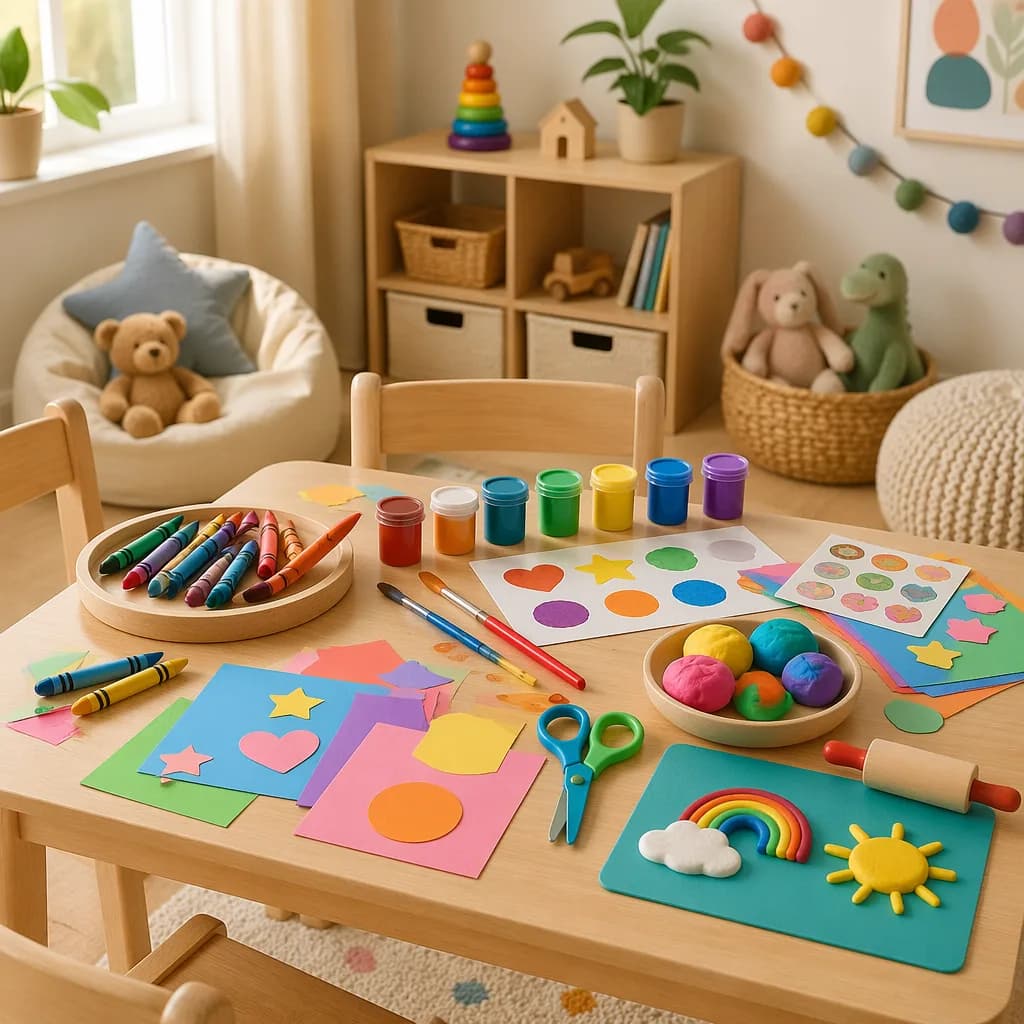
Art & Creative Play toys invite your little one to make marks, mix colours, and turn simple ideas into something real.
Art and creative play covers child-friendly tools that help your toddler draw, paint, stamp, squish, stick, build, and pretend. Think chunky crayons, washable paints, play dough, collage bits, easels, stencils, stickers, craft papers, and simple making kits.
What makes this category feel so special is the open-ended joy. There is no single right answer. Your child can make a purple sun, a wobbly road, or a birthday cake from dough. You get to sit nearby, smile, and say, “Tell me about this.” That small moment can feel huge.
For many 2 to 5 year olds, art is also a way to speak before words catch up. A swirl may be a storm. A line may be a train track. A handful of stickers may become a garden. Your little one gets to choose, change, and try again. That freedom can bring real confidence.
These toys also fit beautifully into daily life. You can set up five quiet minutes at the kitchen table. You can bring crayons to a café. You can roll dough together after nap time. The best creative play often feels simple, shared, and full of little surprises.
Art and creative play can support fine motor skills in very practical ways. Your child pinches stickers, grips crayons, rolls dough, snips soft paper, and presses stamps. These small hand movements often help build strength and control for later drawing, dressing, and early writing.
Creative toys can also support problem-solving. Your child may wonder how to make a tower stand, how to fit paper shapes together, or how to make brown paint from other colours. You can support this thinking with gentle questions. “What could we try next?” keeps the play warm and open.
Language can grow here too. Many children enjoy naming colours, describing marks, and telling stories about what they made. You might hear, “This is my house,” or “The dog is hiding.” When you listen and add a few words, you help your little one build meaning.
Art play can also support social and emotional growth. Your child gets to make choices, handle small frustrations, and feel proud of effort. A torn paper, a smudged hand, or a paint drip can become part of the fun. Together, you can model flexible thinking.
For 2-3 year olds, the joy is often sensory. They may love squeezing dough, dabbing paint, and making big bold marks. For 3-4 year olds, pretend ideas often bloom. A drawing becomes a map. A box becomes a shop. For 4-5 year olds, planning may start to appear. Your child may want to make a card, build a creature, or decorate a scene with care.
Choose art and creative play toys that match your child’s hands and patience. Chunky tools often feel easier for younger toddlers. Short crayons, broad brushes, large stickers, and soft dough can make early success more likely.
Look for materials that invite many kinds of play. Open-ended supplies, like paper, dough, crayons, tape, and fabric scraps, can stretch across ages. Your little one can use them in new ways as skills grow.
Washability helps you relax. Creative play feels better when you are not worried about every smudge. Easy-clean paints, wipeable mats, and washable markers can make table time feel calmer for you and your child.
Storage matters too. Clear tubs, trays, or small baskets help your child see choices and help you reset quickly. A simple “art box” can make creative time feel special without taking over your home.
For older preschoolers, add tools that support more detailed work. Child-friendly scissors, glue sticks, stamps, shape punches, stencils, and collage papers can add fresh challenge. You can also choose supplies that connect to your child’s interests, like animals, vehicles, nature, or pretend food.
Try to balance guided projects with free making. Kits can be lovely for a shared goal. Loose materials give your child room to invent. A mix of both keeps creative play lively.
Use age-suitable materials and stay close during messy or small-piece play.
No published comparisons yet for this category.
