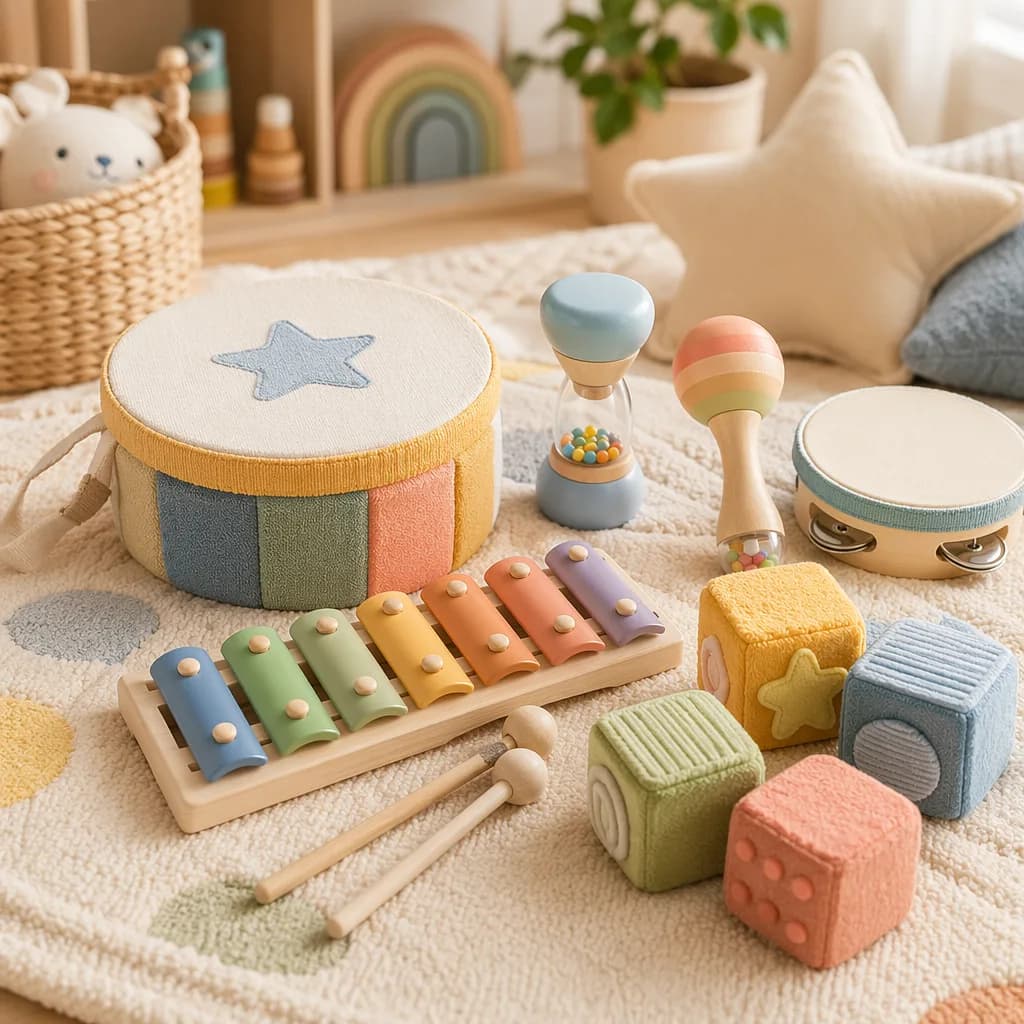
Musical and sound toys bring little bursts of rhythm, surprise, and joy into your baby’s day.
Musical and sound toys are baby toys that make noise through tapping, shaking, pressing, rolling, or squeezing. Some play gentle tunes. Some rattle, crinkle, chime, squeak, drum, or click. Some invite your baby to make the sound. Others reward your little one with a happy note after a simple action.
That mix feels exciting to babies. Your baby moves a hand, and something happens. A shake becomes a jingle. A pat becomes a beat. A button brings a tune. You see the smile, the pause, the wide eyes. Then your baby tries again.
These toys fit many everyday moments. You might keep a soft rattle near the changing mat. You might tap a small drum together on the floor. You might sing while your baby shakes a bell toy in the high chair. The play can be lively or calm. It can last two minutes or twenty.
For 6-9 months, many babies enjoy soft sounds they can control with simple moves. By 9-12 months, your baby may start shaking, banging, and pressing with more purpose. From 12-18 months, sound toys often become part of early pretend play and dancing. From 18-24 months, your toddler may copy rhythms, ask for favorite songs, and proudly make their own noisy show for you.
Musical and sound toys can support cause-and-effect learning. Your baby discovers that their action creates a sound. That tiny lesson matters. It helps your little one feel curious, capable, and ready to explore.
They can also support listening skills. Your baby may notice loud and soft sounds. They may turn toward a chime or pause when a tune stops. Over time, your little one may begin to expect a pattern. Tap, tap, pause. Shake, shake, shake. This kind of play often helps early attention and memory.
Rhythm play can support movement too. When your baby shakes a rattle, they practice grip and arm control. When your little one pats a drum, they use hands, shoulders, and balance. When your toddler dances to a beat, they work on coordination in a joyful way.
Sound toys can also invite early communication. You sing, your baby listens. You copy their jingle, and they beam back at you. You say, “Your turn,” then wait. That gentle back-and-forth can support social play. It also gives your baby a sweet reason to make sounds, gesture, and share attention with you.
For older babies and toddlers, musical play can build confidence. Your little one may choose the shaker, start the song, or lead the dance. You follow along. Together, you make a small family band.
Choose musical and sound toys that match your baby’s stage. For younger babies, look for lightweight pieces with easy grips. Soft rattles, wrist shakers, crinkle toys, and simple chimes can feel rewarding without much effort.
For 9-12 months, look for toys that respond to bigger actions. A toy that jingles when rolled, clicks when turned, or plays a sound when pressed can be satisfying. Clear cause and effect is more useful than lots of busy features.
For 12-18 months, simple instruments can shine. Small drums, shakers, xylophone-style toys, bells, and clappers invite your baby to explore sound with their whole body. Look for sturdy pieces that can handle eager hands.
For 18-24 months, your toddler may enjoy toys with choice. Different sounds, simple songs, and pretend microphones or music panels can invite longer play. Open-ended options often grow better with your child than toys that do only one thing.
Think about sound level too. You want sound that your baby can hear and enjoy, without taking over your home. Volume control, softer tones, or non-electronic sounds can make play easier for you. Also notice the feel. Smooth edges, easy buttons, and parts your baby can hold help your little one play with less frustration.
A good musical toy does not need to be fancy. The best choice is often the one your baby can use, repeat, and share with you.
Check pieces often, and choose sounds and sizes that feel right for your baby’s age.
No published comparisons yet for this category.
