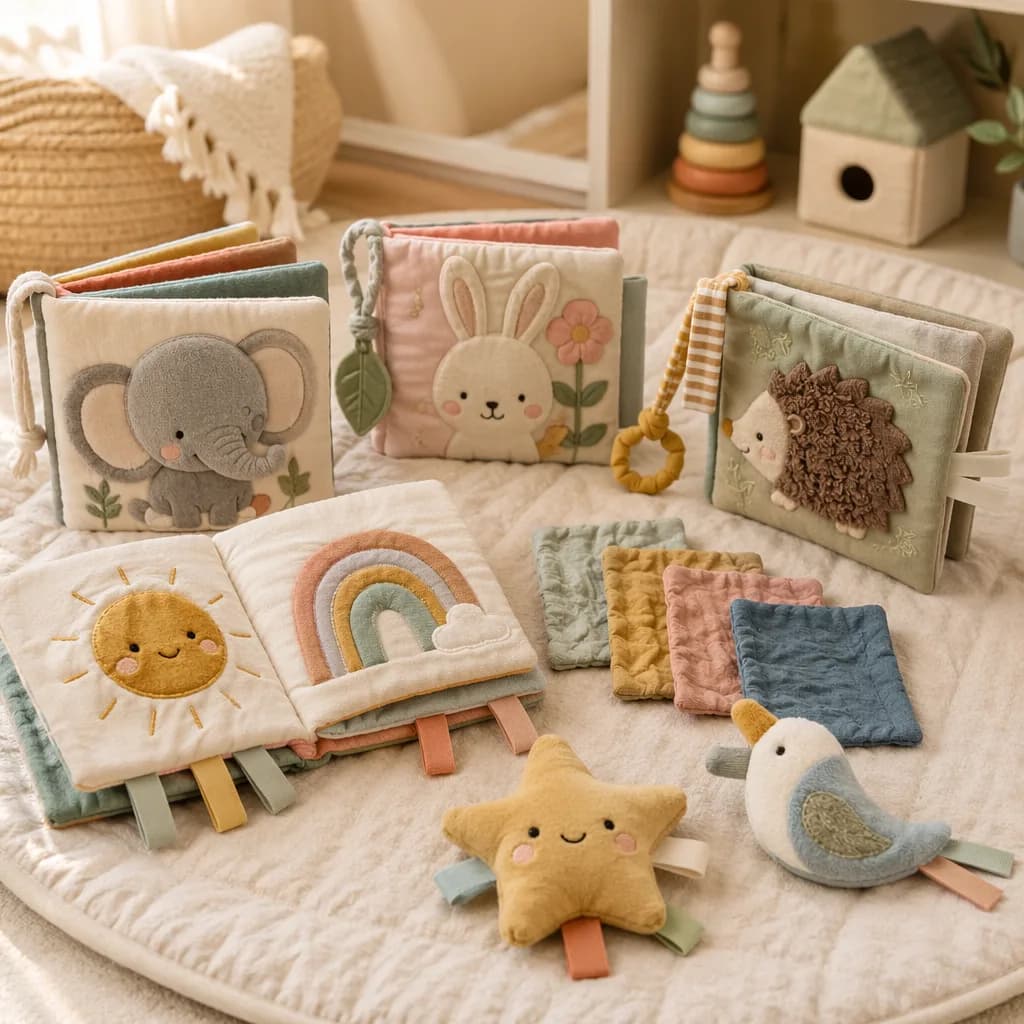
Soft cloth books and crinkle toys are gentle first books and sensory toys your baby can grab, mouth, squeeze, and explore with you.
Soft cloth books are fabric books made for tiny hands. Crinkle toys are soft toys with a fun, scrunchy sound hidden inside. Many combine both. You might see a cloth book with a crinkle page, a soft tail to tug, or a mirror for your baby to study.
These toys feel lovely in everyday baby life. You can tuck one beside your baby during tummy time. You can hand one over during a nappy change. You can sit together on the floor and turn soft pages at your own slow pace.
What makes this category special is how relaxed it feels. There is no right way to play. Your baby might pat the cover, chew a corner, or stare at one bold picture. You might read the few words on the page, name the animal, or simply make a happy crinkle sound together.
For very young babies, soft cloth books and crinkle toys bring gentle sensory joy. They are light, quiet enough for calm play, and easy to hold close. As your little one grows, the same toy can become a tiny story, a peekaboo prop, or a beloved travel friend.
Soft cloth books and crinkle toys can support early sensory learning. Your baby hears the crinkle, feels the fabric, and sees simple pictures. These small moments can help your baby connect action with sound. Squeeze, crinkle, pause. Try again.
In the 0-3 month stage, many babies enjoy high contrast shapes and your voice most of all. You can hold a cloth book near your baby during quiet wake time. Your baby may look, listen, and slowly turn toward the sound of you talking.
From 3-6 months, babies often reach, bat, and bring toys to the mouth. A soft book gives your baby a safe-feeling way to practise grabbing. A crinkle panel often rewards that effort with a little sound. That can make play feel joyful and repeatable.
From 6-9 months, your little one may sit with support and explore with both hands. Cloth pages invite turning, scrunching, and pulling. Those actions can support hand strength and coordination. Lift-the-flap details can also make cause-and-effect play feel exciting.
From 9-12 months, many babies enjoy simple routines. You can point to a picture and say, “Dog.” Your baby may pat it, babble, or look back at you. These shared moments can support early language, attention, and connection. The toy becomes a small place where you and your baby meet.
Choose soft cloth books and crinkle toys that feel easy for your baby to handle. Lightweight designs are helpful for young babies. Chunky pages can be easier to grab than thin ones. A small loop or tag can give curious fingers more to explore.
Look for clear, simple pictures. Babies do not need busy scenes. Bold shapes, faces, animals, and everyday objects often work well. A mix of textures can add interest too. Soft fleece, smooth satin, ribbed fabric, and crinkle panels all offer different sensations.
For younger babies, black-and-white or high contrast pages can be especially engaging. For older babies, simple stories, peekaboo flaps, and named objects can grow with your play. A mirror page can also invite sweet little chats together.
Think about cleaning. Babies mouth these toys often. Machine washable or easy-wipe fabric can make daily life gentler for you. Quick-drying materials are helpful if your baby loves to chew and drool.
Also notice the size. A small crinkle square may suit your changing bag. A larger cloth book may be better for floor play. If your baby loves sound, choose a toy with a satisfying crinkle. If your baby prefers calm play, a quieter book with soft textures may suit your home better.
Check regularly for loose parts or worn seams, then keep enjoying your soft play together.
No published comparisons yet for this category.
