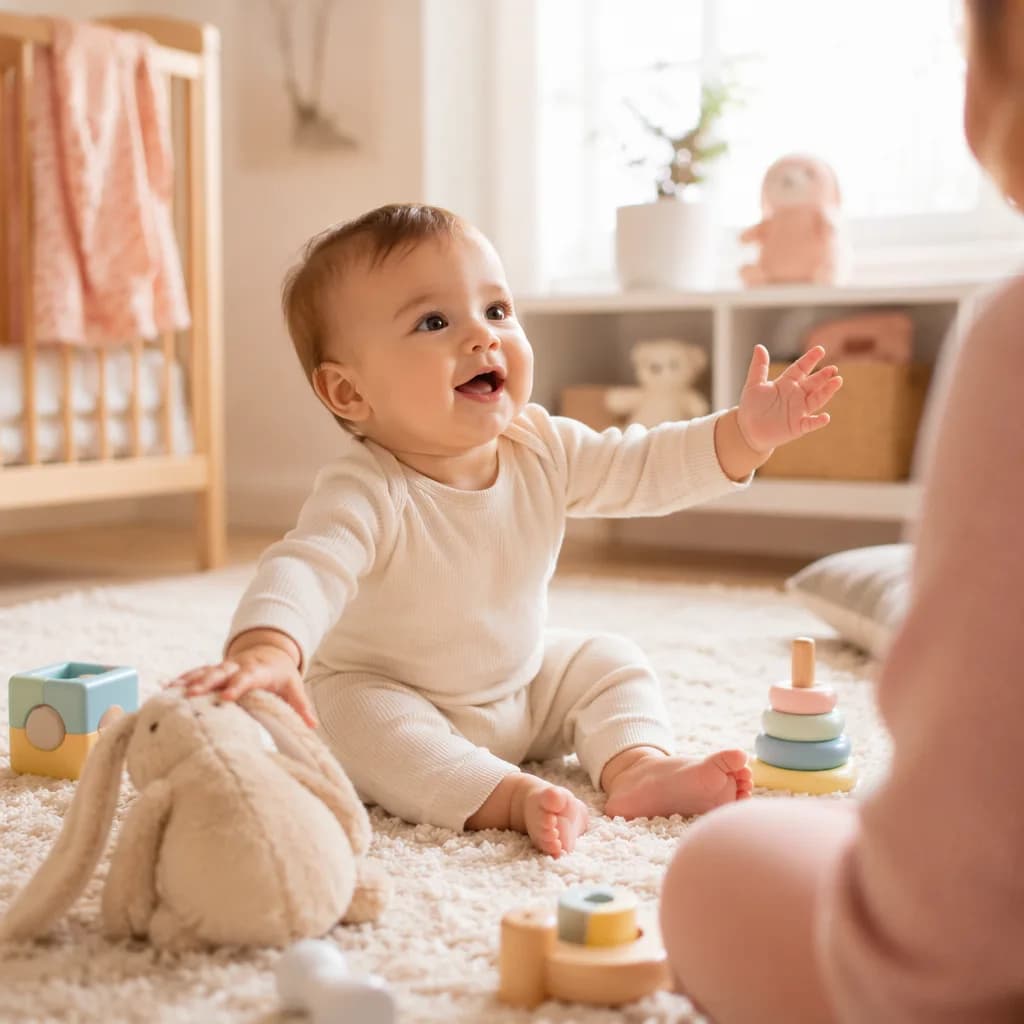
Babbling with purpose is the sweet language milestone where your baby starts using sounds, looks, gestures, and expressions to connect with you.
At 9 to 12 months, your baby’s sounds may feel more social. You might hear “ba-ba,” “da-da,” or long strings of happy chatter from the high chair. Your baby may look right at you, make a sound, pause, and wait. It can feel like a tiny conversation.
This matters because language starts with connection. Before clear words arrive, your baby learns that sounds can bring you closer. A squeal can get your smile. A babble can bring your answer. A hand pat on a book can invite you to read again.
You may notice your baby watching your mouth while you talk. Your baby may copy your tone, even if the sounds don’t match real words yet. If you say, “Where’s the ball?” your baby may turn, grin, or reach. That back-and-forth is part of early communication.
There’s joy in it. Your baby isn’t just making noise. Your baby is practicing the rhythm of family talk. You talk, your baby answers. Your baby babbles, you answer. Together, you build a small, loving pattern that supports later words.
Around this age, many babies spend more time watching, listening, and responding to your voice and face. Everyday Language Co. describes the first year as a time when babies absorb language through your voice, facial expressions, and responsive interaction. That fits what you see at home. Your baby studies you closely, then tries a sound or look of their own.
The CDC also reminds parents that how a child plays, learns, speaks, acts, and moves gives helpful clues about development. Its 9-month milestone guidance says developmental milestones are things most children, 75% or more, can do by a certain age, and it includes speaking as one area to watch (CDC). So your baby’s babbling, expressions, and social replies all give you useful information about how communication is growing.
Language is more than words. Wikipedia describes language as a structured system of communication that helps humans convey meaning in spoken and signed forms. For your baby, that system begins in simple, everyday pieces. A sound. A look. A reach. A smile when you understand.
At 9 to 12 months, your baby may be linking sounds with people, routines, and feelings. “Mama” might pop out during cuddles. “Da-da-da” might happen during play. Those sounds may not carry steady meaning yet, and that’s okay. Research-informed parent guidance suggests that interaction, engagement, and social response can help language grow in fun, natural ways (Everyday Language Co.).
Your baby’s brain gets practice each time you answer. You don’t need fancy lessons. A warm face and a simple reply do a lot. If your baby says “ba,” you might say, “Ball! You see the ball.” That gives your baby a clear model, plus the happy feeling of being heard.
Many babies at this stage babble in repeated syllables. You may hear “ma-ma-ma,” “ba-ba,” or “ga-ga.” Some little ones use a big range of sounds. Others stick with a few favorites for a while.
Your baby may often copy the music of your voice. If you sound excited, your baby may squeal back. If you whisper, your baby may get quiet and watch closely. This turn-taking can look small, but it’s meaningful.
Some babies use their whole body to communicate. Your baby may bounce, wave arms, clap, reach, or lean toward you while babbling. You may see several facial expressions too, such as happy, sad, angry, or surprised, which the CDC lists among common 9-month social and emotional milestones.
Many babies also show strong preferences in their communication. Your baby may babble more with you than with a stranger. The CDC notes that many babies by 9 months may feel shy, clingy, or fearful around strangers. So a quiet moment at the grocery store doesn’t tell the whole story. Your baby may save the loudest chatter for the living room floor with you.
Some little ones may seem to understand more than they can say. They may turn toward a familiar voice, smile at a favorite song, or get excited when you name a loved person. Spoken words may come later, but these shared moments can be part of the same growing communication system.
If you’re wondering about your baby’s progress, keep notes on what you see and enjoy the small changes. One short chat with your pediatrician can help if your baby rarely responds to sound, faces, or your attempts to connect.
- ). Keep them playful and non-medical; never prescribe therapy or medical action.Your loving response is the best part. When you answer your baby’s babble like it matters, you show your baby that communication brings connection, comfort, and joy.
