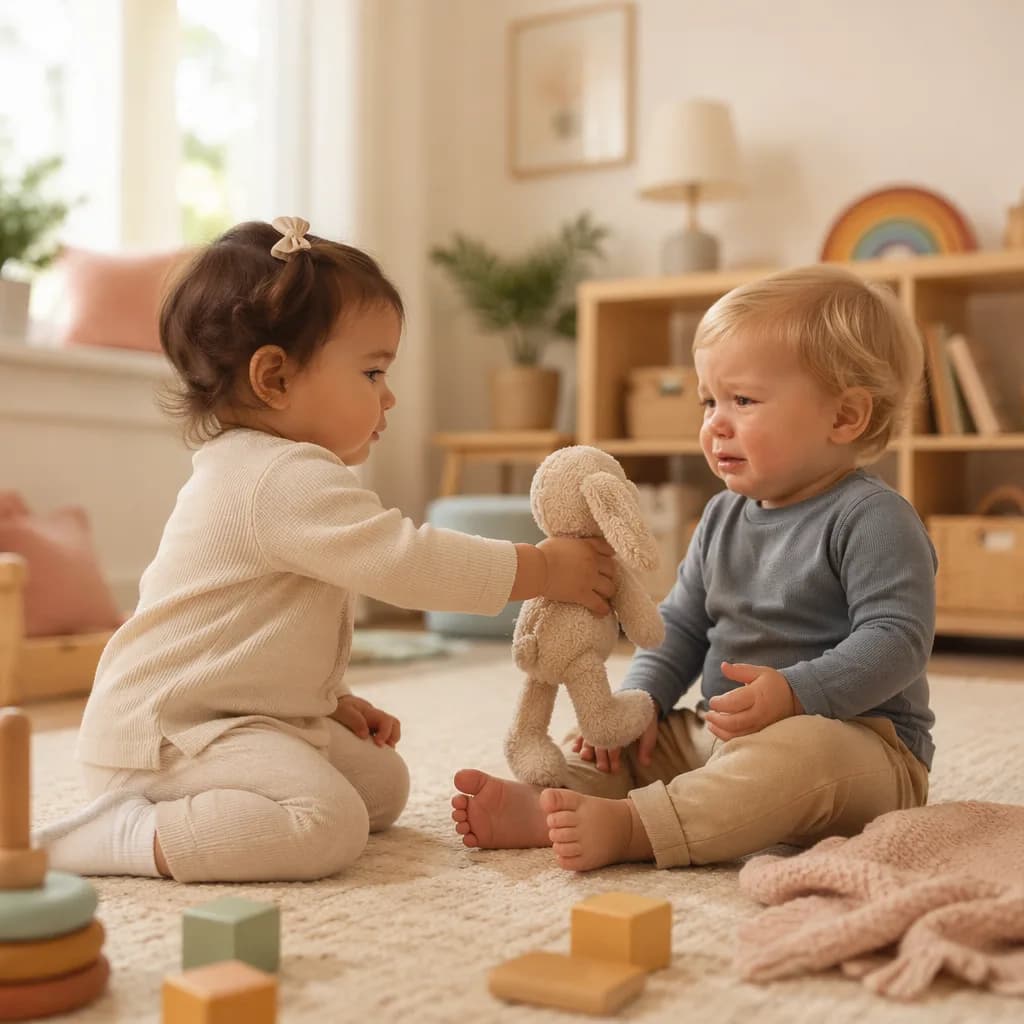
Big feelings and early empathy are a social-emotional milestone many babies show between 18 and 24 months.
Your toddler is becoming a small person with very clear feelings.
One minute your baby may beam when you walk into the room. The next, they may protest because you cut the banana the “wrong” way. You may see affection, strong likes and dislikes, early independence, and tears when you leave. These social and emotional skills are part of development during 18 to 24 months, and children reach them at their own pace, according to pregnancybirthbaby.org.au.
This stage can feel tender and loud at the same time.
Your little one may want to do things “by myself,” then reach for you a moment later. They may enjoy being near other children, even if they mostly play beside them. Some toddlers start to show simple care for others. They may pat your arm when you look sad, or bring you a toy because they want to connect. Research excerpts from babykidshealth.com describe social and emotional growth at 18 to 24 months as part of this busy period of greater independence and emotional expression.
That mix matters. Your baby is learning that feelings can be big, people can be close, and love is still there after a hard moment.
Between 18 and 24 months, toddlers often gain new independence and new ways to express what they feel. babykidshealth.com describes this age as a period of rapid change, with toddlers gaining skills that support independence, learning, and emotional expression.
That can make daily life more intense for you and your baby.
Your toddler may understand more than they can calmly express. They may want a cup, a cuddle, a turn, or a chance to try alone. When the moment does not go their way, strong feelings may spill out. The source pregnancybirthbaby.org.au explains that milestones include social and emotional skills, and that children reach different skills, emotions, and activities at different ages.
Social-emotional growth also connects to relationships. Virtual Lab School says emotional well-being in the early years has a powerful impact on social relationships, and that early relationships help shape how young children understand the world. It also names skills such as self-regulation, empathy, turn-taking and sharing, and positive relationships as part of social-emotional development.
For you, this means your toddler’s “no,” clingy moment, hug, or toy offer can all sit inside the same stage. Your baby is practicing being their own person while still needing your support.
Many babies this age show stronger likes and dislikes. Your toddler may choose the same shoes every morning, refuse a food they liked yesterday, or insist on holding the spoon.
Some little ones show affection more clearly. They may hug you, lean into you, smile at familiar people, or seek comfort after a hard moment. Others may show love in quieter ways, like bringing a book to your lap.
Separation anxiety may still appear for some toddlers. Your baby may cry when you leave, reach for you in a new place, or need a slower goodbye. This can sit alongside growing independence. They may want to climb onto a chair alone, then come back for a cuddle.
Tantrums may happen around this age too. They often reflect strong emotions and limited ways to manage them. Your toddler may cry, protest, or refuse help when upset. Then, just as quickly, they may want comfort.
Many toddlers play near other children before they truly play with them. This is often called parallel play in parent language. Your child may watch another toddler with blocks, copy a small action, or sit nearby with their own toy.
Pretend play may also begin to show. Some little ones feed a doll, hold a toy phone, or copy a familiar daily routine. Keep it simple. A toddler stirring an empty bowl can be doing meaningful social practice.
Empathy can look small at this age. Your baby may notice another child crying, pause, look concerned, or offer a toy. These moments may come and go. That is part of the range.
- ). Keep them playful and non-medical; never prescribe therapy or medical action.If you’re worried about your child’s milestones, pregnancybirthbaby.org.au suggests talking with your doctor or child health nurse.
