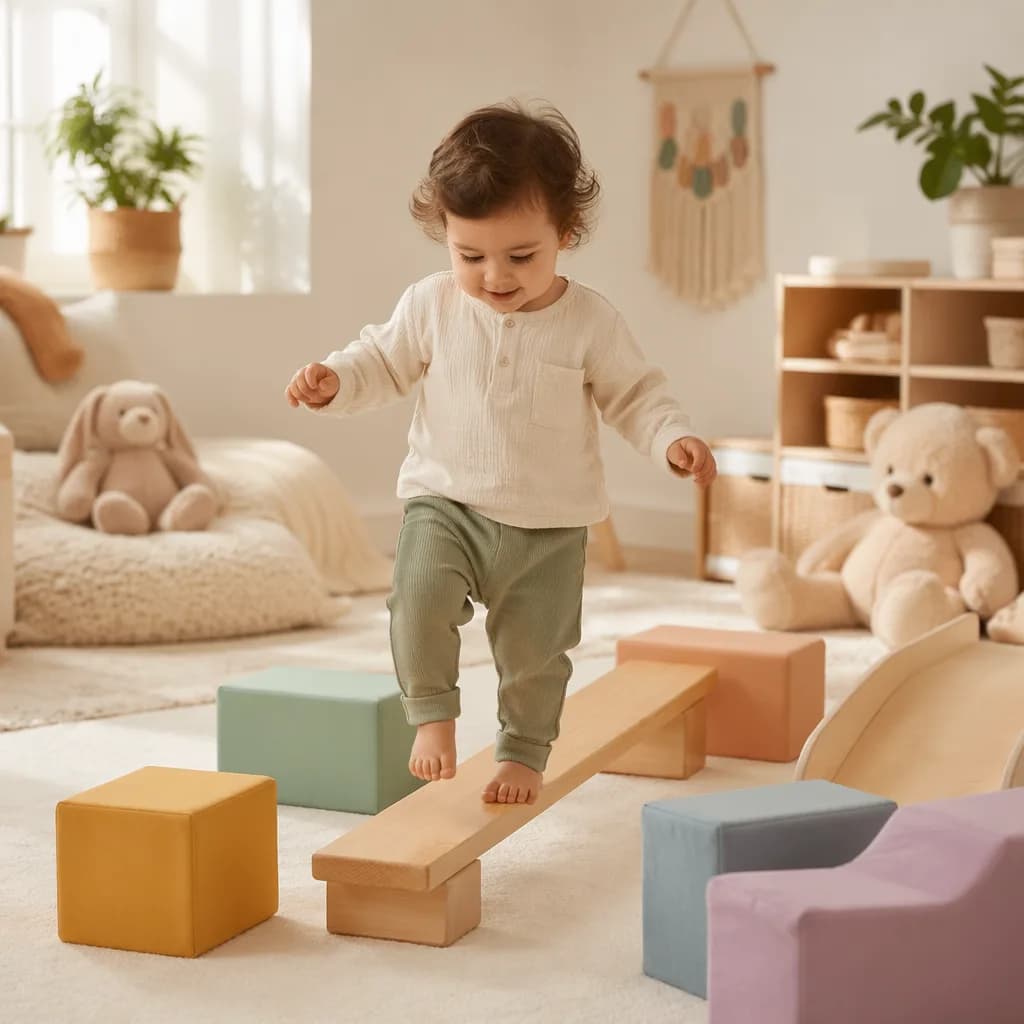
Confident toddler movement and balance is the 18-24 month gross motor milestone where your baby starts using bigger body movements with more purpose, joy, and control.
At this age, your toddler may look busy from the moment those little feet hit the floor. They may walk across the room with a toy in one hand. They may squat to pick up a cracker, stand again, then toddle toward you with a proud grin.
This stage can feel loud, funny, and very physical.
You might see your baby try to climb onto the couch, push a laundry basket, kick at a soft ball, or carry a board book from room to room. These are more than cute moments. They show your child using the large muscles in the legs, arms, and torso for everyday movement. Gross motor development involves those large muscle groups, and it supports things like walking, running, lifting, throwing, and kicking, according to Gross motor skills: birth to 5 years.
There is also a sweet emotional piece here. Your toddler is learning, “My body can help me get there.” That brings confidence. It also brings a lot of requests for “again.” You roll the ball. Your baby chases it. You clap. They beam. Then they want to do it all over.
Between 18 and 24 months, many children are building on earlier movement skills. The CDC's Developmental Milestones describes milestones as skills children reach in how they play, learn, speak, act, and move. For your toddler, movement now often becomes part of play, problem solving, and connection with you.
Gross motor skills are not just about stronger legs. Gross motor skills: birth to 5 years explains that these abilities relate to body awareness, reaction speed, balance, and strength. That helps explain why your baby may seem so determined to practice the same movement again and again. Stepping over a small pillow, turning around without falling, and carrying a toy while walking all give the body useful feedback.
Your toddler’s brain and body are working together in real time. A simple trip across the living room asks for balance, strength, and planning. Your baby has to judge the space, shift weight, and adjust when the rug bunches up. If they bend to pick up a stuffed animal, they also need trunk strength and body awareness to stand back up.
The CDC's Developmental Milestones notes that children reach milestones in how they move, along with other areas of development. So a movement burst may also show up during social play. Your toddler may run toward you for a hug, copy your stomp, or lift both arms when you say, “So big!” Those moments are warm and useful. They let your baby practice movement while feeling safe with you.
Many babies this age want to move through the day instead of staying in one spot. Your little one may walk with more control, though tumbles can still happen during busy play. Some toddlers move fast and bold. Others watch first, then try when the room feels calm.
You may notice your baby using whole-body effort. A kick might look like a big swing and a wobble. A throw may go backward instead of forward. A climb onto a low cushion may involve knees, hands, belly, and a huge smile. That’s normal toddler problem solving through the body.
Many babies enjoy carrying things now. Your toddler may drag a blanket, push a toy bin, or bring you one shoe at a time. Gross motor skills: birth to 5 years links large-muscle movement with everyday actions like lifting and walking, so these little jobs fit beautifully into this stage.
Some little ones prefer repeated practice. They may step up and down from the same low step ten times. They may kick the same ball into the same chair leg. Repetition can help your baby learn how much force to use and how to recover balance.
You might also see movement change with mood and tiredness. A well-rested toddler may look steady in the morning, then wobbly before dinner. That can be part of being small, busy, and still learning.
If you have a concern about your toddler’s movement, or you notice a big change, a gentle chat with your pediatrician can help you decide what support fits your child.
- ). Keep them playful and non-medical; never prescribe therapy or medical action.