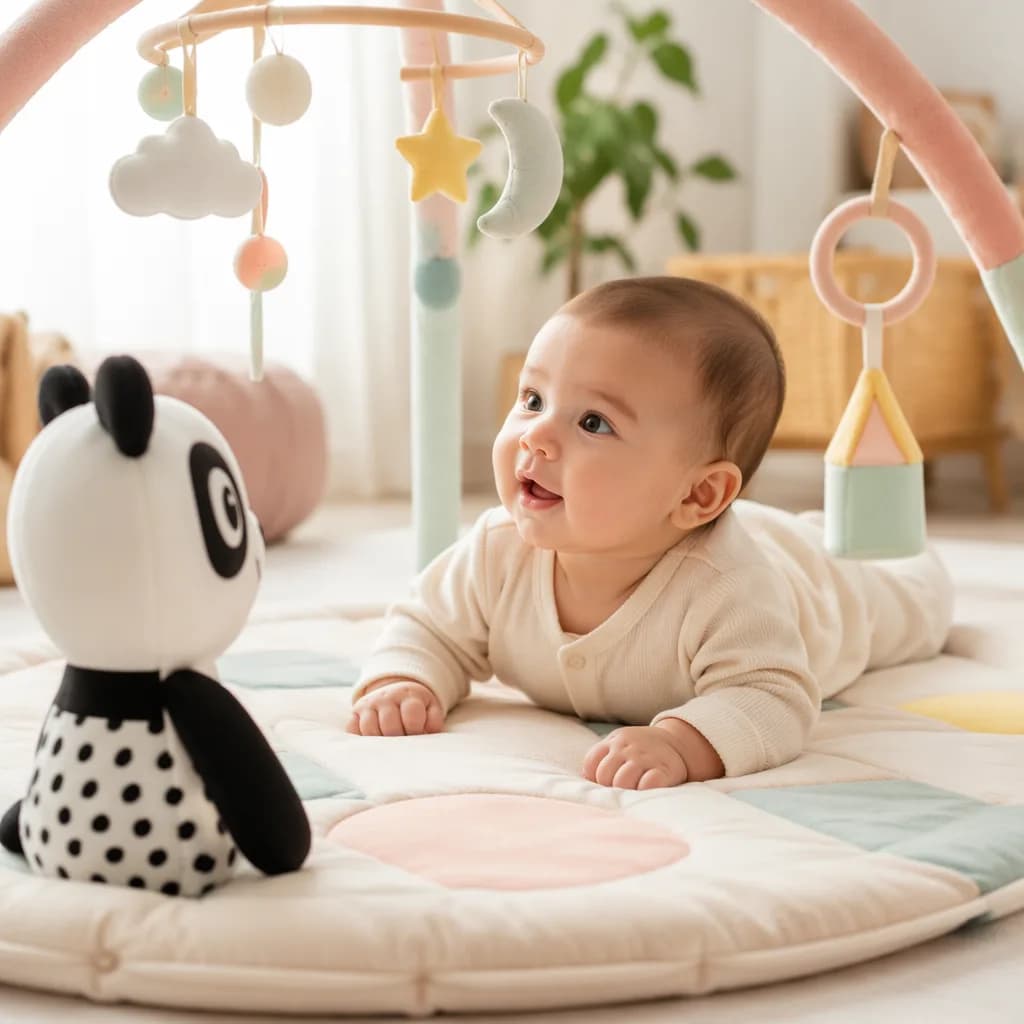
Early noticing and remembering is your baby’s first quiet step into learning how the world works.
In the first 0-3 months, your baby’s cognitive world is small, warm, and close. It often starts with you.
Your baby may pause when your face comes near. They may grow still when a familiar voice fills the room. During a diaper change, they might look toward the window where light falls across the wall. These tiny moments can feel simple. They matter because your baby is beginning to take in information, hold bits of it, and connect one moment with the next.
Cognitive development means growth in thinking and mental processes. Cambridge Advanced Learner's Dictionary & Thesaurus describes cognitive as connected with thinking or conscious mental processes. U.S.Dictionary.com describes it as relating to thinking, understanding, learning, and remembering. For a newborn, that learning doesn’t look like flashcards or lessons. It looks like watching your mouth move, hearing your gentle hello, and slowly learning, “This voice belongs to my person.”
You may notice your baby has more alert windows now. They might study your face for a few seconds longer than last week. They may turn toward a repeated sound. They may settle when a familiar routine begins, like lights dimming before a feed. These little patterns can bring real joy, because you start to feel your baby learning you.
Your baby’s early cognitive growth centers on taking in and making sense of information. U.S.Dictionary.com defines cognitive as involving mental processes such as thinking, understanding, learning, and remembering. In these early months, your baby’s “thinking” is very basic and body-based. They learn through what they see, hear, smell, taste, and feel with you nearby.
Cambridge Advanced Learner's Dictionary & Thesaurus links cognitive function with mental processes. That helps explain why simple daily moments can support early learning. A soft song repeated during rocking gives your baby a pattern. Your face appearing after your voice gives your baby another pattern. Over time, many babies may begin to notice these repeated pieces of life.
This stage matters because babies are gathering the first building blocks for understanding. A young baby may not remember in the way an older child does. Still, early remembering can show up in small ways. Your baby may quiet to a familiar lullaby. They may look more alert when you use the same playful sound each morning. They may seem to expect comfort when you pick them up in your usual gentle way.
Learning at this age is not about doing more. It’s about loving repetition. Your baby’s brain gets many chances to meet the same safe sights, sounds, and feelings. You don’t need special gear. Your face, your voice, your scent, and your steady care give your baby rich information.
Many babies in the 0-3 month stage spend short periods in a quiet-alert state. This is the sweet spot when your baby may seem ready to look, listen, and take things in. It may last only a minute or two. That still counts.
Some little ones stare at high-contrast edges, like a dark curtain against a bright wall. Some prefer your face over anything else. Others seem most interested in sound. They may pause when you say their name, even if they don’t truly know it yet.
Often around this age, you may see early signs of pattern learning. Your baby might relax when they hear bath water running, if that usually means a warm wash and a cuddle. They may fuss less when you start the same bedtime steps each night. They may become more awake during a favorite song.
The range can be wide. One baby may gaze for long stretches. Another may look away quickly and need a break. Looking away can be a normal way to rest from stimulation. Your baby is still learning how much sound, light, touch, and movement feels good.
You might also notice changes from day to day. A baby who studied your face yesterday may mostly sleep today. Growth, feeding, and tiredness can all shape these moments. Gentle attention helps you spot your baby’s best times for connection.
A lovely real-life example: you lean over after a nap and say, “Good morning, baby,” in the same sing-song voice. At first, your baby just blinks. A few weeks later, they become still, widen their eyes, or move their mouth as if joining in. That tiny response can feel like a conversation starting.
- ). Keep them playful and non-medical; never prescribe therapy or medical action.If you’re worried about how your baby looks, listens, feeds, or responds, it can help to chat with your pediatrician.
