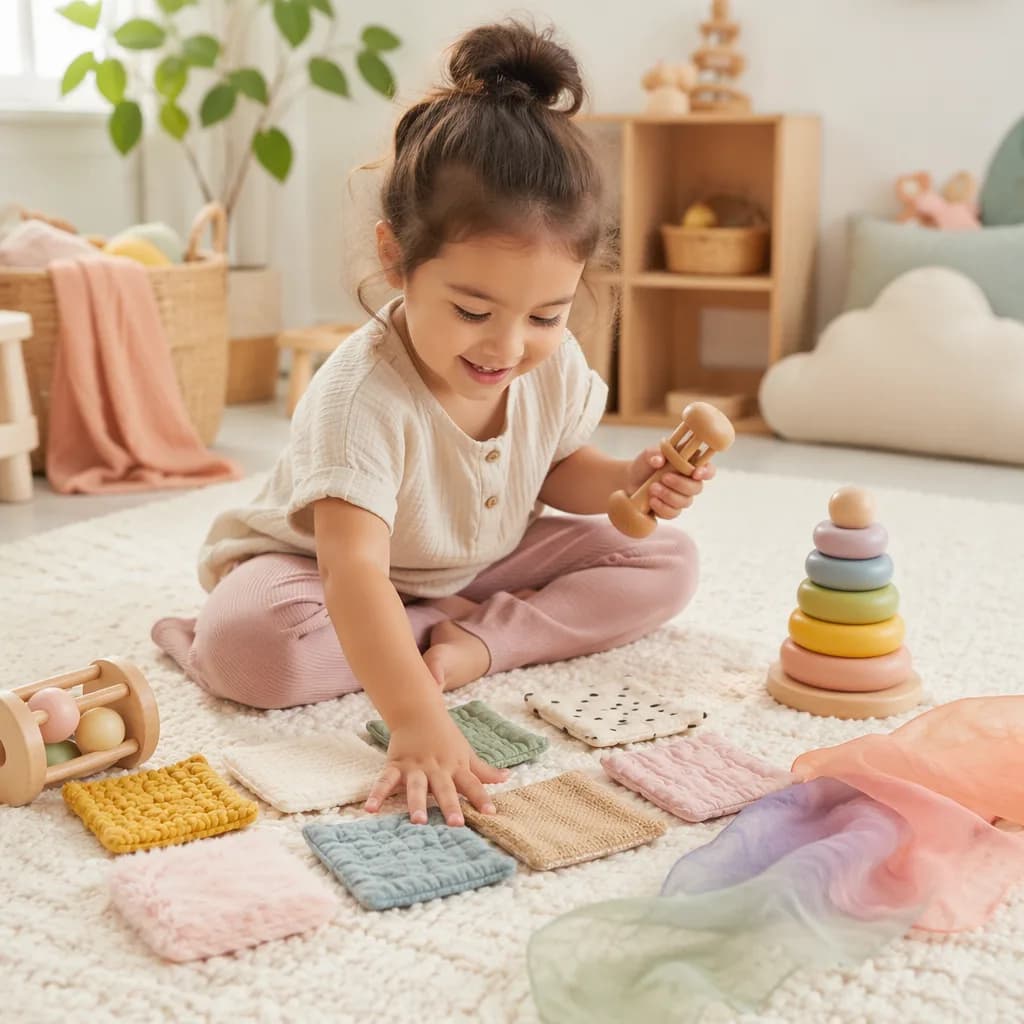
Exploring textures, sounds, and movement is a sensory milestone that often becomes more visible between 3 and 4 years.
Your child is taking in the world with their whole body now. They may press their hands into wet sand, stomp through leaves, sniff a peeled orange, or ask why the vacuum is so loud. It can look funny, messy, and very busy.
This stage matters because your child uses sensory information to understand daily life. Touch tells them if play dough is sticky or dry. Sound helps them notice a truck outside. Movement helps them feel where their body is during climbing, dancing, or jumping. Sight helps them compare the big red cup with the little blue one.
You might see your child seek more of one kind of input. Maybe they love spinning in circles after breakfast. Maybe they rub every soft blanket in the store. Or they may avoid something that feels too much, like finger paint, loud hand dryers, or scratchy tags.
These reactions can be part of your child learning what feels good, what feels hard, and what helps them feel settled. Your calm support gives them a safe base. You’re not trying to make every texture or sound easy in one day. You’re helping your child notice, try, and recover.
This preschool stage builds on earlier sensory skills. Pathways.org describes young children as investigating shapes, sizes, and textures in toys and surroundings, enjoying different movements, focusing near and far, and experimenting with how much force they need to pick up objects (Pathways.org). By ages 3 to 4, many children use those same sensory tools in bigger, more social, more creative play.
That’s why a simple mud kitchen can become a full cooking show. Your child feels the mud, watches it drip, hears it splat, smells the grass, and adjusts how hard they stir. Their senses work together during one playful moment.
Sound and sight also become more meaningful. Sensory describes listening, seeing, and understanding as separate streams of information that can work together in smart systems (Sensory). Your child’s brain is doing its own human version during play. They hear you say, “Find the rough rock,” look across the yard, touch a few choices, and bring one back with pride.
Age-fit play also matters. ToysRUs groups toys by age, including a 3-4 category and outdoor toys, which reflects how families often choose play materials that match a child’s current size, interests, and abilities (ToysRUs). For your preschooler, that may mean chunky chalk, water play, dress-up clothes, simple instruments, or a safe place to climb.
This is also a time when your child may talk more about sensory likes and dislikes. “Too loud.” “It’s cold.” “I want the soft socks.” Those small comments are useful. They show your child can notice body signals and share them with you.
Many babies who are now preschoolers still love big movement. They may jump from the bottom step, crash into couch cushions, dance hard to one song, then need a quiet corner. This movement can help them feel their body in space, a skill that connects with the earlier movement enjoyment described by Pathways.org (Pathways.org).
Some little ones prefer hands-on texture play. They may squeeze slime, sort rocks, line up pinecones, or rub lotion into their arms with deep focus. Others may touch with one finger first, then wipe their hand right away. Both patterns can happen in everyday preschool life.
You may notice sound sensitivity too. Some children cover their ears for blenders, toilets, or birthday singing. Others seek sound by banging pots, shaking containers, or asking for the same noisy toy again. Your child may also change from day to day. Tired children often have less patience for big sensory moments.
Sight can show up in sweet ways. Your child may spot tiny crumbs on the floor, match socks by color, or notice that one puzzle piece has a curved edge. They may enjoy looking closely at bubbles, shadows, rain on the window, or glitter in glue.
Force is another piece. Some preschoolers press too hard with crayons, slam doors by accident, or hug with extra strength. They’re still learning how much pressure a task needs. Pathways.org notes that children experiment with force when picking up objects earlier in development, and preschool play gives your child many new chances to practice that idea (Pathways.org).
- ). Keep them playful and non-medical; never prescribe therapy or medical action.If sensory reactions often stop your child from joining family routines, you can chat with your pediatrician.
