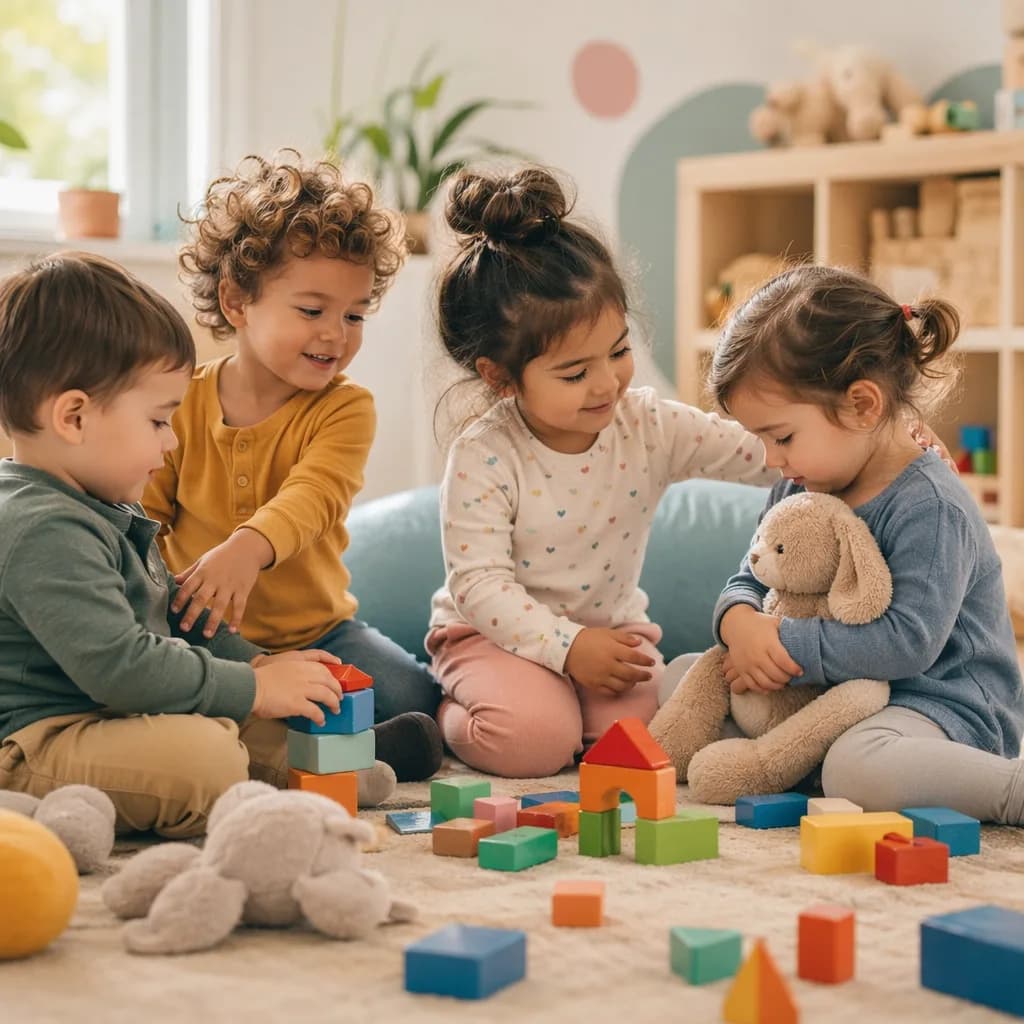
Growing friendships and feelings is the preschool milestone where your child starts to care more about playmates, feelings, turn-taking, and belonging.
At 3 to 4 years, your child’s social world gets bigger. You may see your baby march into preschool with a toy dinosaur and say, “This one is the daddy, and you can be the baby.” A friend says no. Your child may pause, protest, or try a new idea.
That tiny moment matters.
Your child is learning that other people have ideas, wishes, and feelings too. Play starts to include roles, rules, and little plans. One child makes soup in the play kitchen. Another child brings a pretend phone. Soon, they’re “calling Grandma” and feeding teddy bear dinner together.
You may also notice more feeling words. Your child might say, “I’m mad,” “She’s sad,” or “I wanted that first.” The words may still come after tears. That’s common. Naming a feeling and managing a feeling are different skills, and both take practice.
This stage can feel noisy and sweet at the same time. Your child may hug a friend one minute and grab a truck the next. They may invite someone into play, then struggle when that friend changes the game. This is real learning, happening right in front of you.
Between 36 and 48 months, children are learning about feelings and relationships through everyday play, family routines, and time with other children, according to All About Young Children: Information for Families on Children's Early Development. This source frames social-emotional growth at this age around how children understand feelings and build relationships.
That’s why play looks more social now. Your child can often hold a simple idea in mind, use more words, and watch what other children do. Those skills help your child join a game, copy a friend’s silly voice, or say, “You be the dog.”
Research shared in Fun and Engaging Emotional Development Toys says social-emotional learning toys can help children build skills like empathy, emotional regulation, communication, frustration tolerance, and confidence through play. The same source notes that social-emotional skills connect strongly with school success, relationships, resilience, and mental health.
You don’t need fancy toys for this. A cardboard box can become a bus. A dish towel can become a cape. The growth comes from the back-and-forth: your child’s idea, your gentle response, their friend’s reaction, and another try.
Feelings also grow more layered now. Your child may feel proud after helping. They may feel embarrassed after a spill. They may want comfort and independence at the same time. Your steady voice helps your child connect the body feeling, the word, and the next small step.
Many babies at this preschool age start to seek out other children more often. They may ask, “Who will be there?” before a playdate. They may talk about a friend from class at dinner.
Some little ones play side by side for a while before they join in. One child may build blocks near another child, then slowly add a bridge to the same city. That still counts as social growth.
You may see pretend play with feelings. A stuffed dog gets sick. A doll feels scared. A superhero rescues someone. These little stories let your child try on care, worry, power, and repair in a safe way.
Sharing may look uneven. Your child may offer one cracker with joy, then guard a favorite blue cup like it’s gold. Many children can take turns better with support, short waits, and clear words. “Maya has two more scoops, then it’s your turn” can feel easier than “share nicely.”
Big feelings may still arrive fast. Your child might cry when a friend leaves, shout when a tower falls, or hide when a new adult says hello. Often around this age, children can use more feeling words, yet still need your calm body close by.
You might also hear early friendship language. “She’s my best friend.” “He can’t come.” “I don’t like you.” These words can sting. Usually, they reflect a preschooler’s strong feeling in the moment, not a fixed view of the other child.
- ). Keep them playful and non-medical; never prescribe therapy or medical action.If your child seems very distressed by most social play or loses skills you’ve seen before, you can chat with your pediatrician.
