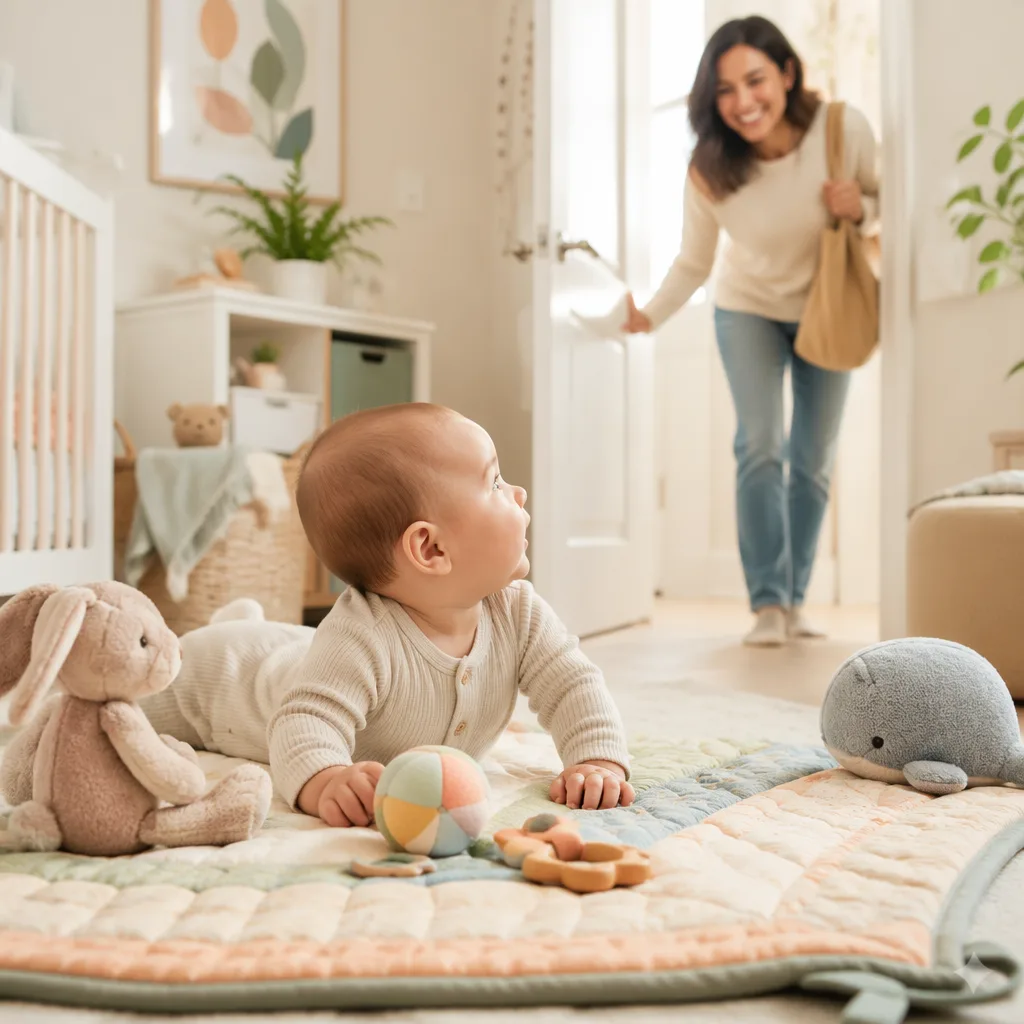
Noticing new faces and places is a social-emotional milestone that often starts to show between 3 and 6 months.
Your baby is beginning to take in the social world with more interest. You may see your baby pause when a new person leans over the stroller. A room they haven’t seen before may get a long, serious look. A different voice may make them quiet for a moment.
This can feel sweet and surprising.
Last month, your baby may have gone from arms to arms at a family visit with barely a blink. Now, they may stare at Auntie’s glasses, then look back toward you, or fuss when the room gets busy. Some babies smile quickly. Some need a slower hello.
This milestone is about awareness. Your baby is noticing that people, places, voices, and daily moments can feel familiar or new. Parenting Expert to Mom lists “Awareness of New Situations” as part of social skills from 3 to 6 months. That simple phrase captures a lot of real life for you and your baby.
You may also notice more social sweetness with familiar people. Your baby may react to you with smiles and little sounds, which Parenting Expert to Mom describes as a common part of social development at this age. Those tiny coos from the changing table count. So does the grin when you walk into view.
Between 3 and 6 months, many babies begin to show you more of who they are. Yellow Brick Road describes this stage as a time when connection, curiosity, and communication start to bloom. That fits this milestone well. Your baby isn’t just looking around. They’re becoming more aware of you and of what’s different around them.
Parenting Expert to Mom explains that social skills include the skills babies use to interact with adults and children, and later to regulate emotions. At 3 to 6 months, those social skills can look like more awareness of you, smiles, and sounds. They can also include noticing new situations.
So, if your baby seems more alert in a grocery store or watches a visitor with wide eyes, that can fit this age. If your baby beams when you make a familiar sound, that can fit too.
Yellow Brick Road also describes this age as full of discovery, connection, curiosity, and communication. Those words are helpful because they remind you that this milestone is not one single behavior. It may show up in tiny moments all day. Your baby may smile during a diaper change, quiet down to study a new face, or make happy sounds when you come close.
This stage can feel uneven. Social skills can look different from one baby to the next, according to Parenting Expert to Mom. One baby may love new people and noisy rooms. Another may need more time before they relax. Both patterns can be part of the wide range you see at this age.
Many babies around 3 to 6 months become more aware of familiar people. Your baby may brighten when you talk. They may kick, coo, or smile when they see you after a nap. Parenting Expert to Mom notes that babies this age may react to you with smiles and sounds.
Some little ones also begin to notice when a situation feels new. A new room, a new caregiver, a crowded doorway, or a loud family gathering may get a stronger reaction than it did before. Parenting Expert to Mom names awareness of new situations as a social skill in this age range.
Your baby may show this awareness in quiet ways. They may stop sucking for a second when a new voice speaks. They may stare at a cousin’s beard. They may look serious during the first few minutes at a playgroup.
Other babies are louder about it. They may fuss when passed to someone new. They may make worried sounds when a place feels busy. They may smile at first, then need a break.
Many babies move back and forth. Your baby may adore Grandma one day and seem unsure the next time. They may enjoy one new place, then fuss in another. Social skills look a little different from one baby to the next, as Parenting Expert to Mom says, and this milestone can show up in small, changing ways.
You may also see more personality. Yellow Brick Road shares that infant teachers often tell parents this stage is when your baby begins to show you who they are. Maybe your baby is a careful observer. Maybe they’re a big smiler. Maybe they study first, then warm up.
That’s your baby learning through connection.
- ). Keep them playful and non-medical; never prescribe therapy or medical action.If you’re concerned about your baby’s development, Parenting Expert to Mom suggests seeking out your local Early Intervention program for a free screening or evaluation.
