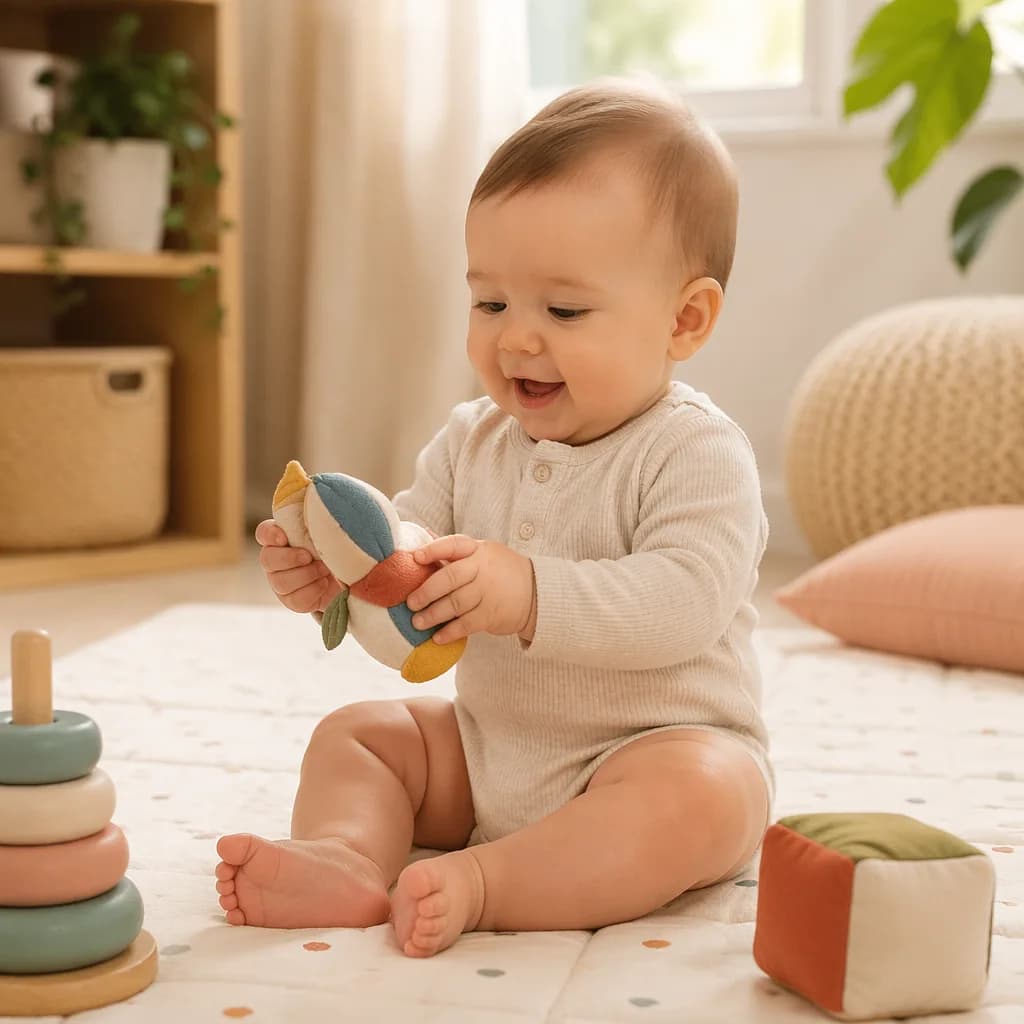
Reaching, grasping, and passing toys is a sweet 6-9 month fine motor milestone where your baby starts using their hands with more purpose.
You may see your baby spot a soft block, lean toward it, open their fingers, and swipe until they get it. Then comes the proud part. Your baby may hold it, mouth it, bang it, turn it, or pass it from one hand to the other.
It looks simple. It’s actually a big deal.
Your baby is learning that their hands can make things happen. A crinkly toy makes noise. A cup rolls away. A spoon feels cool and smooth. Each tiny reach gives your baby new information about the world, and each grab gives your baby a little more control.
This stage can feel joyful because it pulls you into the action. You hold out a toy. Your baby studies it. Their hand opens, closes, and maybe misses. You smile. They try again. That warm back-and-forth is part of the fun.
Fine motor skills include reaching, grasping, and using the hands to handle objects, according to Fine motor skills: birth to 2 years. So when your baby works hard to pick up a ring or pass a rattle across their body, they’re practicing the small hand movements they’ll use later for finger foods, books, cups, and scribbles.
Around this age, your baby’s vision, attention, arms, hands, and fingers are working together more smoothly. Fine motor skills: birth to 2 years explains that fine motor development includes the small muscles of the hands and upper body, plus visual-motor skills, often called hand-eye coordination.
That hand-eye link matters. Your baby sees the toy, plans a reach, moves their arm, adjusts their fingers, and learns from what happens next. If the toy slips, your baby may try a wider grasp. If it’s light, they may wave it. If it makes a sound, they may repeat the movement with pure joy.
Milestones by 6 Months For Everyone says how a child plays, learns, acts, speaks, and moves gives clues about development. It also notes that developmental milestones are things most children, 75% or more, can do by a certain age. That means these skills give you a useful window into your baby’s growth, while still leaving room for your baby’s own pace.
BabyCenter’s Best toys for 6- to 9-month-olds, according to moms and child development experts points parents toward toys such as textured balls, stack-and-count cups, blocks, soft books, and bath toys for this age range. Those kinds of simple objects invite your baby to reach, grab, hold, drop, and explore with you nearby.
You don’t need fancy gear. Your baby needs safe objects, floor time, and your warm attention. A clean measuring cup can be fascinating. So can a soft cloth, a board book, or a rattle that fits in one hand.
Many babies between 6 and 9 months reach with more aim than they did before. The reach may still look wobbly. That’s okay. Your baby is practicing.
You may notice your baby using both hands together. One hand may hold a toy while the other pats it. Your baby may bring toys to their mouth to learn about shape and texture. Many babies also enjoy banging toys on the floor or high chair tray. It’s loud, yes, but it’s useful practice.
Some little ones pass a toy from one hand to the other often around this stage. Others prefer one hand for a while, then suddenly surprise you by switching hands during play. You may see your baby rake at a small object with their fingers, or grab a larger toy with the whole hand.
Your baby may drop toys again and again. This can feel like a dinner-table comedy routine. You pick up the spoon, your baby drops it, you pick it up, and down it goes again. Your baby may be learning about release, sound, distance, and your loving response.
Mood matters too. A tired baby may bat at a toy and give up fast. A rested baby may spend several minutes turning one block in their hands. Some babies love busy toys with bumps and sounds. Others focus longer with one quiet object.
If you’re worried that your baby isn’t using their hands, reaching, or interacting with objects in ways you expect, a short chat with your pediatrician can help you feel supported.
- ). Keep them playful and non-medical; never prescribe therapy or medical action.