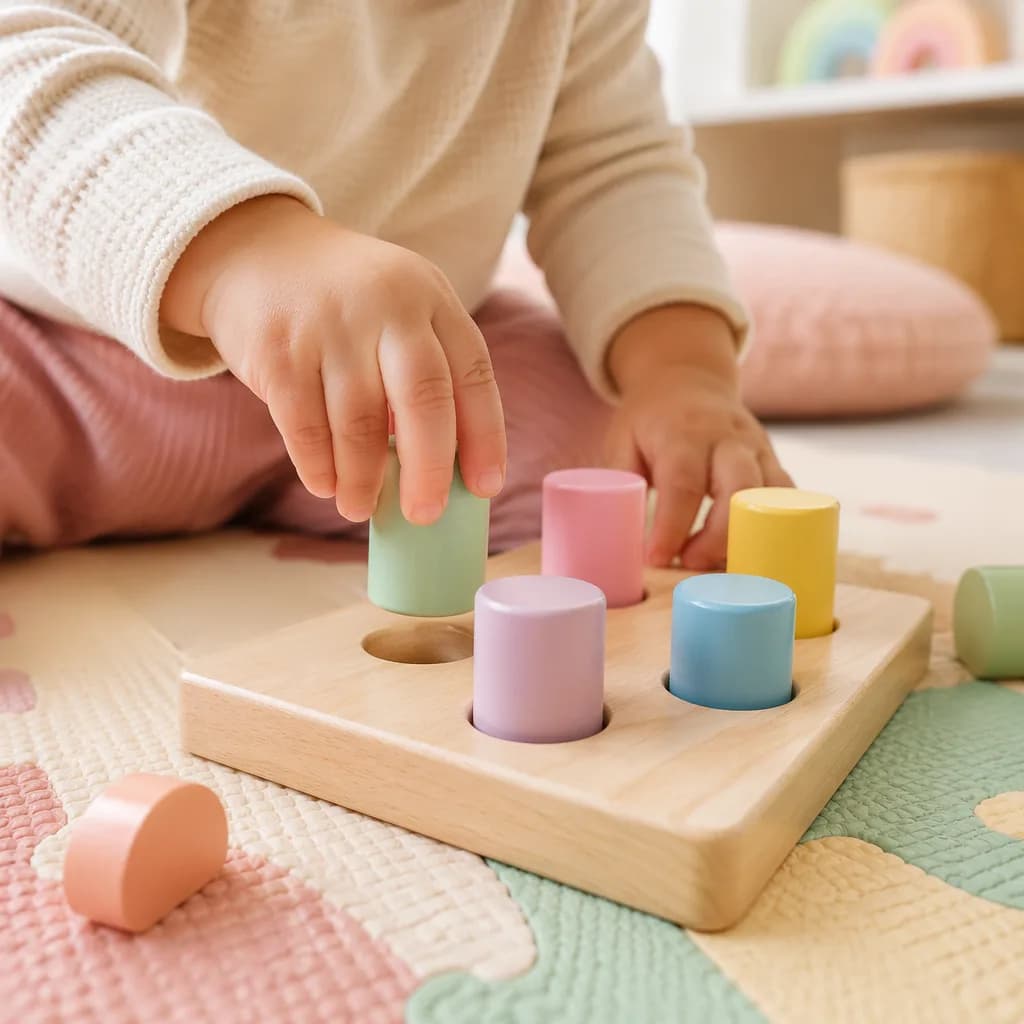
Fine motor skills at 18 to 24 months often show up in your toddler's busy hands during ordinary play and care. Your baby may scribble on paper, stack more than 3 blocks, pull apart connecting blocks, help dress themselves, and start to feed themselves with a fork and spoon, according to Nationwide Children's. These are small, practical steps. They can make your day messier, sweeter, and more interactive.
You may see your toddler reach for a crayon, pat the paper, and make marks. You may watch your baby place one block on another, then add another, then look at you. A lid on a jar or box may suddenly become interesting. Your toddler may take it off and want to try again. Nationwide Children's also lists doing a 3-piece puzzle, matching and sorting colors, and naming pictures in a book as skills many children show around 18 to 24 months.
This stage can feel very real at the kitchen table. Your toddler wants the spoon. Your toddler wants the fork. Your baby may want to help with clothes, even when you need to get out the door. Those little hands are joining the day in bigger ways.
Fine motor skills involve the movement and use of the hands and upper body, including reaching, grasping, and handling objects, according to Fine motor skills: birth to 2 years. That same source explains that visual motor skills, often called hand-eye coordination, help coordinate the hands with the rest of the body. So when your baby scribbles, stacks blocks, or works with a spoon, your toddler uses small muscles and visual attention together.
Nationwide Children's describes 18 to 24 months as a time when many children show both small body movements and play skills. The source lists scribbling on paper, stacking more than 3 blocks, pulling apart connecting blocks, helping dress themselves, and starting to feed themselves using a fork and spoon. It also lists taking the lid off a jar or box, doing a 3-piece puzzle, and matching and sorting colors.
Fine motor skills: birth to 2 years also says babies and toddlers need a lot of playtime and practice to develop the small muscles used for fine motor control. That practice can happen through simple play. It can also happen during daily routines, like eating, dressing, reading, and putting toys away.
This is why the same basket of blocks can matter in several ways. Your toddler may grasp, place, pull apart, and try again. Your baby may also look between the block and their hand. The source language supports the idea that fine motor work includes hand use and visual motor coordination, so these simple moments may support your child's growing control.
Many babies in this age range enjoy hands-on play. Some little ones spend longer with blocks. Others want crayons, lids, spoons, or puzzle pieces. Nationwide Children's says children reach milestones in many ways, including moving, playing, learning, and communicating.
You might notice your toddler scribbling on paper during a short art moment. You might see your baby stack more than 3 blocks one day, then prefer pulling connecting blocks apart the next. Some little ones like to open a jar or box again and again after they learn how the lid comes off. These actions fit the 18 to 24 month skills described by Nationwide Children's.
Mealtimes may also look different. Many babies around this stage start to feed themselves using a fork and spoon, according to Nationwide Children's. Your toddler may still need your close support during meals, but the interest in utensils can be a meaningful part of fine motor growth.
Dressing may become more shared, too. Your baby may help dress themselves, which Nationwide Children's lists as a motor skill for 18 to 24 months. Some little ones are eager. Some are brief helpers. Both can still fit the wide range of toddler development described by the source.
Color sorting and puzzles may appear in short bursts. Nationwide Children's lists matching and sorting colors and doing a 3-piece puzzle among skills to look for in this age range. Your toddler may do these with you nearby, especially when the pieces and colors feel familiar.
- ). Keep them playful and non-medical; never prescribe therapy or medical action.If you feel worried about your toddler's fine motor skills, you can chat with your pediatrician and share the specific things you notice.
