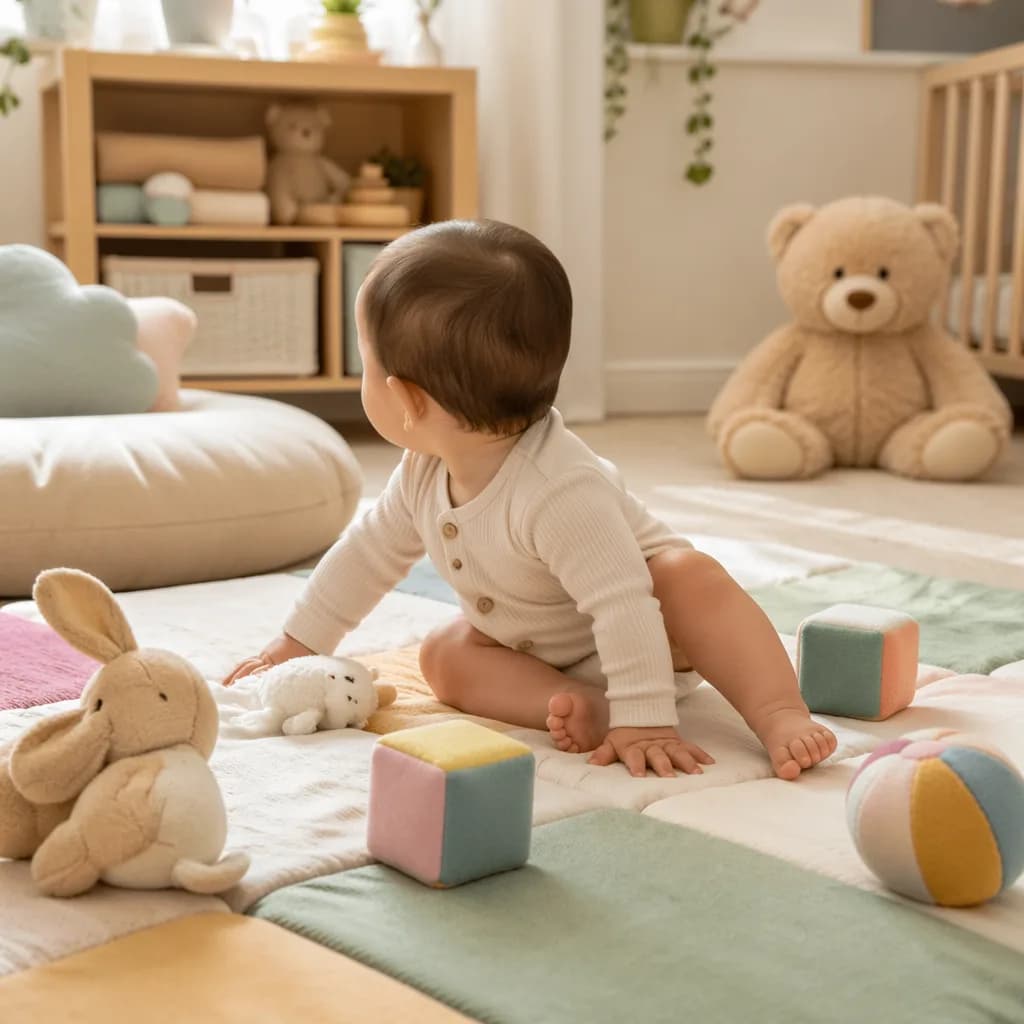
Stronger sitting and rolling practice is one of the big gross motor shifts many babies work on between 6 and 9 months.
Your baby may look suddenly busy on the floor. One minute, your baby is on their back, feet in the air. A minute later, they may twist toward a toy, roll to one side, push through their arms, or try to sit with a proud little wobble.
This stage can feel joyful because your baby starts using the whole body with more purpose. Your baby may reach for you, turn toward your voice, or work hard to get closer to a crinkly book. The effort is part of the charm. You might see a serious face, a few grunts, then a big smile when your baby gets where they wanted to go.
Gross motor skills use the larger muscles of the body, while fine motor skills use smaller muscles, especially in the hands, according to Fine motor skills: birth to 2 years. So this milestone is about the big work: belly, back, shoulders, hips, legs, and balance. Your baby is practicing how those parts work together.
You do not need fancy gear for this. A clear patch of floor, a soft blanket, and your face nearby can make a rich little practice space. Your baby learns a lot from ordinary moments with you.
Around this age, movement gives you useful clues about your baby’s development. Milestones by 6 Months For Everyone explains that how your child plays, learns, acts, and moves offers clues about development. It also says developmental milestones are things most children, 75% or more, can do by a certain age. That means milestones are guideposts, not a race.
Your baby’s body is also getting better at linking looking, reaching, and moving. Fine motor skills: birth to 2 years explains that visual-motor skills help coordinate the hands, legs, and the rest of the body. That matters during gross motor play too. When your baby sees a soft block just out of reach, their eyes help guide the twist, lean, push, or scoot toward it.
This stage often brings more practice with balance. Sitting takes steady work from the belly and back. Rolling takes the shoulders, hips, and head working in a pattern. Reaching from the tummy asks your baby to shift weight from one side to the other. Each tiny attempt can help your baby learn where their body is in space.
Play matters here. Fine motor skills: birth to 2 years notes that babies and toddlers need lots of playtime and practice to develop motor control. For your baby, that practice may look like tummy time with you smiling on the floor, rolling toward a favorite rattle, or leaning forward while seated between your legs.
Many babies at 6 to 9 months show more control during floor time. Your baby may roll more often, push up higher on their arms, or sit for short moments with support close by. Some little ones lean on their hands in front, almost like a tiny tripod. Others prefer to roll first and sit later.
You may notice your baby using the body in bursts. A few minutes of hard work can be plenty. Then your baby may want a cuddle, milk, or a quiet reset. That pattern can be very normal. Gross motor practice is tiring.
Some babies love tummy time by now. Others still complain, especially when they cannot yet move the way they want. You can keep it gentle. A short tummy moment on your chest counts as practice. So does reaching for your face while lying beside you.
Your baby may also start to understand that movement gets results. If the toy is to the left, your baby may turn left. If you sit nearby, your baby may wiggle toward you. That growing purpose can bring a lot of joy to daily play.
There is a wide range in how babies practice these skills. Milestones by 6 Months For Everyone frames milestones as skills most children show by a certain age, which leaves room for different timing. Your baby may focus on one skill for a while, then surprise you with a new one after many quiet practice days.
- ). Keep them playful and non-medical; never prescribe therapy or medical action.If you feel worried about your baby’s movement, you can chat with your pediatrician and share what you’re seeing.
