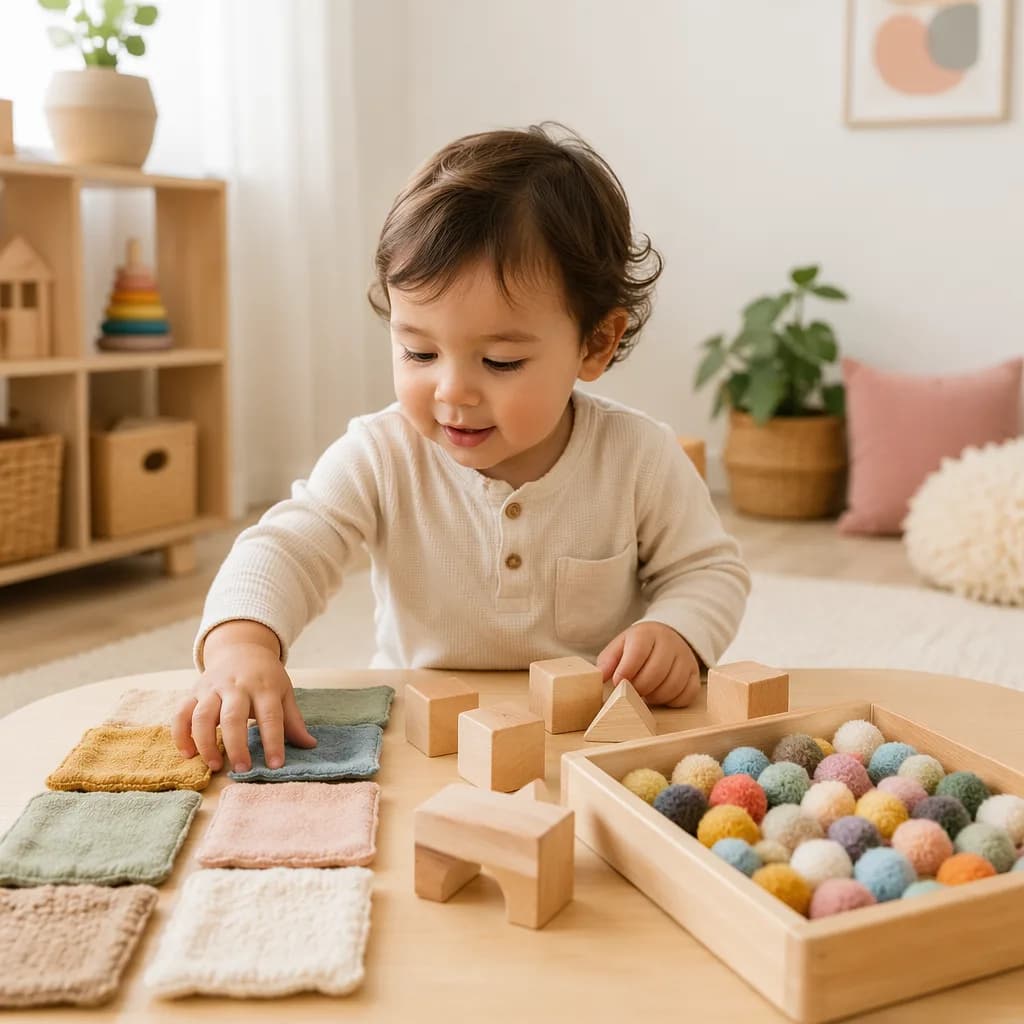
Toddler sensory curiosity grows from 24 to 36 months, as your child starts using sight, sound, touch, movement, and body awareness in more purposeful ways.
Your toddler may suddenly notice everything.
The tag inside a shirt. The crunch of toast. The deep boom of a truck outside. The slippery feel of soap. The way wet sand sticks to tiny fingers. These everyday sensory moments can become big learning moments for your child.
At this age, sensory play often looks like serious work. Your toddler might pour water from cup to cup, stomp in puddles, smear yogurt with one finger, or press every button on a musical toy. You may see your child pause to listen, then copy a sound. You may watch them choose the soft blanket over the scratchy one.
This is your toddler learning through the body. Touch tells them about texture. Movement helps them feel balance and space. Sounds help them sort what is familiar, loud, fun, or surprising. Vision helps them compare shapes, sizes, and distance. It can be messy. It can be loud. It can also be full of joy.
A simple example: your toddler drops a wooden spoon on the kitchen floor, then drops a sock. The spoon clacks. The sock barely makes a sound. Your child may laugh and try again. That tiny experiment helps your child connect action, sound, weight, and force.
Between 24 and 36 months, many toddlers bring together movement, thinking, language, and sensory input in new ways. St. Jude Children’s Research Hospital describes this age as a time when children often run easily, climb well, pedal a tricycle, walk up and down stairs, copy a circle, string large beads, follow 2- or 3-step instructions, and name familiar objects. Those skills give your toddler more chances to explore with their whole body and then talk about what they notice (St. Jude Children’s Research Hospital).
Sensory learning also builds on earlier patterns. Pathways.org describes sensory development as including calming with rocking, touch, and gentle sounds, enjoying different kinds of movement, exploring toys with hands and mouth, focusing near and far, and investigating shapes, sizes, and textures. By toddlerhood, your child often uses those same systems in bigger, busier ways (Pathways.org).
So your toddler is not just “making a mess” in the sensory bin. Your child may be practicing how hard to squeeze, how far to reach, how much water fits in a cup, or how a sound changes when an object hits tile instead of carpet. Research-based milestone lists also connect this age with more precise hands, stronger movement, and better understanding of words like “in,” “on,” and “under” (St. Jude Children’s Research Hospital). That means your child can explore and label the world with more purpose.
This matters because sensory information helps your toddler plan actions. If the slide feels fast, your child may sit down more carefully next time. If a puzzle piece has a bumpy edge, your child may turn it with both hands. If the blender sounds too loud, your child may cover their ears and step back. These are small, useful ways your child learns comfort, choice, and control.
Many babies who are now toddlers seek more active sensory play during this stage. Your child may love jumping, spinning, climbing, pushing a laundry basket, or carrying a stuffed animal from room to room. Movement gives strong body feedback, and many toddlers ask for it again and again.
Some little ones prefer quieter sensory play. Your toddler may line up smooth stones, stroke a soft toy, finger-paint slowly, or listen to the same song several times. This can still be rich sensory learning.
You may also see clear likes and dislikes. Your toddler may adore bath time but dislike hair washing. They may ask for crunchy crackers and reject mushy banana. They may love bare feet in grass one week, then want shoes the next. Preferences can shift with tiredness, hunger, noise, or the setting.
Often around this age, toddlers use more words during sensory moments. Your child may say “loud,” “wet,” “hot,” “sticky,” “mine,” or “again.” They may follow simple directions during play, like putting a toy “in” a box or standing “on” a mat, which fits with the language skills described for 24 to 36 months by St. Jude Children’s Research Hospital.
Your toddler may also test force. Pouring too fast, hugging too hard, crashing blocks, or stomping loudly can be part of learning how much pressure to use. Pathways.org notes that younger children experiment with the amount of force needed to pick up objects. Toddlers often carry that learning into bigger play, with bigger muscles and more confidence.
If you’re concerned about your child’s sensory responses or daily comfort, you can chat with your pediatrician.
- ). Keep them playful and non-medical; never prescribe therapy or medical action.