
12 Month Baby Milestones: Words, Steps, Play, Food
What are typical 12 month baby milestones?
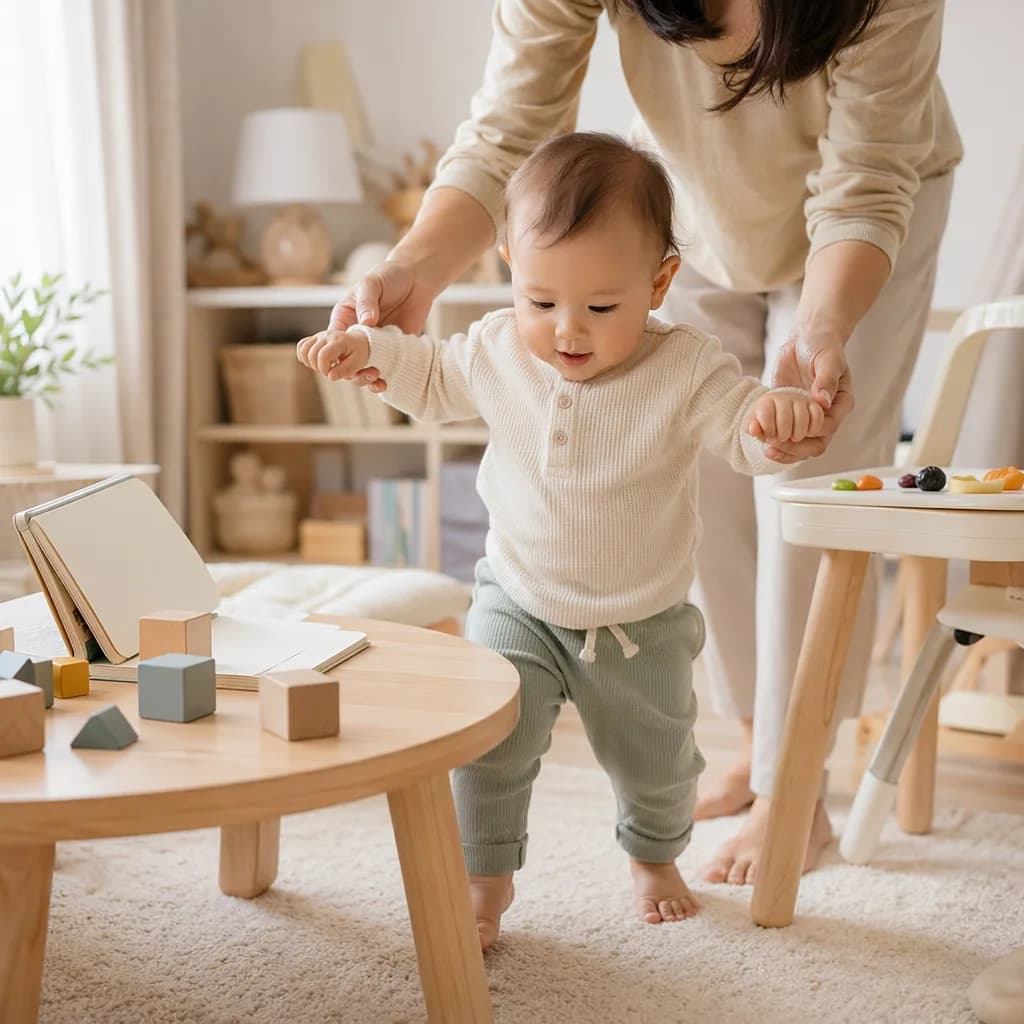
At 12 months, many babies are busy showing new skills in little flashes all day long. You might see more movement, like pulling to stand, crawling quickly, cruising along furniture, or taking a first step. You may hear early words or word-like sounds, often mixed with lots of pointing, waving, reaching, and noisy babble.
This age can feel big because one year olds are learning across several areas at once: how they move, play, communicate, act with people, and handle everyday routines like meals and sleep. A baby might clap when you sing, look for a hidden toy, hand you a book, poke food with one finger, or try to drink from a cup with help. Some are steady walkers. Some are expert crawlers. Some are mostly working on balance and confidence.
A very normal 12 month old might cruise along the couch, point to the dog, say “mama,” and then drop peas from the high chair just to see what happens. That one tiny dinner scene shows movement, communication, social attention, curiosity, and feeding practice.
Milestones are helpful signs to watch, not strict deadlines your baby has to meet on their birthday. Children develop at different speeds, so a baby may be ahead with crawling or walking but quieter with words, or chatty and social while still cautious about standing. If you’ve been following Baby Milestones by Month: What to Watch First Year, you already know development often comes in uneven little bursts.
It can also help to look back at where things began in Newborn Milestones: First 12 Weeks by Week, especially on the days when progress feels slow. Growth, sleep changes, and clingy phases can all affect what you see, so keep Baby Growth Spurts in the First Year: What to Know and Baby Separation Anxiety: Signs, Timing, and Help close if your baby suddenly seems extra hungry, restless, or attached to you.
And if you’re jotting memories into a baby book, even the small details count. The first “mama,” the couch cruising, the pea-dropping experiment, or a name note like Tanmay Suresh Upadhyay: meaning & origin can all become part of the story you’ll love rereading later.
Movement milestones at 12 months
Around 12 months, movement starts to look busy, curious, and very determined. Many babies are pulling to stand, cruising along the couch, crawling quickly, sitting well without tipping over, and changing positions with more control, like moving from sitting to hands and knees, then back again.
Some babies take those first independent steps before their first birthday. Others are still cruising and may walk closer to 15-18 months. Both patterns can be part of typical development, especially if your baby is gaining strength, balance, and confidence over time. If you’re tracking the whole first year, our guide to Baby Milestones by Month: What to Watch First Year can help you see how these skills often build on each other.
Fine motor skills are busy now too. You may see a pincer grasp, with thumb and finger picking up tiny bits of food, pointing at something interesting, clapping when excited, waving “bye bye,” dropping blocks into a cup, dumping them out again, and trying to turn chunky board book pages. These little hand movements matter. They’re part of how babies play, learn, act, and communicate, which the CDC describes as key areas of developmental milestones.
Simple practice works best when it feels like play. Try a sturdy push toy on a flat surface, barefoot time on safe floors so toes can grip, or placing a favorite toy just out of reach on the couch to encourage cruising. You can also make a small supervised climbing zone with couch cushions on the floor. Stay close. Babies this age are brave before they’re steady.
You might notice movement practice comes in bursts, especially during clingy weeks or sleepier stretches. That can feel similar to earlier changes you may remember from Newborn Milestones: First 12 Weeks by Week, and it often overlaps with Baby Growth Spurts in the First Year: What to Know. If your baby suddenly wants you nearby while practicing new skills, Baby Separation Anxiety: Signs, Timing, and Help may feel reassuring too.
First words and communication at one year
At 12 months, communication can feel like a mix of tiny words, big feelings, and a lot of pointing at crackers.
The CDC describes developmental milestones as skills children reach in how they play, learn, speak, act, and move, and one year is a wonderful age for watching those skills come together. Many 1 year olds are babbling with expression now, almost like they’re telling a whole story in their own language. You may hear one or two clear words, like “mama,” “dada,” or “uh-oh,” along with copied sounds they’ve picked up from you.
Understanding often shows up before talking. So your baby may follow a simple request like “give me the ball” before they can actually say “ball.” That counts. Receptive language is real communication, even when the spoken words are still warming up.
Gestures matter too. A lot.
At this age, your baby may point to something they want, reach up to be held, wave bye-bye, shake their head no, or bring you an object to show you. If they toddle over with one sock and hold it up proudly, that’s communication. They’re sharing attention with you, which is a big social step.
Simple daily routines are the best speech practice. Name real objects as you use them: “cup,” “spoon,” “sock,” “dog.” Pause after you talk so your baby has a chance to answer with a sound, gesture, or look. Read the same short book again and again, even if you’re tired of it, because repetition helps babies connect words with meaning. And when your baby says “ba-ba-ba,” copy it back with warmth. Then add one small word: “Ba-ba. Ball!”
If you’ve been tracking skills since the early days, Newborn Milestones: First 12 Weeks by Week and Baby Milestones by Month: What to Watch First Year can help you see how much has changed. Big developmental stretches can also overlap with clinginess or fussy weeks, so Baby Separation Anxiety: Signs, Timing, and Help and Baby Growth Spurts in the First Year: What to Know may be useful companions.
If your baby isn’t meeting milestones, has lost skills they once had, or you’re worried, trust that instinct. The CDC says you know your child best and recommends talking with your child’s doctor, sharing your concerns, and asking about developmental screening.
Social and emotional development at 12 months
At 12 months, social development can feel big and tender. The CDC describes developmental milestones as skills children reach in how they play, learn, speak, act, and move, and this age often brings clearer preferences, stronger feelings, and more obvious bids for connection.
You may notice your baby strongly prefers familiar adults now. They might reach for you when tired, bring you a toy just to show it, crawl back for a quick cuddle, or look at your face when something surprising happens. Some babies react to emotions around them too, like pausing when someone sounds upset or smiling when everyone laughs.
Stranger anxiety can also show up around this time, and it’s not a sign that you’ve done anything wrong.
Picture a family party: an auntie leans in with open arms, and your baby buries their face in your shoulder. Ten minutes later, after watching from your lap, they reach toward the same auntie’s necklace or offer her a block. That slow warm-up counts. Your lap is the safe base.
You may also see the first flashes of independence. A 12 month old might push away a spoon, choose one toy over another, protest diaper changes, or insist on trying to pull off a sock alone. It can be messy. It’s also practice.
Gentle support helps. Keep goodbyes predictable: a hug, a simple phrase, then leave without sneaking away. If separation feels intense, Baby Separation Anxiety: Signs, Timing, and Help can help you sort out what’s typical. Name feelings in plain words: “You wanted me to stay.” Offer tiny choices, like “blue cup or green cup?” For a wider view of first-year changes, see Baby Milestones by Month: What to Watch First Year, especially if you’re remembering how far they’ve come since those early weeks.
Play and learning skills for a 12 month old
At 12 months, play starts to look less random. Your baby is still mouthing, banging, tossing, and crawling toward the dog bowl, yes. But underneath all that busy motion, they’re working on how the world fits together.
Some play-based one year old milestones you may notice include:
- Looking for a toy after it’s hidden under a cloth, which shows growing object permanence
- Copying simple actions, like clapping, waving, stirring with a spoon, or pretending to talk on a phone
- Trying simple problem-solving, such as turning a block around to make it fit
- Enjoying cause-and-effect toys, like pop-up buttons or anything that makes a sound after they press, shake, or bang it
- Exploring texture, sound, and movement through squishy food, crinkly paper, rattles, music, crawling, cruising, and climbing over cushions
This is also the age when “again” becomes the whole game. Dumping a basket. Banging two blocks together. Dropping a spoon from the high chair. Then dropping it again while staring right at you.
Tiring? Absolutely.
Learning? Also yes. Repeating helps babies test patterns: What happens if I let go? Does the cup always fall? Will Dad make that funny face again? The CDC describes milestones as skills children show in how they play, learn, speak, act, and move, and this kind of everyday play gives you a front-row seat to those changes. If you like seeing the bigger first-year picture, Baby Milestones by Month: What to Watch First Year can help you place this stage alongside earlier ones.
Good toys don’t need to be fancy. Try stacking cups, a shape sorter with help, pop-up toys, soft balls, chunky crayons, music, peekaboo, or putting blocks into a bowl. A clean oatmeal container and a few large blocks can buy you a very focused five minutes.
Here’s a simple 10-minute play routine:
- Read one short board book.
- Sit on the floor and roll a ball back and forth.
- Offer a bowl or container and let your baby fill it, dump it, and fill it again.
If your baby gets clingy during play, that can happen around this age too. You may find Baby Separation Anxiety: Signs, Timing, and Help reassuring. And if play suddenly feels different during a fussy stretch, Baby Growth Spurts in the First Year: What to Know may give you helpful context.
It’s sweet to think how far they’ve come since those earliest weeks, when you were watching tiny newborn changes in Newborn Milestones: First 12 Weeks by Week. Now they’re busy experimenting with gravity, noise, and your patience.
Tiny scientist. Big feelings. Lots of blocks on the floor.
And if you’re saving family keepsakes from this first birthday, even something personal like a name story, for example Tanmay Suresh Upadhyay: meaning & origin, can become part of the memory of who your baby was at one.
Feeding milestones and nutrition at 12 months
Around the first birthday, meals often start to look a little more like family meals. Many babies are moving toward three meals and two snacks, but appetite can still swing from one day to the next. One morning they’ll eat every banana slice on the tray. The next morning, the same banana is apparently offensive.
That’s normal toddler energy beginning to show up.
After 12 months, many babies can drink whole milk, unless their clinician recommends something different for their growth, allergies, digestion, or family needs. If you’re making that switch, it doesn’t have to happen all at once. Some families offer milk in a cup with meals while keeping the rest of the routine calm and familiar.
Cup practice is a big part of this stage. So is self-feeding. Fingers are still the main tool, and that’s okay. You can also offer early spoon practice with thicker foods like yogurt or mashed beans, knowing that some of it will land on the bib, the high chair, and possibly the dog.
Good 12 month foods are usually soft, easy to gum, and cut into safe pieces. Think soft fruit, small pieces of scrambled egg, pasta, beans, shredded meat, and well-cooked vegetables. If you’ve been tracking changes through the first year, our guide to Baby Milestones by Month: What to Watch First Year can help put this new independence in context.
Choking safety still matters a lot. Avoid whole grapes, popcorn, hard candy, large nut pieces, hot dog rounds, and big chunks of raw vegetables. For foods that can be made safer, cut them small, cook them until soft, or skip them for now if they make you nervous.
Picky eating can also pop up around this age. A simple breakfast might be yogurt, banana slices, and toast strips. You choose what to offer, and your baby gets to decide how much to eat from what’s there. No begging required. No short-order cooking either.
Some days food refusal is about taste. Some days it’s teething, tiredness, distraction, or a clingy phase. If separation is suddenly making meals harder, this piece on Baby Separation Anxiety: Signs, Timing, and Help may feel familiar. And if appetite seems to rise and fall along with sleep or mood, Baby Growth Spurts in the First Year: What to Know is a helpful next read.
Sleep changes around the first birthday
Around 12 months, sleep can feel a little wobbly again. Many babies this age sleep about 11-14 hours total in 24 hours, often split between nighttime sleep and one or two naps. But there isn’t one schedule every family should be following. Some babies are still very much on two naps, while others are starting to push toward one.
A few things can stir up nights right now: teething, illness, travel, separation anxiety, and the very exciting work of learning to walk. If your baby is pulling up in the crib at 2 a.m. like it’s practice time, you’re not alone. New movement skills can spill into sleep, especially if they haven’t had much time to practice during the day. This stage can also overlap with clinginess, so our guide to Baby Separation Anxiety: Signs, Timing, and Help may help you sort out what’s going on.
Keep bedtime boring in the best way. Same steps, same order, same calm voice: bath, pajamas, book, song, bed. If they cry, try brief, calm check-ins rather than turning the lights on or starting a long play session. Daytime outdoor time can help, and so can giving them plenty of safe chances to crawl, cruise, stand, and step before dinner.
If you’re tracking the bigger first-year picture, Baby Milestones by Month: What to Watch First Year is a helpful companion. For those “wasn’t my baby just tiny?” moments, Newborn Milestones: First 12 Weeks by Week and Baby Growth Spurts in the First Year: What to Know can be sweet to revisit.
When to ask the pediatrician
You know your baby best. If something feels off at 12 months, it’s okay to ask early. That doesn’t mean something is wrong. It means you’re getting clear eyes on it and, if support would help, you’re starting sooner.
Bring up any of these with your pediatrician:
- No gestures yet, like pointing, reaching to show you something, or waving “bye bye”
- No babbling
- Not responding to their name
- Not bearing weight on their legs when supported
- Loss of a skill they used to have
- Using one side of the body much more than the other
Feeding is worth mentioning too. Tell the doctor if your baby frequently chokes, seems to have trouble swallowing, isn’t gaining weight well, or accepts only a very limited range of textures. For example, if they gag hard every time a soft piece of banana touches their tongue, or they can only manage very smooth purées, that’s useful information.
Videos can make the visit easier. A 20-second clip of how your baby crawls, pulls to stand, eats lunch, or responds when you call their name can show the pediatrician what’s happening at home. Babies don’t always perform on command in an exam room, especially if they’re tired, hungry, or dealing with clinginess like we talk about in Baby Separation Anxiety: Signs, Timing, and Help.
The CDC says developmental milestones include how children play, learn, speak, act, and move, and it encourages parents not to wait if a child isn’t meeting milestones, has lost skills, or if there are other concerns. You can also use a month-by-month view, like Baby Milestones by Month: What to Watch First Year, to jot down what you’re seeing before the appointment.
Growth, sleep, feeding, and new skills can all feel tangled during the first year. If you’re trying to sort out what’s typical change and what needs a closer look, Baby Growth Spurts in the First Year: What to Know can help you put the bigger picture together.
How to support 12 month old development at home
At 12 months, support looks wonderfully ordinary. You don’t need special toys or a packed activity plan. The CDC describes milestones as skills children show in how they play, learn, speak, act, and move, and so much of that growth can happen during the day you’re already having.
Talk through routines in simple language. “Sock on. Other sock on. Now shoes.” During diaper changes, copy your baby’s sounds and pause so they can answer you back. That face-to-face back-and-forth is far more useful than passive screen time, especially because your baby is watching your mouth, your eyes, and your reactions.
Read every day if you can, even for two minutes. Let your baby turn the pages, chew the corner of a board book, or choose between two books. Yes, you may read the same farm book 11 times before breakfast. That repetition helps. The same words, songs, and peekaboo games can build language, memory, and connection.
Offer safe floor play every day. Put a toy just out of reach, roll a soft ball, or stack two blocks and let your baby knock them down. If they’re practicing standing, let them hold a stable surface like a heavy couch while you stay close. Small chances to try, wobble, and try again are part of learning. For a wider first-year view, Baby Milestones by Month: What to Watch First Year can help you see how these skills build over time.
Mealtimes count too. Eat together when possible, and let your baby try to feed themself. It’ll be messy. A banana piece may end up in their hair. Still, picking up food, bringing it to the mouth, and joining family meals all support growing independence.
Sing action songs like “If You’re Happy and You Know It” or make up your own hand motions. If clinginess pops up while you step away, that can be part of this age too, and Baby Separation Anxiety: Signs, Timing, and Help may be reassuring.
And if your baby seems hungrier, sleepier, or suddenly different for a few days, you’re not imagining it. Baby Growth Spurts in the First Year: What to Know is a helpful read, especially alongside earlier guides like Newborn Milestones: First 12 Weeks by Week.
Frequently Asked Questions
What should a 12 month old be able to do?
Many 12 month olds pull to stand, cruise, point, wave, babble, say one or two words, use a pincer grasp, and feed themselves some soft foods.
Should my 12 month old be walking?
Not necessarily. Some babies walk at 12 months, but many start later, often between 12 and 18 months.
How many words should a one year old say?
Many one year olds say one or two clear words, like “mama” or “bye,” but gestures and understanding simple words matter too.
What should a 12 month old eat?
Offer soft family foods in safe pieces, such as eggs, yogurt, fruit, pasta, beans, vegetables, and small pieces of tender meat, plus breast milk, formula, or whole milk as advised.
Is it normal for a 12 month old to be clingy?
Yes. Separation anxiety and stranger anxiety are common around this age, especially during new situations, illness, or big routine changes.
When should I worry about 12 month baby milestones?
Call your pediatrician if your baby is not babbling, pointing, waving, responding to their name, bearing weight on legs, or if they lose a skill they had before.
Frequently asked questions
What milestones should a 12 month old have?
How many words should a 12 month old say?
Is it normal if my 12 month old is not walking yet?
What should a 12 month old eat?
References
Sources
External research this article was grounded in.
- 12 (number) - Wikipediaen.wikipedia.org
- CDC's Developmental Milestones | Learn the Signs. Act Early. | CDCcdc.gov
- Number 12 Meaning & Symbolism in Mythology, Folklore & Spirit Work - Wisdom Of The Spiritwisdomofthespirit.com
- Mastering Milestones at 12 Months: A Guide to Baby Development - The Parenting Protheparentingpro.com
Related reading
More from the journal → development
Newborn Reflexes Explained: What Parents Notice Early
Newborn reflexes can look surprising at first. Here’s what rooting, sucking, grasping, startle, and stepping reflexes mean in the early weeks.
13 min readJul 17, 2026 development
When Do Babies Roll Over? Milestones and Safe Practice
Most babies roll between 4-6 months, but the direction matters. Here’s what rolling usually looks like, how to practice safely, and when to ask for help.
10 min readJul 3, 2026- development
Tummy Time by Age: Newborn to Crawling Guide
A calm age-by-age tummy time guide, from sleepy newborn chest time to rolling, reaching, and early crawling practice.
14 min readJul 3, 2026