
Baby Separation Anxiety: Signs, Timing, and Help
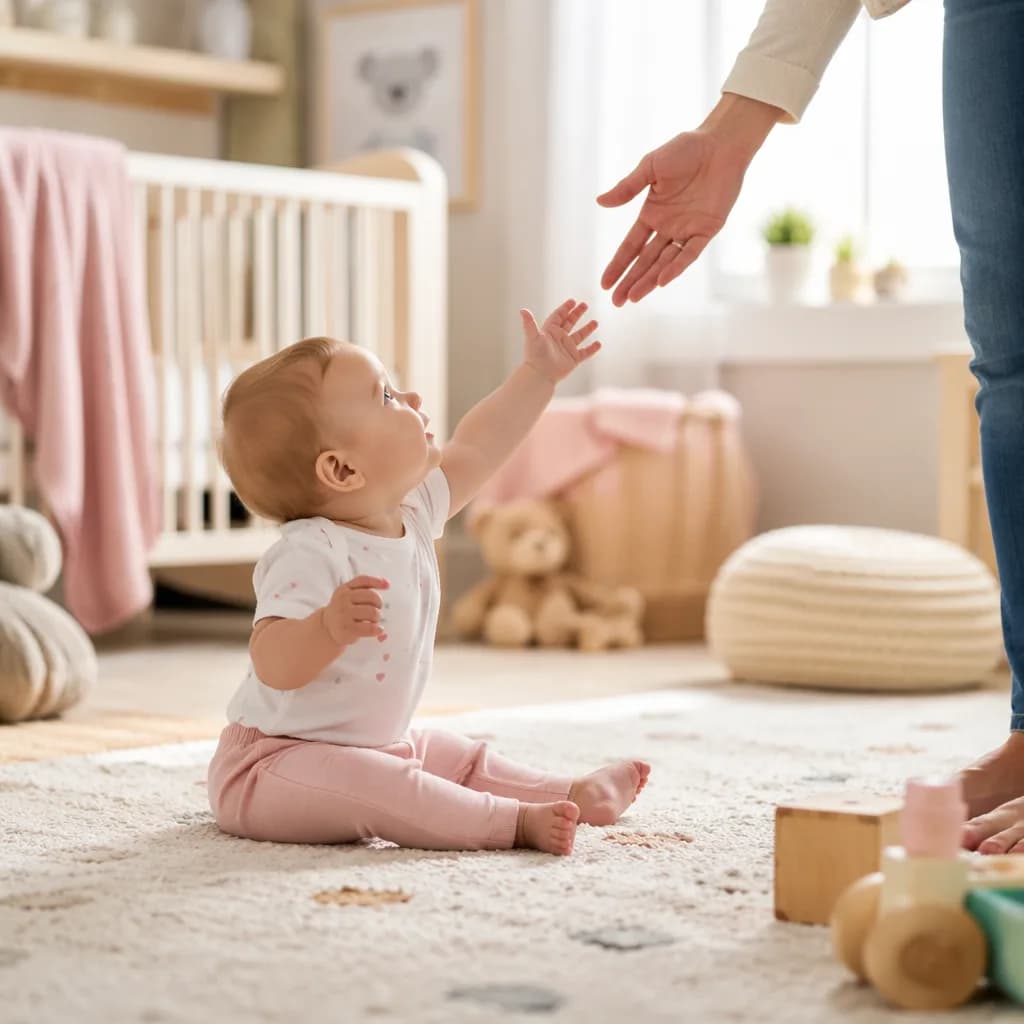
What is baby separation anxiety?
Baby separation anxiety is the distress a baby feels when a trusted caregiver leaves or is out of sight. It can look like crying when you walk away, clinging at drop-off, waking and needing you nearby, or getting upset when someone else holds them.
This isn’t a sign that your baby is spoiled. It also doesn’t mean you’ve done something wrong. Separation anxiety is a normal developmental stage, and it often shows up as babies start making big mental leaps in the first year. If you’re tracking changes alongside baby milestones by month or wondering why behavior shifts during baby growth spurts in the first year, this can be one of those “oh, that explains it” moments.
A lot of it connects to object permanence. Your baby is beginning to understand that you still exist even when they can’t see you. The hard part is that they don’t yet understand when you’ll come back. So from their side, your quick trip to the kitchen can feel big and uncertain.
For example, maybe last month your baby happily kicked on the play mat while you grabbed a drink. Now, the second you step into the kitchen, their face crumples. Same mat. Same baby. New awareness.
Like tummy time or learning when babies roll over, this stage can be challenging, but it’s part of growing.
When does separation anxiety start in babies?
Separation anxiety in babies often starts around 6 to 9 months. This is the age when many babies begin to understand that you still exist when you leave the room, but they don’t yet understand when you’ll come back. So yes, that sudden crying when you step into the kitchen can be a real developmental shift, not “bad habits.”
For many babies, separation anxiety peaks between 10 and 18 months. After that, it usually eases gradually as toddlers build more language, stronger memory, and confidence with familiar routines. A toddler who can hear “I’ll be back after snack” and remember that you did come back yesterday has a little more to hold onto emotionally.
The timing can vary, though. Some babies show signs earlier or later depending on temperament, daily routines, illness, travel, daycare changes, or sleep disruptions. A baby who was fine with Grandma last week may suddenly cling hard after a rough night or a new childcare start. That doesn’t mean you’ve gone backward.
A baby clingy phase can also come and go during growth spurts, teething, or big family changes. If you’re trying to sort out what’s separation anxiety and what might be a developmental leap, it can help to look at baby growth spurts in the first year alongside baby milestones by month.
A calm benchmark: if your baby calms after comfort and is otherwise growing, feeding, and interacting well, the clinginess is usually age-appropriate. Keep routines simple. Practice tiny separations, like waving from the doorway during tummy time or while they’re practicing new skills like rolling over. Then come back with a smile. That repetition matters.
Signs your baby is going through a clingy phase
Separation anxiety can look loud and obvious. Your baby may cry when you leave the room, reach both arms up to be picked up, refuse another caregiver, wake more at night, or need extra contact just to settle. Some babies cling at your shoulder the second someone else walks in. Others seem fine until you put on shoes or pick up your bag.
There are quieter signs too. Your baby might watch you closely from the playmat, crawl after you from room to room, fuss during handoffs, or become upset when a familiar routine changes. This can show up around the same season as big developmental shifts, so if everything suddenly feels different, it may help to look at baby milestones by month or even compare notes with common baby growth spurts in the first year.
A daycare drop-off is a classic example. Your baby may sob when you pass them to the teacher, then slowly calm once that trusted adult starts the usual song, brings out the same soft toy, or begins a familiar play routine. A simple nursery rhyme can become part of the comfort pattern, much like “Rock-A-Bye Baby” or “Mary Had a Little Lamb” in a familiar kids’ song lineup.
The tricky part is sorting separation anxiety from everyday fussiness. Hunger, tiredness, overstimulation, or illness can also make a baby cry and want arms. The difference is often the trigger. If the tears spike right when you move away, hand them to someone else, or leave their sight, separation anxiety may be part of it.
Stranger anxiety can overlap, especially when unfamiliar people get too close too quickly. If your baby buries their face in your shirt, give them a minute. Warm up slowly. That counts.
Gentle ways to help with separation anxiety in babies
Start small, and start at home. If your baby cries when you leave the room, try a tiny, predictable separation first: “I’ll be right back,” then step into the bathroom for a minute and return with a warm smile. Keep your voice calm. The goal isn’t to stop every tear right away. It’s to help your baby learn, little by little, that you leave and you come back.
A consistent goodbye helps too. Use the same short phrase each time, like “Bye-bye, I’ll be back,” with one hug or kiss. Then go. Long exits can make the moment feel bigger and harder, especially if you keep returning because your baby cries. Come back warmly when it’s time, but don’t turn the goodbye into a big production.
Peekaboo is more useful than it looks. So are little hide-and-return games, like ducking behind the couch and popping back out. These playful moments support the idea that people and things still exist when they’re out of sight, which is tied to the developmental changes behind separation anxiety. If you’re watching other first-year changes stack up at the same time, our guide to Baby Milestones by Month: What to Watch First Year can help you place this phase in context.
Let trusted caregivers build connection while you’re still nearby. Sit on the floor while Grandma offers a toy, sings a song, or reads a board book. Once your baby seems more settled, step away briefly. Over time, those short separations can stretch.
A comfort object can help, if your baby is old enough for it to be safe. A small blanket, stuffed animal, or even a piece of your clothing with your scent may be reassuring during awake time or daycare transitions. For younger babies, keep comfort objects outside sleep spaces and follow safe sleep practices.
Drop-offs work best when they’re calm and simple: one hug, one phrase, one handoff, then leave. Avoid sneaking out. It may seem kinder in the moment, but it can make babies watch more anxiously for the next disappearance.
Also, protect the basics. A fed, rested baby usually has more emotional bandwidth than an overtired, hungry one. If sleep, feeding, or growth changes seem to be piling on, you might find Baby Growth Spurts in the First Year: What to Know, Tummy Time by Age: Positions, Timing, Daily Tips, or When Do Babies Roll Over? Timing, Signs, and Safety helpful as you sort out what’s normal for this stage.
What to do at bedtime and during night wakings
Separation anxiety can feel louder at night. The room is dark and quiet, the busy daytime distractions are gone, and the person your baby wants most has just stepped away. If your baby is in that 6-8 month stage or older, they may understand that you still exist when they can’t see you, but they don’t yet feel sure about when you’ll come back.
A steady bedtime routine helps because it makes the evening predictable. Keep the order the same each night, even if the whole thing needs to be short: bath, pajamas, book, song, crib. The exact steps matter less than the pattern. Your baby starts to learn, “This is what happens before sleep.”
During night wakings, try brief, reassuring check-ins that fit your family’s sleep approach. Some parents stay beside the crib for a minute. Some pat the mattress, offer a calm phrase, and leave. Some pick up briefly and then place baby back down. The key is to keep it boring, loving, and repeatable.
You can use the same words every time:
“You’re safe. It’s sleep time. I love you. I’ll see you in the morning.”
Simple is powerful at 2 a.m.
Expect bumps. Illness, travel, teething, and new skills can temporarily increase night waking. If your baby is working on rolling, sitting, or crawling, sleep may look messier for a bit. If you’re tracking changes, our guides on Baby Milestones by Month: What to Watch First Year, When Do Babies Roll Over? Timing, Signs, and Safety, and Baby Growth Spurts in the First Year: What to Know can help you spot what else might be going on.
Don’t feel pressured to fix everything in three nights. Pick one calm plan and give it time instead of trying five new strategies in one week. Consistency is kinder than constant change, for you and for your baby.
How caregivers can respond without making it worse
First, take this pressure off your shoulders: comforting your baby warmly doesn’t create separation anxiety. Separation anxiety is a normal developmental stage, often starting around 6-8 months and peaking between 10-18 months, as babies begin to understand that you still exist when they can’t see you.
So yes, pick them up. Hug them. Let your voice be the steady thing in the room.
The balance is gentle but clear: comfort your baby, then give tiny chances to practice being apart. That might mean stepping into the kitchen for one minute while Grandma sits nearby with a familiar toy, then coming back with a smile. Over time, those small, positive separations help your baby learn, “My person leaves, and my person comes back.”
Try to stay calm during the tears. Babies pay close attention to our faces and voices, so a soft voice and relaxed body can help them borrow a little of our steadiness. You can also name what’s happening in simple words: “You wanted me to stay. Grandma is holding you. I come back.”
Predictable routines matter even more during big transitions, like daycare starting or a parent returning to work. A short goodbye routine, such as hug, kiss, wave, can be easier to understand than a long, emotional exit. If you’re tracking other first-year changes too, our guides on baby milestones by month and baby growth spurts can help you see the bigger picture.
One practical handoff trick: ask the caregiver to greet your baby the same way each time. Same stuffed bunny. Same little song. Same walk to the window or outside. Familiar cues can make the goodbye feel less sudden.
When to ask your pediatrician for advice
Most separation anxiety is a normal stage, often starting around 6-8 months and peaking between 10-18 months. Still, there are times when it’s smart to check in with your pediatrician, especially if something feels different from your baby’s usual pattern.
Call or make an appointment if you notice sudden extreme clinginess, crying that’s hard to soothe, feeding changes, poor sleep that doesn’t improve, loss of skills, or any signs of pain or illness. Sometimes discomfort can look a lot like “just wanting you.” Ear infections, reflux, constipation, and other aches can make a baby seem extra clingy because being held is the only thing that feels manageable.
It’s also worth asking for help if separation distress is disrupting daily life for weeks, making daycare drop-offs impossible, affecting feeding or sleep in a bigger way, or leaving you or another caregiver feeling overwhelmed. That doesn’t mean you’ve failed. It means you’re paying attention.
Your pediatrician can help sort out what fits normal development and what might need a closer look, including medical discomfort or developmental concerns. If you’re tracking patterns, it can help to compare them with gentle guides like Baby Milestones by Month: What to Watch First Year or Baby Growth Spurts in the First Year: What to Know.
Asking for support is a smart parenting move, not an overreaction. You know your baby best.
Frequently Asked Questions
When does separation anxiety start?
It often starts around 6 to 9 months, peaks between 10 and 18 months, and usually eases as toddlers gain confidence and language.
How long does baby separation anxiety last?
It can last a few weeks or come in waves over several months. Big changes, illness, travel, or teething can bring it back for a while.
Is separation anxiety in babies a sign of a problem?
Usually no. It is a normal sign that your baby knows you, trusts you, and is learning that people can leave and come back.
Should I sneak out to avoid making my baby cry?
Try not to sneak out. A short, calm goodbye helps your baby learn what to expect and can build trust over time.
Why is my baby suddenly clingy?
A baby clingy phase can happen with normal development, teething, sickness, poor sleep, a new caregiver, daycare, travel, or a change in routine.
Can sleep training make separation anxiety worse?
It depends on the timing, method, and baby. During a strong clingy phase, many families use extra reassurance and make changes more gradually.
Frequently asked questions
When does separation anxiety start in babies?
What are common signs of baby separation anxiety?
Is separation anxiety a sign my baby is spoiled?
How can I help my baby with separation anxiety?
Can separation anxiety affect baby sleep?
References
Sources
External research this article was grounded in.
Related reading
More from the journal → development
When Do Babies Laugh? Milestones and Play Ideas
Most babies laugh around 3 to 4 months. Learn what early giggles mean, what can encourage them, and when to check in with your pediatrician.
8 min readAug 3, 2026- development
When Do Babies Start Babbling? Sounds and Stages
Most babies start babbling around 4 to 6 months, then build toward ba-ba and da-da sounds as speech skills grow.
11 min readAug 3, 2026 - development
When Do Babies Roll Over? Timing, Practice, Safety
Rolling can look wobbly at first. Learn what early practice looks like, how tummy time helps, and what safety changes once baby starts to roll.
11 min readAug 3, 2026