
3 Month Old Sleep Schedule: Naps and Bedtime Tips
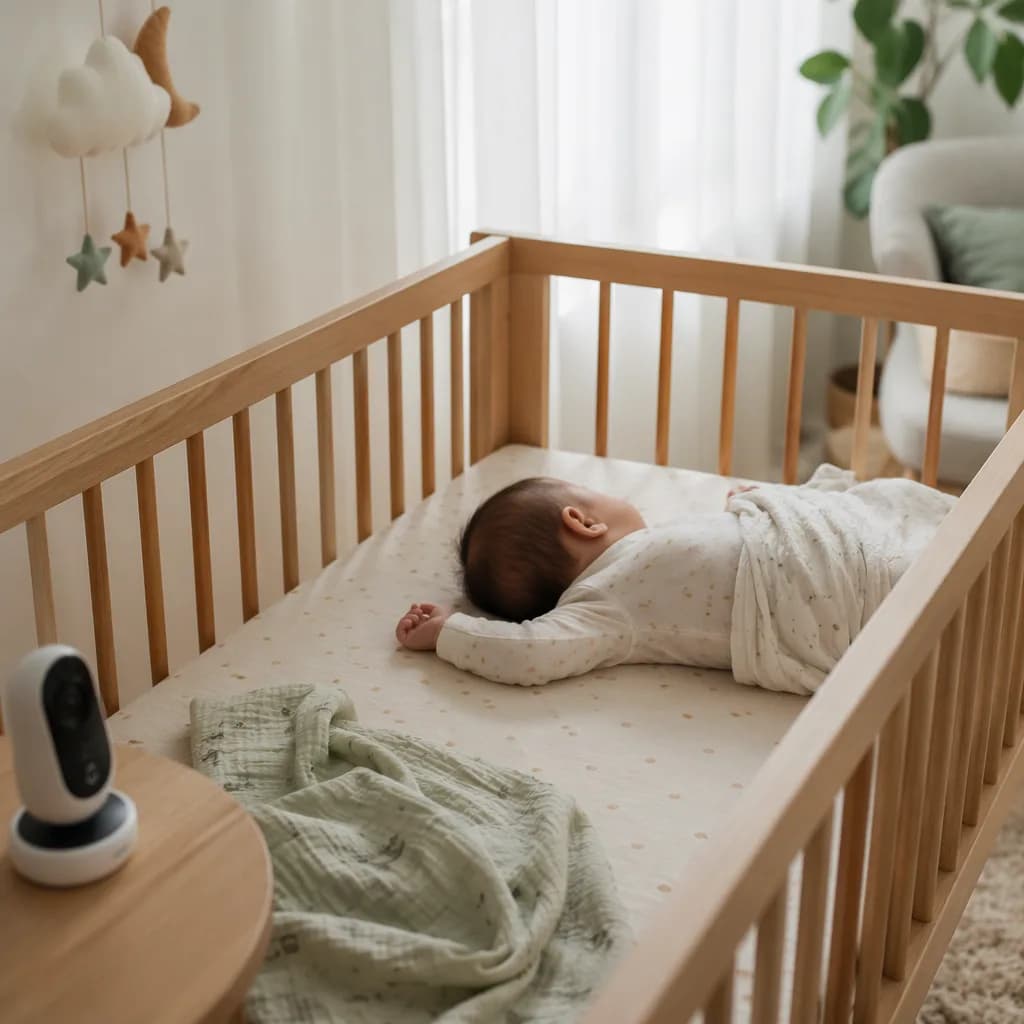
What a 3 month old sleep schedule usually looks like
Most 3 month olds sleep about 14-17 hours in 24 hours, usually with 4-5 naps and a bedtime that often lands somewhere between 7:30 and 9:30 p.m. Some babies are starting to give one longer stretch at night. Others are still waking every 2-4 hours to feed.
Both can be normal.
At this age, a “schedule” is really more of a rhythm than a clock-based plan. Think of it as a loose pattern: wake, feed, a little play, then sleep again before your baby gets overtired. If you’re coming out of the newborn fog, our Newborn Sleep Schedule: What to Expect Weeks 1-12 can help you see how much changes around this stage.
A typical day might include a short morning nap, one or two middle-of-the-day naps, and a late afternoon catnap to bridge the gap to bedtime. Wake windows are still short, so watching sleepy cues matters more than watching the exact minute on the clock. For age-by-age guidance, this Baby Nap Schedule by Age: Wake Windows That Help is a helpful next read.
And yes, the day can shift. Growth spurts, feeding needs, reflux, and temperament can all change how naps and nights look. One baby may nap best in a carrier after a big feed. Another may need a darker room and a quicker wind-down, just like siblings with totally different personalities or even names, from Rami: meaning & origin to something classic.
If naps suddenly get shorter as you approach month four, peek at Baby Nap Transitions: When and How Babies Drop Naps and 4 Month Sleep Regression: Signs and Gentle Help. It’s not a failure. It’s development showing up at bedtime.
Best 3 month old wake windows by time of day
A 3 month old wake window is the stretch of time from when your baby wakes up to when they fall asleep again. Not when you start the nap routine, but when they’re actually asleep.
Most babies this age do best with wake windows around 75-120 minutes. The first wake window of the day is often the shortest, sometimes just 60-90 minutes, because babies can still wake up with a little sleep pressure left from the night.
So if your baby wakes at 7:00 a.m., that first nap may need to start around 8:15 or 8:30 a.m. Waiting until 9:00 might sound reasonable on paper, but for some babies it’s just enough time to tip into overtired territory.
Here’s a gentle way to think about it:
- First wake window: often 60-90 minutes
- Midday wake windows: often 75-105 minutes
- Later wake windows: often 90-120 minutes, depending on naps
Sleepy cues matter more than the clock. Watch for zoning out, red eyebrows, fussing, turning away from your face or toys, rubbing eyes, or suddenly having a much shorter attention span. One minute they’re smiling at the play mat, the next they’re staring past you like they’ve had a long day at the office.
Overtired signs can look bigger: crying hard at nap time, taking tiny naps, or needing lots of rocking, bouncing, feeding, or contact to finally settle. If that’s happening often, try starting the nap routine 10-15 minutes earlier for a few days.
If you’re comparing this stage with the early weeks, our newborn sleep schedule guide can help you see what’s changed. For a broader age-by-age view, this baby nap schedule by age is helpful too. And since the next big shift may be coming soon, you may want to read about the 4 month sleep regression and upcoming nap transitions when you have a quiet minute.
Maybe during that quiet minute you’re also saving baby names, like Rami and its meaning. Nap-trapped scrolling counts as parenting, too.
How many 3 month old naps should you expect?
Most 3-month-olds take 4-5 naps a day. Some babies can manage 3 longer naps, especially if one nap stretches close to 2 hours. Others still need 5 short naps to make it to bedtime without getting wildly overtired.
Both can be normal.
At this age, naps may last anywhere from 30 minutes to 2 hours. Short naps are very common because your baby’s sleep cycles are still organizing, and daytime sleep can feel much less predictable than nighttime sleep. If your baby wakes after 35 minutes looking bright-eyed, that doesn’t mean you did anything wrong. It may just be where their sleep is right now.
Many babies need around 4-5.5 hours of daytime sleep total, spread across those naps. A flexible rhythm helps more than a strict schedule. If you’re trying to get a feel for the bigger picture, our Newborn Sleep Schedule: What to Expect Weeks 1-12 and Baby Nap Schedule by Age: Wake Windows That Help can help you see how quickly sleep changes in these early months.
If nights are getting rough, you may want to gently cap very long naps, usually around 2 hours for a single nap unless your pediatrician has told you otherwise. This can help protect enough sleep pressure for bedtime.
And if the day is falling apart? Use one supported nap. A stroller nap, carrier nap, or contact nap can be the difference between a calm evening and a meltdown at 5:00pm.
The next shifts can come quickly, so it helps to know what’s ahead with Baby Nap Transitions: When and How Babies Drop Naps and the 4 Month Sleep Regression: Signs and Gentle Help. And if you’re nap-trapped and making a baby name list, Rami: meaning & origin is a sweet little read.
Sample 3 month old sleep schedule
At 3 months, a schedule is more like a soft rhythm than a rulebook. Most babies this age do best with 3 to 4 naps, wake windows around 60-120 minutes, and plenty of flexibility when naps run short or feeds need to shift.
Here’s a sample day for a baby who wakes around 7:00:
| Time | What’s happening |
|---|---|
| 7:00 | Wake and feed |
| 8:15 | Nap 1 |
| 9:30 | Wake, feed, play |
| 10:45 | Nap 2 |
| 12:00 | Wake, feed, tummy time or floor play |
| 1:30 | Nap 3 |
| 2:30 | Wake, feed, short activity |
| 4:00 | Nap 4 |
| 4:45 | Wake, feed, quiet play |
| 6:15 | Short catnap if needed |
| 7:00 | Bedtime routine |
| 7:45-8:15 | Bedtime |
Use this as a starting point, then watch your baby. If that first nap is only 35 minutes, don’t try to stretch the next wake window just because the clock says so. Move the next nap earlier. So instead of waiting until 10:45, you might start settling closer to 10:15 or 10:30. A short nap usually means your baby needs a little help getting back to sleep sooner, not more time awake to “build sleep pressure.”
If your baby wakes later, keep the same wake window logic and slide the day forward. For example, an 8:00 wake time might mean the first nap around 9:15, the second around 11:45, the third around 2:30, and a final short catnap near 5:00 if bedtime would otherwise be too far away. The exact times matter less than catching that sleepy window before your baby gets overtired.
Feeds can land before or after naps depending on hunger, reflux, and what feels calmest for your baby. Some babies do beautifully with eat, play, sleep. Others need a smaller feed before rest.
If you’re still piecing together newborn patterns, this newborn sleep schedule guide can help. For a broader look at timing, our baby nap schedule by age is a handy next read, especially as you get closer to the 4 month sleep regression and future nap transitions.
A realistic 3 month old bedtime rhythm
A 3 month old bedtime often starts to move earlier now, especially as day and night sleep become a little more organized. You may notice your baby can handle slightly longer stretches overnight, while naps still feel uneven or short. That’s normal. This age is more about rhythm than a strict schedule.
A simple bedtime routine can be short and steady, about 20-30 minutes from start to sleep. Try something like this:
- Feed in a calm spot
- Change diaper
- Put on pajamas
- Move into an arms-out sleep sack if baby is rolling or showing signs of rolling
- Read one short book or sing the same quiet song
- Turn on white noise
- Place baby in a dark room for sleep
That repeated order matters. It gives your baby the same gentle cues every night: we’re slowing down, it’s time to sleep.
For example, if your baby wakes from a catnap at 4:45 p.m., bedtime might land around 7:15 or 7:30 p.m. That gives enough time for a feed, a little quiet play, and a calm wind-down without stretching the last wake window too far. If you’re still sorting out daytime timing, this baby nap schedule by age can help you think through wake windows without turning the day into a math problem.
Some babies still need a later bedtime, closer to 9:00 or 9:30 p.m., especially if they take a late evening nap. That can be fine too. If your baby’s sleep still feels more newborn-like, our newborn sleep schedule guide may feel more realistic for where you are right now.
Keep safety simple: place baby on their back, use a firm flat sleep surface, and skip loose blankets or pillows. And if bedtime suddenly gets bumpy soon, it may help to read about the 4 month sleep regression and upcoming nap transitions.
Night sleep and feeding at 3 months
At 3 months, night sleep can start to feel a little less choppy. Some babies will give one longer stretch of 4-6 hours, especially in the first part of the night. Plenty of babies still wake more often, though, and that can be normal too.
Night feeds are still very common at this age. Breastfed babies, smaller babies, and babies going through a growth spurt may need to eat overnight, even if a friend’s baby is suddenly sleeping longer. If you’re comparing your nights to the early newborn weeks, our Newborn Sleep Schedule: What to Expect Weeks 1-12 can help you see what has changed and what’s still typical.
The best trick for night feeds is to keep them deeply boring. Dim light. Quiet voice. Fresh diaper only if needed. No play, no big smiles if you can help it, even when they’re being adorable at 3:17 a.m. Feed, burp, cuddle briefly, then back to sleep.
If your baby suddenly starts waking much more often, check the basics before assuming everything is broken: daytime calories, nap timing, and any signs of illness. Sometimes an overtired baby wakes more, so it may help to look at age-appropriate wake windows in this Baby Nap Schedule by Age: Wake Windows That Help. If sleep gets bumpy soon, the 4 Month Sleep Regression: Signs and Gentle Help may also be useful.
Before trying to drop night feeds, ask your pediatrician. Your baby’s growth, feeding pattern, and health history matter here.
How to fix short naps without making the day harder
Short naps are so normal at 3 months. Frustrating, yes. A sign that you’ve done something wrong? No.
At this age, sleep is still organizing, and many babies bounce between longer stretches and tiny naps that barely give you time to drink coffee while it’s warm. A 30-minute nap doesn’t mean the whole day is ruined. It just means the next little stretch may need to be gentler.
If the morning nap is 28 minutes, aim for the next nap about 60-75 minutes later. That shorter wake window can help prevent overtiredness, especially because 3-month-old wake windows are often around 60-120 minutes and the first one is usually the shortest. If you need a broader age-by-age view, our Baby Nap Schedule by Age: Wake Windows That Help guide can help you sanity-check the day.
A few simple tweaks can help:
- Make the room dark, even for daytime sleep.
- Try steady white noise.
- If baby wakes early but seems calm, give them a few minutes to see if they’ll resettle.
- Keep the next wake window shorter after a short nap.
- Help one nap go longer if the day is falling apart.
That last one can be a lifesaver. If baby wakes after 25-30 minutes, you might hold them and see if they drift back off, or finish the nap in a carrier while you walk around the kitchen. One supported longer nap can take the pressure off the rest of the day.
What usually doesn’t help is keeping baby up a long time so they’ll be “really tired.” Overtired babies often sleep worse, not better.
If sleep still feels scattered, that fits this stage. You can revisit what’s typical in the early weeks with Newborn Sleep Schedule: What to Expect Weeks 1-12, and it’s also smart to peek ahead at the 4 Month Sleep Regression: Signs and Gentle Help so the next shift feels less surprising.
Signs your baby may be ready for a schedule shift
At 3 months, sleep can change quickly. One week your baby naps like clockwork, and the next week they’re staring at you from the crib like, “Nice try.” That doesn’t always mean the schedule is broken. It may just need a tiny adjustment.
Signs your baby’s wake windows may need to stretch include:
- Fighting naps even though they were recently fed and changed
- Taking a long time to fall asleep
- Waking happily after a short nap, ready to play
- Bedtime suddenly getting pushed too late because the last nap or wake window no longer fits
On the other hand, wake windows may be too long if you’re seeing:
- Frantic crying right before sleep
- False starts at bedtime, where baby wakes soon after going down
- More night waking than usual
- Naps under 30 minutes, especially when baby wakes upset
Small changes are best here. Try shifting one wake window by 10-15 minutes for a few days before changing the whole day. If you want a wider age-by-age view, this baby nap schedule by age can help you compare what’s typical.
And remember, some babies begin showing early signs of the 4-month sleep regression before they’re officially 4 months old. A rough week doesn’t always mean you need to redo everything. For more context, read 4 Month Sleep Regression: Signs and Gentle Help, or step back to the basics with Newborn Sleep Schedule: What to Expect Weeks 1-12. If naps start changing more broadly, our guide to baby nap transitions may be useful too.
Gentle sleep habits to practice now
At 3 months, sleep practice is just that: practice. This is a good age to build familiar sleep cues, but it’s not the time to pressure your baby into full independence. Many babies are still waking for feeds, needing help settling, and having naps that vary from day to day. That’s normal.
Think of it like giving your baby a few gentle “this means sleep is coming” signals. A dark room, steady white noise, a flat and firm safe sleep space, and the same short wind-down can all help. If your baby is no longer swaddled or is showing signs of rolling, an arms-out sleep sack is usually the safer next step. If you’re still sorting out what’s typical in these early months, our Newborn Sleep Schedule: What to Expect Weeks 1-12 guide can help you compare patterns without panicking.
When it works, try placing your baby down drowsy or calm. Not every time. Not as a test. Just as a low-pressure chance to feel the crib or bassinet before sleep fully takes over. If they fuss a little, pause and offer a hand on their chest or a quiet shush. If they cry hard, pick them up, settle them, and try again another day.
If most naps are contact naps, choose one nap a day to practice in the crib or bassinet. The first nap often works best because babies are usually less overtired then. For timing help, our Baby Nap Schedule by Age: Wake Windows That Help breaks down wake windows in a practical way.
These small habits can also make the upcoming 4 Month Sleep Regression: Signs and Gentle Help feel a little less jarring. And if naps shift again soon, that doesn’t mean you did anything wrong. Baby sleep keeps changing, and our guide to Baby Nap Transitions: When and How Babies Drop Naps can help you spot the difference between a rough week and a real schedule change.
Frequently Asked Questions
What is a good 3 month old sleep schedule?
A good 3 month old sleep schedule usually includes 4-5 naps, wake windows of about 75-120 minutes, and bedtime between 7:30 and 9:30 p.m.
How long should 3 month old wake windows be?
Most 3 month old wake windows are about 75-120 minutes. The first wake window of the day is often closer to 60-90 minutes.
How many naps should a 3 month old take?
Most 3 month olds take 4-5 naps a day. Short naps are still very normal at this age.
What time should a 3 month old go to bed?
Many 3 month olds do well with bedtime between 7:30 and 9:30 p.m., depending on the last nap and how long they can comfortably stay awake.
Is it normal for a 3 month old to take 30 minute naps?
Yes. Many 3 month olds take 30-45 minute naps because nap sleep is still developing.
Can a 3 month old sleep through the night?
Some can give a longer 6-8 hour stretch, but many still wake to feed. Check with your pediatrician before dropping night feeds.
Should I wake my 3 month old from a long nap?
Sometimes, yes. If a nap goes much over 2 hours or night sleep is getting disrupted, waking baby gently can help protect the rest of the day.
Frequently asked questions
How many naps should a 3 month old take?
What wake window is best for a 3 month old?
What time should a 3 month old go to bed?
Is it normal for a 3 month old to still wake at night?
References
Sources
External research this article was grounded in.
- Math Solver - Trusted Online AI Math Calculator | Symbolaben.symbolab.com
- 3 Month Old Sleep Schedule: Wake Windows, Naps & Bedtime Routine - Well Supported Familywellsupportedfamily.com
- Superscript Symbols (Copy and Paste) ⁰ ¹ ² ³ – Unicode Superscripts & Usesi2symbol.com
- 3 month old sleep schedule: Wake Windows, Bedtime and nap schedule | Huckleberryhuckleberrycare.com
- How to create the perfect 3-month-old sleep schedule for your baby | BabyCenterbabycenter.com
- 3 Month Old Sleep Schedule: Expert Guide for Restful Nightsthebabycarehome.com
Related reading
More from the journal → sleep
sleepDaycare Nap Tips for Helping Baby Sleep Away From Home
Daycare naps can be shorter at first. Help your baby adjust with a gentle prep plan, steady home sleep, and simple questions for caregivers.
15 min readJul 22, 2026 sleep
sleepNewborn Sleep Cues: Tired Signs to Watch For
Learn the tiny newborn sleep cues that mean your baby is getting tired, from glassy eyes to turning away, plus what overtired signs can look like.
12 min readJul 3, 2026- sleep
Bassinet to Crib Transition: Gentle Tips That Work
Gentle, practical tips for moving baby from bassinet to crib, including readiness signs, safe crib setup, and how to start with one sleep at a time.
12 min readJul 3, 2026