
Baby Welcome Traditions From Around the World
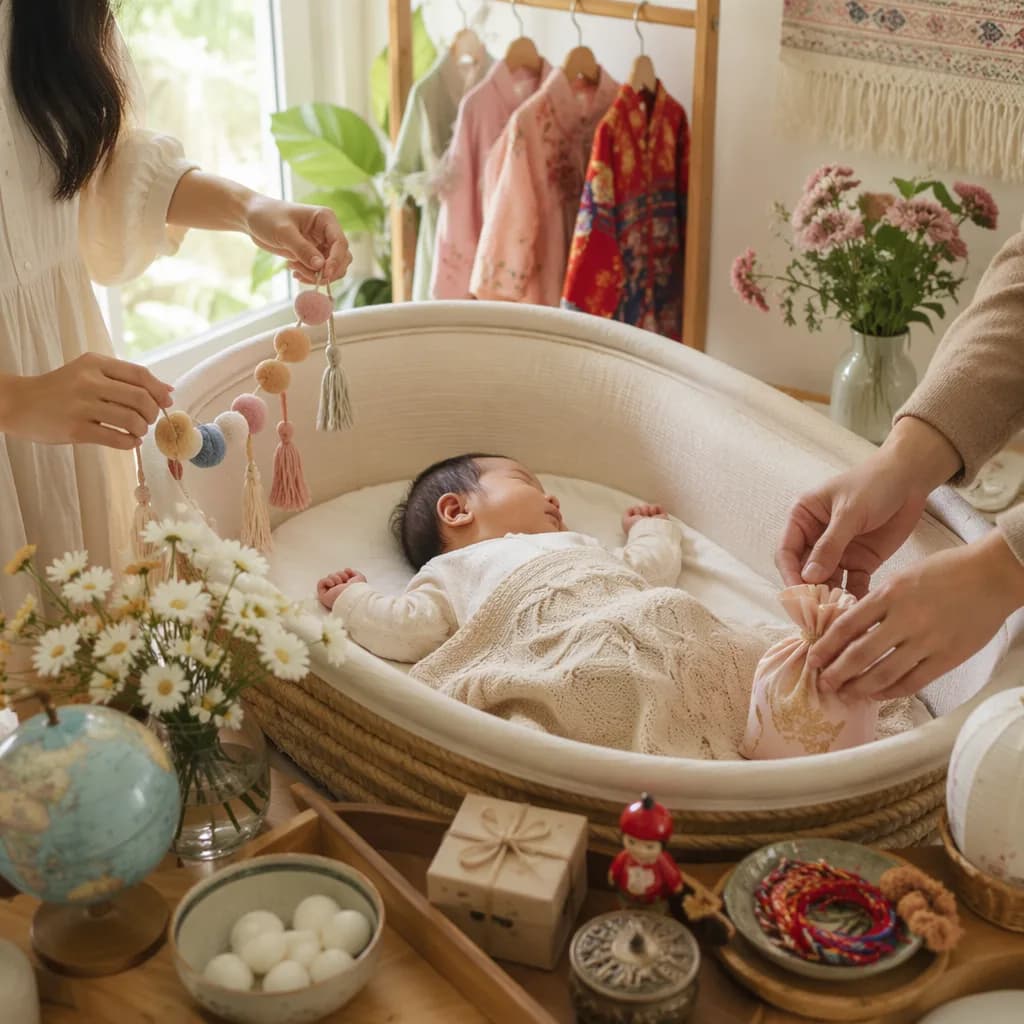
Why baby welcome traditions matter
A new baby changes the shape of a family overnight. There’s the practical side, of course: feeding, sleeping, healing, learning each tiny cry. But there’s also the emotional shift. Baby welcome traditions give families a way to pause and say, “Something big has happened here.”
That can be a formal ceremony, or it can be very simple. Grandparents might cook a special meal. Relatives might gather in the living room to say the baby’s name aloud for the first time. Someone may offer a prayer, light a candle, bring a gift, or take a photo that becomes family history before anyone realizes it.
Across cultures, these traditions often carry the same hopes. Families want protection for the baby. They want to give thanks. They want the child to be known by name, welcomed by the community, and introduced to family beliefs or faith in a meaningful way.
Names often sit right at the center of that moment. A family choosing a name like Tanmay Suresh Upadhyay: meaning & origin may be carrying forward heritage, sound, and story all at once. Another family drawn to Aurora: meaning & origin may love the sense of new light it brings.
The details differ, but the heart is familiar: we gather close, we mark the change, and we welcome this new little person with intention.
Naming ceremonies across cultures
Names can feel tiny at first, just a few syllables whispered over a sleepy newborn. But in many families, that name carries a whole roomful of love: grandparents remembered, prayers spoken, hopes tucked quietly into the future.
In Jewish tradition, naming may look different for boys and girls. For many baby boys, the name is shared during a brit milah, a covenant ceremony usually centered on circumcision and attended by family and community. Baby girls may be welcomed with a separate baby naming ceremony, often in a synagogue or at a family gathering, where blessings are said and the child’s Hebrew name is announced. The heart of it is connection. A baby is being placed lovingly within a family story and a faith tradition.
In Islamic families, the aqiqah is another beautiful welcome. A baby’s name is often announced during this time, and the family may share food with relatives, friends, and neighbors. Some families also give charity, turning the celebration outward so the joy of the baby’s arrival reaches others too.
Hindu namkaran is a naming ceremony that may include prayers, blessings from elders, and the choosing of an auspicious name. Sometimes the name reflects spiritual meaning, a quality parents hope their child will grow into, or a link to family heritage. If you’ve ever looked up a name like Tanmay Suresh Upadhyay: meaning & origin, you know how much meaning can sit inside one full name.
Across cultures, naming is rarely just paperwork.
A name can mean dawn, devotion, courage, peace, or remembrance. It can honor someone beloved. It can mark a fresh beginning, like Aurora: meaning & origin, a name tied to the image of morning light. And for new parents, that first public saying of the name can feel wonderfully grounding: here you are, loved already, and this is what we’ll call you.
First outings and first introductions
Some baby welcome traditions are less about the birth day itself and more about the moment a baby is introduced beyond the front door. There’s something tender about that pause. A family has had a little time to breathe, learn the baby’s rhythms, and protect those early newborn days before inviting the wider world in.
In Japan, omiyamairi is a first shrine visit, where families take the baby to a Shinto shrine and pray for the baby’s health. It’s a gentle kind of introduction: baby, parents, often grandparents, and a place that carries family meaning. The outing says, “You belong here. You are loved. We are asking for good things for you.”
Korea has baek-il, the 100th-day celebration, often marked with rice cakes and family photos. That 100-day point can feel deeply emotional for parents. By then, the fog of the earliest weeks may have lifted a little. The baby is more alert, the family has found a few routines, and everyone gets to gather around this tiny person who has already changed the whole household.
Waiting periods show up in many cultures because newborn life has always felt precious and fragile. Some customs reflect old concerns about infant health, while others give parents a protected window before visits, ceremonies, and social expectations begin.
And sometimes, these introductions sit alongside naming conversations too. A family might be choosing a name with a peaceful meaning, like Tanmay Suresh Upadhyay: meaning & origin, or something bright and dawn-like, such as Aurora: meaning & origin. Either way, the heart of it is the same: welcome, blessing, and belonging.
Blessings, prayers, and protection rituals
For many families, welcoming a baby begins with a blessing. Not a big performance, necessarily. Sometimes it’s a priest’s hand on a tiny forehead, a grandparent whispering a prayer, or a small bracelet tied on before the baby is carried into a room full of relatives.
In Christian families, baptism or christening often marks a baby’s welcome into the faith community. The details can look different from church to church and family to family, but the feeling is usually tender and clear: this child is loved, named, prayed over, and surrounded by people who promise to care.
Other families use protective objects or prayers in those early days. In parts of Latin America, the Mediterranean, and South Asia, you may see babies wearing small bracelets, charms, or amulets, or being blessed by elders. These practices aren’t just “old customs.” They’re a parent’s love made visible. A way of saying, “May you be safe. May good people stay near you. May harm stay far away.”
Names can carry that same protective feeling. Some parents choose names for their meanings, their sound, or the people they honor. A name like Tanmay Suresh Upadhyay: meaning & origin may feel rooted and meaningful to one family, while another might be drawn to the light-filled feel of Aurora: meaning & origin. Both choices can become part of the welcome.
Indigenous and local community traditions deserve special care in how we talk about them. Practices vary widely by nation, tribe, family, and region, and no single description can stand in for everyone. Some families may include songs, prayers, naming customs, elders, land-based practices, or community gatherings.
The heart of it is simple: babies arrive small, and families answer with protection. With faith. With hands reaching in.
Food, gifts, and family gatherings
Food has a way of turning a baby welcome into something bigger than one household. A tired parent can sit down, someone passes a plate, an auntie holds the baby for ten minutes, and suddenly the whole room feels softer.
In some Chinese families, a baby’s arrival is celebrated around the one-month mark with red eggs and ginger parties. The red eggs carry happy symbolism, and the gathering gives relatives and friends a clear moment to come meet the baby, bring blessings, and fuss over the new parents a little too.
You’ll see the same warmth in other traditions too. After an aqiqah or naming ceremony, families may share sweets with guests, neighbors, or loved ones. At Korean baek-il or doljanchi celebrations, rice cakes often have a special place on the table. These foods aren’t just snacks. They say, “Come be part of this child’s life.”
Gifts matter as well, especially the useful ones. Blankets, baby clothes, money, and ready-to-heat meals can all be deeply thoughtful. A casserole left on the porch may not look ceremonial, but to parents running on two hours of sleep, it can feel like love in its most practical form.
Naming can become part of the gathering too. Families might talk through names, meanings, and hopes for the baby’s future, from a name with a calm spiritual feel like Tanmay Suresh Upadhyay: meaning & origin to a bright, nature-linked choice like Aurora: meaning & origin. Around a table full of food, those conversations can feel especially tender.
Milestone celebrations in the baby's first year
Not every baby welcome happens in the first few days. In many families, the biggest ceremony comes weeks or even months after birth, once parents have had a little time to recover, gather relatives, and choose the right moment for their custom.
In Korea, a baby’s first birthday celebration, often called doljanchi, is a major milestone. One well-known part is doljabi, where the baby is placed near objects and encouraged to pick one. Families may treat the chosen object as a playful hint about the child’s future. It’s sweet, symbolic, and honestly very fun to watch, especially when a baby ignores every carefully chosen item and reaches for something completely unexpected.
Chinese families may celebrate earlier, often around the first month with a Full Moon Ceremony. Some families also mark a 100-day celebration, depending on their own custom. In the Full Moon Ceremony, relatives and friends bring gifts for the baby and parents, and guests may receive red-dyed eggs in return. Red is connected with happiness, the egg shape with long life, and the egg itself with the changing process of life.
Hair can be part of first-year traditions too. In Hindu customs such as mundan or chudakarana, a baby’s hair may be shaved as a symbolic fresh start. For some families, this feels deeply spiritual. For others, it’s a family tradition they’ve always known, like saving a tiny curl in an envelope or taking a photo before and after the cut.
The timing and details can vary a lot by family, region, and religious practice. One family may hold a quiet home ceremony. Another may invite a full room of aunties, cousins, grandparents, food, music, and photos. Names can carry that same sense of meaning and belonging, whether parents are drawn to a traditional choice like Tanmay Suresh Upadhyay: meaning & origin or a bright, nature-inspired name like Aurora: meaning & origin.
How modern families blend old and new
You don’t have to recreate every custom exactly to make a baby welcome feel meaningful. New parent life is full enough already. A smaller celebration can still carry a lot of love, especially when you choose the parts that feel rooted, doable, and kind to your energy.
Start with one meaningful element. Maybe it’s a short blessing before everyone eats, a special food your grandmother always made, a family song, or a quiet naming moment where you share why you chose your baby’s name. If names are a big part of your celebration, you might enjoy reading about name stories like Tanmay Suresh Upadhyay: meaning & origin or Aurora: meaning & origin as you think about how meaning gets passed down.
For mixed-culture families, simple pairing often works better than trying to fit everything into one packed event. One side of the family might host a naming prayer in the living room, while the other brings a traditional dessert to share afterward. That way, both families feel seen, and nobody has to turn the day into a production.
Before changing or combining customs, ask elders what the tradition means. Not in a formal interview way. More like, “What did this mean when you were little?” or “Which part mattered most to your parents?” You may find that the heart of the custom is easier to keep than the full ritual.
And if a tradition doesn’t fit your values, budget, home, or baby’s needs, it’s okay to adapt it gently. The point is welcome. The point is connection. Keep what brings peace, leave what adds pressure.
Respectful ways to learn about another culture's baby ceremony
A good first step is to ask small, practical questions instead of asking the parents to explain the whole history behind a tradition while they’re also feeding a newborn and running on broken sleep.
Try something simple and kind: “Is there anything special I should know before attending?” or “Would you like guests to bring anything?” These questions give the family room to share what matters for their specific ceremony, without putting them on the spot.
You can also ask about the basics ahead of time:
- What should guests wear?
- Are photos or videos okay?
- Is there a gift expectation, or would a card be better?
- Are any parts of the ceremony private for close family only?
- Should guests arrive at a certain time, or is it more casual?
Be especially gentle around naming customs. Some families may choose a name with deep spiritual or family meaning, while others may simply love the sound. If you’re curious, ask with warmth: “Would you like to share the story behind the name?” Then accept whatever answer they give. Names can carry so much meaning, as you’ll see in examples like Tanmay Suresh Upadhyay: meaning & origin or Aurora: meaning & origin, but the family gets to decide how much they want to share.
And remember, families within the same culture may celebrate differently. One family may host a big gathering, another may keep things quiet and private. That’s normal. The most respectful thing you can bring is curiosity without pressure, and a willingness to follow the parents’ lead.
Frequently Asked Questions
What are baby welcome traditions?
Baby welcome traditions are cultural, religious, or family customs used to celebrate a newborn, announce a name, offer blessings, and introduce the baby to loved ones.
What are common cultural baby ceremonies?
Common cultural baby ceremonies include naming ceremonies, baptisms, aqiqah, namkaran, red egg and ginger parties, baek-il, doljanchi, and first haircut rituals.
Why do some families wait before celebrating a new baby?
Some families wait a month, 40 days, 100 days, or a full year because of older health concerns, religious timing, postpartum recovery, or local custom.
What should you bring to a baby welcome ceremony?
A small gift, card, baby clothes, money, or food may be welcome, but it's best to ask the parents or host because expectations vary by culture and family.
Can families combine baby welcome traditions from different cultures?
Yes. Many families blend traditions by choosing meaningful pieces from each side, such as a naming prayer, a special meal, family blessings, or symbolic gifts.
Are baby welcome traditions religious or cultural?
They can be either, and often both. Some are tied to faith, while others come from family history, regional customs, or community practice.
Frequently asked questions
What are baby welcome traditions?
Why do families have naming ceremonies for babies?
What are some examples of baby welcome traditions around the world?
Can we create our own baby welcome tradition?
References
Sources
External research this article was grounded in.
- 事業者向けインターネットバンキングサービス|法人・個人事業主のお客様|日新信用金庫nisshin-shinkin.co.jp
- 20 Interesting Baby Welcoming Traditions From Around the Worldparenting.firstcry.com
- 20 Unique Birth Rituals and Baby Traditions From Different Cultures | Health Kurahealthkura.com
- Global Baby Welcoming Traditions | Expert Parenting Guidance from BIBSbibsworld.com
Related reading
More from the journal → traditions
Family Traditions With Baby for the First Year
Simple, low-pressure family traditions to start in baby's first year, from weekly photos and bedtime songs to tiny keepsakes you'll actually want to keep.
13 min readAug 3, 2026- traditions
Baby Naming Traditions Around the World
A warm look at baby naming traditions across cultures, from ancestor names and birth order to faith, language, blessings, and family stories.
14 min readAug 3, 2026 - traditions
Naming Traditions Around the World for Babies
A warm guide to baby naming traditions worldwide, from surnames and honor names to cultural customs, family stories, and modern choices.
14 min readAug 3, 2026