
Family Heritage Baby Names With Real Meaning
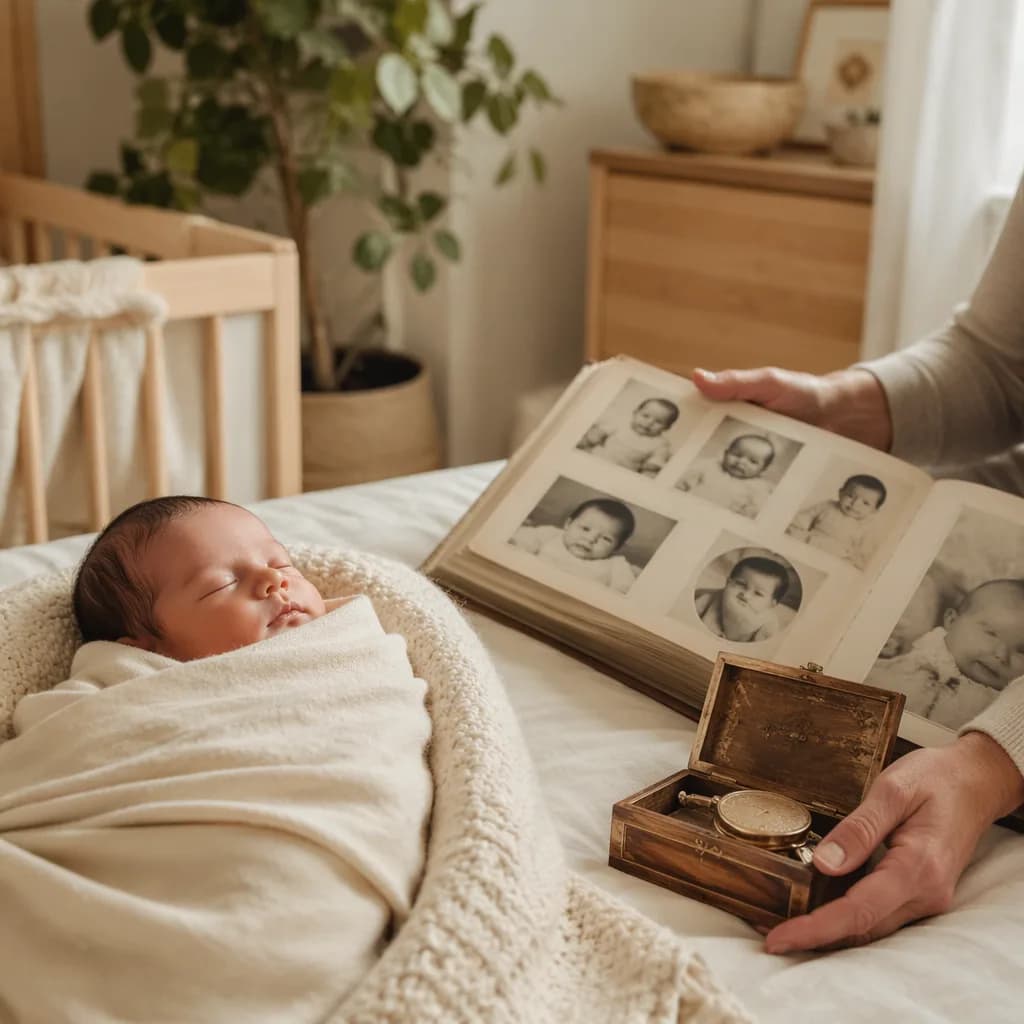
What are family heritage baby names?
Family heritage baby names are names that carry a thread from your family story into your baby’s life. They might come from a beloved relative, a surname, cultural roots, faith traditions, a home country, a language you grew up hearing, or even a story that gets told at every family gathering.
A heritage name can be direct, like naming a baby after a grandfather. But it doesn’t have to be an exact copy.
You might use the name as a first name, tuck it into the middle spot, keep the same initials, choose a family nickname, translate the meaning into another language, or pick a name that simply feels connected. That flexibility can be a relief, especially if you want to honor someone but the original name doesn’t quite fit your style.
Say Grandma Rose was the person who always had soup on the stove and a birthday card in the mail. You could name your baby Rose. Or you might choose Rosalie, Rosa, Rosemary, or use Rose as a middle name. Same love, different shape.
This is why heritage naming can feel so personal. It sits right beside the bigger traditions families use to welcome babies, from naming ceremonies to the customs in Baby Welcome Traditions From Around the World. Some names carry layered family and cultural meaning, like Tanmay Suresh Upadhyay: meaning & origin, while others, like Aurora: meaning & origin, may connect through meaning, sound, or story.
Start with the people and stories you want to honor
Before you start comparing name lists, start with people.
Make a short, honest list of relatives, ancestors, places, and family traditions that actually feel meaningful to you. Not the names you feel pressured to use. Not the ones everyone assumes you’ll choose. The ones that make your shoulders drop a little when you say them.
That might be a grandparent who raised three kids in a tiny kitchen full of music. A great-grandmother whose maiden name was almost forgotten. A beloved aunt, an uncle who always showed up, or chosen family who became yours in every way that mattered. Family can be connected by birth, marriage, care, nurture, and deep sentimental ties, so let your list reflect the real shape of your life.
Ask yourself a few plain questions:
- Who made you feel safe?
- Whose story do you want your child to know?
- Which names bring warmth instead of pressure?
- Is there someone who shaped the way you hope to parent?
Then write more than names. Write full names, nicknames, maiden names, birthplaces, favorite flowers, songs, languages, and little details that hold memory. “Nana Rose, born in Manila, sang lullabies while folding towels” gives you more to work with than Rose alone. Maybe Rose becomes a middle name. Maybe Manila inspires a place-based name. Maybe the lullaby points you toward a music meaning instead.
This is also where traditions can help. If your family marks birth with songs, blessings, visits, or keepsakes, you may find more ideas in Baby Welcome Traditions From Around the World.
You can also look at how layered names carry meaning, like Tanmay Suresh Upadhyay: meaning & origin, or how a name such as Aurora: meaning & origin can hold both sound and story. Start close to home. The strongest names often do.
Ways to honor a grandparent without using the exact name
Naming a baby after a grandparent doesn’t have to mean copying the name exactly. Family names can bend a little and still carry the same love.
A variant is often the easiest place to start. John might become Jack, Giovanni, Sean, or Ian. The sound changes, but the family thread stays clear. This can be especially helpful when one parent loves the honor behind a name, but the original version doesn’t quite feel right for daily life.
You can also keep the same first letter or initials. If Grandma Mildred’s name feels hard to use, maybe Mae, Mira, or Margot feels softer in your home. Initials can be a sweet nod too, especially if relatives will recognize the connection without you needing to explain it every time.
The middle name is a lovely quiet honor spot. It gives the grandparent’s name a real place on the birth certificate, while leaving the first name open for something you both feel excited to say 40 times a day. It can also ease family pressure if more than one person has strong feelings about the baby’s name.
Meaning is another gentle route. Margaret means pearl, so Pearl or Perla can honor a Margaret without repeating her exact name. This works beautifully if you’re drawn to names with layered stories, like Aurora: meaning & origin, where the meaning adds another reason to love the sound.
Don’t forget the name everyone actually used. If Grandpa Robert was always “Bobby” at family dinners, or Nana was known by a childhood nickname, that may be the most tender version to carry forward. Sometimes the family-only name holds more warmth than the formal one.
You can honor both sides, too. One grandparent’s name might shape the first name, while another’s becomes the middle. Many families already mark a baby’s arrival with meaningful customs, as you’ll see in Baby Welcome Traditions From Around the World. A name can be part of that same welcome.
If you’re comparing full-name styles, looking at examples like Tanmay Suresh Upadhyay: meaning & origin can help you notice how first, middle, and family names work together. The goal isn’t to please everyone. It’s to choose a name that feels usable, loving, and rooted in the people who helped shape your family.
Using surnames, maiden names, and place names
Family surnames can make strong, grounded first or middle names, especially when they already sound familiar as given names. Ellis, Bennett, Monroe, and Reed all have that easy crossover quality. A baby named Ellis James or Nora Bennett carries a family thread without the name feeling too formal or heavy.
Maiden names can be especially meaningful. Sometimes one branch of the family tree fades from everyday use because a surname changes after marriage, and using that name for a baby can be a quiet, respectful way to keep it present. It doesn’t have to be the first name, either. A middle name often gives you room to honor someone while still choosing a first name you love for daily life.
Place names can hold family history too. Georgia might point to a home state, Florence to a city where grandparents met, Siena to a beloved trip or ancestral place, Dakota to family roots, and Alba to a meaningful region or town. These names can feel warm because they’re tied to real stories, not just style. If you enjoy learning how families mark identity and belonging, Baby Welcome Traditions From Around the World has lovely examples of how names and rituals can carry family meaning.
Before you commit, say the full name out loud. Check the initials. Listen for rhythm. Think about nicknames and anything that could invite teasing on a playground or roll call. Reed Aurora sounds different from Aurora Reed, and seeing names in full, like Aurora: meaning & origin or Tanmay Suresh Upadhyay: meaning & origin, can help you notice flow and balance.
And if a family place feels too bold for everyday use, tuck it into the middle spot. A name like Clara Siena or Miles Dakota can carry the story beautifully.
Cultural heritage names and pronunciation choices
A heritage name carries more than a nice sound. It can hold a family story, a language, a place, or a bond with grandparents, aunties, uncles, and cousins who are ready to tell your child where it came from.
Start by asking the people closest to the name. If you’re considering a name from your culture, ask relatives how they spell it, how they say it, and what it means in everyday use. Trusted cultural sources can help too, especially if a name has older roots or more than one spelling. This is the same spirit behind many baby welcome traditions from around the world: families pass on belonging through words, rituals, and shared memory.
Then think about daily life.
You might choose the traditional spelling because it feels most true to the name. You might use an English-friendly spelling if you know your child will be correcting people all day otherwise. Or you might keep the full heritage name for documents and family moments, with a nickname for school, sports, and coffee cups.
For example, Siobhan could go by Shiv day to day. Alejandro might use Alex with friends, while still having the full name spoken proudly at home.
Mixed-heritage families have a few lovely options. You can choose one name from each side, such as a first name from one parent’s family and a middle name from the other. You can look for a shared meaning across languages, like light, peace, joy, or wisdom. You can also choose a name that travels well, one that relatives on both sides can say with warmth. A name like Aurora may appeal because it feels familiar in more than one setting, while a fuller name story like Tanmay Suresh Upadhyay shows how meaning and origin can sit together in a deeply personal way.
What matters most is that the name has someone behind it.
If a grandparent can say, “This was your great-aunt’s name,” or a cousin can explain the meaning at the dinner table, your child gets more than a label. They get a thread back to their people.
How to balance family expectations with your own taste
Heritage names can carry a lot of love. They can also carry a lot of opinions.
Maybe one side of the family has always expected the first grandson to be named after a certain grandfather. Maybe there’s a beloved aunt whose name everyone keeps bringing up at dinner. Family can be a source of predictability, structure, and safety, and names often become part of that bigger sense of belonging. No wonder people feel attached.
Still, this is your baby’s name. It has to feel right in your home, on the school sign-in sheet, at the doctor’s office, and whispered at 2 a.m. when you’re rocking a sleepy newborn.
A helpful first step is to decide privately with your partner before opening the conversation widely. Talk about what matters most: sound, meaning, spelling, cultural connection, religious ties, family history, or ease of use. You might both love the meaning behind a longer heritage name like Tanmay Suresh Upadhyay, but prefer something shorter for everyday use. Or you may find that a name like Aurora gives you the feeling you want, even if it isn’t the exact family name people expected.
Once you know where you stand, keep your wording kind and steady. Try:
“We love that connection, and we’re still choosing what feels right for the baby.”
You don’t need to argue every point. Repeat the same sentence if needed.
And remember, honoring someone doesn’t have to mean using the exact name. A middle name can carry the legacy beautifully. Initials can nod to a grandparent. So can telling your child the story of the person they’re connected to. In many families, traditions around welcoming a baby are rich and varied, as you can see in these Baby Welcome Traditions From Around the World.
The goal isn’t to please everyone. It’s to choose a name your child can live in.
Family heritage baby name ideas by style
Family names can carry a lot: care, memory, belonging, and the stories children grow into over time. Since family can include relatives by birth, marriage, and other close relationships, there’s room to honor more than one kind of bond. A name can come from a grandparent, a surname, a cultural tradition, or even the feeling you want your child to carry.
Classic honor names are often the easiest place to start. They feel familiar, and they usually age well from babyhood into adulthood. Think Anna, Joseph, Clara, Thomas, Elena, Samuel, Beatrice, or Louis. If one of these already appears in your family tree, it may feel quietly strong without needing much explanation.
Modern names with family roots can work beautifully too. Maybe Maeve echoes a beloved Mary, Theo shortens Theodore, or Lila reminds you of a great-aunt Lily. Nico, Sienna, Ellis, Remy, and Mira can also feel fresh while still giving you a path back to someone meaningful. This is a sweet option if you want the honor to feel present, but not exact.
Surname names are another warm way to keep a family line visible. Parker, Sullivan, Hayes, Brooks, Campbell, Morgan, Quinn, and Adler all have that steady last-name-as-first-name style. For some families, this can honor a parent’s maiden name, a grandparent’s surname, or a branch of the family that might otherwise fade from everyday use.
Some parents choose names inspired by meaning. Vera can point to truth, Felix to happy, Amara to grace or eternal, and Leo to lion. If you like this style, you might enjoy reading name stories such as Aurora: meaning & origin or Tanmay Suresh Upadhyay: meaning & origin, where meaning and background sit right at the center.
You can also honor grandparents through sound rather than using the exact name. Cora can nod to Carol, Mila to Mildred, Luca to Lucille, and Eli to Eleanor. It feels personal, but your child still gets a name that’s fully their own.
Before you settle on any list, confirm the cultural meanings, spellings, and family connections that matter to you. Names can travel across languages and generations, much like the rituals families use to welcome a baby, from blessings to gatherings to the kinds of traditions shared in Baby Welcome Traditions From Around the World.
A simple checklist before you choose
Before you settle on a family heritage name, try living with it for a few days. Say the first, middle, and last name out loud several times: at breakfast, in the car, while pretending to call across a playground. Some names feel wonderful on paper and a little stiff in real life. Others grow warmer each time you say them.
Check the practical bits, too. Look at the initials, the monogram, and the nicknames people are likely to use. If a grandparent’s formal name feels too big for a newborn, a softer nickname might make it easier to love every day.
Then pause for the emotional check.
Ask yourselves: does this honor feel loving, heavy, or complicated? Family can offer structure, safety, care, and a deep sense of belonging, but every family story has layers. If a name carries painful history, you don’t have to use it exactly as it was. You might choose a related meaning, a birthplace, shared initials, or a name with a similar feeling instead.
It helps to form one warm sentence you’ll someday tell your child: “We chose this name because it reminds us of your great-aunt’s courage.” That simple explanation matters.
Both parents should be able to happily use the name every day. If one of you hesitates each time, keep looking. You might find inspiration in family customs, like those in Baby Welcome Traditions From Around the World, or in layered name stories such as Tanmay Suresh Upadhyay: meaning & origin and Aurora: meaning & origin.
Frequently Asked Questions
What are family heritage baby names?
They are names that connect a child to family roots, such as a grandparent's name, surname, cultural name, place name, or name with a shared meaning.
How can I honor a grandparent without using their name exactly?
Use a variation, nickname, initials, middle name, same meaning, or a name that shares the same first sound.
Is naming after grandparents still popular?
Yes. Many parents still use grandparent names, often in the middle spot or through updated versions that fit their own style.
Can I use a family surname as a baby name?
Yes, especially as a middle name. Say it with the full name first and check the initials before deciding.
What if both families want us to use their side's name?
Pick the name that feels right to you, or use one side for the first name and the other for the middle. You don't have to satisfy everyone.
How do I choose a cultural heritage name if pronunciation is hard?
You can keep the traditional spelling, choose a familiar nickname, or use the name in the middle spot. Ask family members how they say it.
Frequently asked questions
What is a family heritage baby name?
Do I have to use the exact family name to honor someone?
How do I choose a heritage name without family pressure?
Can a baby have a heritage name from more than one side of the family?
References
Sources
External research this article was grounded in.
- Rock-A-Bye Baby +More Nursery Rhymes - CoCoMelon - Videos For Kidskidvideo.org
- Family - Wikipediaen.m.wikipedia.org
- Honoring Family Heritage with a Meaningful Baby Nameobfocus.com
Related reading
More from the journal → traditions
Family Traditions With Baby for the First Year
Simple, low-pressure family traditions to start in baby's first year, from weekly photos and bedtime songs to tiny keepsakes you'll actually want to keep.
13 min readAug 3, 2026- traditions
Baby Naming Traditions Around the World
A warm look at baby naming traditions across cultures, from ancestor names and birth order to faith, language, blessings, and family stories.
14 min readAug 3, 2026 - traditions
Naming Traditions Around the World for Babies
A warm guide to baby naming traditions worldwide, from surnames and honor names to cultural customs, family stories, and modern choices.
14 min readAug 3, 2026