
Best Cups for Babies: Straw, Open, and Sippy Picks
Quick answer: which baby cup should you start with?
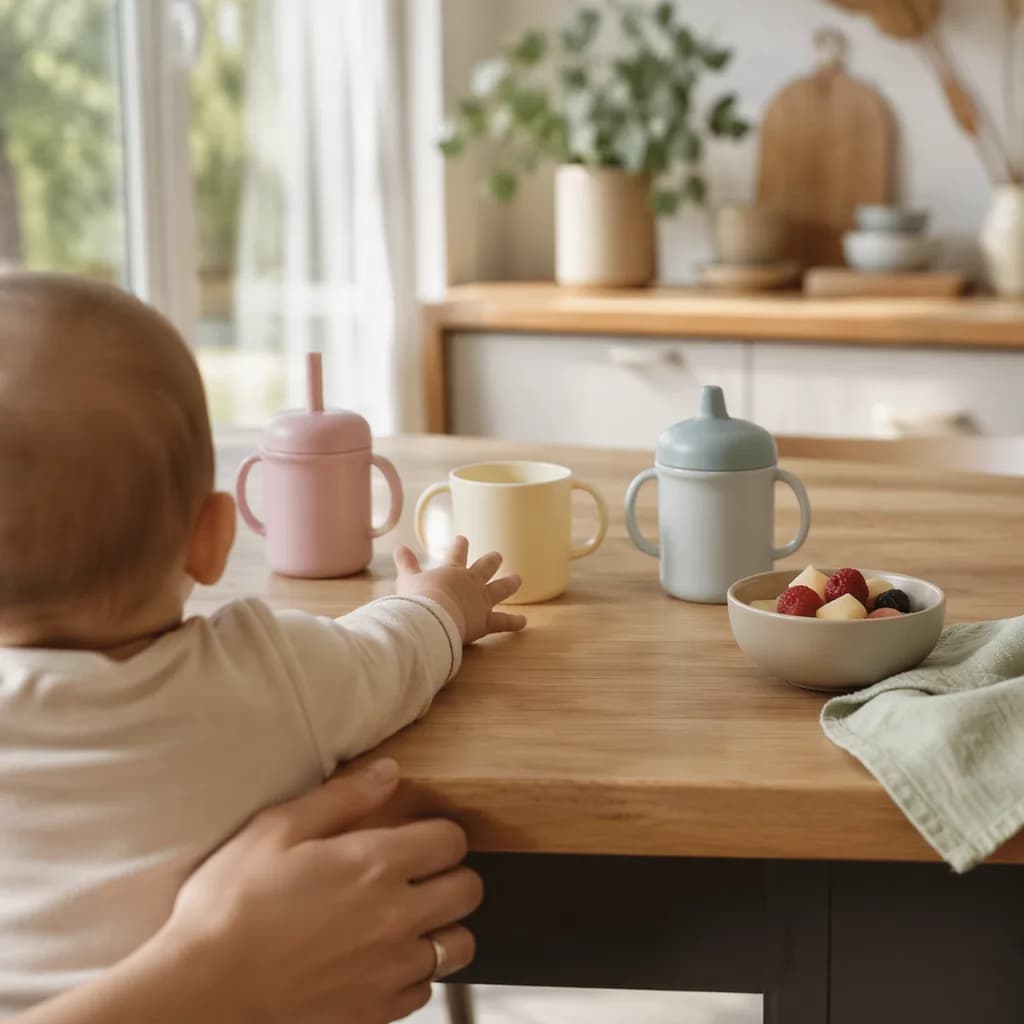
For most families, the easiest place to start is with two cups: a tiny open cup and a baby straw cup. Around 6 months, once baby is sitting well and starting solids, you can begin small, low-pressure practice with both.
An open cup helps baby practice sealing their lips, carefully tilting the cup, pacing sips, and coordinating hands to mouth. A straw cup builds different skills, including sucking while keeping the lips sealed, tongue control, and suck-swallow-breathe coordination. Both are useful.
Sippy cups can still have a place. They’re convenient in the car, at the park, or tucked into the side pocket of your diaper bag. But they don’t teach the same lifelong drinking skills as an open cup or straw cup, so we wouldn’t make them the only cup baby uses.
A real-life setup might look like this: offer a splash of water with dinner in a tiny open cup, with your hand nearby because spills are part of the lesson. Then keep a simple straw cup in the diaper bag for outings. If you’re packing for the day, our Diaper Bag Essentials for Newborns and Older Babies guide can help you keep the cup situation simple.
What goes in the cup depends on baby’s age. Breast milk, formula, and water guidance changes as babies grow, so follow your pediatrician’s advice for your child. Then practice as best you can. Small sips count.
What to look for in the best cups for babies
For early cup practice, small is your friend. A cup that holds about 2 to 5 ounces is usually easier for baby hands to lift, tip, and bring back to the table without a dramatic splash. Solid Starts notes that a tiny open cup, even something as simple as an espresso cup or shot glass, can work well because babies only need a little liquid while they’re learning.
Look for soft or rounded edges, too. A rim that feels comfortable against the lips makes practice calmer, especially when baby is still figuring out how hard to grip and how far to tilt.
Simple parts matter more than fancy features. Straws and valves can trap milk if they’re not cleaned thoroughly, and Solid Starts specifically warns that mildew can grow in straws that aren’t scrubbed well after each use. At home, an easy-clean cup often beats a totally leakproof one. Leakproof cups are helpful in the stroller or tucked beside snacks in your diaper bag, but for meals at the table, fewer parts usually means less frustration after dinner.
A stable base helps, especially with open cups. Some baby cups have a slightly weighted bottom, which can make them steadier as babies practice lifting, sipping, and setting the cup down. It won’t stop every spill. Nothing does. But it can reduce the constant tipping that makes parents want to hide all cups until preschool.
Materials are mostly about your preferences and your baby’s habits. Parents often compare silicone, stainless steel, glass with a sleeve, and BPA-free plastic. Silicone can be grippy and soft. Stainless steel is sturdy. Glass with a sleeve lets you see what’s inside while adding some protection. Plastic is often lightweight for bags and outings.
Try one open cup and one straw cup first. Solid Starts recommends both styles because they build different drinking skills, like lip sealing, tilting, sucking, pacing, and hand-to-mouth coordination. You don’t need a cabinet full of options before your baby has even shown what they like.
Baby gear adds up fast, from cups to sleep tools like a baby monitor or crib mattress. Start small, watch what works, and save the extras for later.
Best straw cups for babies
A straw cup can be a really helpful first cup because it builds skills babies will keep using long after the baby gear phase is over. Straw drinking supports lip closure, tongue control, suck-swallow-breathe coordination, pacing, eye-hand-mouth coordination, and independent drinking.
It’s also practical. Very practical.
For a baby who gets mad when an open cup tips too fast, a straw cup can make practice feel less frustrating. It works well at meals, in a daycare bag, on stroller walks, or tucked beside the wipes and backup outfit in your diaper bag essentials for newborns and older babies. Just keep expectations low at first. A few sips is still practice.
Look for a straw cup with a short, narrow straw. Shorter straws take less effort because baby doesn’t have to pull liquid as far, and a narrow straw can slow the flow so those first sips are easier to manage. Removable straw pieces are a big help too, because straws can grow mildew if they’re not cleaned well after each use.
A soft weighted straw can be useful if you want baby to drink from different angles, especially during snack time or while sitting in the stroller. Try to avoid lots of hard-to-clean valves if you can. Unvalved straws are ideal for babies just getting started, though a valved straw may help some babies who cough often or lose most of the drink out the sides of their mouth. The tradeoff is that valved straws can encourage biting.
Here’s a simple way to teach it: dip the straw into a little water, cover the top with your finger, lift it out, then release a few drops at baby’s lips. Pause. Let them taste and notice. After a few tries, many babies start closing their lips around the straw and experimenting with sucking.
One parent-to-parent warning: “dishwasher-safe” doesn’t always mean “fully clean.” Some straw cups still need a long, tiny brush through every little piece. If a cup has three hidden parts and you’re already washing bottles at 10 p.m., it may not be the one you reach for daily. For packing sanity, this is the kind of small detail that belongs right next to your diaper bag essentials new parents actually use daily.
For safety, keep baby seated while practicing with straw cups, especially if the straw or spout is rigid, like metal, glass, or hard plastic. Walking around while drinking from a hard straw can be dangerous if they fall. Same calm rule as sleep gear decisions, like checking a baby monitor buying guide for safer sleep or choosing from a crib mattress buying guide for safer baby sleep: simple, steady, and suited to your actual day.
Best open cups for babies
Open cups can feel wildly optimistic the first time you hand one to a baby. Water dribbles down the chin, the cup gets grabbed with both hands, and someone usually needs a towel. Still, this messy little practice builds real drinking skills: sealing the lips, carefully tipping the cup, pacing sips, and learning how much liquid is coming.
For early practice, tiny cups work best. Think small silicone training cups, weighted cups with a stable base, or small stainless cups with smooth rims. You don’t need anything fancy, either. A small espresso cup or shot glass can work well if it’s easy to hold and easy to clean.
Start with 1 to 2 teaspoons of water at meals. That’s enough for practice, but not so much that every attempt turns into a floor-mopping event. If you’re packing meals out of the house, tuck a tiny open cup into your bag alongside the basics from Diaper Bag Essentials for Newborns and Older Babies, because cup practice is much less stressful when you already have a spare bib or cloth nearby.
Here’s a simple way to help. Hold the cup near the bottom, bring it gently to baby’s lips, pause, and let baby close their lips around the rim. Then tip just enough for a small sip. Go slowly. Babies often need time to connect the feeling of the rim, the water, and the swallow.
You’ll start to see little signs that baby wants more independence: reaching for the cup, opening their mouth when it comes close, or trying to tip it without your help. Let them try, even if your hand stays nearby.
For cleanup, practice over a bib with a food-catching pocket. Or make it silly during bath play with an empty cup, letting baby practice holding, tipping, and bringing it to their mouth without the pressure of a real drink. It’s the same kind of practical setup thinking parents use for sleep gear, like choosing items from a Crib Mattress Buying Guide for Safer Baby Sleep: simple, safe, and easy to live with.
Sippy cups versus sippy cup alternatives
A traditional sippy cup is usually a toddler cup with a firm spout, often with a valve that helps prevent leaks. That leakproof design is exactly why parents reach for it. Toss it in the diaper bag, hand it over in the stroller, survive the ride home without milk on the car seat. Very understandable.
Still, many feeding specialists prefer straw cups and open cups for everyday practice. Solid Starts’ licensed pediatric professionals recommend open cups and straw cups because they help babies build drinking skills they’ll keep using, like sealing their lips, carefully tilting a cup, sipping, and coordinating sucking, swallowing, and breathing with a straw.
The difference is easier to picture than it sounds.
With a hard-spout sippy cup, a baby often sucks on the spout to get liquid out, especially if there’s a valve. With a straw cup, baby has to seal their lips around the straw and pull liquid up. With an open cup, baby learns to bring the cup to the mouth, tilt just enough, seal the lips, and manage small sips. Those straw and open-cup skills are closer to mature drinking than relying on a firm spout.
That doesn’t mean sippy cups are “bad.”
Real life has crumbs in the car seat and a daycare cubby with rules. A leakproof sippy can be genuinely useful in the car, at the playground, or anywhere spills would create a whole extra problem. It’s a bit like packing extra wipes or a spare outfit from your Diaper Bag Essentials for Newborns and Older Babies list. Sometimes the practical choice is the sane choice.
A good middle ground is to limit hard-spout sippies instead of treating them as forbidden. Use them when you need the leak protection, then offer open cup or straw cup practice during meals at home. A tiny open cup with a small amount of water is plenty. Solid Starts even notes that a shot glass, espresso cup, or small cup can work, so this doesn’t have to become another expensive baby gear project.
Softer spout cups and 360 cups sit somewhere in the middle. They may spill less than an open cup, which is helpful, but they can have more parts to clean and may build skills more slowly than regular open cup practice. If you’re already comparing baby gear, like a Baby Monitor Buying Guide for Safer Sleep or a Crib Mattress Buying Guide for Safer Baby Sleep, cups deserve the same calm approach: choose what fits daily life, then give baby chances to practice the skills that matter.
Best cups by age and stage
Cup timing isn’t only about age. Readiness matters more than the calendar.
Before you start, look for a baby who can sit upright with support, has good head control, shows interest in food and cups, and seems able to swallow safely during meals. If your baby was born premature or has feeding concerns, ask your pediatrician, feeding therapist, or dietitian about the right timing and cup style. Individual guidance is the safest plan.
Around 6 months
At meals, you can introduce a tiny open cup with a very small amount of water, unless your clinician has advised something different. Think espresso-cup size, not toddler tumbler size. Solid Starts notes that a shot glass, espresso cup, or small cup can work well, so you don’t have to buy something fancy.
A simple straw cup can also be used for practice. Short, narrow straws are easier for babies learning to suck because they take less effort and can slow the flow. Choose one that’s easy to clean, since straws can grow mildew if they aren’t washed well after each use.
7 to 9 months
Offer cup practice daily if baby is ready. This doesn’t need to be a big production. A few sips at breakfast or dinner is enough.
Let baby hold the cup with help. You might guide their hands around a tiny silicone cup, tip it together, then pause. Open cups help babies practice lip sealing, careful tilting, pacing, and hand-to-mouth coordination. Expect spills. That’s part of the learning.
This is also the stage where simple routines save your sanity, just like having a stocked bag before leaving the house. If you’re building one, these diaper bag essentials for newborns and older babies can help.
9 to 12 months
Now you can gradually give baby more chances to do it independently. Keep open cup practice at the table, where spills are easier to manage and baby is seated.
For outings, straw cups are often easier. A spill-proof straw cup can cut down on cleanup while still helping baby practice a useful drinking skill. Toss a clean one into your bag with the items you actually use daily, like the basics in Diaper Bag Essentials New Parents Actually Use Daily.
12 months and up
After the first birthday, many families begin working toward milk and water in cups instead of bottles, following their pediatrician’s guidance. Open cups and straw cups both build long-term skills, while sippy cups are best used as a short-term convenience rather than the only drinking option.
It’s a lot like sleep gear: the goal is safe, practical, and age-appropriate, whether you’re choosing a cup, reading a Crib Mattress Buying Guide for Safer Baby Sleep, or checking a Baby Monitor Buying Guide for Safer Sleep. Small choices add up, and you don’t have to get every detail right on the first try.
How to introduce a cup without making meals stressful
Start small. Pick one calm meal a day, ideally when your baby is rested and interested, but not wildly hungry. A baby who’s overtired or crying for food probably isn’t ready to practice a brand-new skill right then.
Use water for practice at first, unless your pediatrician has given you different instructions. Keep the amount tiny. With an open cup, that might mean just a sip or two in the bottom. With a straw cup, it may be enough to let baby explore the straw, taste a little water, and be done.
The early days can look messy. Coughing once in a while, dribbling water down the chin, chewing the straw, or dumping the cup are all common parts of learning. Babies are working on lip sealing, tongue control, pacing, and coordinating sucking, swallowing, and breathing. If coughing is frequent, your baby seems distressed, or drinking regularly looks hard instead of just messy, call your pediatrician for guidance.
Two or three sips can be plenty.
Sit with your own cup and take a slow sip where your baby can see you. Babies copy more than we think, and a calm little demonstration often works better than lots of explaining. Try, “Sip,” then drink. Pause. Let them try.
Keep the mood light. Avoid repeated wiping after every dribble, and try not to turn each sip into a big performance. A quick smile is enough. If we clap, cheer, correct, wipe, and reload the cup every ten seconds, it can start feeling like a test instead of practice.
If your baby refuses the cup, pause for a week. Truly. Then try a different time of day or switch styles, such as moving from an open cup to a straw cup. Some babies like a tiny open cup at breakfast. Others do better with a straw cup at lunch.
And if you’re packing meals away from home, tuck the cup next to the bibs and wipes you already carry. Our Diaper Bag Essentials New Parents Actually Use Daily list can help keep that setup simple.
Cleaning and safety tips parents actually use
The easiest baby cup to love is the one you can actually clean at 9 p.m. with a tired brain.
Take apart every removable piece each time you wash it: straw, valve, seal, lid, weighted straw, spout, all of it. Straw cups can trap moisture, and Solid Starts notes that mildew can grow in straws that aren’t cleaned well after each use. A long, thin straw brush is worth keeping by the sink.
Let every piece dry fully before you put the cup back together. If you reassemble it while parts are still damp, that moisture gets sealed inside. I like setting tiny parts on a clean towel near the bottles, so they don’t disappear into the dishwasher basket.
Do quick “is this still okay?” checks while you wash:
- Look for cracks in silicone or plastic.
- Toss parts that have cloudy spots, sticky patches, trapped smells, or rough edges.
- Replace chewed straws or spouts, especially once baby has teeth.
- If a valve makes cleaning harder or encourages biting, consider a simpler straw setup.
Milk in a straw cup is not a diaper bag souvenir. If a cup gets forgotten next to wipes and snacks, just dump it when you find it. For packing help, we keep cup choices boring and practical, the same way we think about diaper bag essentials for newborns and older babies and the daily diaper bag items parents actually use.
Try to avoid bedtime cups with milk or juice because of tooth decay risk. Water is the simpler sleep-adjacent choice, much like keeping sleep gear straightforward with a baby monitor buying guide for safer sleep or a crib mattress buying guide for safer baby sleep.
Pretty cups are everywhere online. Choose the one grandparents, daycare, and babysitters can take apart, wash correctly, and put back together without guessing.
Frequently Asked Questions
What type of cup is best for a 6 month old baby?
A small open cup and a simple straw cup are usually the best first choices once baby can sit well and has started solids.
Are straw cups better than sippy cups for babies?
For everyday drinking practice, straw cups are often better because they build more mature mouth skills than hard-spout sippy cups.
When can babies use an open cup?
Many babies can start open cup practice around 6 months with help, using tiny amounts of water at meals.
Do babies need sippy cups at all?
No. Many families skip traditional sippy cups and use straw cups and open cups instead, with a leakproof option only for outings.
How much water can a baby have when learning to drink from a cup?
At around 6 to 12 months, cup practice usually means small sips with meals. Ask your pediatrician for the right amount for your baby.
What should I do if my baby coughs when drinking from a cup?
Occasional coughing can happen while learning. Frequent coughing, choking, wet breathing, or distress should be discussed with your pediatrician.
Frequently asked questions
What cup should a baby use first?
Are straw cups better than sippy cups for babies?
What size cup is best for a baby learning to drink?
How do you keep baby straw cups clean?
References
Sources
External research this article was grounded in.
- Best Buy International: Select your Country - Best Buybestbuy.com
- What's the Best Cup for Babies? - Solid Startssolidstarts.com
- BEST | English meaning - Cambridge Dictionarydictionary.cambridge.org
- Best Cups For Infants - 2026 Reviews - The Common Momthecommonmom.com
Related reading
More from the journal → baby-products
Newborn Essentials Checklist: Buy This, Skip That
A calm newborn essentials checklist for what to buy now, what can wait, and what to skip so you can prep for baby without overbuying.
20 min readAug 3, 2026- baby-products
Car Seat Safety for Newborns: Fit, Position, Mistakes
Newborn car seat safety starts with fit: rear-facing straps, a snug harness, correct recline, and no bulky coats or extra padding.
12 min readAug 3, 2026 - baby-products
Babywearing for Beginners: Fit, Wraps, and Tips
New to babywearing? Start with simple fit checks, carrier types, and calm tips that help you carry baby safely and comfortably.
12 min readAug 3, 2026