
Diaper Bag Essentials New Parents Actually Use Daily
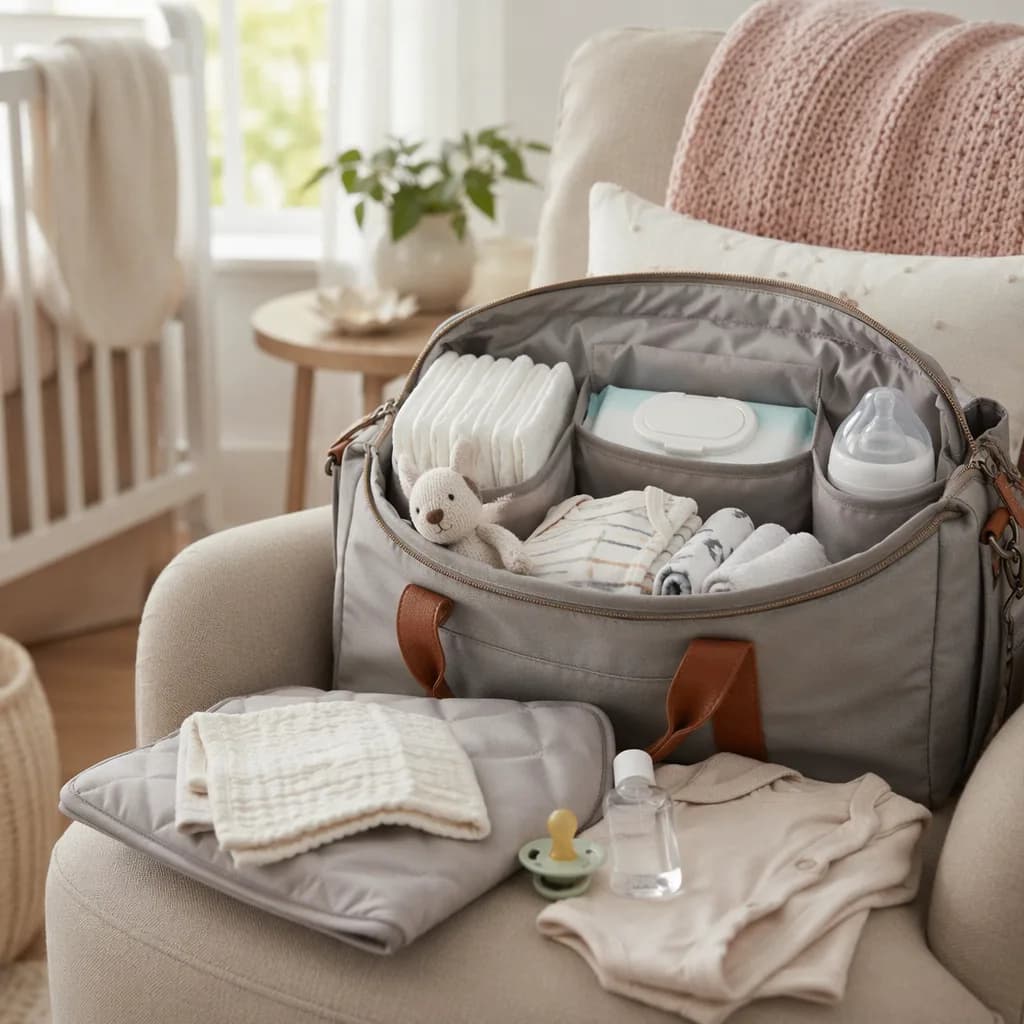
The diaper bag essentials most parents reach for first
Start with the things you’ll use on nearly every outing: diapers, wipes, a changing pad, diaper cream, hand sanitizer, and a spare outfit. That’s the core kit. If those are packed, you can usually handle the messy middle of a grocery run, a pediatrician visit, or a quick stop for coffee.
For diapers, a simple rule works well: pack one diaper for every 2-3 hours you’ll be out, plus one extra. For a newborn appointment, three diapers is usually a safe minimum. Tiny babies have excellent timing, and somehow the big diaper change often happens five minutes after you leave the house.
Wipes earn their space fast. Choose wipes that can handle diaper changes, sticky hands, spit-up, and the random coffee spill on your stroller handle. If you’re still sorting out what belongs at home versus what belongs in the bag, our Newborn Essentials Checklist for the First 8 Weeks can help you keep things simple.
A thin foldable changing pad is worth packing, especially for public changing tables or the back seat of the car. It gives you a cleaner surface without taking over the whole bag. A small tube of diaper cream is the same idea. Bring the travel size, not the full-size one, so your diaper bag doesn’t start feeling like a bathroom drawer.
Add hand sanitizer and one spare outfit in a zip bag. If the outfit gets messy, the zip bag becomes your laundry bag.
And if you’re choosing gear, this is where size matters. A stroller with easy storage can make quick changes less stressful, so peek at How to Choose a Stroller That Fits Your Life before you commit. Keep the bag useful, not overstuffed. Our guide to Baby Products You Don't Need: What New Parents Can Skip is a good gut check.
What to pack in a diaper bag for a newborn
A newborn diaper bag works best when it’s simple, stocked, and easy to repack when you’re tired. Think of it as your tiny mobile changing station, not a suitcase.
Here’s a practical newborn diaper bag checklist:
- Diapers
- Wipes
- A portable changing pad
- Diaper cream
- Two spare outfits
- Two burp cloths
- Feeding supplies
- Pacifiers, if your baby uses them
- A wet bag for soiled clothes
The two outfits matter. Newborns can go through clothes quickly, and a blowout at the pediatrician’s office is exactly when you’ll be glad you packed a footed sleeper, not just an extra onesie. A sleeper covers the whole baby, which is handy if socks have disappeared or the car seat straps rubbed against damp clothes.
For feeding, pack based on how your baby eats. That might mean a bottle with formula or pumped milk, a nursing cover if you like using one, breast pads, or ready-to-feed formula for longer errands. Keep it realistic for your actual day. If you’re still sorting out what belongs at home versus what belongs in the bag, our Newborn Essentials Checklist for the First 8 Weeks can help you separate the true basics from the “maybe later” items.
Add two burp cloths. One often gets wet fast, and the second one saves your shirt on the ride home. Tuck them somewhere easy to grab, not under the diapers.
If your baby uses a pacifier, keep a clean one in a small case. Loose pacifiers at the bottom of the bag collect crumbs, lint, and mystery fuzz, and somehow it always happens right when the baby is crying in the checkout line.
You don’t need to pack every baby product you own. In fact, this is a good place to be picky, just like we talk about in Baby Products You Don't Need: What New Parents Can Skip. A lighter bag is easier to carry, easier to clip onto the stroller, and easier to find things in when one hand is holding the baby. If you’re still choosing gear, How to Choose a Stroller That Fits Your Life pairs well with a diaper bag setup that matches your real errands.
Diaper bag must haves for feeding, messes, and comfort
Feeding supplies are the first thing to pack because a hungry baby has no interest in waiting.
For bottle-fed babies, keep bottles, formula or milk, a small cooler if needed, and a clean bib in the bag. If you use powdered formula, pre-measured portions can save you from scooping in the car while everyone is crying. For nursing parents, pack breast pads, a light cover or muslin blanket if you prefer one, nipple cream, and a snack for yourself. Truly, the snack matters.
A wet bag or large zip-top bag is one of the most useful diaper bag must haves. It holds dirty clothes, wet bibs, or a diaper that has to wait until you find a trash can. One blowout at the pediatrician’s office will make you a believer.
Bring one lightweight blanket, too. It can work as a stroller shade, burp cloth backup, clean floor spot, or warmth in a chilly waiting room. If you’re still sorting out the bigger gear, our guide on how to choose a stroller that fits your life can help you think through what you’ll actually use day to day.
Once your baby starts noticing the world, add a small toy or soft rattle. A crinkly toy can buy you five calm minutes in a checkout line, which sometimes feels like a gift.
If you’re building your bag alongside the nursery and first baby supplies, the Newborn Essentials Checklist for the First 8 Weeks and Newborn Nursery Setup: A Safe, Simple Room Guide are good places to keep things simple. And if the baby aisle starts convincing you that you need everything, read Baby Products You Don't Need: What New Parents Can Skip before you add more to the cart.
Parent items that deserve a pocket too
Your diaper bag should take care of you, too. Yes, the baby needs diapers, wipes, and a change of clothes, but you also need the basics that keep the day from falling apart: wallet, keys, phone, lip balm, water bottle, and a quick snack.
A protein bar sounds tiny until you’re 45 minutes past feeding yourself, sitting in the car after a long pediatrician visit, and starting to feel shaky. Toss in two if you can. One will disappear faster than you expect.
If your bag has a parent pocket, claim it. Put your keys, wallet, and phone there every single time. You don’t want to dig past diapers, burp cloths, and spare onesies while holding a crying baby in a parking lot. This is the same practical mindset we love in a good Newborn Essentials Checklist for the First 8 Weeks: keep what you’ll actually use close by.
A small pack of tissues and a few bandages are worth adding, too. They take almost no room and somehow come in handy for runny noses, paper cuts, mystery scrapes, and snack messes.
If you’re still recovering from birth, pack for that reality. Pads, clinician-approved pain reliever, or an extra shirt can make an outing feel much more manageable. And if you’re trying to avoid overpacking, this pairs well with Baby Products You Don't Need: What New Parents Can Skip. Keep it useful. Keep it reachable.
What you can usually leave at home
A diaper bag gets heavy fast. If you pack for every possible diaper blowout, weather shift, hunger cry, and toy emergency, you can end up carrying a bag that makes a normal Target run feel harder than it needs to be.
For short trips, skip the full-size diaper cream, the big sleeve of diapers, multiple blankets, and half the toy basket. A travel-size cream, a few diapers, one light blanket, and one small toy usually cover the basics. If you’re still sorting what truly belongs in the early baby setup, our Newborn Essentials Checklist for the First 8 Weeks can help you keep the list realistic.
You probably don’t need three outfit changes for a one-hour errand. Most of the time, one extra outfit is enough. For newborns, long drives, or babies in a very spit-up-heavy phase, pack two and call it good.
Bulky bottle warmers can usually stay home unless your baby truly needs one. Many babies will take room-temperature milk, and ready-to-feed options can make short outings simpler. This is the same idea behind Baby Products You Don't Need: What New Parents Can Skip: keep what solves a real problem, skip what just adds weight.
Also, avoid tossing loose medicine into the bag unless your pediatrician has told you to bring it. If medication is needed, keep it labeled, closed tightly, and safely stored where little hands can’t reach.
How to organize the bag so you can find things fast
A diaper bag works best when it’s packed in little “grab and go” zones, not as one big jumble. The goal is simple: when the baby is crying on a restroom changing table, you shouldn’t be digging under a spare onesie for the wipes.
Put all diaper change items in one pouch: diapers, wipes, cream, and a foldable changing pad. Then, when you need a change, you can grab that pouch instead of hauling the whole bag into a tiny restroom stall.
Use a second pouch for feeding items. This is especially helpful if you’re packing bottle parts, formula packets, bibs, or burp cloths. Feeding supplies tend to scatter fast, and a pouch keeps them from ending up at the bottom of the bag next to loose socks and snack crumbs.
Keep the spare outfit in a zip-top bag. If the outfit gets soiled, the same bag becomes your dirty clothes bag. It’s one of those small tricks that feels almost too simple, until you’re holding a wet onesie in a parking lot.
Place the most urgent items near the top: wipes, a pacifier, a burp cloth, and one diaper. If you’re still building your baby gear list, our Newborn Essentials Checklist for the First 8 Weeks can help you keep the diaper bag practical, and Baby Products You Don't Need: What New Parents Can Skip can save you from overpacking.
Restock as soon as you get home. If you used the last diaper during a grocery run, replace it before the next outing, not when everyone’s already buckled into the car.
Quick diaper bag checklist by trip length
The easiest diaper bag is the one packed for the outing you’re actually taking. A 20-minute pharmacy run doesn’t need the same setup as a day at Grandma’s, and packing lighter makes it much easier to find the wipes when you need them.
For a quick errand under one hour, keep it simple:
- 2 diapers
- Wipes
- Changing pad
- 1 spare outfit
- Burp cloth
- Pacifier, if your baby uses one
- Your wallet and keys
That’s enough for the classic parking-lot diaper change or the surprise spit-up right after you’ve buckled the car seat.
For a half-day outing, add a little cushion. Pack extra diapers, feeding supplies, 2 burp cloths, a wet bag, a blanket, a snack for you, and an extra shirt if your baby spits up often. Parent snacks count as baby gear in this season. Truly. If you’re still building your basics, our Newborn Essentials Checklist for the First 8 Weeks can help you separate daily-use items from “maybe someday” purchases.
For a full day away from home, think in blocks. Pack diapers using the 2-3 hour rule, then add 2 outfits, enough milk or formula, extra bibs, a small toy, and any parent recovery items you need. Lip balm, water, a clean shirt, pain reliever, or nursing pads can make a long day feel less chaotic.
For daycare drop-off, follow the center’s rules first. Many ask for labeled diapers, wipes, bottles, extra clothes, and diaper cream with a permission form. Labels save everyone confusion, especially during busy changes.
For car trips, keep a backup mini kit in the car with diapers, wipes, an outfit, and a trash bag. It’s a lifesaver when the main bag gets left by the door.
And you don’t need every clever gadget sold to new parents. If you’re trying to keep things lean, Baby Products You Don't Need: What New Parents Can Skip is a helpful sanity check. A bag that fits under your stroller matters too, so pair this with How to Choose a Stroller That Fits Your Life if you’re still deciding.
Frequently Asked Questions
How many diapers should I pack in a diaper bag?
Pack one diaper for every 2-3 hours you’ll be out, plus one extra. Newborns may need more, especially on longer outings.
What should be in a newborn diaper bag checklist?
Pack diapers, wipes, changing pad, diaper cream, two outfits, burp cloths, feeding supplies, pacifier if used, and a wet bag.
Do I need a separate diaper bag or can I use a backpack?
A backpack works well if it has enough pockets and is easy to clean. You don’t need a special bag if your setup stays organized.
What diaper bag essentials are easy to forget?
Parents often forget a wet bag, extra parent shirt, hand sanitizer, snacks, and a clean pacifier case.
How often should I restock the diaper bag?
Restock after every outing if you used diapers, wipes, clothes, or feeding supplies. It prevents stressful surprises later.
What can I skip packing for short trips?
Skip bulky toys, full-size creams, extra blankets, and too many outfit changes. For a quick errand, keep the bag light.
Frequently asked questions
How many diapers should I pack in a diaper bag?
What should be in a newborn diaper bag?
Do I really need two spare outfits?
How do I keep a diaper bag from getting overpacked?
References
Sources
External research this article was grounded in.
- 40+ Top Computer Vision Projects [2025 Updated] - GeeksforGeeksgeeksforgeeks.org
- 25+ Computer Vision Projects with Code Examples & Templatesblog.roboflow.com
- 24 Diaper Bag Must-Haves for New Parents - Richmond Momrichmondmom.com
- Diaper Bag Must-Haves: A Comprehensive Guide to Packing Essentials - The Parenting Protheparentingpro.com
Related reading
More from the journal → baby-products
Newborn Essentials Checklist: Buy This, Skip That
A calm newborn essentials checklist for what to buy now, what can wait, and what to skip so you can prep for baby without overbuying.
20 min readAug 3, 2026- baby-products
Car Seat Safety for Newborns: Fit, Position, Mistakes
Newborn car seat safety starts with fit: rear-facing straps, a snug harness, correct recline, and no bulky coats or extra padding.
12 min readAug 3, 2026 - baby-products
Babywearing for Beginners: Fit, Wraps, and Tips
New to babywearing? Start with simple fit checks, carrier types, and calm tips that help you carry baby safely and comfortably.
12 min readAug 3, 2026