
Bottle Nipple Sizes: Flow Rates and When to Switch
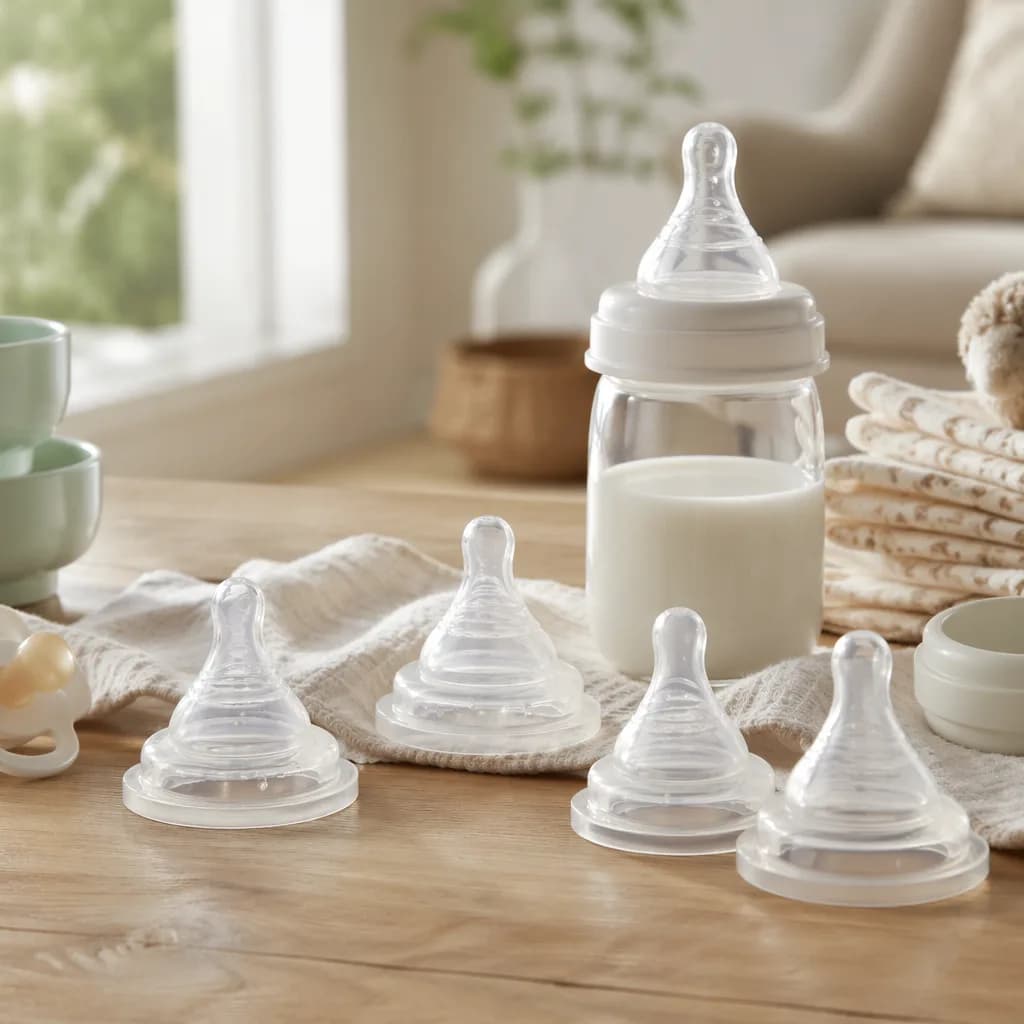
What bottle nipple sizes mean
Bottle nipple sizes are mostly about flow speed, not the actual physical size of the nipple. In plain terms, the “size” tells you how quickly milk comes through the opening at the tip. A slower flow gives babies more time to suck, swallow, and breathe comfortably. A faster flow lets milk come out more quickly, which some babies handle well and others really don’t.
You’ll see labels like preemie, newborn, level 1, level 2, level 3, slow flow, medium flow, and fast flow. Some brands use numbers. Some use words. Some use age ranges, like 3 months plus or 6 months plus. Those age ranges can be helpful starting points, but they aren’t rules.
Brands also don’t size nipples the same way. A level 1 from one bottle line may feel faster than a level 1 from another, and even nipples with similar labels can feed differently. That’s why your baby’s behavior during a feed matters more than the number printed on the package. If you’re still getting comfortable with bottles, Formula Feeding Basics: Amounts, Prep, and Tips can help with the bigger feeding picture.
Here’s a real-life example: if your 4-month-old finishes calmly with a slow flow nipple, doesn’t seem frustrated, and feeds well, you may not need to switch just because the box says 3 months plus.
Watch your baby, not just the label. Hungry and full cues can tell you a lot, especially alongside bottle flow. If you need a refresher, we like this guide to Newborn Feeding Cues: Hungry and Full Baby Signs.
How bottle nipple flow rates work
Bottle nipple flow rate means how quickly milk or formula comes through the nipple when your baby sucks. It sounds simple, but there’s more going on than the number printed on the package.
The hole size matters, of course. A smaller opening usually means a slower flow, while a larger opening lets milk move faster. But flow can also be affected by the nipple shape, the bottle’s venting system, the thickness of the liquid, and how strongly your baby sucks. That’s why two nipples labeled “slow” may not feel exactly the same to your baby, especially across different bottle brands.
Slow flow nipples are often a good starting point for many newborns. They can also be helpful for breastfed babies moving between breast and bottle, since a slower flow may feel closer to breastfeeding. If your baby coughs, gulps, hard swallows, chokes, has milk dripping from their mouth, or starts refusing the bottle, the flow may be too fast and a slower nipple may be worth trying.
Faster isn’t automatically better.
A baby still needs time to suck, swallow, breathe, and notice they’re getting full. If milk comes too quickly, feeding can feel stressful instead of comfortable. If it comes too slowly, you might see fussiness, irritation, sleepy feeds, or bottles that seem to take forever. Watching your baby’s cues matters more than following an age label exactly. If you’re sorting out intake alongside bottle flow, How Much Milk Does a Newborn Need by Age? and Newborn Feeding Cues: Hungry and Full Baby Signs can help you connect the dots.
One simple at-home check: fill the bottle, turn it upside down, and watch. Does milk drip slowly, or does it stream out? This isn’t a perfect test, because your baby’s sucking strength changes the flow during an actual feed, but it can give you a quick clue.
If you’re using thickened feeds or a specialty formula, ask your pediatrician or a feeding therapist before changing nipple size. Some thicker liquids may need a different nipple, but it’s best to get guidance first. For everyday prep questions, Formula Feeding Basics: Amounts, Prep, and Tips is a helpful place to start. And once solids enter the picture, feeding changes can overlap in surprising ways, so tracking patterns like stool changes can help too: Baby Constipation After Starting Solids: What to Track.
Tiny side note from parent life: if you’re reading bottle labels at 2 a.m. and also somehow researching Tanmay Suresh Upadhyay: meaning & origin, you’re in good company. Feeding questions and name rabbit holes both have a way of showing up during the same tired hours.
Signs the nipple flow is too slow
A nipple that’s too slow can make feeding feel like hard work for your baby. You may notice feeds regularly stretching past 30-40 minutes, or your baby sucking hard but getting frustrated because milk isn’t coming fast enough. Some babies collapse the nipple, tug at it, fuss, or fall asleep before finishing. Others seem hungry again soon after what looked like a full feeding attempt.
The key word is pattern.
One fussy bottle doesn’t automatically mean the nipple size is wrong. Babies have off feeds. They get tired, distracted, gassy, or just not in the mood. Before switching sizes, look across several feeds and check the simple things first: the bottle angle, a loose collar, a blocked nipple hole, or whether baby is overtired. Any of those can mimic slow flow and make a normal nipple seem like the problem.
Here’s a real-life kind of clue: baby starts the bottle strong, then begins tugging at the nipple, cries, sucks hard, and only takes an ounce after 20 minutes. If that happens again and again, the flow may be too slow.
If you’re also sorting out how much baby should be taking overall, our guides on How Much Milk Does a Newborn Need by Age? and Formula Feeding Basics: Amounts, Prep, and Tips can help you compare intake with feeding behavior. It also helps to watch for Newborn Feeding Cues: Hungry and Full Baby Signs, since fussiness can have more than one meaning.
When you do try the next nipple size, pick a calm daytime feed. Bedtime bottles are not the best testing ground, because everyone is tired and the stakes feel higher. Keep the first try low-pressure and watch how your baby handles the faster flow.
Signs the nipple flow is too fast
A nipple flow that’s too fast can make feeding feel stressful for your baby, even if they’re hungry and trying hard to keep up.
Common signs include coughing, choking, gulping, hard swallowing, milk leaking or dripping from the corners of the mouth, wide eyes, a stiff body, pulling away from the bottle, or refusing the bottle altogether. Some babies look startled, like the milk is arriving faster than they expected.
Finishing a bottle very quickly can be another clue. A fast feed might seem convenient in the moment, especially during a tired 2 a.m. bottle, but if your baby seems uncomfortable afterward, it’s worth slowing things down. Fast flow can lead to more swallowed air, more spit-up, and cues that look like overeating, such as turning away or seeming unsettled after the bottle. It doesn’t mean a nipple change will fix reflux or gas, but flow rate is one practical piece to check.
If these signs started after you moved up a nipple size, try going back to the slower flow nipple for a few feeds and watch how your baby responds. Age ranges on packaging can be helpful, but your baby’s actual feeding behavior matters more. For more on reading those cues, you may like Newborn Feeding Cues: Hungry and Full Baby Signs and How Much Milk Does a Newborn Need by Age?.
Paced bottle-feeding can help too. Hold your baby more upright, keep the bottle more horizontal instead of tipped high, and pause during the feed so they can breathe, rest, and decide if they’re still hungry. If you’re working through bottle routines, Formula Feeding Basics: Amounts, Prep, and Tips is a gentle place to start.
When to change nipple size
Change bottle nipple size when your baby consistently shows the current flow is too slow or too fast, not just because the package lists a certain age.
Some babies are happy on a slow flow nipple for a long time. That can be especially true for breastfed babies who also take bottles, since a slower bottle flow can feel more like breastfeeding. So if your 5 month old is still calm, feeding well, and finishing bottles without stress, you don’t need to move up just because the next nipple says “3 months+.”
Here’s a simple way to think about it.
If feeds are taking much longer than usual, your baby seems frustrated, gets fussy at the bottle, or keeps falling asleep before finishing, the flow may be too slow. Try one size up for one or two feeds and watch closely. You’re looking for a steady rhythm: suck, swallow, breathe, pause.
If your baby is gulping, coughing, choking, hard swallowing, leaking milk from the mouth, or refusing the bottle, the flow may be too fast. Go back down a size and see if feeding looks calmer. If you’re also sorting out amounts or timing, How Much Milk Does a Newborn Need by Age? and Formula Feeding Basics: Amounts, Prep, and Tips can help you sanity-check the basics.
When testing a new nipple, keep the rest of the feed boring and familiar. Same bottle, same position, same room if you can. Watch your baby’s comfort, breathing, and pace more than the clock. Their cues matter, and Newborn Feeding Cues: Hungry and Full Baby Signs is a helpful refresher.
Please don’t enlarge nipple holes at home. It can make the flow uneven and too fast, which is hard for babies to manage.
Replace bottle nipples if they crack, feel sticky, discolor, thin out, leak too much, or show bite marks. And call your pediatrician for poor weight gain, frequent choking, blue lips, breathing trouble, or feeding refusal. If thicker feeds or solids are part of the picture, ask before changing flow, and track related changes like stool patterns with Baby Constipation After Starting Solids: What to Track. Also, if you landed here while browsing baby names like Tanmay Suresh Upadhyay: meaning & origin, welcome. Feeding questions tend to pop up right alongside name lists.
Bottle nipple sizes by age: a practical guide
Age charts can be helpful, but they’re only a starting point. A nipple labeled “3 months+” doesn’t mean every 3 month old is ready for it, and a baby who’s older isn’t behind if they’re still happy with a slower flow.
A simple way to think about it:
- Preemie, ultra-preemie, or extra-slow flow: Often used for premature babies, medically fragile newborns, or babies who need a very gentle flow.
- Newborn or Level 1: A common starting place for many babies from 0-3 months, especially if feeding feels calm and comfortable.
- Level 2: Some babies move here around 3-6 months if feeds are taking a long time or they seem frustrated with the slower flow.
- Level 3 or higher: Usually for older babies who truly need a faster flow, are taking larger amounts comfortably, or have thicker feeds when recommended by a pediatrician.
Breastfed babies may stay on slower nipples longer, and that can be completely normal. A slower bottle flow can feel closer to nursing, which may help babies move between breast and bottle without getting frustrated by one or the other.
What’s in the bottle matters too. Babies drinking expressed breast milk, standard formula, or thickened feeds may need different nipple levels even if they’re the same age. If you’re sorting out ounces, timing, and prep, Formula Feeding Basics: Amounts, Prep, and Tips and How Much Milk Does a Newborn Need by Age? can help you see the bigger feeding picture.
Some babies never use the fastest nipples before moving on to cups. That’s fine. If feeds are steady, your baby isn’t working too hard, and milk isn’t pouring too quickly, there may be no reason to change.
Always check your specific bottle brand’s nipple chart first, since flow rates aren’t standard across brands. Then let your baby’s cues be the final check. Fussing, falling asleep during feeds, gulping, coughing, choking, or milk dripping from the mouth are all worth paying attention to. For more on reading those signals, see Newborn Feeding Cues: Hungry and Full Baby Signs.
And if you’re making feeding changes around solids, keep an eye on comfort overall, including stools. Baby Constipation After Starting Solids: What to Track is a useful one to save. For a lighter baby-name break during late-night feeding research, you might also enjoy Tanmay Suresh Upadhyay: meaning & origin.
How to switch nipple sizes without upsetting feeds
A nipple change doesn’t have to be a big production. Pick a feed when baby is hungry enough to be interested, but not so upset that everything feels urgent. Those early hunger cues can help here, like rooting, bringing hands to mouth, or getting more alert. If you’re still learning those signals, this guide to newborn feeding cues is a helpful one to keep nearby.
Start small. Put just a little milk in the bottle for the first try, so if the flow is messy or baby gets annoyed, it doesn’t feel like you’ve wasted a full feed. Keep everything else familiar: the same bottle, same feeding position, same burp breaks, same calm little routine you usually use.
Then watch the first few minutes closely.
If baby is relaxed, sucking in a steady rhythm, and swallowing comfortably, that’s a good sign the new flow may fit. If you see gulping, coughing, hard swallowing, milk dripping from the mouth, or sudden frustration, the flow may be too fast. Switch back right away. You don’t need to push through a nipple size that’s clearly not working.
If baby refuses the new nipple, that’s information too, not a failure. Try again another day, or stay with the current size if baby is growing, feeding comfortably, and finishing bottles without ongoing fussiness or exhaustion. Some babies stay on a slower level longer than the package suggests, and that can be completely fine.
For formula-fed babies, keeping prep and bottle routines consistent can make changes easier, so this refresher on formula feeding basics may help. And if daycare, grandparents, or another caregiver gives bottles, tell them exactly which nipple size to use. Consistency keeps feeds calmer for everyone.
Frequently Asked Questions
What bottle nipple size should a newborn use?
Many newborns start with a slow flow or level 1 nipple. Premature babies or babies who cough during feeds may need an extra slow flow nipple.
How do I know when to change nipple size?
Change nipple size when feeds are consistently too slow, frustrating, or too fast for your baby. Watch your baby's cues more than the age label.
Can a nipple flow be too fast for my baby?
Yes. Coughing, gulping, milk leaking, pulling away, or finishing very quickly can mean the flow is too fast.
Is a slow flow nipple only for newborns?
No. Some older babies do best with a slow flow nipple, especially breastfed babies or babies who are sensitive to faster milk flow.
Should I size up if my baby takes a long time to finish a bottle?
Maybe. If feeds often take more than 30-40 minutes and your baby seems to work hard, trying the next size up can help.
Are bottle nipple sizes the same across brands?
No. A level 1 nipple from one brand may flow differently than a level 1 from another, so check the brand chart and your baby's response.
Frequently asked questions
How do I know if my baby needs a faster bottle nipple?
What are signs the bottle nipple flow is too fast?
Should I switch nipple sizes based on my baby's age?
Are bottle nipple sizes the same across brands?
References
Sources
External research this article was grounded in.
- Dr. Brown's Nipple Level Guidedrbrownsbaby.com
- Boddle Learning | 3D Math and ELA Game for K-6 Kidsboddlelearning.com
- Nipple Sizes for Bottles - Eat Play Say Blogeatplaysay.com
- Choosing a Bottle Flow Ratenationwidechildrens.org
- Bottle - Wikipediaen.wikipedia.org
Related reading
More from the journal → feeding
Newborn Feeding Cues: Hunger and Fullness Signs
Learn early newborn hunger cues, late feeding signs, and fullness signals so feeds feel calmer and you know when your baby has had enough.
11 min readAug 3, 2026- feeding
Bottle Feeding Newborn Basics for Calm Feeds
Newborn bottle feeding can feel messy at first. Learn hunger cues, typical amounts, pacing, burping, and when to call your pediatrician.
10 min readAug 3, 2026 - feeding
Breastfeeding Positions for Newborn Comfort
Comfortable breastfeeding starts with your body supported, baby tucked close, and a position that helps both of you relax into the latch.
11 min readAug 3, 2026