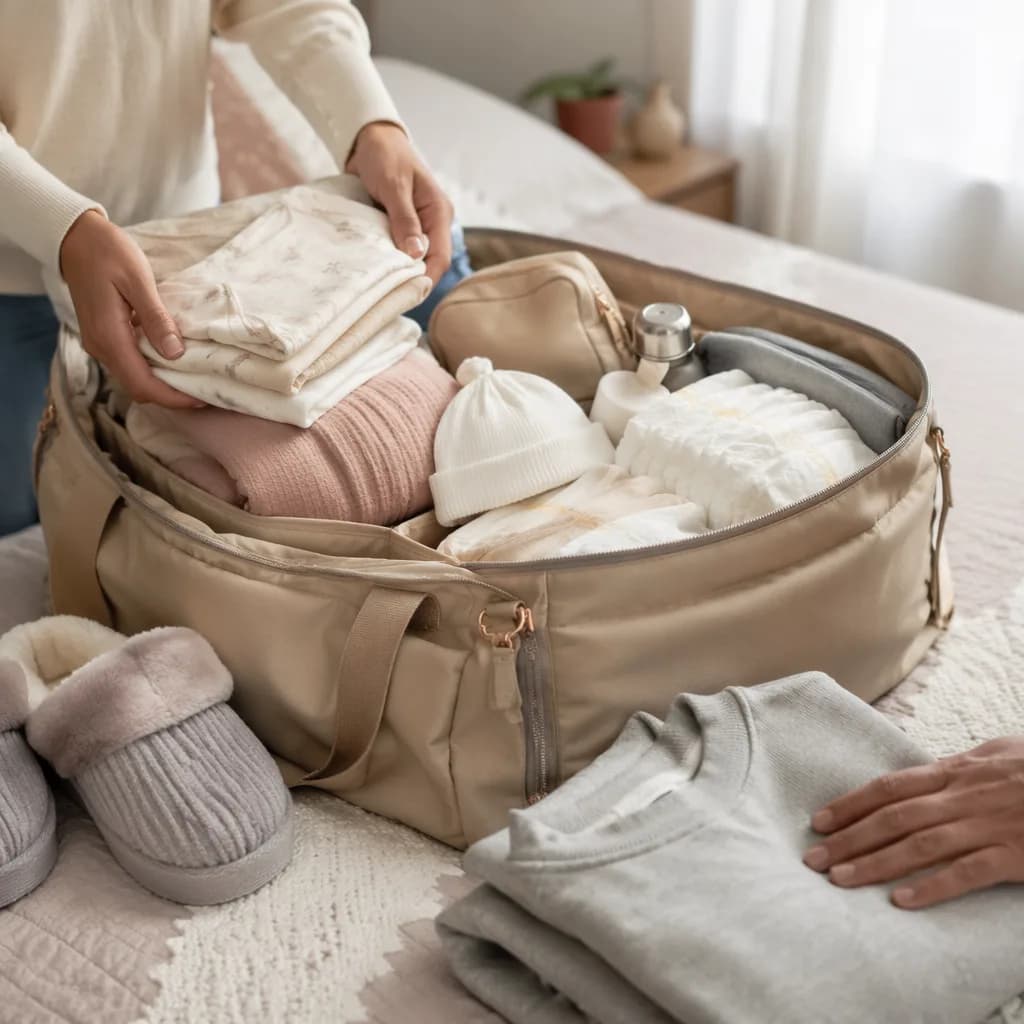
Hospital Bag Checklist for Labor, Birth, and Baby

When to pack your hospital bag
Babies don’t always follow the calendar. Only 1 in 20 arrives on their due date, so it’s smart to have your hospital bag packed by 36 weeks, or at least 3 weeks before your due date.
Pack earlier if you’re having twins, have a planned induction, or your provider has mentioned a risk of preterm labor. Future you will be grateful when you’re not hunting for socks during contractions.
Once it’s packed, keep the bag near the door or in the car, especially if your hospital is more than 20 minutes away. A small practical move like that can make the whole “it’s time” moment feel a little less frantic.
Make a tiny last-minute list and tape it to the top of the bag. Add the things you still use every day: phone charger, glasses, wallet, medication, and any hospital notes you haven’t packed yet.
If you’ll be leaving an older child at home, add one more note with childcare phone numbers, school or daycare pickup details, and bedtime basics. Think: “Maya’s inhaler is in the blue pouch, and she needs her stuffed rabbit.”
And if you find yourself naming-daydreaming while folding baby clothes, that’s normal too. You might like browsing Aurora: meaning & origin or Tanmay Suresh Upadhyay: meaning & origin while the bag waits by the door.
Documents, medical items, and phone basics
This is the small, boring stuff you’ll be very glad you packed. Keep it in an easy-to-reach pocket or a clear folder, not buried under baby clothes.
Pack your photo ID, insurance card, hospital registration papers, and any birth plan copies you want to share. If your hospital or birth center has asked for them, bring your prenatal records too. Add a current medication list and allergy list, even if you know them by heart. Labor is not the time to rely on memory.
Bring your phone, an extra-long charging cord, and a small power bank. Hospital outlets can be in awkward places, and it’s frustrating to have your phone charging across the room when you’re trying to text family or time contractions.
A folder or large envelope is useful for everything you’ll receive before going home: discharge papers, baby records, prescription instructions, and forms. You can label it “baby paperwork” if that helps your tired brain later.
If you wear contacts, pack your glasses, contact solution, and a case. Dry eyes and long hours can make contacts feel miserable.
Also bring a small amount of cash or a card for parking, cafeteria food, vending machines, or a quick pharmacy pickup.
And if you need a gentle distraction while waiting, scrolling baby name meanings can be surprisingly calming. You might save names like Aurora: meaning & origin or Tanmay Suresh Upadhyay: meaning & origin for later.
What to pack for labor and delivery
Labor is not the time to be digging through a giant bag for lip balm. Pack the things you’ll want within reach, then keep them in one small pouch near the top of your hospital bag.
Bring comfortable labor clothes if you’d rather not wear the hospital gown. A dark, loose nightgown works well, especially one that opens easily for monitoring, breastfeeding, or skin-to-skin after birth. A soft robe can be nice too, since hospital rooms can feel chilly and you may want coverage while walking the halls.
Tiny comfort items matter more than you’d think. Pack warm socks with grips, hair ties, a headband, and lip balm. Your mouth can feel dry, your hair may suddenly drive you wild, and cold feet are just annoying when you’re trying to breathe through contractions.
For drinks, a reusable water bottle with a straw is helpful if your hospital allows it. You can sip without sitting all the way up. Clear drinks or electrolyte packets may also be useful, but check with your care team first. Add small snacks for early labor or for your support person, depending on hospital rules.
A few simple comfort tools can make a real difference:
- A massage tool, tennis ball, or comb for counter-pressure
- A heating pad, if your hospital allows plug-in items
- Bluetooth speaker or headphones for a playlist, calming audio, or white noise
- Unscented lotion or oil if you want back rubs
Skip strong scents. Labor can make smells feel intense fast, even ones you usually love.
Finally, print a one-page birth preference sheet and keep it easy to find. Clear requests are best: delayed cord clamping, who cuts the cord, pain relief preferences, and feeding plans. If you’re still choosing a baby name between packing sessions, you might enjoy reading about Aurora: meaning & origin or Tanmay Suresh Upadhyay: meaning & origin while you rest.
Postpartum essentials for mom
Pack for the body you’ll have right after birth, not the one you had before pregnancy. A soft, forgiving going-home outfit makes the ride home feel so much better. Think high-waisted joggers, a loose nursing tank, and a zip hoodie. Five-months-pregnant fit is the sweet spot. Pre-pregnancy jeans can wait.
Add 2 or 3 nursing bras or stretchy bralettes, even if you’re not sure how feeding will go yet. They’re comfortable, easy to move in, and useful whether you breastfeed, pump, combo-feed, or are still figuring things out in those first days.
You’ll also want large, comfortable underwear. Many hospitals provide mesh underwear, and honestly, a lot of moms love it. Still, some prefer having their own pair for the trip home, especially something high-waisted and soft that won’t rub.
For toiletries, pack the basics you’d want after a sweaty, emotional, very long night: toothbrush, toothpaste, face wash, deodorant, shampoo, conditioner, hairbrush, and dry shampoo. If shared hospital bathrooms make you uneasy, toss in shower shoes or flip-flops. They take up almost no room and can make that first shower feel less stressful.
A few comfort items are worth the bag space. Nipple cream, nursing pads, lip balm, and your own pillow can make a bright hospital room feel a little more like yours. If you’re picky about sleep, bring the pillow. Label the pillowcase or use one that won’t blend in with hospital linens.
Peri bottles, maternity pads, and postpartum ice packs are often supplied by the hospital, but it’s completely fine to bring your preferred brand if that helps you feel prepared. Same with a small makeup pouch. If a tinted lip balm and a quick hairbrush moment help you feel human after labor, pack them.
Bring any prescribed medications you take, ideally in their original containers if your hospital requests that. And if you find yourself scrolling baby names during quiet moments, sweet meanings like Aurora: meaning & origin or Tanmay Suresh Upadhyay: meaning & origin can be a gentle little distraction while you wait.
What to pack for baby
Baby’s bag can stay pretty simple. The hospital will usually have what your baby needs during the stay, especially blankets, diapers, and wipes, but it helps to have your own few things ready for the trip home.
Pack an approved infant car seat first, and install it before you leave for the hospital. Truly, this is the item you can’t skip for discharge. If you’re practicing ahead of time, try buckling in a small doll or stuffed animal so you’re not figuring out the straps while you’re tired and ready to go home.
Add one or two going-home outfits. Bring both newborn and 0-3 month sizes, because it’s hard to know what will actually fit. A simple footed sleeper is often easier than a tiny outfit with lots of buttons, especially for a first car seat ride.
You may also want:
- A soft hat and socks, depending on the weather and your hospital’s guidance
- A swaddle or receiving blanket for photos or the ride home
- A burp cloth or small muslin blanket, just in case there’s spit-up on the way home
- A couple of diapers and wipes for the car, even if the hospital provides them during your stay
Skip bulky coats in the car seat. In cold weather, buckle baby in snugly first, then place a blanket over the harness. That keeps the straps sitting close to baby’s body where they belong.
And if you’re still daydreaming over names while folding those tiny clothes, that’s normal. One minute you’re packing socks, the next you’re comparing meanings like Aurora: meaning & origin or Tanmay Suresh Upadhyay: meaning & origin. Baby prep has a funny way of mixing practical tasks with sweet ones.
What your partner or support person should bring
Your support person needs their own small bag, too. Once labor is rolling, they’re the one digging for the lip balm, texting your sister, and finding the charger at 2 a.m.
Pack a change of clothes, a hoodie, pajamas, and comfortable shoes. Hospital rooms can feel chilly one hour and stuffy the next, so layers help a lot. Add a toothbrush, deodorant, contacts or glasses, and any medication they need. It’s much easier when they’re not leaving the room to hunt for basics.
Food matters more than people think. Choose snacks that don’t smell strong, like granola bars, crackers, trail mix, or applesauce pouches. A reusable water bottle or coffee cup is handy, especially during a long wait.
They should also bring:
- Phone charger, power bank, and a list of people to update after birth
- Pillow and light blanket, since the sleeping setup may be a narrow chair or pullout couch
- Camera, if you’re using one, plus batteries or a charger
- Spare glasses or contact lenses, if needed
- A little cash or spare change for vending machines or parking, if your hospital uses them
Give them a simple job list before labor starts. Time contractions. Offer water. Speak up for your birth preferences. Take photos only when you want them. Manage family texts so you’re not answering “Any baby yet?” between contractions.
And if you need something calm to scroll through during early labor, baby name pages can be a sweet distraction. Maybe Aurora: meaning & origin for a sunrise baby, or Tanmay Suresh Upadhyay: meaning & origin if you’re saving meaningful names to revisit later.
Things most hospitals provide
Before you zip that bag shut, ask your hospital or birth center what they already supply. Policies vary, and it’s much easier to pack light when you know what will be waiting in the room. Many hospitals provide the basics you’ll use most right after birth.
For you, common supplies often include mesh underwear, maternity pads, a peri bottle, ice packs, numbing spray, disposable bed pads, basic toiletries, and hospital gowns. Some parents love using the hospital gown because it can get messy and nobody has to wash it later. Others bring a soft robe or front-opening nightgown for after that first shower.
For baby, hospitals often have diapers, wipes, receiving blankets, hats, a bulb syringe, formula if medically needed or requested, and basic feeding supplies. You can still pack a going-home outfit, a blanket, and anything special for photos. Maybe that’s a tiny hat you picked while reading baby name lists like Aurora: meaning & origin, or a keepsake card with a family name such as Tanmay Suresh Upadhyay: meaning & origin.
You usually don’t need to bring your breast pump unless your provider or lactation consultant told you to, or you’d like help learning your exact pump before discharge.
What hospitals don’t always provide are the comfort extras: favorite snacks, a long phone charger, your own pillow, and specific postpartum brands you already know you like. Those are worth the bag space.
What to leave at home
Packing for birth can start to feel like packing for a move. It’s not. The goal is to have what you’ll actually use, without creating clutter around the bed, chair, and bathroom.
Leave jewelry, large amounts of cash, expensive electronics you won’t use, and anything you’d be upset to lose. Labor rooms can get busy, and once baby arrives, your attention will be elsewhere.
You can also skip most of the tiny outfits. A going-home outfit, one photo outfit, and one backup are plenty for many short hospital stays. If you’ve been saving name ideas in your notes app, like Aurora: meaning & origin or Tanmay Suresh Upadhyay: meaning & origin, that takes up a lot less space than six extra sleepers.
Pre-pregnancy clothes for going home can stay in the closet too. Your body has just done a huge thing. Soft waistband pants, a loose dress, or maternity leggings will feel much kinder.
Skip strong perfumes, scented candles, and diffusers. Many hospitals don’t allow them, and scent sensitivity is common during labor. A clean lip balm or an unscented lotion is usually a safer bet.
Try not to bring large suitcases if a small rolling bag and tote will do. Nurses, midwives, and doctors may be coming in and out often, and nobody wants to step around a pile of bags.
And you don’t need your whole diaper bag setup yet. A few baby basics are enough for the hospital stay. Keep it simple.
Printable hospital bag checklist
A hospital bag feels much easier when it’s split into four small groups: labor, mom recovery, baby, and support person. Print the list, tick things off slowly, and don’t worry about making it fancy. You just need it to work at 2 a.m.
Use zip pouches or clear bags if you can. During contractions, nobody wants to hear, “Where did you put the charger?” A clear pouch labeled “labor” can save everyone a lot of digging.
Labor bag
- ID, hospital notes, and birth plan
- Lip balm
- Hair tie or headband
- Phone charger, ideally with a long cable
- Water bottle, one with a straw is handy
- Snacks and drinks
- Loose, comfortable clothing
- Flip-flops or slippers
- Anything you’ve chosen for comfort, like music, podcasts, or a fan
Put those first-hour items right at the top: ID, birth plan, lip balm, hair tie, charger, and water bottle. That way your support person can grab them fast.
Mom recovery
- Front-opening or loose nightwear if you’re planning to breastfeed
- Comfortable clothes
- Socks
- Knickers, including disposable ones if you prefer
- Comfortable bras or nursing bras
- Breast pads
- Maternity pads
- Wash bag and toiletries
- Towel
- Spare bag for laundry
Baby bag Pack baby’s going-home outfit in a labeled bag with a diaper, wipes, socks, and blanket. Add bodysuits, vests, sleepsuits, a hat, scratch mittens, muslin squares, nappies, and a blanket or shawl. If you’ve been browsing names while folding tiny clothes, you might like Aurora: meaning & origin or Tanmay Suresh Upadhyay: meaning & origin.
Support person
- Change of clothes
- Toothbrush, toothpaste, and deodorant
- Phone and charger
- Snacks and drinks
- Any medication
- Spare glasses or contact lenses
- Change for parking or vending machines
Add one car reminder: car seat installed, gas in the tank, and route to the hospital saved.
Last thing: tape a last-minute list to the bag handle. Include phone, wallet, glasses, medication, charger, and toiletries you still use every day.
Frequently Asked Questions
What week should I pack my hospital bag?
Pack by 36 weeks. Pack earlier if you’re high risk, expecting multiples, or live far from the hospital.
How many bags should I bring to the hospital?
Most moms do well with one small rolling bag, one tote for labor items, and the infant car seat.
Do I need to bring diapers and wipes?
Usually no. Most hospitals provide diapers and wipes, but packing a few for the drive home is smart.
What should I wear home after giving birth?
Choose loose, soft clothes with a stretchy waistband, like joggers or maternity leggings and a nursing-friendly top.
Should I bring my breast pump to the hospital?
Usually you don’t need to. Bring it only if your provider suggests it or you want help using your own pump.
What snacks are good for packing for labor?
Pack mild, easy snacks like crackers, granola bars, applesauce pouches, pretzels, or trail mix. Check your hospital’s food rules first.
Frequently asked questions
When should I pack my hospital bag?
What should I keep near the top of my hospital bag?
What should I pack for baby at the hospital?
Do I need to bring postpartum supplies?
References
Sources
External research this article was grounded in.
- Baguio General Hospital and Medical Center (BGHMC) - Baguio-Benguet Directorybaguiobenguetdirectory.com
- Hospital bag checklist - Best Start in Life - NHSnhs.uk
- Baguio City Healthcare Guide 2026 — Hospitals, Clinics & Doctorsclinicfinderph.com
- Hospital Bag Essentials: What to Pack for Birth – My Expert Midwifemyexpertmidwife.com