Hospital Bag Checklist for Parent, Partner, and Baby
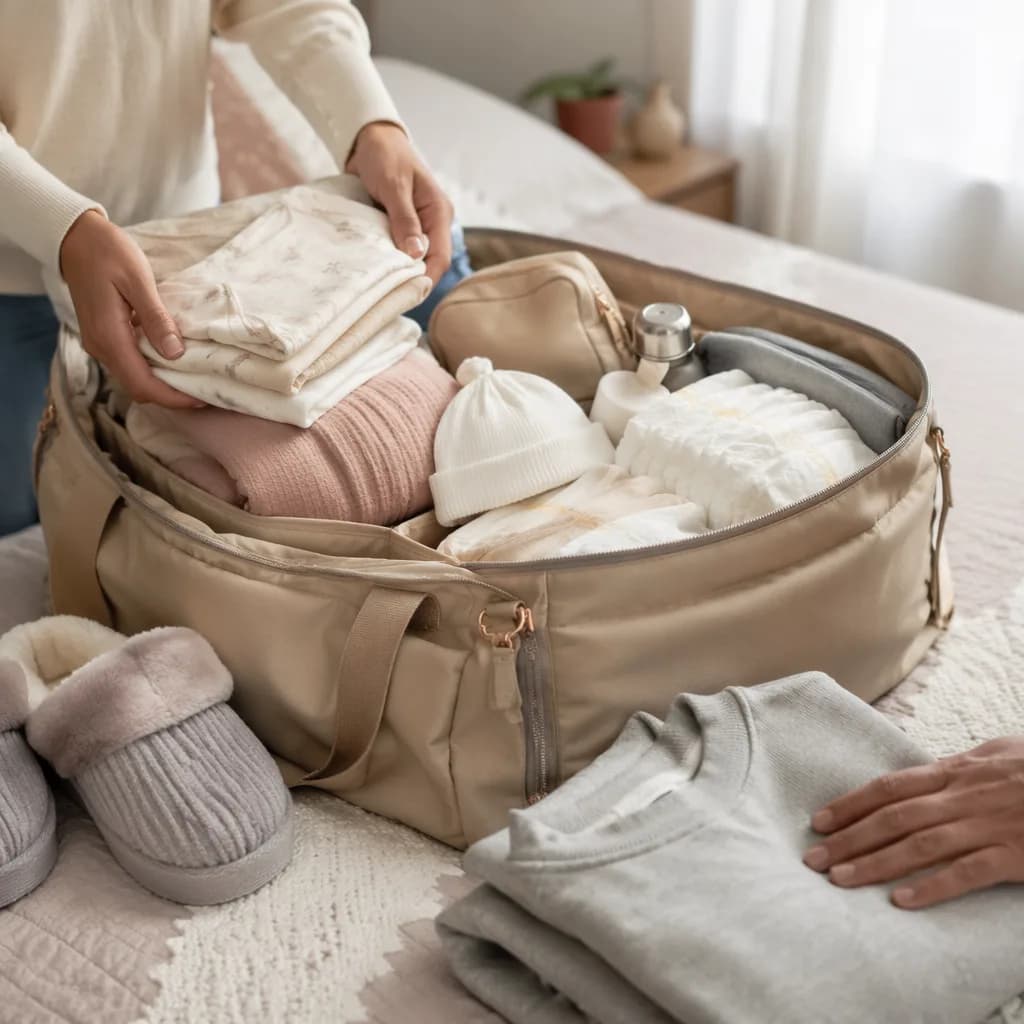
Quick hospital bag checklist
If you want the short version, start packing about 6 to 7 weeks before your due date, then keep last-minute items in a note on your phone. A rolling bag plus a small labor bag works beautifully. Bring the small bag into triage with your ID, birth plan, charger, water bottle, lip balm, hair tie, and comfort item, then leave the bigger bag in the car until you’re admitted.
Here are the true essentials.
For the birth parent:
- ID, insurance card, hospital forms, and copies of your birth plan
- Pediatrician contact information
- Phone, extra-long charger, glasses or contacts, and personal medications
- Toiletries: toothbrush, toothpaste, deodorant, face wash, hairbrush
- Robe, front-opening pajamas or nightgown, slippers or grip socks
- Going-home outfit, ideally something that fit around 6 months pregnant
- Nursing bra, breast pads, nipple cream, and a nursing pillow if you plan to use one
- Comfort items: pillow from home, headphones, snacks if allowed, or a small fan
For your partner or support person:
- ID, insurance card, phone charger, and wallet
- 2-4 changes of clothes, sleepwear, toiletries
- Pillow and blanket
- Drinks, snacks, and simple entertainment like a book, journal, music, or games
For baby:
- Installed infant car seat
- Going-home outfit in newborn and 0-3 month sizes
- 2-3 swaddles, 4-5 burp cloths, hat, socks or booties, and mittens
- Bottles if bottle-feeding, plus formula if you plan to use it
Hospitals and birth centers usually provide postpartum pads, disposable underwear, peri bottles, diapers, wipes, receiving blankets, swaddles, and basic toiletries, but policies vary. Ask your hospital what’s included before you pack. For a room-by-room version, use our Hospital Bag Checklist for Labor, Birth, and Baby. And if you’re still choosing a name for that going-home outfit photo, Aurora: meaning & origin and Tanmay Suresh Upadhyay: meaning & origin are lovely places to browse.
When to pack your hospital bag
A good time to start packing is around 34-36 weeks, with the goal of having your bag ready about a month before your due date. Babylist suggests starting 6 to 7 weeks before your expected delivery date in case labor begins early, and having it ready by 36 weeks. If you’re expecting twins or multiples, have a high-risk pregnancy, or live a long drive from the hospital, pack earlier so you’re not tossing socks and insurance cards into a bag while timing contractions.
Once it’s packed, keep the bag somewhere obvious: by the front door, in your bedroom, or already in the car if that feels easier. A small roller bag, weekender, backpack, or diaper bag can all work, as long as you can find things quickly. If you want a fuller list, our Hospital Bag Checklist for Labor, Birth, and Baby breaks it down by parent, partner, and baby.
Leave a few daily-use items for the last minute: glasses or contacts, daily medications, phone, charger, wallet, keys, and your favorite water bottle. Put a sticky note on top of the bag so no one forgets.
And install the infant car seat before your due date. You’ll need it for the ride home, long before you’re debating names like Aurora or Tanmay Suresh Upadhyay out loud in the nursery.
What to pack for hospital birth
For the hours before and during birth, think small, reachable, and useful. This is the bag you want by the bed, not buried under the going-home outfit and baby blankets.
Start with the must-haves: your ID, insurance card, any hospital pre-registration forms, a copy of your birth preferences, pediatrician contact information, and a current medication list. Add your glasses or contacts with solution, personal medications, lip balm, hair ties or a headband, grippy socks or slippers, and a long phone charger. If your hospital allows it, pack snacks and drinks for you or your support person.
A simple labor bag checklist might look like this:
- ID and insurance card
- Birth preferences or birth plan copies
- Medication list and personal prescriptions
- Glasses or contacts, plus case and solution
- Lip balm, hair ties, deodorant, toothbrush, toothpaste, and face wash
- Grippy socks or slippers for walking during early labor
- Phone, headphones, and an extra-long charger cord
- Snacks and drinks, if permitted
- A small fan
- Massage tool, tennis-ball sock, or rice sock for back pressure
- Heating pad, only if your hospital approves plug-in devices
- Playlist, meditation audio, or a familiar show downloaded to your phone
- Pillow from home with a pillowcase that clearly doesn’t look like the hospital’s
Comfort items don’t need to be fancy. A small fan can feel amazing when labor gets intense. Headphones can help you tune out hallway noise. A familiar pillowcase can make a hospital room feel a little less clinical, and it also helps keep your pillow from being mistaken for hospital bedding.
For clothing, bring what makes sense for your body and your plan. You can absolutely wear the hospital gown. You can also pack a loose robe, a front-opening nightgown, a nursing bra, or a sports bra, especially if you’re planning to labor in water or want extra coverage. No one needs a special “labor outfit” unless it makes them feel more comfortable. Birth is messy, practical, and personal.
Before you zip the bag, check your hospital’s rules for food, essential oils, candles, heating pads, fans, and any plug-in devices. Some places are flexible, while others have clear safety policies.
If you want a bigger list for postpartum, baby, and your support person, this Hospital Bag Checklist for Labor, Birth, and Baby can help you separate what you’ll need now from what can wait until after delivery. And if you’re passing the time with baby name tabs open, you might like reading about Aurora: meaning & origin or Tanmay Suresh Upadhyay: meaning & origin while the charger does its job.
Birth parent recovery bag
After delivery, the best recovery bag is the one that makes the first shower, the first feeding, and the ride home feel a little less clunky. You don’t need to pack your whole bathroom. Just bring the things that help you feel clean, covered, and comfortable.
Start with soft clothes. Loose pajamas or a robe are easy to pull on when nurses are checking on you often, and front-opening styles are helpful if you’re planning to breastfeed. Pack one or two nursing bras, or supportive bras if you’re not nursing. Breast pads can help with leaks, and nipple cream is a small thing that can make early feeding more comfortable. A nursing pillow can also reduce strain on your arms, neck, and back during breast or bottle feeds.
For bleeding, the hospital or birth center often provides the basics: postpartum pads, a peri bottle, ice packs or cooling pads, witch hazel pads, and mesh underwear. Many parents still like bringing a favorite brand of heavy-flow postpartum pads or disposable underwear from home. If you prefer more coverage, high-waisted underwear can feel more secure, especially after a cesarean.
Pack your shower and sink basics in a small toiletry bag: deodorant, toothbrush, toothpaste, face wash, hairbrush or comb, hair ties, glasses or contacts and solution, and any personal medications. Add slippers or grip socks for walking around the room. Flip-flops can be useful for the shower. If you know hospital towels bother you because they’re tiny or scratchy, bring one towel from home in a color that won’t get mixed up with hospital linens.
If you’re planning for a cesarean, add a few incision-friendly pieces. High-waisted bottoms can keep waistbands away from the tender area. A small pillow is helpful to hold against your incision in the car. Shoes that slip on easily are also worth packing, because bending over may not feel great.
For the ride home, choose one comfortable outfit that fits like third-trimester clothing. Think stretchy pants, a soft top, and layers. This isn’t the moment for anything tight.
If you want the bigger packing picture, our Hospital Bag Checklist for Labor, Birth, and Baby keeps parent, partner, and baby items together. And if you find yourself scrolling names between contractions or feeds, Aurora: meaning & origin and Tanmay Suresh Upadhyay: meaning & origin are there for a quiet minute.
Partner hospital bag checklist
Your partner or support person needs a bag too, and it shouldn’t be an afterthought. Their job is to stay useful, rested, and easy to find when you need the lip balm, the charger, or someone to ask the nurse a question.
A small backpack or weekender bag works well. Keep the most-used things in outside pockets so nobody is digging through pajamas during contractions.
Pack these basics:
- ID, insurance card, wallet, and keys
- Phone and an extra-long charger cord
- Change of clothes, ideally 2-4 outfits if the stay may be longer
- Sweatshirt or hoodie, since hospital rooms can feel chilly
- Sleepwear
- Toiletries: toothbrush, toothpaste, face wash, deodorant, contacts solution, and glasses
- Personal medications
- Snacks and drinks, plus a refillable water bottle
- Headphones, especially if they’ll use music, calls, or a show during quiet stretches
- Cash or a card for parking, vending machines, cafeteria runs, and coffee
If they’re staying overnight, comfort matters more than you think. Partners may end up sleeping in a chair or on a fold-out couch, so a small pillow and light blanket can make the night feel much less rough. It’s the kind of thing you’ll be glad you packed at 3 a.m.
Add a few practical support items, too. A notebook can help track feeding times, questions for the nurse, or reminders from the pediatrician. A copy of your birth preferences is useful if your support person is helping speak up for what you want. A short list of people to update after baby arrives can also prevent the “Wait, did we text Aunt Maya?” moment.
If you want the full packing picture, our Hospital Bag Checklist for Labor, Birth, and Baby keeps parent, partner, and baby items in one place. And if name conversations are still happening between packing sessions, you might like reading about Aurora: meaning & origin or Tanmay Suresh Upadhyay: meaning & origin.
Hospital bag for baby
Baby’s hospital bag can be pretty small. The hospital or birth center usually has the basics, including diapers, wipes, receiving blankets, swaddles, formula, bottles, and hospital-grade breast pumps. Still, it’s nice to pack a few things that feel like home, especially for those first photos and the ride back.
Here’s a simple baby packing list:
- Infant car seat, installed in the car before you go to the hospital
- Two newborn-size outfits
- One 0-3 month outfit, since newborn sizing can be hard to predict
- Weather-appropriate going-home outfit
- Baby hat
- Socks or booties
- Mittens, if you’d like to help prevent face scratches
- Two to three swaddles or receiving blankets
- A soft blanket for outside the car seat, especially in cool weather
- Four to five burp cloths
- Diapers and wipes, if you want a specific brand
- Pacifier, if you plan to use one
- Formula preference, if you have one
- Bottles, if you’re bottle-feeding and your hospital allows outside bottles
- Nipple shield, only if a lactation consultant has already recommended one
For outfits, I’d pack something easy: a footed sleeper with snaps or a zipper, plus a spare. Tiny clothes are adorable, but the first change can feel surprisingly fiddly when you’re tired and learning your baby’s little limbs. A newborn outfit may fit beautifully, or your baby may need 0-3 months right away. Packing both saves you from guessing.
If you’re using a special name blanket or photo outfit, tuck it in too. Those early details become part of the story, like the first time you say their name out loud. If you’re still choosing, you might enjoy browsing name meanings like Aurora: meaning & origin or Tanmay Suresh Upadhyay: meaning & origin while your bag waits by the door.
Before discharge, the car seat needs to be ready to use. Install it ahead of time and have it checked if that’s available to you. For the ride home, skip bulky coats under the straps. Use a warm outfit, buckle baby in snugly, then place the blanket over the straps if needed.
For the full parent, partner, and baby packing list, you can also use this Hospital Bag Checklist for Labor, Birth, and Baby.
Paperwork, tech, and must-have extras
This is the small-stuff pile that can make admission smoother and the hospital stay less annoying. Pack it in an outside pocket or a clear pouch so nobody is digging through pajamas while a nurse is asking for your insurance card.
Bring a photo ID, insurance card, hospital registration or pre-registration forms, copies of your birth plan, pediatrician contact information, and a medication list. If you have advance directives that are relevant to your care, tuck those in too. We’d also take photos of important cards on your phone as a backup, but still bring the physical cards. Hospitals usually need the real thing.
A simple folder helps more than you’d think. Use it for discharge papers, newborn paperwork, receipts, and any loose instructions you’re handed when everyone is tired. Add a pen. Somehow, the moment you need to sign something or write down a feeding time, there never seems to be one nearby.
For tech, pack your phone, an extra-long charger, a battery pack, headphones, and a camera if you’re using one. The long cord is especially nice when the outlet is behind the bed and you’re trying to text family, time contractions, or look up something sweet and distracting, like Aurora: meaning & origin or Tanmay Suresh Upadhyay: meaning & origin.
If you want the bigger packing picture, our Hospital Bag Checklist for Labor, Birth, and Baby keeps everything in one place.
What you probably don't need to pack
A hospital bag can get big fast. Truly, you don’t need to pack like you’re moving in.
Hospitals and birthing centers usually provide many basics for you and baby, including hospital gowns, basic toiletries, disposable underwear, postpartum pads, peri bottles, ice packs, cooling pads, nipple cream, common over the counter medications, blankets and pillows. For baby, they often provide receiving blankets, swaddles, diapers, wipes, hospital grade breast pumps, formula, and bottles. So if your bag is already bulging, it’s okay to take a few things out.
A few common extras to skip:
- Lots of baby clothes
- Pre-pregnancy jeans
- Heavy books
- Too many blankets
- Candles
- Large pillows you can’t identify easily
- Valuable jewelry
Pack one outfit for baby photos if you want, especially if you’ve picked something sweet after browsing names like Aurora: meaning & origin or Tanmay Suresh Upadhyay: meaning & origin. But you don’t need six tiny outfits for two days. A going home outfit in newborn size and one in 0-3M is plenty for most families.
For your own going home outfit, choose something soft and roomy. The American Pregnancy Association suggests something that fit around 6 months pregnant, which is much kinder than packing jeans from before pregnancy and hoping for the best.
Most parents find it easier to keep the main bag focused, then leave a second small bag in the car with backup clothes, extra snacks, or seasonal items like a warmer blanket. If you need it, someone can grab it. If you don’t, it stays out of the room.
For the must-pack items, use our full Hospital Bag Checklist for Labor, Birth, and Baby.
How to organize your bags for labor and recovery
A simple bag system can save everyone a lot of rummaging. Pack one labor bag, one recovery bag, one partner bag, and one baby bag. Then have the infant car seat installed and ready in the car ahead of time.
For labor, think quick access. Put your first-hour items right on top: ID and insurance card, phone charger, lip balm, hair tie, glasses or contacts, and your birth preferences or birth plan. If you’re using our Hospital Bag Checklist for Labor, Birth, and Baby, this is the part to double-check before the bag goes by the door.
Clear pouches or labeled zip bags are your friend here. One for toiletries. One for chargers and headphones. One for postpartum items like pads, disposable underwear, nipple cream, or nursing pads. One for baby clothes, including the going-home outfit, hat, mittens, burp cloths, and swaddles. Labels can be plain and practical, or sweet if that makes you smile. We’ve seen parents use name labels they were testing out, like Aurora: meaning & origin or Tanmay Suresh Upadhyay: meaning & origin, just to make the packing feel a little more real.
Partner tip: know where everything is before contractions are close together. Practice once. Seriously. “Front pocket, blue pouch, charger” is much easier than digging through three bags at 2 a.m.
If you prefer fragrance-free detergent, wash baby clothes, swaddles, and blankets in advance, then pack them in a clean bag so they’re ready for that first ride home.
Frequently Asked Questions
What should be in a hospital bag checklist?
Pack ID, insurance card, birth preferences, chargers, toiletries, comfort items for labor, loose clothes for recovery, partner basics, baby outfits, and an installed car seat.
When should I pack my hospital bag?
Most parents pack around 34-36 weeks. Pack earlier if you’re having twins, have a high-risk pregnancy, or live far from the hospital.
What should I pack for hospital birth specifically?
For labor, bring ID, birth preferences, lip balm, hair ties, grippy socks, glasses, a long charger, comfort items, and snacks if your hospital allows them.
What should I put in a hospital bag for baby?
Bring two newborn outfits, one 0-3 month outfit, a going-home outfit, hat, socks, blanket, and any feeding items your hospital allows.
Does the hospital provide diapers and wipes?
Most hospitals provide diapers, wipes, receiving blankets, pads, mesh underwear, and basic postpartum supplies, but it’s smart to ask your hospital ahead of time.
What should the partner pack for the hospital?
The partner should bring ID, wallet, phone charger, clothes, toiletries, medications, snacks, water bottle, sweatshirt, pillow, blanket, and cash or a card for parking.
How many baby outfits should I bring to the hospital?
Three outfits is usually enough: two newborn sizes and one 0-3 month size. Add a warmer layer if the weather is cold.
What should I not pack in my hospital bag?
Skip valuables, too many baby clothes, tight pre-pregnancy clothes, candles, heavy books, bulky blankets, and anything your hospital doesn’t allow.
Frequently asked questions
When should I pack my hospital bag?
What should go in the small labor bag?
What does the hospital usually provide?
What should my partner or support person pack?
What should I pack for baby?
References
Sources
External research this article was grounded in.
- Babylistbabylist.com
- Hospital Bag Checklist: Expert Packing List & Facts | APAamericanpregnancy.org
- Montevista Provincial Hospital – The Province of Davao de Orodavaodeoro.gov.ph
- Hospital bag checklist - Best Start in Life - NHSnhs.uk
- Hospital Bag Essentials: What to Pack for Birth – My Expert Midwifemyexpertmidwife.com
- A Caregiver's Hospital Bag Checklist | The Caregiver Field Guidecaregiverfieldguide.com