
How to Dress Baby for Sleep by Room Temperature
Quick answer: how to dress baby for sleep
A simple rule is to dress your baby in one more light layer than you’d wear in the same room, then adjust based on the actual temperature and how your baby feels. Small babies aren’t great at regulating their own temperature, so lighter layers are easier to add or remove than one thick layer.
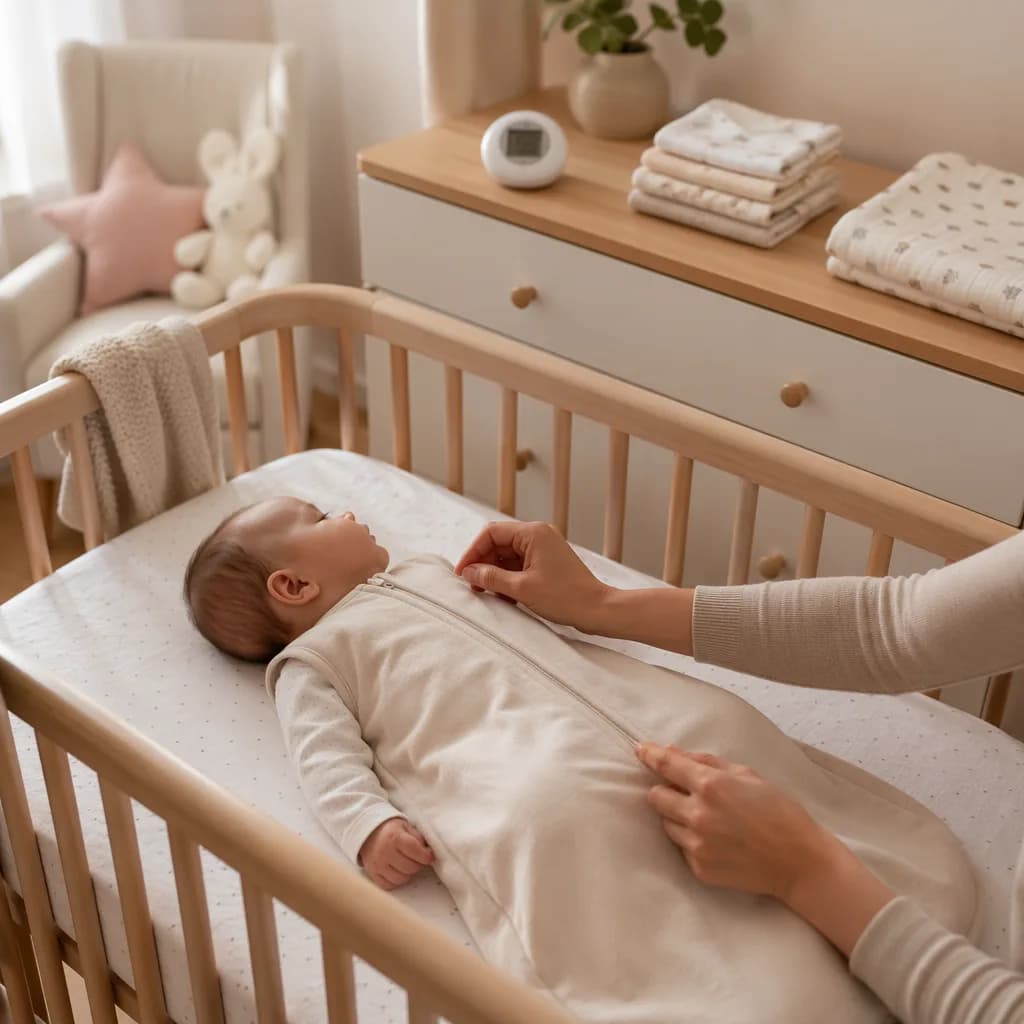
For most nights, think: a fitted cotton bodysuit, footed pajamas, and a well-fitting sleep sack. That setup keeps baby warm without loose blankets near their face. If you use a blanket instead, choose a lightweight cellular blanket, keep it well secured, and make sure it can’t cover baby’s face or get tangled.
The safest sleep setup is still the foundation: baby on their back, on a firm, flat mattress, with no loose bedding, pillows, hats, or stuffed animals in the sleep space. Skip hats for bedtime, even when it’s chilly, because overheating raises SIDS risk.
For example, in a 70°F room (about 21°C), many babies do well in cotton pajamas with a 1.0 TOG sleep sack, but always check the sleep sack maker’s guidance and your baby’s body temperature. Feel their tummy, chest, or the back of their neck. Sweaty or hot means remove a layer. Cool hands and feet can be normal.
If sleep is still feeling bumpy, clothing is just one piece. A calm baby bedtime routine and age-appropriate rhythm, like an 8 month sleep schedule or 12 month sleep schedule, can help too.
Baby sleep temperature chart by room range
A room thermometer helps take the guesswork out of bedtime. The NHS says 16 to 20°C, about 61 to 68°F, is a comfortable and safe room temperature for sleeping babies, with light bedding or a lightweight, well-fitting baby sleep bag.
Here’s a practical starting point by room temperature. Check your own sleep sack label too, since manufacturers give their own tog guidance.
| Room temperature | What baby might wear for sleep |
|---|---|
| Under 61°F | Long sleeve bodysuit, sleepsuit, and a 2.5 TOG sleep sack. If the room is truly cold, warm the room safely rather than adding loose blankets. |
| 61-64°F | Long sleeve bodysuit, sleepsuit, and a 2.5 TOG sleep sack. This sits in the cooler end of the NHS safe range. |
| 65-68°F | Sleepsuit and a 2.5 TOG sleep sack. Add a vest underneath if baby’s chest or upper back feels cool. |
| 69-72°F | Lightweight sleepsuit and a lighter sleep sack, often around 1.0 TOG if that matches the product guidance. |
| 73-75°F | Short sleeve bodysuit or lightweight sleepsuit with a 1.0 TOG or 0.5 TOG sleep sack, depending on how warm the room feels. |
| Over 75°F | Keep layers minimal. A vest, or just a nappy on the warmest nights, may be enough. If using a sleep sack, choose a very light one and follow the label. |
Fabric changes how a layer feels. Lightweight cotton is a good warm-weather choice because it’s breathable. Fleece pajamas feel much warmer, so use them carefully and avoid pairing too many warm layers together. Bamboo or modal can feel cooler to the touch, so if you use them, still check baby’s body temperature rather than trusting the fabric alone.
The best place to check is baby’s chest or upper back. Try not to judge by hands or feet, because those often feel cool even when baby is comfortable. If baby is sweaty, clammy, or their tummy feels hot, remove a layer.
A calm routine helps too. If bedtime has started to feel like a nightly temperature puzzle, a simple wind-down like this baby bedtime routine can make the whole evening feel steadier. And if you’re adjusting sleepwear during a schedule shift, these guides for an 8 month sleep schedule and 12 month sleep schedule can help you match bedtime timing with comfort.
What TOG rating means for baby sleep
TOG is a warmth rating. In baby sleep, it tells you how warm a sleep sack or wearable blanket is, a bit like choosing between a light cardigan and a thicker jumper.
The higher the TOG, the warmer the sleep sack. A 0.2 or 0.5 TOG sack is usually for warm rooms. A 1.0 TOG sack suits milder rooms. A 2.5 TOG sack is commonly used for cooler rooms. A 3.5 TOG sack is only for very cold spaces, and it’s one to use carefully, because babies can overheat if they’re dressed too warmly.
TOG is helpful, but it isn’t the whole story. Your baby’s pajamas matter too. So does the room temperature, the fabric, humidity, and whether your baby naturally runs warm or cool. One baby may sleep comfortably in a cotton sleepsuit and lighter sack, while another in the same room may need a warmer layer.
Here’s a real example. If the nursery is 68°F, a long sleeve sleeper with a 1.0 TOG sack may work well for a baby who runs warm or sleeps in thicker fabric. Another baby in a thinner cotton sleeper might be more comfortable in a 2.5 TOG sack. Check their chest or the back of their neck rather than their hands or feet, since cool hands and feet can be normal.
If bedtime still feels like a guessing game, keep the rest of the evening predictable. A simple baby bedtime routine can make it easier to notice what’s actually helping. Sleep needs also change with age, so schedules like an 8 month sleep schedule or 12 month sleep schedule can sit alongside safe, comfortable sleepwear choices.
What should baby wear to bed in warm weather?
Warm nights can make bedtime feel like a guessing game, especially if your baby’s room sits around 73-75°F. A good starting point is light, breathable layers: a short sleeve bodysuit with a 0.5 TOG sleep sack. If your baby tends to run warm, you might skip the bodysuit and use a very light sleep sack over a diaper.
For rooms over 75°F, think even simpler. A diaper only, a short sleeve bodysuit, or very light pajamas can all work, depending on airflow and how your baby feels. If there’s a fan on, keep it pointed away from the crib. You’re aiming for comfortable, not chilly.
Skip hats indoors at bedtime, even if your baby is tiny. Babies release heat through their heads, and a hat can make it harder for them to cool down. It can also increase the risk of overheating, which is one reason safe sleep guidance is so firm about keeping babies’ heads uncovered.
To check warmth, feel your baby’s chest or the back of their neck rather than their hands or feet. Cool hands and feet can be normal.
Watch for signs your baby is too hot:
- Sweaty neck
- Damp hair
- Flushed skin
- Fast breathing
- Heat rash
- Chest feeling hot to the touch
If bedtime has been messy lately, a simple baby bedtime routine can help. And if naps are shifting too, these age guides for 8 months and 12 months can make the whole day feel a bit easier.
How to dress baby for sleep in a cold room
In a cooler room, think snug layers rather than loose bedding. A simple setup might be a bodysuit, footed pajamas, and a warmer, well-fitting sleep sack. If you’re using a sleeping bag, check the manufacturer’s guidance for the right winter tog, and add clothing layers if baby seems cold rather than adding extra blankets.
Loose blankets can ride up, especially once baby starts wriggling, so lightweight, wearable sleepwear is usually the calmer choice. If you do use a sheet or blanket, keep it light and well secured so it can’t cover baby’s face.
Cold hands and feet can be misleading. Newborns are still learning how to regulate temperature, and their hands or feet may feel cool even when their body is comfortable. Instead, check baby’s chest, tummy, or the back of the neck. If their chest or back feels cool, they’re unusually wakeful, crying and then settling once warmed, or their skin looks pale and mottled, they may need a little more warmth.
A practical bedtime move: warm the room before sleep if needed, then keep baby away from heaters, radiators, fires, and direct airflow. The NHS says 16 to 20C is a comfortable and safe room temperature for sleeping babies.
If bedtime has become a nightly guessing game, a steady routine can help you spot what’s normal for your baby. This baby bedtime routine guide pairs nicely with temperature checks, especially during colder months.
Newborn, swaddle, and sleep sack tips
Newborns need a little extra checking because small babies aren’t very good at regulating their own temperature yet. Too many layers, heavy bedding, or a warm room can make them overheat, and a room that feels chilly to you may mean they need one more light layer. The NHS gives a safe sleep room temperature of 16 to 20°C, with light bedding or a lightweight, well-fitting baby sleep bag.
To check, feel your baby’s tummy, chest, or the back of their neck. Sweaty or hot to the touch means it’s time to remove a layer. Cool hands and feet are normal, so try not to use those as your guide.
Swaddling can be helpful for some newborns, especially during those early, startly weeks. Use a lightweight swaddle, thin muslin, or thin cot sheet. Keep it snug around the chest so fabric can’t come loose near the face, but loose around the hips so baby’s legs can bend naturally. Stop swaddling as soon as your baby shows signs of rolling. And if you’re bed sharing, don’t swaddle.
Here’s the simple difference:
- A swaddle wraps around your newborn and can feel cosy and contained.
- A sleep sack is a wearable bag that keeps baby warm without loose blankets.
- A wearable blanket works much like a sleep sack, giving warmth while keeping the head uncovered.
If you’re choosing between them, simple is usually safest. Many pediatric sleep safety experts do not recommend weighted swaddles or weighted sleep sacks, so it’s best to stick with lightweight, well-fitting options.
A calm bedtime rhythm helps too. If you’re building one, this baby bedtime routine guide is a gentle place to start. For later months, sleep needs shift, as you’ll see in our 8 month sleep schedule and 12 month sleep schedule. And for daytime sleep, especially those cosy chest naps, read about contact naps and safe sleep. If you’re also saving meaningful baby name ideas between feeds, Tanmay Suresh Upadhyay has a lovely meaning to read through.
How to tell if baby is comfortable overnight
The best temperature check is simple: feel your baby’s chest, upper back, or the back of their neck. Try it during a night waking, or before you go to bed if they’re sleeping peacefully. Hands and feet can feel cool and still be normal, so they’re not the most reliable guide.
A comfortable baby usually has a warm chest, dry hair, normal breathing, and relaxed sleep. Their skin shouldn’t look flushed, sweaty, or clammy. If their tummy or neck feels hot, or you notice sweating, take off one layer of clothing or bedding.
Go small with changes. If baby seems too warm, you might swap a fleece sleeper for a cotton sleepsuit rather than changing the whole sleep setup. If they seem cool at the chest, add one light layer, such as a vest under a sleepsuit. One change at a time makes it easier to see what actually helps.
This check can become part of your usual evening rhythm, right alongside a calming wind-down like the steps in Baby Bedtime Routine: Calm Steps for Easier Sleep. Older babies may also sleep differently as naps shift, so guides like the 8 Month Sleep Schedule: Naps, Wake Windows, Nights and 12 Month Sleep Schedule: Naps, Bedtime, Waking can help you spot patterns.
If your baby is unwell, feverish, premature, or has a medical condition, ask your pediatrician what’s safest for them. And if they’re mostly sleeping on you right now, this guide to Contact Naps: Why Babies Love Them and Sleep Safely may help.
Tiny side note for tired parents scrolling at 2 a.m.: if you somehow landed here from baby name research, Tanmay Suresh Upadhyay: meaning & origin is over here.
Safe sleep rules that matter more than extra layers
Before we worry about vests, sleepsuits, or TOG ratings, safe sleep comes first. Place your baby on their back, on a firm mattress, with a fitted sheet, in an empty crib or cot. No loose blankets, pillows, duvets, cot bumpers, hats, or anything that could cover their face during sleep.
Overheating matters because babies aren’t great at regulating their own temperature, and getting too hot is linked with a higher chance of SIDS. That’s why breathable layers are usually a better choice than thick, fleecy, or padded bedding. A sleepsuit with a well-fitting baby sleeping bag, or lightweight cellular blankets tucked securely if you’re using blankets, is easier to adjust than one heavy layer.
A nursery thermometer can be genuinely useful, especially at 2 a.m. when you’re tired and second-guessing everything. The NHS says 16 to 20°C is a comfortable and safe room temperature for sleeping babies. Still, don’t rely on the number alone. Check your baby’s chest or tummy. If they’re sweaty or their tummy feels hot, remove a layer. Cool hands and feet are common, so they’re not the best guide.
A simple bedtime check can help: room temperature, clothing layers, sleep sack TOG, then baby’s chest temperature once they’ve settled. If you’re building a predictable evening rhythm, this fits nicely into a baby bedtime routine. And as sleep patterns change, whether you’re looking at an 8 month sleep schedule or a 12 month sleep schedule, the same safe sleep basics still matter.
Frequently Asked Questions
What is the best baby sleep temperature?
Many babies sleep comfortably around 68-72°F, but clothing, fabric, humidity, and your baby’s own warmth matter too.
How do I know if my baby is too hot at night?
Check the chest, neck, or upper back. Sweating, damp hair, flushed skin, fast breathing, or a hot chest can mean baby is too warm.
Should babies wear socks to bed?
They can if the room is cool, but footed pajamas or a sleep sack usually keep feet warm without adding loose items.
Can my baby sleep in just a diaper?
Yes, in a hot room, a diaper only may be enough. Check baby’s chest to make sure they feel warm, not hot or chilly.
What TOG sleep sack should I use for 70°F?
A 1.0 TOG sleep sack with cotton pajamas is a common starting point for a 70°F room.
Do newborns need more layers than older babies?
Often, yes. Newborns may need one light extra layer, but avoid overheating and check their chest or back.
Is it safe for a baby to sleep with a blanket?
Loose blankets are not recommended for babies. Use a properly fitted sleep sack or wearable blanket instead.
Should my baby wear a hat to sleep indoors?
No. Babies should not wear hats for indoor sleep because hats can make overheating more likely.
Frequently asked questions
What should baby wear to sleep in a 70°F room?
How can I tell if my baby is too hot at night?
Should baby wear a hat to sleep if the room is cold?
What room temperature is safest for baby sleep?
References
Sources
External research this article was grounded in.
- How to dress a newborn baby - Best Start in Life - NHSnhs.uk
- How to dress your baby safely for sleep: Complete guidemotherandbaby.com
- How to Dress a Baby for Sleep | Sleep Foundationsleepfoundation.org
Related reading
More from the journal → sleep
sleepBaby Bedtime Routine by Age and Temperament
A calm baby bedtime routine by age, with simple steps for newborns through older babies and gentle tweaks for different temperaments.
14 min readAug 3, 2026- sleep
Nap Transitions by Age: Signs Baby Is Ready to Drop
Wondering if your baby is ready to drop a nap? Learn the common ages, signs, and gentle ways to handle bumpy nap transitions.
15 min readAug 3, 2026 - sleep
Newborn Sleep Patterns in the First Few Weeks
Newborn sleep is often short, noisy, and uneven. Here’s what’s normal in the first few weeks, when to feed, and when to call the pediatrician.
10 min readAug 3, 2026