
How to Dress Baby for Sleep in Every Season
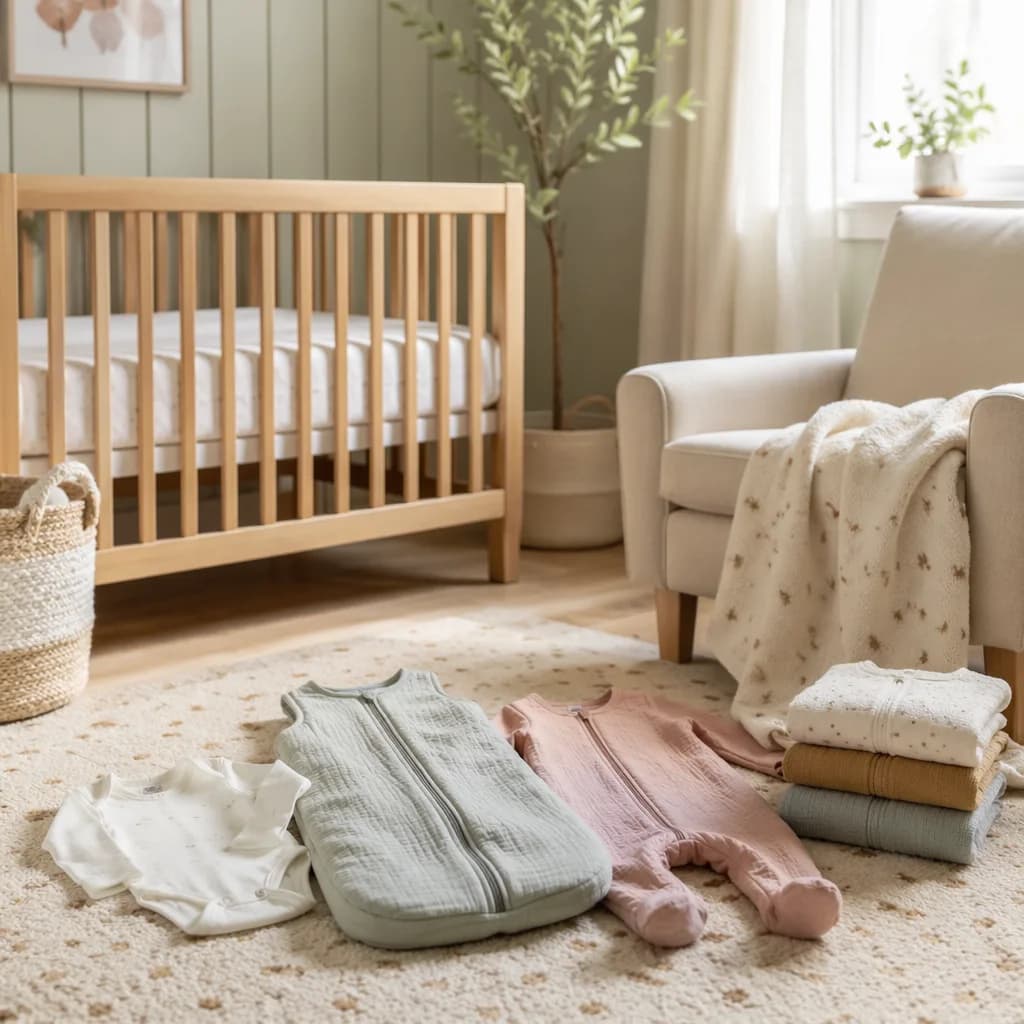
Quick answer: what should baby wear to bed?
A simple rule that helps at 2 AM: dress your baby in one more light layer than you’d wear to sleep in the same room. If you’d be comfortable in pajamas, your baby may do well in pajamas plus a sleep sack or swaddle, depending on their age and stage.
Room temperature matters more than the season outside. A chilly summer night with strong air conditioning may call for warmer sleepwear, while a winter nursery that stays warm may need lighter layers. Most babies sleep comfortably in a room around 68° to 72°F (20° to 22°C) when dressed appropriately.
For example, in a 68°F room, a cotton sleepsuit plus a 1.0 TOG sleep sack is usually a comfortable starting point. If the room is warmer, you might use a short-sleeve onesie with a lighter 0.5 TOG sleep sack. If it’s cooler, footed pajamas with a warmer sleep sack may make more sense.
Check your baby’s tummy, chest, or neck to see how they feel. Hands and feet can run cooler, so they’re not the best guide. Sweaty, flushed, or overly warm usually means too hot. A cool body may mean too cold.
And keep sleep safety steady: place baby on their back, on a firm flat mattress, with no loose blankets. The name you’re dreaming about, maybe Rami or Aurora, can wait until morning. Sleep first.
Baby sleep clothes by temperature
A simple temperature guide can make bedtime feel much less like guesswork. Most babies sleep comfortably in a room around 68-72°F (20-22.2°C) when dressed appropriately, but the outfit matters just as much as the number on the thermostat.
Here’s a practical starting point:
| Room temperature | Sleepwear idea |
|---|---|
| Hot room, above 75°F | Diaper only, or a short-sleeve onesie with a very light 0.5 TOG sleep sack |
| Warm room, 72-75°F | Short-sleeve onesie or lightweight pajamas with a 0.5 TOG sleep sack |
| Mild room, 68-72°F | Long-sleeve onesie or full pajamas with a 1.0 TOG sleep sack |
| Cool room, 64-68°F | Footed pajamas with a 2.5 TOG sleep sack |
| Cold room, below 64°F | Warm footed pajamas with a 3.5 TOG sleep sack, layered as needed for the room |
Think of the sleep sack or swaddle as the top layer, not the whole outfit. On a sticky summer night, a diaper under a light sleep sack may be enough. In a cool nursery, footed pajamas under a warmer sleep sack can help your baby stay cozy without using loose blankets.
A good rule of thumb is to dress your baby in one more layer than you’d wear to sleep in the same room. Skip hats for sleep, and avoid loose clothing or blankets in the crib.
To check comfort, feel your baby’s chest, tummy, or the back of their neck. Hands and feet can feel cool because babies often have less blood flow to their extremities, so chilly toes don’t always mean they’re cold. Sweating, flushed skin, or an overly warm chest can be signs they’re too hot.
Preemies, newborns in those first weeks, and babies with medical needs may need more specific advice from their pediatrician.
And if you’re scrolling names during a midnight feed, Rami: meaning & origin and Aurora: meaning & origin are sweet ones to keep on your list.
TOG guide for baby sleep sacks
TOG stands for Thermal Overall Grade, which is just a warmth rating for fabric. You’ll usually see it on sleep sacks, swaddles, and wearable blankets. The higher the TOG, the warmer the sleep sack.
Here’s the simple version:
- 0.2 to 0.5 TOG: Best for warm rooms or hot nights. A short-sleeve onesie, lightweight pajamas, or even just a diaper underneath may be enough if the room is very warm.
- 1.0 TOG: A good middle-ground option for mild rooms. Many babies can wear a short-sleeve or long-sleeve onesie underneath, depending on the room.
- 2.5 TOG: Better for cooler sleep spaces. Footed pajamas underneath are often a good match.
- 3.5 TOG: Made for very cold rooms. You’ll usually need to layer based on the room temperature and your baby’s cues.
One thing to keep in mind: TOG ratings can vary a bit by brand, so always check the product label instead of guessing by feel. Two sleep sacks can look similar in thickness but feel very different once your baby is zipped in for the night.
For a real-life example, if the nursery is around 68 to 72°F, a 1.0 TOG sleep sack with long-sleeve pajamas is often a comfortable starting point. If your baby’s chest or back feels sweaty or overly warm, go lighter. If their body feels cool, not just their hands or feet, you may need a warmer layer.
And if you’re labeling drawers in the nursery at 2 AM, you’re not alone. Some parents sort sleep sacks by TOG right next to tiny socks, diapers, and name keepsakes, maybe even the card from choosing Rami: meaning & origin or Aurora: meaning & origin. Whatever helps you make a quick, calm bedtime choice counts.
How to dress a baby for sleep in summer
Hot nights can make bedtime feel like a guessing game. A good starting point is breathable sleepwear, like cotton or bamboo, and fewer layers than you’d use in cooler months. If the room is warm, a short-sleeve bodysuit may be enough. On very hot nights, especially in a room without air conditioning, a diaper with a lightweight sleep sack can work if your baby seems comfortable.
Think of the swaddle or sleep sack as the outer layer, not an extra blanket to pile on top. A 0.5 TOG sleep sack is meant for warmer temperatures, while 1.0 TOG can work in mild rooms depending on what baby wears underneath.
If you’re unsure, check your baby’s core, not just hands or feet. Feel the tummy, chest, or back of the neck. Signs your baby may be too hot include a sweaty neck, flushed skin, damp hair, or breathing that seems faster than usual. If your baby feels overly warm or sweaty, remove a layer and cool the room safely.
For rooms without air conditioning, simple steps help. Keep curtains or shades closed during the day so the room doesn’t heat up as much. You can also use a fan placed away from the crib, pointed away from your baby rather than blowing directly on them.
Summer baby names always make me think of warmth and light, like Aurora, while Rami has that soft, breezy feel. Bedtime can feel that way too: light, simple, and calm.
How to dress a baby for sleep in winter
Winter sleepwear is all about warm, snug layers without extra bulk. A good starting point is a bodysuit, footed pajamas, and a sleep sack with a TOG rating that fits the room temperature. The layers should sit close to your baby’s body without bunching under the arms, behind the knees, or around the neck.
On a cold night in a cool room, you might dress your baby in a long-sleeve bodysuit, fleece-free footed pajamas, and a 2.5 TOG sleep sack. That gives warmth without adding loose items to the crib. If the room is closer to the recommended 68° to 72°F (20 to 22°C), you may not need as much warmth, so let the room temperature guide the outfit.
Skip hats indoors for sleep. Babies can overheat in hats, and overheating is a known SIDS risk factor. If you’re worried they’re cold, check their tummy, chest, or the back of their neck instead of relying on hands or feet, which can feel cooler.
Loose blankets, quilts, and weighted sleep products don’t belong in a baby’s sleep space. Blankets and quilts can shift during sleep, and sleep sacks are a safer way to keep your baby warm without loose bedding. Weighted products add pressure that babies don’t need for sleep.
Think cozy, not bundled. The same calm judgment you used picking a name like Rami or Aurora can help here too: one thoughtful choice at a time, based on the room, the layers, and how your baby actually feels.
Spring and fall sleep outfits for changing temperatures
Spring and fall can be tricky because the room may feel warm at bedtime, then cool down by 4 AM. That’s the shoulder-season puzzle. Your baby can go from perfectly cozy to a little chilly without anything dramatic changing, except the temperature outside and the way your home holds heat.
Before bed, check the nursery temperature rather than guessing from the hallway. If your baby wakes for a night feed, it’s worth checking again, especially on those days when afternoon sun makes the room warm but the early morning air feels cool. A room temperature around 68-72°F (20-22.2°C) is often comfortable for sleep when baby is dressed appropriately.
Flexible layers help here. Think cotton pajamas with a medium-weight sleep sack, often around 1.0 TOG depending on the room. If the nursery runs cooler, footed pajamas may make sense. If it’s warmer, a lighter onesie under the sleep sack may be enough.
Try to adjust one layer at a time. If baby’s chest or tummy feels cool, swap short sleeves for long sleeves next time, or choose footed pajamas. If baby feels sweaty or flushed, go lighter. No need to redo the whole outfit at 2 AM unless they’re clearly uncomfortable.
And yes, while you’re up checking the thermostat, you may also find yourself scrolling baby names like Rami: meaning & origin or Aurora: meaning & origin. Very normal tired-parent behavior.
How to tell if baby is too hot or too cold
The quickest check is not their hands or feet. Babies often have cooler hands and feet because of normal blood flow patterns, so those spots can trick you.
Instead, slide a hand gently onto the back of your baby’s neck, chest, or tummy. Their core should feel warm, not sweaty or chilly. I usually think of it like checking a pancake on the griddle. The edges don’t tell you as much as the middle.
Signs your baby may be too warm include:
- Sweating
- Red or flushed skin
- Heat rash
- Restless sleep
- Damp hair
If you notice these, remove one light layer, such as a onesie under the sleep sack, or switch to a lighter sleep sack if the room is warm. Then give it a few minutes and check their neck, chest, or tummy again.
Signs your baby may be too cold include:
- A cool chest or back
- Unusual fussiness
- Pale skin
- Curling tightly for warmth
If their core feels cool, add one light layer, like a long-sleeve onesie or footed pajamas, depending on what they’re already wearing. Avoid loose blankets, since safer sleepwear layers are the better choice for babies.
This is one of those parenting skills that gets easier with practice. Tonight you might check three times. Next week, you’ll probably know right away. And if you’re sitting there during a late feeding scrolling baby names like Rami: meaning & origin or Aurora: meaning & origin, just do a quick neck check before you settle back in. Small habit. Big reassurance.
Safe sleep rules that matter with baby sleep clothes
Baby sleep clothes aren’t just about comfort. They’re part of safe sleep, right alongside a firm sleep surface, a clear crib, and paying attention to temperature. Since babies don’t regulate body temperature well in the early months, what they wear can affect both how cozy they feel and how safely they sleep.
A good rule of thumb is to dress your baby in one more layer than you’d wear to sleep, then check their core, not their hands or feet. Feel the back of the neck, chest, or tummy. Sweaty, flushed, or overly warm means they may be too hot. A cool body can mean they need a warmer layer.
For babies under 12 months, wearable blankets and sleep sacks are safer than loose blankets because they keep warmth on the baby without adding loose fabric to the crib. A sleep sack also stays put, which is helpful when your baby starts wiggling around at night. If you’re choosing one, look at the TOG rating so the warmth matches the room. A 0.5 TOG works for warmer rooms, 1.0 TOG is a middle option, and 2.5 TOG or higher is for cooler spaces.
Swaddles are only for the early stage. Once your baby shows signs of rolling, it’s time to stop swaddling and switch to an arms-free sleep sack.
Skip anything weighted, including weighted sleep sacks or blankets. Also avoid hoods, drawstrings, loose ties, and bulky outerwear in the crib. Puffy jackets and thick layers can trap heat, and extra fabric can get in the way of safe sleep.
The goal is simple: warm enough, not hot, and nothing loose. If you’re up at 2 AM wondering whether baby Rami needs another layer, or if little Aurora feels too warm, trust the neck check and adjust gently. For name inspiration later, you can peek at Rami: meaning & origin or Aurora: meaning & origin.
Common mistakes parents make at bedtime
Most bedtime clothing mistakes come from love. You’re trying to keep your baby cozy, and then suddenly you’re second-guessing every snap, zipper, and sleep sack. Totally normal.
Here are a few common ones to watch for:
- Overdressing because the room feels cold to you. Adults and babies don’t always feel temperature the same way, and babies need help staying comfortable without getting too warm. A helpful starting point is one more layer than you’d wear to sleep, then adjust from there.
- Pairing a thick sleep sack with fleece pajamas in a warm nursery. TOG ratings matter. A higher TOG means more warmth, so a 2.5 TOG sleep sack plus fleece pajamas can be too much if the room is already mild or warm. In hot weather, a light sleep sack with a diaper may be enough.
- Leaving a hat on for sleep after the hospital. Hats are useful in certain newborn moments, but they’re not needed for sleep at home. Skip loose extras in the crib and keep sleepwear simple.
- Changing layers too quickly. Cool hands or feet don’t always mean your baby is cold. Check the chest, tummy, or back of the neck first. Sweaty or flushed usually means too warm. A cool core may mean baby needs another layer.
- Following a season chart without checking the room. “Winter” doesn’t mean the nursery is cold, especially if the heat is running. “Summer” doesn’t mean it’s warm if the air conditioning is strong. Use the actual room temperature as your guide.
Baby names can feel just as personal as sleep routines. If you’re in that sweet planning stage, Rami: meaning & origin and Aurora: meaning & origin are lovely places to browse while the monitor is quiet.
Frequently Asked Questions
What temperature should a baby's room be for sleep?
Many babies sleep comfortably in a room around 68°F to 72°F, but clothing and TOG rating should match the actual room temperature.
Should my baby wear socks to bed?
Socks are fine if they fit well and don’t make baby too warm. Footed pajamas are often easier and stay in place better.
Can a baby sleep in just a diaper?
Yes, in a very warm room, a baby may sleep in just a diaper or a diaper with a very light sleep sack. Check the chest or neck for warmth.
Do babies need hats while sleeping?
No. Babies shouldn’t wear hats for routine indoor sleep because hats can trap heat and increase the risk of overheating.
Is fleece safe for baby sleep?
Fleece can be too warm for many babies. If you use fleece, keep the room cool, skip heavy layers, and check baby for sweating or flushed skin.
What TOG sleep sack should I use for my baby?
Use a lower TOG, like 0.5, for warm rooms, 1.0 for mild rooms, and 2.5 for cooler rooms. Always check the brand’s temperature guide.
How many layers should a newborn wear to sleep?
A newborn usually needs one more light layer than an adult would wear in the same room, but check the baby’s chest or neck to be sure.
When should I stop swaddling my baby?
Stop swaddling as soon as baby shows signs of rolling, even if they haven’t rolled all the way over yet.
Frequently asked questions
What should my baby wear to sleep?
How do I know if my baby is too hot at night?
Are cold hands and feet a sign my baby is too cold?
Can my baby sleep with a blanket?
What TOG sleep sack should I use?
References
Sources
External research this article was grounded in.
- How to dress a baby for sleep: Safe and cozy tips for every season | Huckleberryhuckleberrycare.com
- How to Dress Your Baby for Sleep | TOG Chart & Temperature Guidecozybabysleep.com
Related reading
More from the journal → sleep
sleepBaby Bedtime Routine by Age and Temperament
A calm baby bedtime routine by age, with simple steps for newborns through older babies and gentle tweaks for different temperaments.
14 min readAug 3, 2026- sleep
Nap Transitions by Age: Signs Baby Is Ready to Drop
Wondering if your baby is ready to drop a nap? Learn the common ages, signs, and gentle ways to handle bumpy nap transitions.
15 min readAug 3, 2026 - sleep
Newborn Sleep Patterns in the First Few Weeks
Newborn sleep is often short, noisy, and uneven. Here’s what’s normal in the first few weeks, when to feed, and when to call the pediatrician.
10 min readAug 3, 2026