
New Parent Pacifier Guide: Sizes, Timing, Weaning
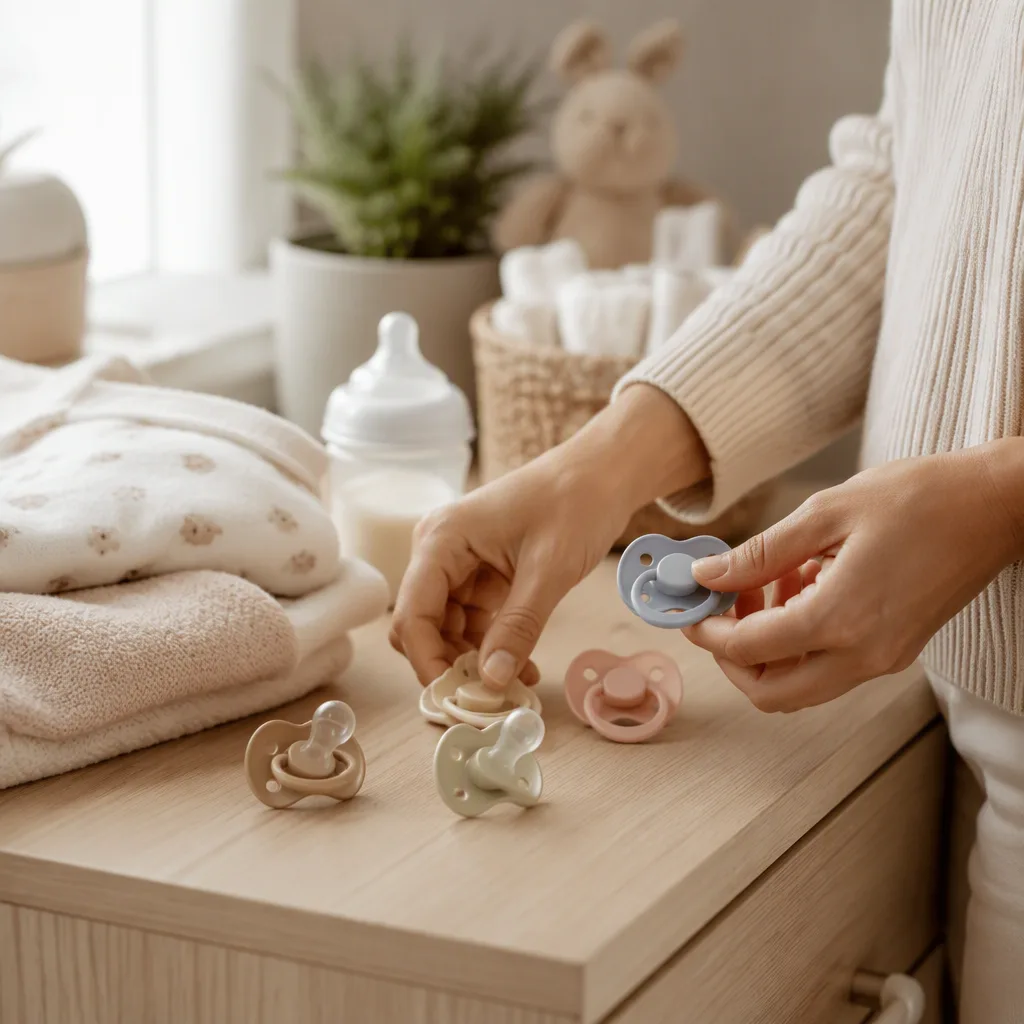
Quick pacifier guide for the first year
Pacifiers can be a very useful soothing tool in baby’s first year. They can help with comfort sucking between feeds, settling for naps, and giving a baby something familiar at bedtime. The key is using them as comfort, not as a way to delay a hungry newborn’s feed. If baby is rooting, sucking on fists, or getting more upset, offer milk first. If you’re sorting out feeding amounts, How Much Milk Does Baby Need? An Age-by-Age Guide can help you think through what’s typical.
For bottle-fed newborns, a pacifier can often be offered from birth. For breastfed babies, many families prefer to wait until feeding feels more settled. If you’re also working on bottles, How to Introduce a Bottle to a Breastfed Baby Gently and Bottle Feeding Newborns: Positions, Pacing, Burping are good companions to this stage.
At sleep time, offering a pacifier may help lower the risk of sleep-related infant death. Keep the rest of sleep simple and safe: baby on their back, in a clear crib, with no pacifier strings, clips, cords, stuffed toys, or teethers attached.
Pacifiers are optional. Truly. Some babies love them. Some spit them across the room like tiny critics. Both are normal.
For the first year, keep it practical: choose a one-piece pacifier in the right age size, move up when baby outgrows it, and check often for cracks, stickiness, stretching, or loose parts. Sterilize often for babies under 6 months, then wash with hot, soapy water or use the dishwasher if the pacifier is labeled dishwasher-safe. As baby gets closer to toddlerhood, start thinking about a weaning plan, just like you’d plan ahead for food questions with Introducing Allergens to Baby: Pediatrician Questions. And if you’re in a naming mood during all those late-night feeds, Tanmay Suresh Upadhyay: meaning & origin is a sweet little read.
When to introduce a pacifier to a newborn
Many babies can use a pacifier from birth, especially bottle-fed babies. Since bottle-fed newborns are already using an artificial nipple, a pacifier may feel like a familiar soothing tool after a full feed. If you’re bottle-feeding and still figuring out amounts, How Much Milk Does Baby Need? An Age-by-Age Guide can help you sanity-check what’s typical.
For breastfed babies, it can be wise to wait until nursing feels smoother, especially if there are any worries about latch, milk supply, or weight gain. Many parents hear the “wait a few weeks” rule, often around 3-4 weeks, but the better marker is how feeding is actually going. A calendar date matters less than your baby’s cues and your comfort.
Signs a newborn pacifier may be okay to try: baby is gaining weight, having enough wet diapers, and feeds feel manageable instead of tense, painful, or unfinished. If baby just fed well but still wants to suck, you might offer the pacifier for a few minutes while rocking in the chair. That’s a soothing use. It’s not replacing a meal.
Pause and ask your pediatrician, midwife, or lactation consultant if your baby has poor weight gain, very sleepy feeds, jaundice, prematurity, or if you’re having nipple pain. Those are times to protect feeding first and get eyes on the situation. If you’re also planning bottles later, How to Introduce a Bottle to a Breastfed Baby Gently may be helpful, and bottle-feeding parents may like Bottle Feeding Newborns: Positions, Pacing, Burping.
A pacifier can soothe, but it shouldn’t stretch out time when a newborn is hungry. If baby is rooting, sucking fists, turning toward you, or getting more upset, offer a feed first. For other “ask the doctor first” moments, this same mindset shows up in Introducing Allergens to Baby: Pediatrician Questions. And if you wandered here during a late-night naming scroll, yes, Tanmay Suresh Upadhyay: meaning & origin is still waiting for you.
Pacifier sizes by age and why they matter
Pacifier sizes are basically age ranges, but each brand labels them a little differently. You might see newborn, 0-3 months, 0-6 months, 6-18 months, or toddler sizes. Those labels aren’t just marketing. They usually reflect changes in nipple length, shield shape, and how the pacifier is meant to sit safely in your baby’s mouth.
A newborn pacifier is made for a very small mouth. A toddler pacifier is not. Bigger sizes may have a longer nipple or a wider shield, and that can be too much for a younger baby. On the other side, a pacifier that’s too small for an older baby may not sit well, may be harder to keep in, or may no longer match the way your baby sucks for comfort.
The easiest rule: follow the age range on the package instead of guessing by weight alone. Babies grow unevenly. One 4-month-old might be long and chunky, while another is petite, but their mouth development still may line up better with the manufacturer’s age guidance than with the number on the scale. It’s similar to feeding questions, where age matters too, like in How Much Milk Does Baby Need? An Age-by-Age Guide.
You’ll know it may be time to size up if the pacifier looks tiny in your baby’s mouth, your baby has outgrown the brand’s printed age range, or your baby seems to manage the shape without gagging but suddenly struggles to keep it in. If you’re also working on bottles, gentle changes can help there too, especially with tips from How to Introduce a Bottle to a Breastfed Baby Gently and Bottle Feeding Newborns: Positions, Pacing, Burping.
One thing to avoid: don’t hand the baby an older sibling’s larger pacifier just because it’s clean and nearby. If it isn’t made for your baby’s age, skip it. Use the same careful mindset you’d use for food readiness, like asking good questions before Introducing Allergens to Baby: Pediatrician Questions.
Choosing a newborn pacifier that is safe and comfortable
For a newborn, start simple. A one-piece pacifier is usually the safest first pick because there are fewer parts that can loosen or separate. Before you buy, look closely at the shield. It should be firm and wide enough that it can’t fit fully into your baby’s mouth, and it should have ventilation holes so moisture doesn’t sit trapped against the skin.
Size matters too. Choose the age range listed on the package, especially in those tiny early weeks. A pacifier made for an older baby may be too large or awkward for a newborn, while a newborn pacifier shouldn’t stay in rotation once your baby has outgrown it.
You’ll see a few common nipple shapes. Cylindrical nipples are rounded and simple. Orthodontic nipples are shaped with a flatter side. Symmetrical nipples are designed so there isn’t really an “up” or “down.” There’s no need to find the winner before your baby arrives. Some babies latch onto one shape right away, and some make a face like you’ve offered them a lemon.
Materials vary as well. Silicone is common, firm, and easy to clean. Natural rubber tends to feel softer, but it can wear faster, so you’ll want to check it often for stickiness, cracks, stretching, or discoloration.
My practical rule: buy two styles at first, not a drawer full. Babies can be surprisingly picky, and feeding rhythm matters more than pacifier aesthetics. If you’re sorting out early feeds, these guides can help alongside pacifier choices: How Much Milk Does Baby Need? An Age-by-Age Guide, How to Introduce a Bottle to a Breastfed Baby Gently, and Bottle Feeding Newborns: Positions, Pacing, Burping.
How to use a pacifier without replacing feeds
A pacifier can be a lovely soothing tool, but it works best when it doesn’t blur the line between “I need comfort” and “I need milk.”
Start by watching for hunger cues. Rooting, sucking on hands, fussing, and turning toward your chest or a bottle can all mean hunger first, especially if it’s been a while since the last feed. In that moment, offer breast or bottle before offering the pacifier. If you’re trying to sort out typical feeding amounts, How Much Milk Does Baby Need? An Age-by-Age Guide can help you think through the bigger pattern.
Good pacifier timing often looks like this: after a full feed, during a diaper change, in the car seat, or at the start of sleep. For example, if your baby just finished a bottle, burped, and still wants to suck while you buckle them in, that’s a reasonable pacifier moment. If bottle feeding still feels awkward, Bottle Feeding Newborns: Positions, Pacing, Burping has practical tips. And if you’re breastfeeding and thinking about bottles too, How to Introduce a Bottle to a Breastfed Baby Gently may be useful.
Try not to pop the pacifier in for every squeak, grunt, or wiggle. Pause for a beat. Check the basics: hunger, diaper, gas, temperature, tiredness, or just needing to be held. Babies tell us things in tiny, messy ways, and using a pacifier for every sound can make those signals harder to read.
If your baby spits it out, turns away, or gets more upset, don’t keep pushing it back in. Some babies love pacifiers. Some don’t.
Later, as feeding expands, you’ll make the same kind of thoughtful choices with solids and new foods, including questions from Introducing Allergens to Baby: Pediatrician Questions.
Cleaning, replacing, and storing pacifiers
Before the first use, read the package directions and clean the pacifier the way the maker recommends. Some pacifiers can be boiled. Some can go on the top rack of the dishwasher if they’re labeled dishwasher-safe. Others should be washed with warm, soapy water and rinsed well.
Day to day, keep it simple. If the pacifier drops on the kitchen floor, wash it. If it falls into the diaper bag next to snack crumbs and a loose wipe, wash it. And as tempting as it is during a stroller walk, don’t clean a pacifier in your own mouth. A clean spare is a much better fix.
A quick check before use can save you worry later. Throw the pacifier away if you notice:
- Cracks
- A sticky or tacky texture
- Swelling
- Discoloration
- Loose parts
- A nipple that feels weak, stretched, or fragile when you pull on it gently
This is one of those small baby-care habits that fits alongside feeding routines, like tracking how much milk baby needs by age or learning paced bottle feeding positions and burping. Tiny checks become automatic.
For outings, keep two or three clean extras in a small container or zip pouch in the diaper bag. Not loose in the bottom. Not tucked into a side pocket with keys. If you’re working on bottle skills too, especially after reading about introducing a bottle to a breastfed baby gently, having clean backups nearby makes the whole feed-and-soothe routine feel less frantic.
Pacifier safety rules parents should know
Pacifiers are simple, but a few rules really matter.
Never tie a pacifier around a baby’s neck, hand, crib, car seat, or stroller. Cords, ribbons, and strings can tighten or catch before you realize what’s happening. If you use a pacifier clip during awake time, keep it short and remove it before sleep. No clips, stuffed holders, teethers, ribbons, or other accessories should go into the crib with your baby.
Skip anything sweet on the pacifier. Don’t dip it in honey, sugar, syrup, or juice, and don’t add medicine unless your clinician gives clear instructions. For babies under 12 months, honey is a firm no. If you’re sorting out feeding questions at the same time, like whether baby is hungry or just wants to suck, our How Much Milk Does Baby Need? An Age-by-Age Guide can help you think it through calmly.
Use pacifiers that are intact and age appropriate. Check the package age range, especially before moving from newborn size to the next stage. A pacifier that’s too small or damaged can become unsafe. Before using a new one, and especially before accepting hand-me-downs, check for product recalls and inspect it closely.
Teething babies need extra pacifier checks. Biting can weaken the nipple, so look for cracks, stickiness, stretching, discoloration, loose parts, or a bent shield. If anything looks off, toss it. No debate.
If your baby is also learning bottles, the same gentle, safety-first mindset applies. You might like How to Introduce a Bottle to a Breastfed Baby Gently or Bottle Feeding Newborns: Positions, Pacing, Burping. And if you’re wondering what’s safe to put near baby’s mouth as solids begin, bring your questions from Introducing Allergens to Baby: Pediatrician Questions to your next visit.
When and how to start pacifier weaning
Pacifier weaning doesn’t have to happen all at once. Many families begin by limiting pacifier use around 6-12 months, especially during the day. Others aim to wean between ages 2 and 3, often with dental or speech guidance in mind.
A good middle ground is to watch how your child is using it. If the pacifier is mostly for sleep, you may have plenty of room to go slowly. If it’s in all day, during play, in the stroller, and while your toddler is trying to talk, it may be time to set firmer boundaries.
You might choose to wean earlier if your child has frequent ear infections, dental concerns, speech delays, or constant daytime pacifier use. If you’re already checking in with your pediatrician about feeding, growth, or routines, like in How Much Milk Does Baby Need? An Age-by-Age Guide, it’s fair to ask about pacifier timing too.
A gentle step-down plan works well for many kids:
- Keep the pacifier for sleep only.
- Move to naps only.
- Move to bedtime only.
- Remove it completely.
Here’s a real example. Put all pacifiers in a small basket near the crib and say, “Pacis stay in the crib now.” During the day, if your toddler asks, you can calmly point to the basket and repeat the same phrase. Short. Boring. Kind.
Comfort swaps help, especially at bedtime. Try the same song every night, a slow back rub, extra rocking for a few nights, or a lovey if your child is old enough for one. If your baby is still in the early feeding stage, and you’re also working on bottles, these guides may help keep routines gentle: How to Introduce a Bottle to a Breastfed Baby Gently and Bottle Feeding Newborns: Positions, Pacing, Burping.
Pick your week carefully. Illness, travel, a new sibling, daycare changes, or a big feeding shift, like introducing allergens, can make weaning harder than it needs to be.
Tiny side note, if you’re up late reading baby names while someone refuses sleep, Tanmay Suresh Upadhyay: meaning & origin is a sweet little rabbit hole.
Frequently Asked Questions
When should I introduce a pacifier?
Bottle-fed babies can often try one from birth. If breastfeeding, many parents wait until nursing is going well, often around 3-4 weeks.
What pacifier size does a newborn need?
Use a pacifier labeled newborn, 0-3 months, or 0-6 months, depending on the brand. Follow the package age range.
Can a pacifier interfere with breastfeeding?
It can if it delays feeds or masks hunger cues. If latch, supply, or weight gain is a concern, ask a lactation consultant before regular use.
Is it safe for a baby to sleep with a pacifier?
Yes, a plain pacifier at sleep time is generally considered safe. Do not attach clips, strings, toys, or stuffed animals in the crib.
How often should pacifiers be replaced?
Replace them at the first sign of cracking, stickiness, swelling, discoloration, or weakness. Many families also replace them every few weeks with heavy use.
What if my baby refuses a pacifier?
That’s fine. Try once or twice with a different shape if you want, but don’t force it. Some babies prefer feeding, rocking, or a clean finger for comfort.
When should toddlers stop using pacifiers?
Many dentists and pediatricians suggest weaning by age 2-3, or earlier if there are dental, speech, or ear infection concerns.
Frequently asked questions
When can I give my newborn a pacifier?
How do I know what pacifier size my baby needs?
Is it safe for my baby to sleep with a pacifier?
How often should I clean pacifiers?
When should we start pacifier weaning?
References
Sources
External research this article was grounded in.
- YouTube Creator Awards - YouTube Helpsupport.google.com
- Pacifier Safety and Weaning: A Parent's Practical Guide | MyBabyMusemybabymuse.com
- Pacifier Weaning Guide: Age-by-Age Steps That Work (2026)lumebook.com
- Pacifier - Wikipediaen.wikipedia.org
- How to Choose a Baby Pacifier (2026 Guide) | Mubboomubboo.com
Related reading
More from the journal → feeding
Newborn Feeding Cues: Hunger and Fullness Signs
Learn early newborn hunger cues, late feeding signs, and fullness signals so feeds feel calmer and you know when your baby has had enough.
11 min readAug 3, 2026- feeding
Bottle Feeding Newborn Basics for Calm Feeds
Newborn bottle feeding can feel messy at first. Learn hunger cues, typical amounts, pacing, burping, and when to call your pediatrician.
10 min readAug 3, 2026 - feeding
Breastfeeding Positions for Newborn Comfort
Comfortable breastfeeding starts with your body supported, baby tucked close, and a position that helps both of you relax into the latch.
11 min readAug 3, 2026