
Newborn Essentials Checklist for the First 8 Weeks
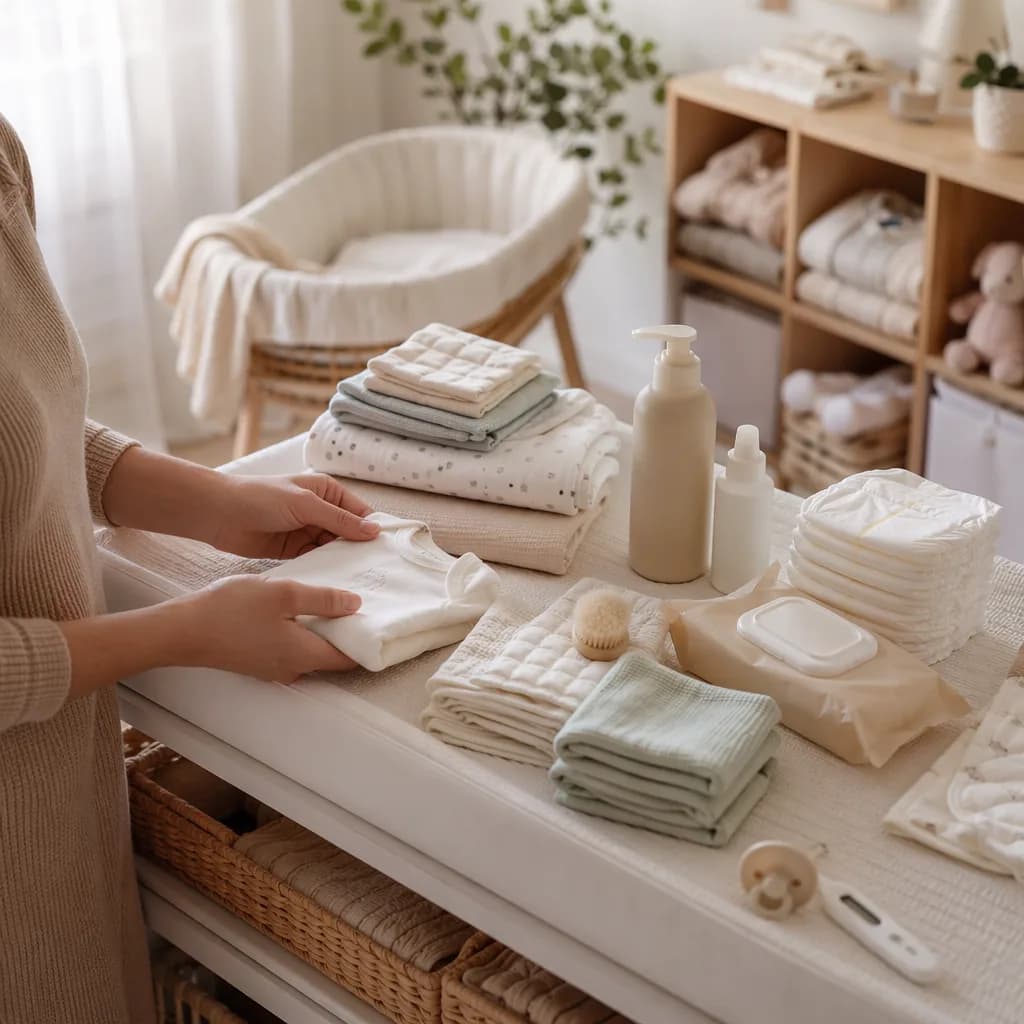
The short newborn essentials checklist
For the first 8 weeks, newborn essentials are pretty simple: a safe place to sleep, diapers, wipes, a few easy outfits, feeding supplies, burp cloths, a rear-facing car seat, and a small health kit. You don’t need a full nursery before the baby comes home. You need the things you’ll reach for at 2 a.m.
Here’s the baby essentials list by daily need:
- Sleep: Firm, flat crib, bassinet, or play yard mattress with 2 fitted sheets. Keep the sleep space free of loose blankets, pillows, bumpers, and stuffed items. If you’re setting up the room, this safe, simple nursery guide can help.
- Feeding: If breastfeeding or chestfeeding, start with a couple of supportive bras or tanks, nursing pads if you want them, and any clinician-recommended nipple ointment. If formula or combo feeding, try a few bottles with slow-flow nipples, formula, and a bottle brush.
- Diapering: Buy 1-2 packs of newborn diapers first, plus wipes and a gentle barrier cream. Fit can change quickly.
- Clothing: Aim for 6-8 soft sleepers or onesies, plus socks if your home runs cool.
- Bathing: Gentle baby soap, a soft towel, and baby nail clippers or a file.
- Health: A digital thermometer and saline drops or spray are useful basics.
- Travel: A correctly installed rear-facing car seat. Add a stroller only if it fits your daily life, and this stroller guide can keep you from overbuying.
- Comfort: 8-12 burp cloths, one swaddle or sleep sack style to try, and maybe a dim night light or simple white-noise option.
Some choices are baby-specific. Bottle shape, pacifiers, diaper fit, and swaddle style may take a little trial and error, so start small before stocking up. If you’re trimming the registry, this list of baby products you don’t need is a good reality check. A monitor can wait unless it truly solves a safety or sleep setup concern, and this guide to baby monitors can help you decide calmly.
Safe sleep essentials for the first two months
For the first 8 weeks, the sleep setup can stay simple. Before birth, aim to have a crib, bassinet, or play yard with a firm, flat mattress, plus 2-3 fitted sheets that fit snugly. Add 2-3 swaddles or sleep sacks so you have a clean option ready when one gets spit-up on or soaked during a diaper change.
That’s enough to start.
The sleep space itself should stay bare. Keep out loose blankets, pillows, bumpers, stuffed animals, and positioners. Weighted sleep products should also stay out unless your pediatrician has specifically cleared one for your baby. A lot of these items are marketed as helpful, but they aren’t part of the basic safe sleep setup you need in the early weeks. If you’re trying to keep the nursery calm and practical, our Newborn Nursery Setup: A Safe, Simple Room Guide can help you avoid the extras that make the room feel crowded.
Here’s a real-life way to think about quantities. If you do laundry every other day, two bassinet sheets may be enough. But three feels much safer after a 3 a.m. diaper leak, especially when you’re tired and the baby is crying and you don’t want to search for a clean sheet in the dark.
A few optional items can make nights easier. A basic white noise machine or fan may help with settling. A dim night light is useful for overnight feeds and diaper changes because you can see what you’re doing without fully waking everyone up. A waterproof mattress protector can also help, as long as it fits safely under the fitted sheet and doesn’t bunch.
If you’re tempted by lots of sleep gadgets, pause before buying. Many families do better starting with the basics, then adding only what solves a real problem. This is also where a guide like Baby Products You Don't Need: What New Parents Can Skip can save you money and closet space.
Diapering supplies you will actually use
Diapering is one of those areas where simple really does work. You don’t need a fancy setup in every room, but you do want the basics ready before baby comes home.
Start with:
- Newborn diapers
- Size 1 diapers
- Fragrance-free wipes
- Diaper cream or barrier ointment
- A changing pad or wipeable changing mat
- A diaper pail or a regular lidded trash can
Buy small amounts at first. Truly. Some babies outgrow newborn diapers quickly, and diaper brands can fit very differently. One diaper may gap around skinny legs, while another feels too snug on a round belly. A small pack of newborn diapers and a small pack of size 1 diapers gives you room to adjust without staring at a giant unopened box that no longer fits.
Many newborns use 8-12 diapers a day during the early weeks, so you’ll go through them faster than you expect. Still, “fast” doesn’t mean “buy every size in bulk.” Restocking once you know your baby’s shape is usually less stressful than overbuying.
For your changing space, keep it practical. If you’re setting up a nursery, this safe, simple newborn nursery guide can help you decide what belongs there and what doesn’t. If most daytime changes happen on the living room floor, that’s fine too.
A small diaper caddy helps a lot. Stock it with wipes, a few diapers, cream, and a spare onesie. Then when there’s a blowout right after feeding, you’re not carrying a wiggly baby across the house looking for clean clothes.
And if you’re tempted by wipe warmers, specialty bins, or extra gadgets, this list of baby products new parents can skip is a helpful gut check.
Feeding must haves for breast, bottle, or combo feeding
Feeding gear is one of those categories where it’s very easy to buy too much before you know what your baby likes. Start small. You can always add more once a real pattern shows up at home.
If you’re breastfeeding or chestfeeding, keep the setup simple: nipple cream if your clinician recommends it, nursing pads if you want them, a few nursing bras or tanks, and several burp cloths within arm’s reach. A water bottle you can open one-handed is also genuinely helpful, because babies have a special talent for settling in right after you realize you’re thirsty.
For bottle feeding, plan on 4-6 newborn bottles, slow-flow nipples, formula if you’re using it, and a bottle brush. You’ll also want a clear cleaning plan. Some families use a safe sterilizing method because it’s recommended to them or because it makes them feel better in those early weeks. Either way, you don’t need a counter full of gadgets right away. If you’re trying to keep purchases practical, this pairs well with a broader “what can wait?” mindset from Baby Products You Don't Need: What New Parents Can Skip.
For pumping, think in pieces rather than a huge system: storage bags or containers, the pump parts you need, and attention to flange sizing. Fit matters for comfort, so it’s okay if this takes a little adjusting. Keep only a small number of bottles at first, since some babies prefer one bottle shape or nipple style over another.
Burp cloths and bibs are used in almost every feeding setup. Even babies who barely spit up at first can surprise you during a sleepy 2 a.m. feed, and a small towel over your shoulder can save an outfit change for both of you.
A note on formula: ask the hospital or your pediatrician what type to start with, then avoid stocking a closet full until you know it works for your baby. The same “start with what you truly need” approach can help with the rest of your setup too, from a simple sleep space in Newborn Nursery Setup: A Safe, Simple Room Guide to choosing bigger gear later, like in How to Choose a Stroller That Fits Your Life.
Newborn clothing that makes daily life easier
For the first 8 weeks, baby clothes should make changes faster, not cuter. Cute is lovely. Easy is what you’ll reach for at 3 a.m.
A practical first baby clothing checklist looks like this:
- 6-8 zip sleepers
- 4-6 short-sleeve or long-sleeve bodysuits
- 2-3 soft hats, if your baby needs them
- Several pairs of socks, if the sleepers don’t have built-in feet
Zip sleepers are the quiet heroes here. Look for two-way zippers if you can, because they let you change a diaper without fully undressing your baby. Wide neck openings help too, especially after spit-up or a diaper leak. Soft cotton is usually easier for everyday wear than stiff little outfits with tiny buttons, snug waistbands, or complicated layers.
Sizing can feel oddly stressful, but it doesn’t need to be. Some babies wear newborn size for a while. Some barely wear it at all. Keep tags on extras until you know what fits, and have a few 0-3 month pieces washed and ready so you’re not doing laundry in a panic. One simple hospital bag tip: pack one newborn outfit and one 0-3 month outfit for going home, just in case.
Adjust for the season and your home. Winter babies may need warmer sleep sacks and an outdoor bunting for walks. Summer babies often need fewer layers indoors, especially if your home runs warm. For sleep, keep the focus on a safe, simple setup, like the basics in Newborn Nursery Setup: A Safe, Simple Room Guide.
And if you’re tempted by racks of tiny special-occasion outfits, pause. You can always add one later. For now, the best newborn clothes are the ones that help you change, feed, cuddle, and get back to resting. If you’re trimming the shopping list, Baby Products You Don't Need: What New Parents Can Skip can help you stay practical.
Bathing and grooming items for gentle care
Newborn bath gear can stay wonderfully simple. You’re not setting up a spa. You’re just keeping baby clean, comfortable, and safe during those sleepy first weeks.
A practical bath and grooming basket might include:
- Infant tub or sink insert
- 2-3 hooded towels
- 4-6 soft washcloths
- Gentle baby wash
- Soft brush or comb
- Baby nail clippers or a nail file
- Digital thermometer
- Nasal aspirator with saline drops
Newborns don’t need daily baths. In the beginning, a quick wipe-down is often enough, especially around the neck folds, diaper area, hands, and anywhere milk tends to collect. Sponge baths may be needed until the umbilical stump falls off, so keep a couple of washcloths and a towel within easy reach.
Baby nails can be surprisingly sharp, even when they look tiny. A nail file can feel less intimidating at first, especially if you’re nervous about clippers. Try trimming or filing after a feed, when your baby is drowsy and less wiggly.
For stuffy noses, saline drops and a nasal aspirator are useful basics. A digital thermometer is also worth having from day one, so you’re not searching for one at 2 a.m. when something feels off.
Fancy lotions, scented bath products, and giant toiletry kits are usually unnecessary at the start unless your pediatrician recommends something specific. If you’re trying to keep the bathroom shelf from overflowing, our guide to Baby Products You Don't Need: What New Parents Can Skip can help you sort the useful from the “maybe later.”
Health and safety basics to have ready
The health kit can stay small. You don’t need a full medicine cabinet for a newborn, especially in the first 8 weeks.
A practical starter kit includes a rectal digital thermometer, saline drops or spray for stuffy noses, a nasal aspirator, and petroleum jelly if your pediatrician recommends it for temperature checks. You can also ask your baby’s doctor whether they want you to keep infant acetaminophen at home. If they say yes, ask for the exact dose and write it down.
Medicine dosing for newborns should always be based on your baby’s weight and your pediatrician’s guidance. This matters even more during the first 8 weeks, when “just a little” is not something to guess at. Save the doctor’s office number in both parents’ phones, along with after-hours instructions and the nearest urgent care or emergency contact.
For safety, have these ready before birth:
- An installed rear-facing car seat
- Working smoke detectors
- Working carbon monoxide detectors
- Emergency contacts saved in both parents’ phones
Learn the car seat before labor if you can. Adjust the straps, practice clicking the seat in and out, and read the basic install steps while you’re rested. Trying to figure it out in a hospital parking lot while exhausted is nobody’s best moment.
At home, keep the sleep space simple and safe too. A firm, flat surface with a fitted sheet is enough, and our Newborn Nursery Setup: A Safe, Simple Room Guide can help you keep the room practical. If you’re tempted by extra gear, Baby Products You Don't Need: What New Parents Can Skip is a good reality check.
Travel and out-of-the-house essentials
Getting out with a newborn is mostly about leaving with enough supplies to handle one feed, one blowout, and one spit-up. You don’t need a trunk full of gear.
For the first 8 weeks, the useful travel basics are:
- Infant car seat, rear-facing and installed correctly before birth if you’ll travel by car
- Stroller or baby carrier, depending on your daily routine
- Diaper bag
- Portable changing pad
- Extra diapers
- Wipes
- One spare outfit
- Burp cloth
- Feeding supplies, such as bottles, formula, nursing cover if you like one, or anything you need for breast/chestfeeding
A diaper bag doesn’t need to be fancy or expensive. A regular backpack with pockets works beautifully, especially when you’re carrying the baby in one arm and trying to find wipes with the other hand. If it has space for diapers, a change of clothes, feeding items, and a washable changing pad, it’s doing the job.
For a two-hour pediatrician visit, pack at least 3 diapers, wipes, one outfit, one burp cloth, and a feeding plan. That could mean a prepared bottle, formula supplies, or a plan to nurse before and after the appointment. Simple is good.
A few extras depend on your life. If you live somewhere hot, a stroller fan may be useful. In cold weather, a car seat cover can help between the house and the car. For quick errands, a compact carrier can be easier than unloading a stroller every time.
If you’re still deciding what’s actually worth buying, this guide to baby products you don’t need can help you skip the extras, and this stroller guide can help you choose a stroller that fits your life. For home setup, keep the same simple mindset with a safe newborn nursery.
Nice-to-have baby gear you can wait to buy
Some baby gear looks helpful in the store, then sits untouched in the corner for weeks. For the first 8 weeks, you can usually wait on extras like a swing, bouncer, wipe warmer, bottle warmer, fancy monitor, baby shoes, large toy sets, and a drawer full of different pacifier styles.
A swing is a good example. One baby melts into it for ten peaceful minutes while a parent drinks coffee. Another baby screams the second the straps click. Movement seats can be wonderful for some families, but they’re also bulky, often pricey, and very baby-specific. If you can borrow one, try it before you buy. If you’re unsure, add it later when you know what kind of soothing your baby actually likes.
The same goes for duplicate soothing gear. It’s easy to register for three swaddles, two sleep sacks, four pacifier shapes, and multiple “must-have” gadgets, then discover your newborn only settles with one simple option. Start small. You can always order more of the thing that works.
Where does it make sense to spend more? Put your money toward the basics that matter every day: a good rear-facing car seat, a safe sleep setup, and feeding items that match your plan. If you’re setting up the room, keep it simple and safe with help from Newborn Nursery Setup: A Safe, Simple Room Guide. If a monitor would help you feel calmer, compare features thoughtfully with Best Baby Monitors for Safety-Conscious Parents, instead of buying the fanciest one by default.
For bigger purchases, think about your real life. Stairs, car storage, sidewalks, and errands matter more than trends, so How to Choose a Stroller That Fits Your Life can help you avoid an expensive mismatch. And if you want a longer skip list, Baby Products You Don't Need: What New Parents Can Skip is a practical next read.
Tiny shoes and big toy sets can wait. Your newborn mostly needs sleep, food, clean diapers, warmth, and you.
How many newborn items to buy before the baby comes
You don’t need a packed nursery to get through the first 8 weeks. You need enough clean basics to handle spit-up, diaper leaks, sleepy changes, and the occasional 3 a.m. surprise.
A practical starting point looks like this:
- 6-8 sleepers
- 4-6 bodysuits
- 2-3 swaddles or sleep sacks
- 2-3 fitted sheets for the crib, bassinet, or play yard
- 8-12 burp cloths, or small soft towels
- 4-6 bottles if you’re bottle feeding or combo feeding
- 1 small pack of newborn diapers, plus wipes
That last one matters. Babies grow at different rates, and diaper fit can change quickly, so it’s usually smarter to start small instead of buying a giant box in one size before you know what works.
Laundry is the real deciding factor. If you plan to run a load most days, you can stay close to the lower end of the list. Six sleepers may be plenty. If laundry will happen once or twice a week, aim higher, especially for sleepers, sheets, and burp cloths. Spit-up has a way of finding the cleanest thing in the room.
Try not to wash every outfit before birth. Wash a small starter set, keep tags on the rest, and save receipts. You may find that zipper sleepers are your favorite, or that certain bodysuits are annoying during nighttime changes. It’s also fine to leave some registry items unpurchased until your baby shows you what they actually like. This is especially true for extras covered in Baby Products You Don't Need: What New Parents Can Skip.
For sleep space planning, keep the setup simple and safe with help from Newborn Nursery Setup: A Safe, Simple Room Guide. If you’re adding gear later, choose based on your actual home and routines, like in How to Choose a Stroller That Fits Your Life or Best Baby Monitors for Safety-Conscious Parents.
One tiny trick: keep an emergency stash in the car or stroller basket. A clean sleeper, one diaper, wipes, and a burp cloth can save the day. And if you’re personalizing a keepsake or label, even something as specific as Tanmay Suresh Upadhyay: meaning & origin can wait until the essentials are sorted.
What to skip on your first baby checklist
Skipping baby gear isn’t being stingy. It’s being practical.
For the first 8 weeks, your baby mostly needs clean diapers, food, a safe place to sleep, warmth, and a cared-for parent who isn’t buried under returns and assembly instructions. A full nursery can wait. If you want a simple room plan, start with this Newborn Nursery Setup: A Safe, Simple Room Guide and build from there.
Here are the items most families can skip at first:
- Crib bumpers, sleep positioners, pillows, and loose blankets. These don’t belong in a newborn sleep space. Keep sleep firm, flat, and clear.
- Weighted sleep products unless your baby’s clinician specifically recommends one. Don’t use marketing as medical guidance.
- Newborn shoes. Tiny sneakers are adorable, but your baby isn’t walking to brunch. Socks or footed sleepers are enough if the room is cool.
- Dressy outfits in bulk. One sweet outfit for photos or visitors is fine. Ten stiff little outfits with buttons up the back will likely sit in a drawer.
- Specialty food makers. Newborns aren’t eating solids in the first 8 weeks, so this can wait.
- Large newborn diaper stockpiles. Babies grow at different rates, and fit matters. Buy enough to start, then restock once you know what works.
- Trendy gear you haven’t actually needed yet. A stroller, carrier, or monitor can be helpful, but choose based on your real life, not pressure. These guides on How to Choose a Stroller That Fits Your Life and Best Baby Monitors for Safety-Conscious Parents can help if those decisions come up.
Cute doesn’t always mean useful. Heavily promoted doesn’t mean urgent. If you’re still unsure, this broader list of Baby Products You Don't Need: What New Parents Can Skip can save you a few late-night carts.
And if you’re deep in baby prep, names, and tiny laundry all at once, even a name page like Tanmay Suresh Upadhyay: meaning & origin can be a nice reminder: you’re preparing for a person, not a showroom.
Frequently Asked Questions
What are the most important newborn essentials?
The most important newborn essentials are a safe sleep space, diapers, wipes, basic clothing, feeding supplies, burp cloths, a car seat, and a small health kit.
How many newborn diapers should I buy before birth?
Start with one small pack of newborn diapers and one pack of size 1. Many babies outgrow newborn diapers quickly, and fit can vary by brand.
Do I need bottles if I plan to breastfeed?
You may not need many, but having 2-4 newborn bottles can help if you pump, supplement, or need someone else to feed the baby.
How many newborn clothes do I need for the first 8 weeks?
Most families do well with 6-8 zip sleepers and 4-6 bodysuits, plus a few extras if laundry will be less frequent.
What baby items can I wait to buy?
You can usually wait on a swing, bouncer, wipe warmer, bottle warmer, extra pacifier types, baby shoes, and large toy sets.
What should not be in a newborn crib or bassinet?
Keep pillows, blankets, bumpers, stuffed animals, sleep positioners, and loose items out of the sleep space. Use only a firm mattress with a fitted sheet.
Frequently asked questions
What are the true newborn essentials for the first 8 weeks?
How many newborn diapers should I buy before the baby comes?
Do I need a full nursery ready before birth?
How many baby outfits do I need for the first two months?
What baby items can wait until after the newborn stage?
References
Sources
External research this article was grounded in.
- Newborn Essentials Checklist: What You Actually Need for the First 8 Weeks – Parenting Mentorparentingmentor.com
- Newborn Care and Development 101whattoexpect.com
- Newborn Essentials Checklist: The Must-Haves | Pamperspampers.com
- Baby Essentials Checklist: Newborn Must-Haves | Chiccochiccousa.com
Related reading
More from the journal → baby-products
Newborn Essentials Checklist: Buy This, Skip That
A calm newborn essentials checklist for what to buy now, what can wait, and what to skip so you can prep for baby without overbuying.
20 min readAug 3, 2026- baby-products
Car Seat Safety for Newborns: Fit, Position, Mistakes
Newborn car seat safety starts with fit: rear-facing straps, a snug harness, correct recline, and no bulky coats or extra padding.
12 min readAug 3, 2026 - baby-products
Babywearing for Beginners: Fit, Wraps, and Tips
New to babywearing? Start with simple fit checks, carrier types, and calm tips that help you carry baby safely and comfortably.
12 min readAug 3, 2026