
Newborn Skin Peeling, Rashes, and Dryness Explained
Why newborn skin peeling happens
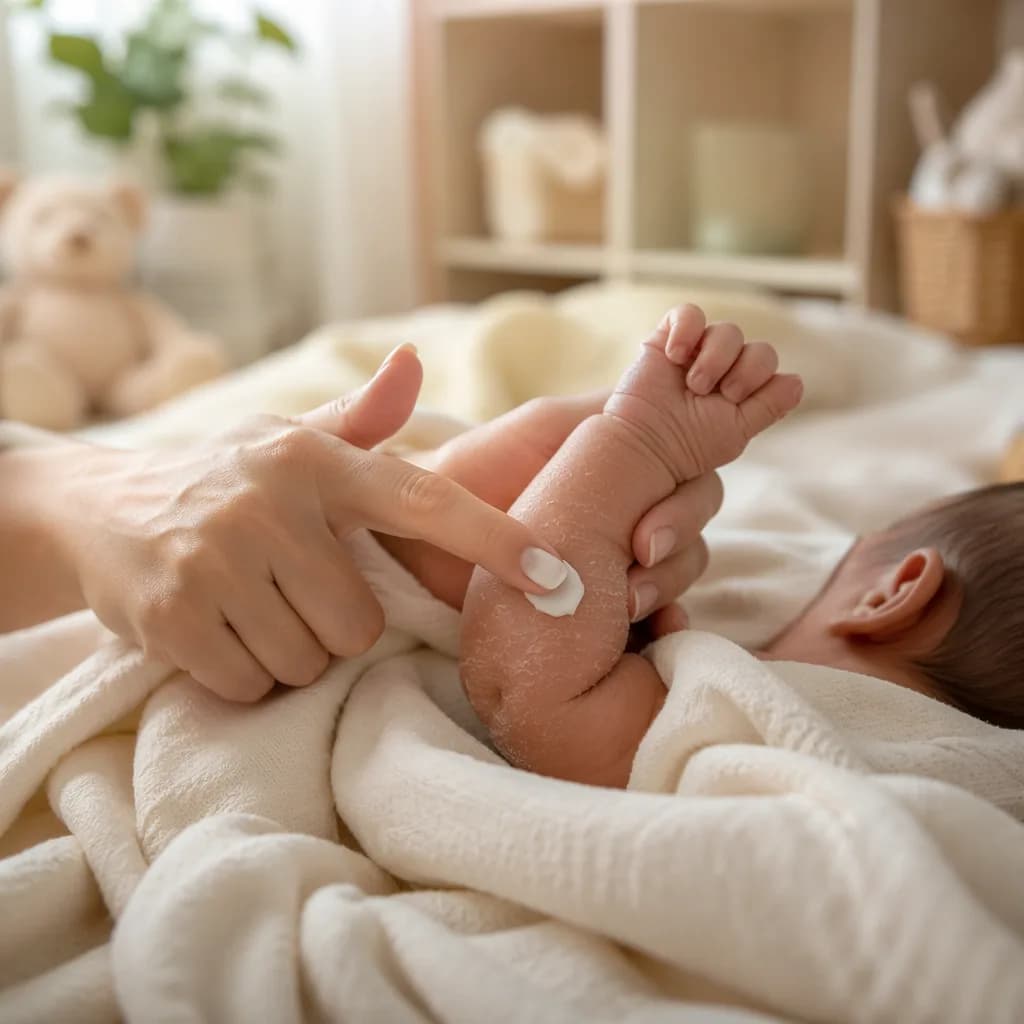
Newborn skin peeling can look a little startling, especially when it shows up on tiny hands, feet, ankles, and wrists. But in the first 1-3 weeks, mild peeling is usually just part of your baby adjusting to life outside the womb.
Think about the change your baby just made. They went from being curled up in fluid to being out in dry air, wearing diapers and clothes, being wiped, snuggled, and bathed. That’s a big shift for brand-new skin. Some flaking is expected as that outer layer settles in.
Babies born after their due date may peel a bit more because they often have less vernix, the creamy protective coating on the skin, by the time they’re born. So if your baby’s feet look like they’ve been soaking in a bath too long, it doesn’t automatically mean something is wrong.
Normal peeling usually looks like thin, papery flakes or mild dryness. The skin underneath should not be bleeding, oozing, or looking angry, and your baby should otherwise seem well: feeding, sleeping, pooping, and having those very newborn moments, like startling at a sound or curling fingers around yours. If those reflexes are making you wonder what’s normal, Newborn Reflexes Explained for Worried Parents can help.
Peeling by itself is different from a rash that spreads, cracks, weeps, or seems itchy and uncomfortable. If dryness starts looking more irritated, you may want to read Baby Eczema Basics: Triggers, Care, Doctor Questions and check in with your baby’s provider. Trust your gut. You’re learning your baby’s skin one diaper change at a time.
What newborn dry skin usually looks like
Newborn dry skin can look surprisingly dramatic, even when it’s mild. You might notice rough little patches, fine flaking, or skin that looks a bit tight, especially after a diaper change or bath. Common spots are the belly, legs, feet, hands, scalp, and those tiny folds around the ankles.
It can help to remember that newborn skin is still adjusting. BabyCenter notes that a newborn’s skin may be thin at first, and their skin tone can keep changing during the first weeks. So a little flakiness, by itself, doesn’t always mean something is wrong.
Dry skin usually looks like flakes or roughness without much drama around it. Irritated skin is different. Watch for redness that spreads, cracks, oozing, swelling, or skin that seems painful when you touch it. If you’re seeing those signs, or if the rash keeps getting worse, it’s a good time to ask your baby’s provider. For rash patterns that seem itchy or stubborn, our guide to Baby Eczema Basics: Triggers, Care, Doctor Questions may help you organize what you’re noticing.
Mild dryness often settles with gentle newborn skin care and time. Keep things simple. Soft touch, mild routines, and patience go a long way.
And if everything feels like a mystery right now, that’s normal. Newborns come with peeling skin, funny noises, startles, and surprises. You may also like Newborn Reflexes Explained for Worried Parents and our Newborn Sneezing, Hiccups, and Noisy Breathing Guide.
Common baby rash types parents may see
Newborn skin can look surprisingly busy. In the first days and weeks, you may notice peeling, little bumps, blotches, or redness that seems to move around. That can feel alarming at 2 a.m., especially when you’re already watching every sneeze, twitch, and tiny sound. If you’re in that phase, you might also like our calm guide to newborn sneezing, hiccups, and noisy breathing.
Here are a few common-looking skin changes parents often ask about:
- Baby acne: These are small red or white bumps that may show up on the cheeks, nose, forehead, or chin. They can make a newborn’s face look irritated, even when baby seems perfectly comfortable.
- Erythema toxicum: This can look like blotchy red spots with tiny pale or yellow centers. It’s common in many newborns and is generally harmless, though the name sounds much scarier than the rash usually looks.
- Milia: These are tiny white bumps, often on the nose or cheeks. They’re easy to mistake for little pimples, but they usually clear on their own.
- Heat rash: This may appear as small pink or red bumps in warm, sweaty areas, like the neck, chest, or skin folds. A baby who’s bundled tightly on a warm day might show it in those cozy creases.
- Diaper rash: This is redness in the diaper area, often linked with moisture, stool, or friction. If the skin looks raw, spreads quickly, or baby seems very uncomfortable, it’s a good reason to check in with your child’s provider.
Cradle cap deserves its own mention. If you see greasy flakes or scales on the scalp, that may be cradle cap rather than a face or body rash. It can look dramatic, especially against that soft newborn hair, but it’s a different pattern than tiny bumps on the cheeks or redness in the diaper area.
And because newborns do all kinds of surprising things, skin changes often show up alongside other normal newborn quirks. If you’re also wondering about sudden startles or clenched little hands, newborn reflexes can help make those moments feel less mysterious. For ongoing dry, itchy, or recurring patches, our baby eczema basics guide is a better next read.
How to care for peeling or dry newborn skin
Newborn skin can look a little surprising at first. It may be lighter than its eventual color, then darken over the first few weeks, and tiny hands or feet can look bluish for a few days while circulation matures. So if you’re staring at flaky knees or dry little ankles under the nursery light, you’re not alone.
For everyday peeling or dryness, keep baths simple. Aim for short baths, about 5-10 minutes, and use lukewarm water instead of hot water. Newborn skin doesn’t need a big scrub, and long soaks can leave it looking drier.
Use a fragrance-free, gentle baby cleanser only where it’s really needed: the diaper area, neck folds, and places where spit-up has dried. The rest can usually be rinsed with water. After bath time, pat your baby’s skin dry with a soft towel instead of rubbing. If the skin still looks dry, apply a thin layer of fragrance-free ointment or moisturizer.
Try not to pick at peeling skin, even when the flakes look loose. I know. It’s oddly tempting. But letting it shed on its own is gentler.
Clothing can help, too. Choose soft cotton pieces that don’t rub, and wash baby clothes with fragrance-free detergent. Skip adult lotions, essential oils, scented products, and harsh soaps, since newborn skin is still adjusting to life outside the womb.
If a rash looks angry, spreads, cracks, oozes, or your baby seems uncomfortable, it’s a good time to ask your baby’s provider. Babies are all different, and getting help early is always better than worrying at 2 a.m. You may also want to read Baby Eczema Basics: Triggers, Care, Doctor Questions if dryness keeps coming back.
And while you’re learning what’s normal, it can help to understand other newborn quirks too, like startles in Newborn Reflexes Explained for Worried Parents or tiny snorts in Newborn Sneezing, Hiccups, and Noisy Breathing Guide.
When newborn skin changes need a doctor
Most newborn skin changes are harmless, especially in these early weeks when your baby is adjusting to life outside the womb. Still, some rashes and skin changes deserve a call to the doctor, even if you’re not sure they’re “bad enough.”
Call your baby’s doctor if you see blisters, pus, open sores, bleeding cracks, or a rash that seems to spread quickly. Those are good reasons to get guidance rather than waiting it out. Also call if the rash is near your baby’s eyes, or if the skin looks swollen, warm to the touch, or has streaking redness moving away from the rash.
Some symptoms should be treated as urgent. If your baby is under 3 months and has a fever, is feeding poorly, seems unusually sleepy, or looks very uncomfortable, get medical help right away. Newborns can change quickly, and it’s always okay to be the parent who calls early.
Yellowing skin or yellowing in the whites of the eyes can be a sign of jaundice and should be checked promptly. If you notice it, especially along with sleepiness or poor feeding, don’t wait for the next routine visit.
One practical tip: take a clear photo before you go in or call, especially if the rash is changing fast. Natural light near a window works well. Try to include one close-up and one photo from farther back, so the doctor can see both the texture and where it is on your baby’s body.
If skin worries are mixed with other newborn concerns, like startles, noisy breathing, or sniffles, you might also find these guides reassuring: Newborn Reflexes Explained for Worried Parents, Newborn Sneezing, Hiccups, and Noisy Breathing Guide, and Baby's First Cold: Comfort, Feeding, and Warning Signs. For ongoing dry, itchy patches, Baby Eczema Basics: Triggers, Care, Doctor Questions may help you prepare questions for the visit.
What not to put on newborn skin
Newborn skin is still settling in after life in the womb, and simple care is usually the safest place to start. Your baby may have thin, sensitive-looking skin, color changes, or peeling in those early weeks, and that can make it tempting to try “just a little” of every cream in the cabinet. I’d keep it boring.
Skip rubbing alcohol and hydrogen peroxide on irritated newborn skin unless your baby’s provider specifically tells you to use them. The same goes for steroid creams. Don’t use acne treatments on newborn bumps or rashes, even if they look a little like pimples.
I’d also avoid heavily scented lotions, perfumes, essential oils, and bubble bath. A newborn doesn’t need a fragrance routine. They need gentle handling, feeding, sleep, diaper changes, and a parent who notices when something seems off.
Powders are best skipped too, especially talc, because babies can inhale the tiny particles. And be cautious with home remedies that sound harmless but can sting or irritate, like lemon juice, baking soda pastes, or undiluted oils.
If a rash worries you, or your baby seems uncomfortable, ask your child’s provider. Early questions are never silly. For more skin-specific guidance, you may also like Baby Eczema Basics: Triggers, Care, Doctor Questions. And if you’re sorting through other normal newborn surprises, Newborn Reflexes Explained for Worried Parents can help too.
Frequently Asked Questions
Is newborn skin peeling normal?
Yes. Newborn skin peeling is very common, especially during the first few weeks, and usually clears without treatment.
Should I put lotion on newborn dry skin?
You can use a small amount of fragrance-free baby moisturizer or ointment if the skin looks dry or cracked. Ask your doctor if the skin is red, bleeding, or oozing.
How long does newborn skin peeling last?
Most peeling improves within 1-3 weeks. Some babies, especially those born after their due date, may peel a little longer.
Can I pick peeling skin off my newborn?
No. Let flakes come off on their own. Picking can irritate the skin or cause tiny cracks.
What baby rash types are common in newborns?
Common newborn rashes include baby acne, milia, erythema toxicum, heat rash, diaper rash, and cradle cap.
When should I worry about a newborn rash?
Call the doctor for fever, blisters, pus, swelling, bleeding, fast-spreading rash, poor feeding, or if your baby seems very sleepy or unwell.
Frequently asked questions
Is newborn skin peeling normal?
What can I put on my newborn’s dry skin?
When should I call the doctor about newborn peeling or a rash?
Can babies born late peel more?
References
Sources
External research this article was grounded in.
- Newborn baby: Development, milestones & growth | BabyCenterbabycenter.com
- Newborn Care and Development 101whattoexpect.com
- Newborn healthwho.int
Related reading
More from the journal → baby-health
Newborn Reflexes Explained for Worried Parents
Newborn reflexes can look startling, but most are normal. Here’s what rooting, sucking, Moro, grasp, stepping, and other reflexes mean.
11 min readJul 6, 2026 baby-health
Baby Eczema Basics: Triggers, Care, Doctor Questions
Baby eczema can be itchy, bumpy, and hard to read. Learn common triggers, gentle care basics, and what to ask your pediatrician.
10 min readJul 3, 2026 baby-health
Baby's First Cold: Comfort, Feeding, and Warning Signs
Baby's first cold can feel scary. Here’s how to ease congestion, protect feeding and sleep, and know when to call the doctor.
10 min readJun 26, 2026