
Baby Eczema Basics: Triggers, Care, Doctor Questions

What baby eczema looks like
Baby eczema, also called infantile atopic dermatitis, is a common skin condition that causes dry, itchy, sensitive patches. It can look bumpy, rough, inflamed, and uncomfortable. The itch is often the clue parents notice first.
In babies younger than 6 months, eczema most often shows up on the scalp and face, especially the forehead, cheeks, chin, and around the mouth. After 6 months, it may appear around the elbows and knees. Parents also often check arms, legs, the belly, and skin folds when they’re trying to sort out a rash, but the pattern your pediatrician sees on the skin helps them decide whether it looks like eczema or something else. If you’re comparing rashes at home, this guide to common newborn skin conditions can be a helpful place to start.
Eczema can look different depending on your baby’s skin tone. On lighter skin, the rash may look red. On darker skin, it may look like a darker version of your baby’s usual skin tone, and the skin around the elbows and knees may look paler. Some parents describe irritated patches as pink, red, purple, gray, brown, or simply darker than the surrounding skin, so color alone doesn’t tell the whole story.
Dry skin patches can be a normal baby thing. Eczema is usually itchier, more inflamed, and more likely to come back after it seems to improve. For example, your baby may rub their cheeks against the crib sheet because the skin feels itchy, then wake more often because the itching is bothering them.
If a rash appears during sniffles or congestion, it can be hard to tell what’s connected. These posts on baby’s first cold and newborn sneezing, hiccups, and noisy breathing can help you sort out what else is going on.
Common triggers that can make eczema in babies worse
Baby eczema can flare after your baby’s skin meets something irritating. The tricky part is that the trigger can be very ordinary: the laundry detergent, the weather, a damp chin, or that cute sweater from Grandma.
Everyday skin irritants are a good place to start. Scented detergent, fragranced lotion, bubble bath, wipes with fragrance, and harsh soaps can all bother sensitive baby skin. If your baby’s cheeks look angrier after bath night, or their belly gets rough where pajamas rub, it may be worth simplifying the products that touch their skin.
Weather can play a role too. Cold dry air can leave skin drier and itchier. Heat, sweating, and overheating can also make eczema worse, especially in those cozy folds around the neck, elbows, and knees. Sudden temperature changes can be rough on sensitive skin as well. A baby who goes from a warm car seat into chilly air may show it on their cheeks later.
Clothing is another sneaky one. Wool and scratchy fabrics can rub and irritate. Tight elastics at wrists, ankles, or waistbands can make patches worse. Overdressing can lead to sweating, which may trigger more itching. Soft, breathable layers are usually easier to adjust, especially if your baby warms up during a nap.
Around the mouth and cheeks, drool, milk, and food smears can be common flare triggers. Think of a teething baby with a wet chin all afternoon, or a new eater wearing yogurt from nose to neck. Gently patting the skin clean and dry can help reduce that constant contact.
Allergens may matter for some babies too, including dust mites, pet dander, pollen, and certain foods. Don’t remove foods from your baby’s diet without medical advice, though. If you’re worried a food is connected to flares, bring that pattern to your pediatrician.
A simple note on your phone can help: what touched the skin, the weather, bath products, new foods, and sleep changes before a flare. This kind of tracking is especially helpful if eczema shows up alongside a cold, since infections like the common cold can also trigger symptoms. You might also like our guides on Baby's First Cold: Comfort, Feeding, and Warning Signs, Newborn Sneezing, Hiccups, and Noisy Breathing Guide, and Common Newborn Skin Conditions: What Parents Can Do.
A simple daily skin care routine
Baby eczema care usually comes down to two quiet goals: protect the skin barrier and cut down on itching. It doesn’t have to be fancy. In fact, simple is usually easier on irritated baby skin.
Start with a short lukewarm bath, usually 5 to 10 minutes. Skip hot water, since heat can make dry, itchy skin feel worse. Use a mild fragrance-free cleanser only where it’s really needed, like the diaper area, neck folds, hands, or anywhere visibly dirty. You don’t need to scrub. Gentle hands are enough.
Right after the bath, use the soak-and-seal method. Pat your baby’s skin so it’s still a little damp, then apply a thick fragrance-free moisturizer within a few minutes. This helps hold moisture in the skin, which matters because baby eczema is linked with a weaker skin barrier and trouble keeping moisture where it belongs.
Here’s the plain-parent version of moisturizers:
- Ointments are the greasiest. They can feel a bit messy, but they’re often the most helpful during rough, dry flare-ups.
- Creams are a good everyday choice. They’re thicker than lotions and easier to spread than ointments.
- Lotions may be too light for eczema-prone skin, especially on patches that already feel dry, bumpy, or cracked.
Moisturize at least twice a day. Add extra to cheeks, ankles, wrists, elbows, knees, and any rough spots you keep noticing during diaper changes or pajamas. If your baby’s eczema shows up on their face, especially the cheeks or around the mouth, a small tub of moisturizer near the changing table can make repeat touch-ups easier.
For itch control, keep nails short so scratching does less damage. Soft cotton sleepwear can help reduce irritation from fabrics. At night, try to keep your baby comfortably cool, since heat and sweat can trigger flare-ups for some babies.
And a quick safety note, because we’ve all been tempted by the bathroom cabinet at 2 a.m.: don’t use adult steroid creams, essential oils, or home remedies on baby eczema unless your child’s doctor says it’s okay. If you’re sorting out what’s eczema and what might be another rash, our guide to common newborn skin conditions can help you know what to watch for. If a cold seems to make skin worse, this piece on baby’s first cold may be useful too.
How doctors may treat baby eczema
Baby eczema treatment usually starts with the basics: steady moisturizing, reducing triggers, and having a clear plan for flare-ups. Your baby’s pediatrician may ask what products you use, what fabrics touch your baby’s skin, and whether things like heat, sweat, dry air, soaps, laundry detergents, wipes, powders, fragranced lotions, pet dander, dust, pollen, or certain foods seem to make the rash worse.
Moisturizer is often the first daily step. Cleveland Clinic notes that baby eczema cream can help repair the skin barrier, keep skin hydrated, and reduce inflammation. A fragrance-free moisturizer designed for babies is usually best, especially after baths and again when the skin looks dry.
For flares, your baby’s doctor may prescribe a medicated cream or ointment. This can include a low-strength topical steroid used for a short time to calm irritated skin. If a steroid isn’t the right fit, ask whether a non-steroid prescription cream is appropriate for your baby’s situation. The right choice depends on your baby’s age, where the rash is, how severe it looks, and whether there are signs like oozing, blisters, cracking, bleeding, or possible infection.
Some areas need extra care with medicated creams, especially the face, eyelids, diaper area, and skin folds. Don’t guess on those spots. Ask exactly where to apply the medicine, how much to use, and when to stop.
Follow-up matters if flares keep coming back or itching is interrupting sleep. Eczema can look much calmer by appointment time, so bring photos from the worst day of the flare. That one picture of red cheeks at 2 a.m. can help more than a long description.
If you’re sorting out whether a rash is eczema or something else, our guide to common newborn skin conditions can help you prepare questions for the visit. And if illness seems to set off skin trouble, you may also find Baby's First Cold: Comfort, Feeding, and Warning Signs useful.
Signs baby eczema needs medical care soon
Baby eczema can look angry even when it’s manageable at home, but some changes are worth a prompt call to your baby’s doctor. Ask for medical care soon if you notice signs that the rash may be infected: honey-colored crust, oozing, pus, increasing warmth, swelling, red streaks, or worsening pain.
Call the doctor, too, if your baby has a fever, seems unusually sleepy, isn’t feeding well, or the rash spreads quickly. Those details matter. Babies can’t tell us, “This burns,” or “I’m too itchy to sleep,” so we have to read the clues for them.
Some symptoms should be treated more urgently. Get urgent care if you see blisters, sores near the eyes, or a widespread rash that seems painful. Eye-area skin can be delicate, and a rash that suddenly covers a lot of the body deserves same-day attention.
It’s also reasonable to ask for help before things look severe. Cleveland Clinic notes that baby eczema can cause severe itching that interrupts sleep, and dry skin may crack and bleed. If your baby is scratching hard, waking over and over, rubbing their face into the sheet, or bleeding from scratched patches, that’s enough reason to call. You’re not overreacting.
If you’re trying to sort out what’s eczema and what might be something else, our guide to common newborn skin conditions can help you compare patterns. And if your baby also has congestion or a fever, it may help to review baby cold warning signs or what’s typical with newborn sneezing and noisy breathing.
Questions to ask your child's doctor
A baby rash can look different from one day to the next, especially when cheeks are dry, drool is involved, or a cold has just moved through the house. Bring photos if you have them. Then ask clear, practical questions like these:
- Is this baby eczema, cradle cap, contact irritation, a rash from illness, or something else? Eczema often shows up as dry, itchy, sensitive patches, but babies can have other common skin changes too. If you’re comparing what you’re seeing at home, our guide to common newborn skin conditions can help you organize your thoughts before the visit.
- Which moisturizer should we use, and how often? Ask whether an ointment or cream makes more sense for your baby’s skin right now. Also ask if you should apply it after baths and during the day when skin looks dry.
- Do we need a medicated cream? If the answer is yes, ask exactly where to put it, how much to use, how many days to use it, and when to stop. A pea-sized amount can feel vague at 2 a.m., so it’s okay to ask the doctor to show you on your baby’s arm or cheek.
- What signs of infection should make us call? Ask what to watch for if the rash starts oozing, blistering, bleeding, or suddenly looks worse.
- Do any triggers seem likely from the rash pattern? Ask about foods, pets, dust, pollen, wipes, powders, fragranced lotions, soaps, shampoos, laundry detergent, fabrics, heat, dry air, sweat, or recent illness. If your baby also has sniffles, baby cold comfort tips or this newborn noisy breathing guide may help you track symptoms.
- When should we come back if this plan isn’t helping?
Tiny note for the waiting room: if you’re scrolling while baby naps on you, name meanings like Aurora or Tanmay Suresh Upadhyay are a calmer rabbit hole than rash photos.
Frequently Asked Questions
What is the main cause of baby eczema?
Baby eczema usually happens because the skin barrier is sensitive and loses moisture easily. Triggers like fragrance, heat, drool, and rough fabrics can make it flare.
Can baby dry skin patches turn into eczema?
Dry patches can be part of eczema, especially if they are itchy, red, rough, or keep coming back in the same places.
How often should I moisturize infant eczema?
Many babies with eczema need moisturizer at least twice a day, plus after baths. Thick fragrance-free creams or ointments usually work better than light lotions.
Is baby eczema caused by food allergies?
Usually, no. Food allergies can be linked with eczema in some babies, but most flares come from skin irritation, dryness, heat, or drool. Ask the doctor before changing foods.
When should I call the doctor about eczema in babies?
Call if the rash oozes, crusts, bleeds, spreads quickly, seems painful, affects sleep, or comes with fever or poor feeding.
Frequently asked questions
What does baby eczema usually look like?
Where does eczema show up on babies?
What can trigger baby eczema flares?
Should I cut out foods if I think they’re causing eczema?
References
Sources
External research this article was grounded in.
- Baby Eczema Causes & Treatmentmy.clevelandclinic.org
- Rock-A-Bye Baby +More Nursery Rhymes - CoCoMelon - Videos For Kidskidvideo.org
- Baby Eczema: Causes, Symptoms & Effective Treatment Guidedermatrials.medicine.iu.edu
- Baby Eczema: A Complete Parent's Guide (+ Free Downloadable Booklet) - Mustela USAmustelausa.com
- Comprehensive Guide to Managing Baby Eczema Naturally – Offspring Incoffspringinc.com
Related reading
More from the journal →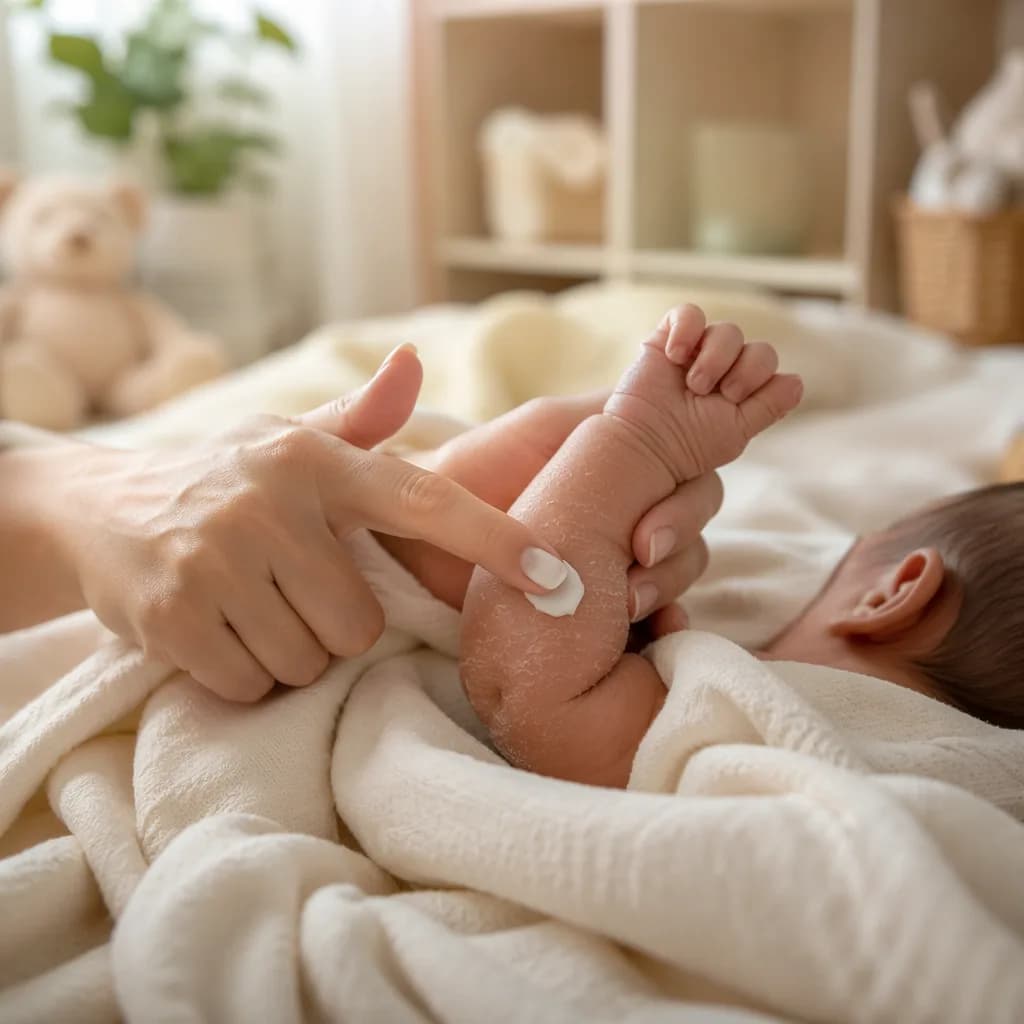 baby-health
Newborn Skin Peeling, Rashes, and Dryness Explained
Newborn peeling, dryness, and tiny rashes can look scary. Here’s what’s usually normal, what helps, and when to call your baby’s doctor.
9 min readJul 10, 2026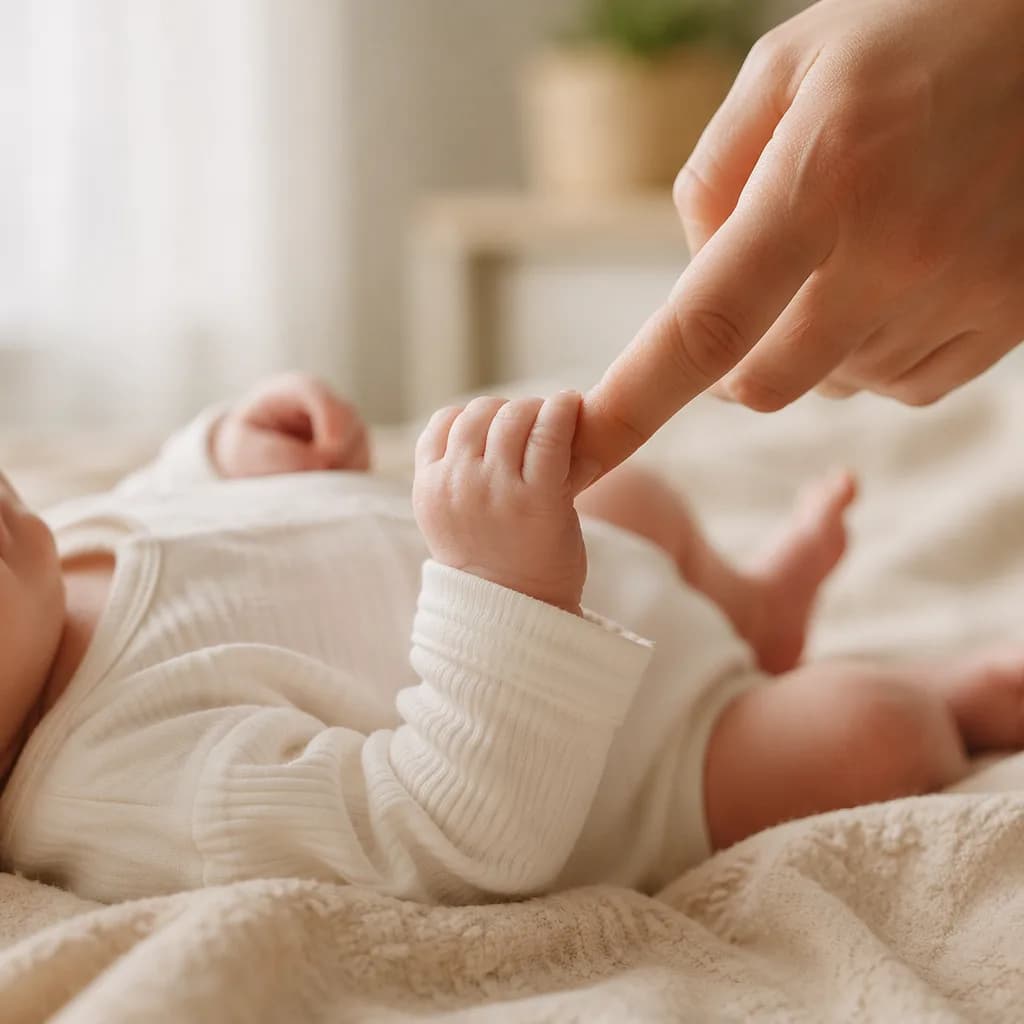 baby-health
Newborn Reflexes Explained for Worried Parents
Newborn reflexes can look startling, but most are normal. Here’s what rooting, sucking, Moro, grasp, stepping, and other reflexes mean.
11 min readJul 6, 2026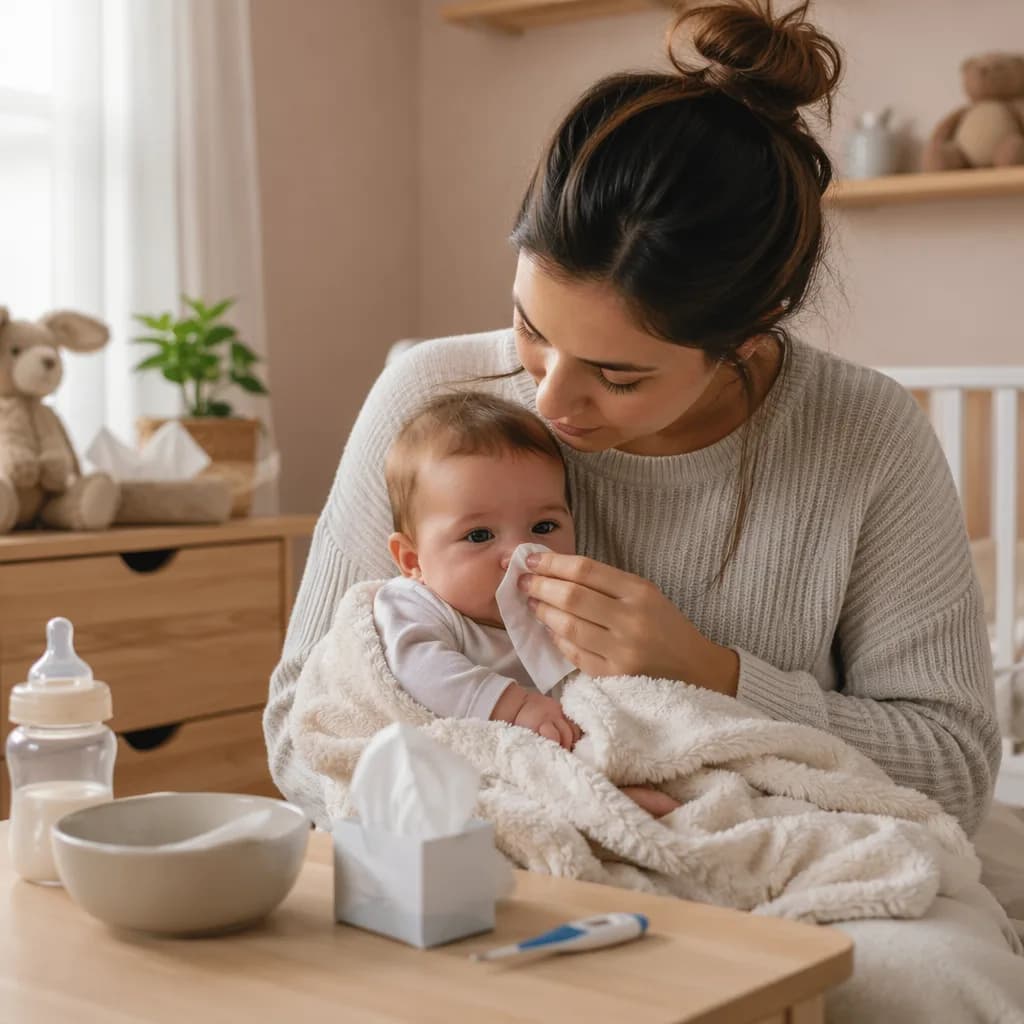 baby-health
Baby's First Cold: Comfort, Feeding, and Warning Signs
Baby's first cold can feel scary. Here’s how to ease congestion, protect feeding and sleep, and know when to call the doctor.
10 min readJun 26, 2026