
Postpartum Exercise: Gentle Ways to Move After Birth
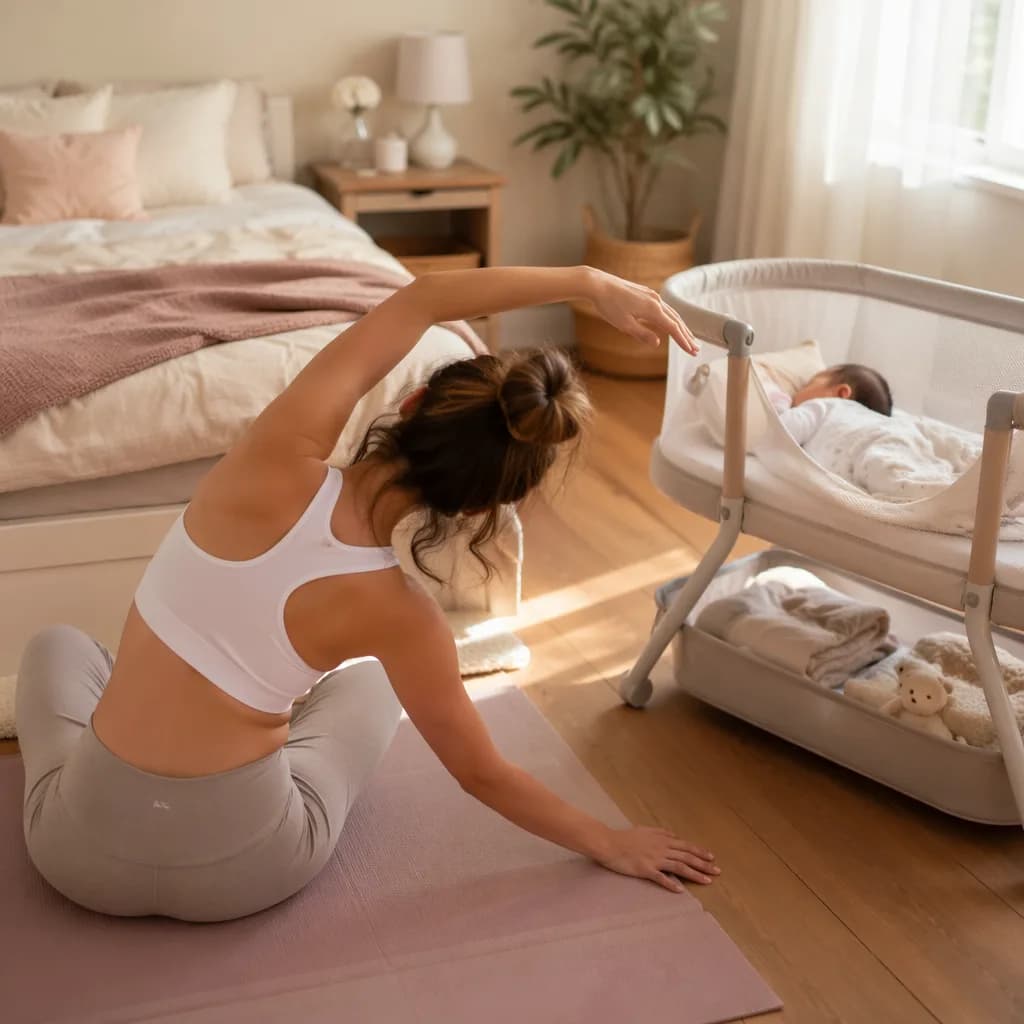
What counts as postpartum exercise in the first weeks
In the first weeks after birth, postpartum exercise usually means gentle movement, not a return to your old workouts.
Your body is healing from a major physical and emotional event. The postpartum period starts right after childbirth and is often described as the first six to eight weeks, though some symptoms can last longer. During this time, rest, food, healing, feeding, and sleep are all part of recovery. They count. Even if they don’t look like exercise.
Gentle movement might be a slow walk to the mailbox, a few shoulder rolls while the baby naps on your chest, or light stretching after a feed. It might be breathing practice while lying on your side. It might be noticing your pelvic floor without forcing anything, especially if you’re sore, swollen, or dealing with bladder changes. If you had a C-section, it may simply be standing tall for a moment and taking a few calm breaths.
Short and easy is enough.
There can be so much pressure to “get your body back,” but your body didn’t go anywhere. It gave birth. It may be bleeding, cramping, leaking milk, sweating through hormonal shifts, or running on tiny scraps of sleep. That deserves care, not punishment.
This is also where your setup matters. A soft place to sit, easy snacks, water nearby, and fewer demands can make movement feel less like another task. If visitors are draining your energy, it’s okay to set limits, and postpartum visitor boundaries can be part of protecting your recovery.
If something feels off, or pain, bleeding, swelling, mood changes, or anxiety worry you, check in with your healthcare provider. Gentle movement should support healing, not make you feel worse. For practical comfort ideas, postpartum recovery essentials can help you make those early days a little kinder.
When to exercise postpartum and when to wait
Postpartum starts right after birth and is often described as the first six to eight weeks, but recovery doesn’t always fit neatly into that window. Some symptoms can last longer, and your body is doing a lot at once: healing tissue, shifting hormones, managing bleeding, making milk if you’re feeding that way, and running on broken sleep.
For many parents after an uncomplicated vaginal birth, gentle movement can begin pretty soon. Think slow walks to the mailbox, ankle circles while you’re sitting with the baby, or a few easy shoulder rolls after a long feeding session. This isn’t “working out” in the old sense. It’s more like reminding your body that movement can feel safe again.
More intense exercise usually waits until medical clearance. That might mean holding off on running, heavy lifting, core workouts, fitness classes, or anything that makes you leak urine, feel pressure, increase pain, or bleed more. The 6-week visit is a checkpoint, not a finish line. It’s a place to ask real questions and get a read on how your recovery is going.
Some births need a slower timeline. C-section recovery, heavy bleeding, vaginal tearing, pelvic pain, high blood pressure, and signs of infection can all change what’s safe and when. If swelling comes with chest pain or trouble breathing, that needs medical attention right away. And if you’re feeling shaky, panicky, or constantly on edge, movement may help a little, but support matters too. This guide to Postpartum Anxiety: Signs, Support, and Relief can help you name what’s going on.
Before starting a postpartum workout plan, check with your OB, midwife, or a pelvic floor physical therapist. Bring specifics: “Can I walk 10 minutes?” “Can I lift my toddler?” “Is pelvic heaviness normal?” Clear questions get better answers.
In the meantime, make recovery easier where you can. A peri bottle, supportive underwear, snacks near your feeding spot, and a plan for fewer interruptions can make a real difference. You might like Postpartum Recovery Essentials for Real-Life Comfort and Postpartum Visitors: Boundaries Without Guilt, because healing is harder when you’re hosting.
Red flags to stop and call your provider
Gentle movement should feel gentle. You might feel tired, tender, or surprised by how much effort a slow walk takes. That’s different from pain, pressure, or symptoms that feel wrong in your body.
Stop exercising and call your provider if you notice:
- Bleeding that gets heavier instead of lighter
- Bleeding that turns bright red again after it had faded
- Clots
- Dizziness or feeling faint
- Chest pain
- Shortness of breath
- Fever
- A severe headache
- Calf pain
- New swelling, especially if it comes with chest pain or trouble breathing
Also pause and get guidance if you feel pelvic heaviness, bulging, worsening urine leaking, sharp incision pain, or a pulling feeling around a tear or scar. Those are not “push through it” signals. They’re your body asking for a check-in.
A real-life example: if a 10-minute stroller walk makes your bleeding turn bright red again, scale back and call your provider for guidance. It doesn’t mean you failed. It means that walk was too much for today.
This is also why comfort matters so much in the early weeks. Ice packs, supportive underwear, easy snacks, and a place to sit without wincing can make a big difference, and we’ve gathered practical ideas in Postpartum Recovery Essentials for Real-Life Comfort. If visitors are making it harder to rest, Postpartum Visitors: Boundaries Without Guilt may help you protect the quiet time your body needs.
And if your worry feels constant or hard to settle, especially around symptoms or movement, read Postpartum Anxiety: Signs, Support, and Relief. You deserve care too.
Start with breath, core, and pelvic floor basics
In the first weeks after birth, your body is still doing a lot of healing. Postpartum generally refers to the first six to eight weeks after delivery, though some symptoms and changes can last longer. So early movement doesn’t need to look like a workout. It can be quiet, small, and honestly a little boring.
That’s okay. Boring can be exactly right.
Start with 360-degree breathing. Lie on your side with a pillow between your knees, or on your back with your knees bent if that feels comfortable. Place one hand on your ribs and one hand low on your belly. As you inhale, imagine your breath spreading gently into your belly, sides, back, and ribs, like an umbrella opening in every direction. As you exhale, let everything soften instead of forcing the air out.
Try a few breaths while the baby naps next to you, or after you’ve settled them and finally have two quiet minutes. This is the same season where boundaries matter too, especially if visitors are making rest harder. If you need language for that, Postpartum Visitors: Boundaries Without Guilt can help.
Next, add the pelvic floor. On an exhale, imagine softly lifting the area between your sit bones, like picking up a blueberry with a tissue. Tiny effort. No clenching. Then fully release on the inhale. The release matters as much as the contraction, because gripping all day can leave you feeling more tense and sore.
Now connect your deep core. As you exhale, think of your lower belly gently drawing in and up, like you’re zipping up loose pajamas. Skip crunches and sit-ups early on. Your uterus is shrinking, hormones are shifting, and soreness, bleeding, fatigue, and swelling can all be part of this stretch of recovery. Comfort comes first. For practical support during this stage, Postpartum Recovery Essentials for Real-Life Comfort is a good companion.
If you notice doming or coning along the midline of your belly, especially with effort, adjust. That can be a sign your body needs less pressure. Roll to your side to get up, make the movement smaller, or return to breathing only. If you’ve been told you have diastasis recti, this pressure check is especially useful.
Keep it simple: breathe, soften, gently connect, fully release. No chasing reps. No intensity badge. And if movement feels tied up with racing thoughts or a sense that you can’t settle, Postpartum Anxiety: Signs, Support, and Relief may be worth reading too.
Easy exercise after birth for the first month
The first month after birth is not the time to “get back” to anything. It’s a time to heal, rest when you can, and notice what your body is telling you.
Postpartum begins right after childbirth and is often described as the first six to eight weeks, though some symptoms can last longer. In those early days and weeks, your uterus is shrinking, hormones are shifting, bleeding is common, breasts may feel swollen, and soreness can be very real. Fatigue is normal too. So gentle movement should feel like support, not a workout you have to complete.
A simple starting routine can be tiny:
- 5 minutes of breathing
Sit or lie comfortably. Let your shoulders drop. Breathe in slowly, then exhale without forcing it. If you had a C-section, place a pillow lightly over your belly if that helps you feel supported.
- 5 to 10 minutes of easy walking
This might mean walking to the mailbox, around the kitchen, or down the hallway while the baby naps. Keep it slow enough that you could talk.
- Ankle circles
Circle each foot a few times in both directions while sitting or lying down.
- Neck rolls and shoulder movement
Newborn care can leave your neck and upper back tight. Move gently. No yanking, no pushing through pain.
- Light mobility
Try slow wrist circles, gentle side-to-side head turns, or opening and closing your hands, especially if feeding or holding the baby has you curled forward.
Start with one short session a day, or every other day if the night was rough. A hard feeding night, extra bleeding, or deep exhaustion counts as information. You’re allowed to do less.
If you had a vaginal birth, perineal soreness can last for weeks, especially if there was tearing. Choose positions that don’t press on tender areas. If you had a C-section, protect the incision from strain. Roll to your side before getting up, then use your hands to push yourself upright. Holding a pillow against your belly can make coughing, laughing, or standing feel steadier.
Increase slowly. Add just a few minutes only if bleeding, pain, and fatigue stay about the same afterward. If symptoms ramp up, step back.
For comfort tools that make early movement easier, you might like our guide to Postpartum Recovery Essentials for Real-Life Comfort. And if visitors are making rest harder, Postpartum Visitors: Boundaries Without Guilt can help you protect this healing window.
Some days your “exercise” will be breathing, drinking water, and texting someone that you need help. That counts. If anxious thoughts are making it hard to rest or leave the couch, Postpartum Anxiety: Signs, Support, and Relief is a gentle next read.
And because postpartum reading often happens in odd little pockets, while feeding a newborn or rocking at 2 a.m., you may also find yourself saving totally unrelated things for later, like a Teething Timeline: Signs, Order, and Relief Tips or even a baby name page such as Tanmay Suresh Upadhyay: meaning & origin. Early parenthood is like that. Tiny steps, tiny windows, one day at a time.
How to build a gentle postpartum workout after clearance
Once your healthcare provider has cleared you, postpartum exercise usually means easing back in. Think gradual strength, longer walks, low-impact cardio, and simple bodyweight work. Not a “get back” plan. A healing plan.
Your body has been through childbirth, recovery, hormone changes, fatigue, bleeding, soreness, and the huge adjustment of caring for a newborn. The postpartum period is often described as the first six to eight weeks after birth, but symptoms and body changes can last longer. So even with clearance, it’s smart to start smaller than you think you need to.
A gentle first workout might look like this:
- 5 to 10 minutes of easy walking
- 5 sit-to-stands from a chair
- 5 wall push-ups
- 5 heel slides on each side
- Bird dog arms only, 5 each side
- Glute bridges, only if they feel comfortable
- Light band rows, slow and controlled
That’s enough.
For early workouts, use the talk test. During most of your walk or workout, you should be able to speak in full sentences. If you’re gasping, holding your breath, or feeling wiped out afterward, bring the intensity down. A stroller walk around the block counts. So does five quiet minutes of movement while the baby naps.
Progression works best in layers. Add time first, like turning a 10-minute walk into 12 minutes. Then add light resistance, such as a slightly stronger band or a few more reps. Impact comes much later, and only if your body feels ready. Jumping, running, and intense intervals can wait.
Pay attention to pressure signals. Leaking pee, pelvic heaviness, or a dragging feeling doesn’t mean you need more willpower. It means your body needs a different plan, and it’s a good reason to check in with your provider. The delayed postpartum phase can include gradual muscle and tissue recovery for months, so support matters.
It also helps to protect your actual life around movement. If visitors are making rest impossible, this is a good time to set kind limits. Our guide to Postpartum Visitors: Boundaries Without Guilt can help. And for the sore, leaky, tender parts of recovery, keep comfort close with Postpartum Recovery Essentials for Real-Life Comfort.
Some days, exercise will be a walk. Some days, it’ll be stretching beside a laundry pile. Both count.
Movement tips for C-section recovery
A C-section is major abdominal surgery, so postpartum exercise usually needs a slower, gentler return. That can feel frustrating, especially if your brain is ready to “do something” before your body is ready. But in these first weeks, movement isn’t about workouts. It’s about circulation, comfort, healing, and learning how your body feels after birth.
Start small. A short walk to the bathroom, then around the bedroom, then maybe to the kitchen and back can count. Ankle pumps while you’re resting can help you add tiny bits of movement without stressing your incision. Supported breathing can help too: place your hands lightly on your lower ribs or belly, breathe in gently, then exhale slowly without bearing down.
Posture resets are another quiet win. After feeding or holding the baby, sit tall for a few breaths, soften your shoulders, and let your jaw unclench. Simple, but it helps.
Incision-friendly habits matter just as much as the movement itself. Try log rolling out of bed: roll onto your side first, then use your arms to push up while your legs come down. Avoid heavy lifting beyond your provider’s guidance. And when you cough or laugh, support your belly with a pillow or your hands. It can make those sudden movements feel less sharp.
Keep your provider in the loop if something feels off. Call if you notice redness, drainage, fever, opening at the incision, sharp pain, or worsening swelling. Your postpartum checkups are there for this exact reason, and you deserve care too.
If visitors make it harder to rest, it’s okay to set limits. This piece on postpartum visitors and boundaries can help you find the words. For practical comfort ideas, you may also like Postpartum Recovery Essentials for Real-Life Comfort. And if anxious thoughts are making recovery feel heavier, Postpartum Anxiety: Signs, Support, and Relief is a gentle place to start.
How feeding, sleep, and hormones affect workouts
Feeding a newborn is physical work, especially in the early weeks. Breast engorgement can make your chest feel swollen, painful, and heavy, even if you’re not breastfeeding. If a walk sounds good but your breasts feel full, try feeding or pumping first, then put on a supportive bra before you head out.
Posture matters too. Long feeding sessions can leave you rounded forward on the couch or bed, then a stroller walk suddenly feels tight through your neck, shoulders, and upper back. A gentle reset can help: roll your shoulders, unclench your jaw, and take a few slow breaths before you stand up.
Your body is also still healing. Postpartum usually refers to the first six to eight weeks after birth, but symptoms and changes can last longer. In the delayed phase, which can extend to about six months postpartum, muscles and tissues are still gradually returning toward their pre-pregnancy state. Hormonal shifts can also bring headaches, hot flashes, and mood changes, so joint comfort and overall energy may feel different from one day to the next. If your provider has talked with you about relaxin or joint looseness, follow their guidance and keep movement gentle.
On tired days, lower the bar until it feels kind. Stretch beside the crib. Walk slowly to the mailbox. Rest without guilt. If visitors are making rest harder, this is a good time to set soft but firm limits, like the ones in Postpartum Visitors: Boundaries Without Guilt.
For comfort ideas that make movement feel more doable, see Postpartum Recovery Essentials for Real-Life Comfort. And if worry feels bigger than ordinary new-baby stress, Postpartum Anxiety: Signs, Support, and Relief may help you decide what to ask for next. During those long feeding windows, lighter reads like a teething timeline or even a baby name meaning like Tanmay Suresh Upadhyay can be just enough company.
A simple 10-minute postpartum exercise routine
Postpartum starts right after birth and is often described as the first six to eight weeks, though some body changes can last longer. So this little routine is meant to be gentle. Think circulation, posture, breath, and confidence. Not “getting back” to anything.
Try it 2 to 4 times per week, or split it into tiny pieces across the day. Two minutes while the baby naps counts. One minute before a shower counts, too. The goal is to finish feeling steadier, not drained.
Minutes 0-2: Breathing
Sit supported, lie on your side, or recline with pillows. Place one hand on your ribs and one on your belly. Inhale softly through your nose, letting your ribs widen. Exhale slowly, like you’re fogging a mirror with your mouth closed. Keep your jaw loose.
If you’re recovering from a C-section, choose a position that doesn’t tug at your incision. A pillow held gently against your belly can make breathing feel safer.
Minutes 2-4: Shoulder and neck mobility
Roll your shoulders up, back, and down five times. Then turn your head slowly to look over one shoulder, come back to center, and switch sides. Add a few gentle chin nods, like you’re saying “yes” in slow motion.
This is lovely after long feeding sessions or after holding visitors at arm’s length, literally and emotionally. If you need help with that part, Postpartum Visitors: Boundaries Without Guilt is a good one to keep nearby.
Minutes 4-7: Gentle walking
Walk around your room, hallway, or yard at an easy pace. You should be able to talk the whole time. If you feel pelvic heaviness, pressure, increased bleeding, dizziness, or pain, stop and rest.
For C-section recovery, keep the steps short and relaxed. Stand tall, but don’t force a big stride.
Minutes 7-9: Sit-to-stand or wall push-ups
Choose one.
For sit-to-stand, use a sturdy chair. Inhale while seated. Exhale as you stand. Sit back down slowly. Do 3 to 6 reps.
For wall push-ups, place your hands on the wall at chest height. Bend your elbows a little, then press back. Do 5 to 8 reps.
If pelvic pressure shows up, skip this part for now and return to breathing or walking.
Minute 9-10: Pelvic floor release breathing
Instead of squeezing, practice letting go. Inhale and imagine your pelvic floor softening downward like a hammock. Exhale gently without clenching. This can feel surprisingly calming, especially on days when your body feels unfamiliar.
Keep comfort tools close, too. Postpartum Recovery Essentials for Real-Life Comfort can help you set up a small basket so movement doesn’t require a scavenger hunt first. And if anxious thoughts are making it hard to rest or trust your body, Postpartum Anxiety: Signs, Support, and Relief may help you feel less alone.
When to get help from a pelvic floor physical therapist
Postpartum symptoms are common. They’re also not something you have to quietly live with while you “wait it out.”
A pelvic floor physical therapist can help if you’re dealing with leaking pee, painful sex, pelvic pressure, tailbone pain, scar tightness after a C-section or tearing, worries about diastasis, or that strange feeling that you just can’t reconnect with your core muscles. Some of these concerns can show up in the delayed postpartum phase, when muscles and tissues are still gradually returning toward their pre-pregnancy state.
In plain language, a pelvic floor PT looks at how your core, breath, hips, back, pelvic floor, and scar tissue are working together. They may check how you move, how you brace when you lift the baby, what happens when you cough or stand up, and whether certain muscles are overworking or not engaging well. If you have a scar that feels tight when you reach, twist, or carry the car seat, they can assess that too.
This kind of support can feel especially helpful because postpartum recovery isn’t just about getting through the first few weeks. Your body is healing while you’re feeding, rocking, carrying, and trying to sleep in tiny pieces. Comfort matters. If you’re gathering practical recovery tools too, Postpartum Recovery Essentials for Real-Life Comfort is a gentle place to start.
At your postpartum visit, ask your healthcare provider for a pelvic floor PT referral. You can say, “I’m leaking when I sneeze and I’d like an evaluation.” Simple is enough. Depending on where you live and your insurance, you may also be able to contact a local pelvic floor clinic directly.
And if the physical symptoms are tangled up with worry or panic, you’re not alone there either. Postpartum Anxiety: Signs, Support, and Relief may help you name what’s been feeling heavy.
Frequently Asked Questions
How soon can I start postpartum exercise?
After an uncomplicated vaginal birth, gentle movement like breathing exercises and short walks may start within days if you feel well. Ask your provider first, especially after a C-section or complications.
What is the safest exercise after birth?
Gentle walking, breathing practice, pelvic floor relaxation and light mobility are usually the safest first steps. Keep it easy and stop if bleeding, pain, dizziness, or pressure increases.
Can I do sit-ups after having a baby?
Usually not right away. Sit-ups can put pressure on healing abdominal and pelvic floor tissues, especially with diastasis recti. Start with breathing and deep core work first.
When can I do a real postpartum workout?
Many parents wait until their postpartum checkup before structured workouts. Even then, start with low-impact strength and walking, then build slowly based on symptoms and energy.
Is bleeding after exercise postpartum normal?
A small change can happen, but heavier bleeding, bright red bleeding that returns, clots, or cramping after exercise means you should stop, rest, and call your provider.
Can postpartum exercise help with back pain?
Gentle core, breathing, posture work, and walking can help some back pain. If pain is sharp, one-sided, or not improving, a pelvic floor physical therapist can check what’s going on.
Frequently asked questions
How soon can I start exercising after birth?
What counts as safe postpartum exercise in the first few weeks?
When should I stop exercising postpartum?
Do I need to wait until my 6-week visit to move?
References
Sources
External research this article was grounded in.
- Postpartum: Stages, Symptoms & Recovery Timemy.clevelandclinic.org
- Postpartum period - Wikipediaen.wikipedia.org
- Postpartum: The Authoritative Guide (2026) | APAamericanpregnancy.org
- 10 Best Exercises for Everyonehealthline.com
- All Exercise and Fitness Articles | Page 1 - Harvard Healthhealth.harvard.edu
Related reading
More from the journal → wellness
Postpartum Self Care: Rest, Heal, and Ask for Help
Postpartum self care means real recovery: rest, food, pain relief, checkups, honest support, and tiny breaks that help you heal.
14 min readJul 31, 2026 wellness
Postpartum Identity: Feeling Like Yourself After Baby
Feeling unlike yourself after baby is common. Here’s why postpartum identity shifts happen, what helps, and when to ask for extra support.
14 min readJul 28, 2026 wellness
Relationship After Baby: Stay Close as New Parents
Baby changes your relationship fast. Here’s how to talk, share the load, repair after hard moments, and stay close in the postpartum weeks.
11 min readJul 25, 2026