
Postpartum Meal Planning for Recovery and Busy Days
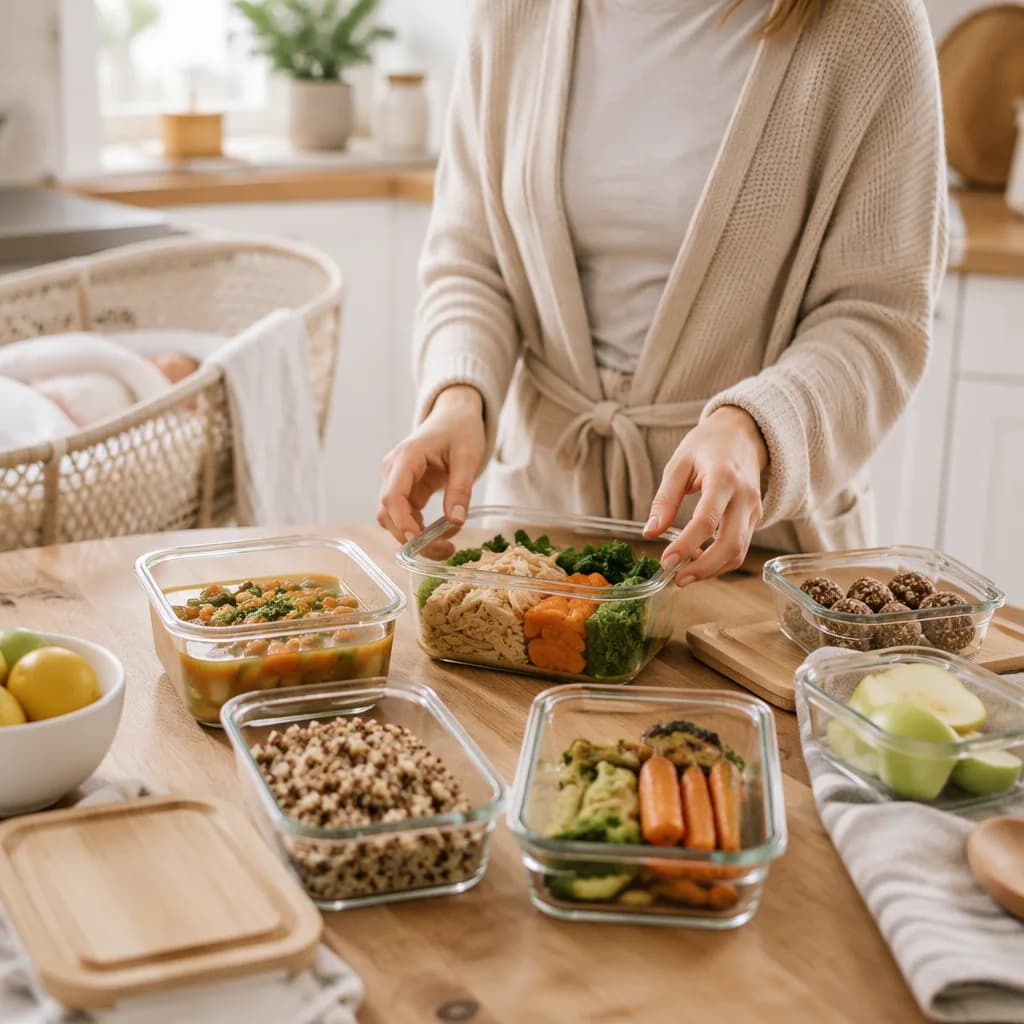
What postpartum meal planning really needs to cover
Postpartum meal planning isn’t about making impressive dinners. It’s about opening the fridge at 2:17 p.m., after three broken stretches of sleep, and finding something you can eat while holding a baby.
The postpartum period starts right after birth and is often described as the first six to eight weeks, though some physical and emotional changes can last longer. During this time, your body is healing, hormones are shifting, and you’re caring for a newborn on very little rest. Food does not need to be fancy. It needs to be there.
A helpful postpartum meal plan usually has three jobs:
- Keep your energy steadier, especially when sleep is chopped into tiny pieces.
- Support healing with simple, nourishing foods.
- Make eating possible when you have one free hand or only five minutes.
Think protein, iron-rich foods, fiber, fluids, and snacks you don’t have to think about. Hard-boiled eggs, yogurt, nut butter toast, lentil soup, trail mix, cut fruit, cheese, and crackers can all count. So can leftovers.
A real example: a bowl with rice, shredded chicken, avocado, salsa, and beans. It can be lunch, dinner, or a late-night bite. You can eat it warm, room temp, or with one hand if you pile it into a tortilla.
This is the same spirit behind Postpartum Self Care That Helps You Feel Human. Small things matter. A full water bottle beside the chair matters. A freezer burrito matters. Asking visitors to bring food instead of expecting to be hosted matters too, especially if you’re working on postpartum visitor boundaries without guilt.
How to build a simple postpartum meal plan
Postpartum starts right after birth and is often thought of as the first six to eight weeks, but the tiredness, soreness, hormone shifts, and general recovery can stretch well beyond that. So meal planning needs to be kind to the person doing it.
Start with three days.
A full month sounds organized, but it can feel like homework when you’re healing, bleeding, feeding a baby, and sleeping in scraps. Three days is enough to lower the daily “what are we eating?” stress without turning your kitchen into a project.
Use a simple formula for most meals:
- one protein
- one starch
- one vegetable or fruit
- one fat
- one quick sauce or topping
That could be a rotisserie chicken wrap with avocado, spinach, and ranch. Or lentil soup with toast and a drizzle of olive oil. Or sheet pan sausage and potatoes with frozen green beans and mustard on the side. Nothing fancy. Food that shows up and does the job.
Plan for breakfast, lunch, dinner, and two snacks. Hunger can hit hard during recovery, and if you’re breastfeeding, you may feel like you need food right now, not after someone finishes washing a pan. Greek yogurt bowls with granola and berries work well. So do breakfast burritos you can reheat with one hand.
Write the plan on the fridge. Truly. A tired parent should not have to stand in front of an open refrigerator and think. Put the meals, snacks, and any “use this first” food right where everyone can see it.
If visitors ask how they can help, point them to the list or ask them to bring one of the meals. Boundaries around help can be loving and practical, and we talk more about that in Postpartum Visitors: Boundaries Without Guilt. Pair this with small recovery habits from Postpartum Self Care That Helps You Feel Human, and later, when your provider says it’s okay, gentle movement from Postpartum Exercise: Gentle Ways to Move After Birth.
Best postpartum meals for recovery
Postpartum meals don’t need to be fancy. They need to be warm, filling, easy to reheat, and kind to a body that’s healing while running on very little sleep.
Soups and stews are a good place to start because they’re gentle and practical. Think chicken noodle soup with shredded chicken, carrots, noodles, and broth, or turkey chili with beans and mild spices. A beef stew with potatoes and carrots can feel especially satisfying when you want something hearty. Lentil soup is another great freezer-friendly option, especially if constipation is making the early days uncomfortable.
Casseroles and bakes help too. Pasta bakes, bean enchiladas, oatmeal bakes, and whole grain muffins can be made ahead and eaten one-handed if needed. Egg cups are another quiet hero. Spinach egg bites, for example, work for breakfast, lunch, or a 3 p.m. “I forgot to eat” moment.
For quick plates, try salmon rice bowls with rice, avocado, cucumbers, and a squeeze of lemon. Cottage cheese toast with berries on the side is fast and protein-rich. Roasted sweet potatoes with beans, bell peppers, and a little cheese can become a filling rice bowl or wrap filling.
Fiber-friendly snacks can be simple: chia pudding, berries, roasted sweet potatoes, lentil soup, and whole grain muffins. Iron-supporting foods like beef stew, beans, spinach egg bites, and fortified cereal can pair nicely with vitamin C foods, such as oranges or bell peppers.
If you had a lot of blood loss, a C-section, feeding concerns, or specific nutrition needs, it’s a good idea to check in with your clinician. Your care doesn’t stop after birth.
Food is only one piece of feeling steadier. Gentle rest, fewer demands, and real support matter too. If you’re building a fuller plan, Postpartum Self Care That Helps You Feel Human and Postpartum Visitors: Boundaries Without Guilt are good companions for these meal ideas.
Freezer meals for postpartum that reheat well
The best freezer meals for postpartum are the ones that ask almost nothing of you later. They freeze flat, reheat without chopping or assembling, and portion easily so lunch doesn’t become a project.
That matters because the postpartum period can bring a lot at once: physical healing, hormonal shifts, fatigue, feeding, and the constant work of caring for a newborn. Food doesn’t fix all of that, but a warm meal you can heat with one hand can make a hard day feel more manageable. Pair it with the tiny basics in Postpartum Self Care That Helps You Feel Human, and you’ve got a real-life recovery plan, not a fantasy one.
Good freezer options include:
- Chicken tortilla soup, frozen flat in bags, with tortillas or chips labeled separately
- Baked ziti, portioned into small foil pans instead of one huge tray
- Breakfast burritos wrapped individually, great for early mornings
- Meatballs, frozen with sauce or plain so they can go with pasta, rice, or bread
- Veggie lasagna, sliced before freezing so you can grab one square
- Pulled pork, packed in small containers for sandwiches, rice bowls, or tacos
- Curry, frozen with a note to add rice or naan
- Shepherd’s pie, made in smaller pans for easier reheating
- Banana oat muffins, frozen in pairs for snacks or quick breakfasts
Snacks count too. Energy bites, mini frittatas, smoothie packs, and lactation-style oat cookies, if you like them, are all easier to grab than a full meal. Smoothie packs are especially helpful if chewing a proper breakfast sounds like too much at 7 a.m.
Label everything clearly: meal name, date, reheating instructions, and add-ons. “Chicken tortilla soup, Jan 12, thaw or microwave, add tortillas and avocado” is much more useful than a mystery container with frost on the lid.
Freeze in smaller portions whenever you can. One parent should be able to heat a meal without thawing a whole family-size tray. This is also kind to the parent who’s healing, especially during those early weeks when even gentle movement, visitors, and baby care can feel like a lot. If you’re thinking ahead, you might also save links like Postpartum Exercise: Gentle Ways to Move After Birth and Postpartum Visitors: Boundaries Without Guilt for later.
And yes, someday you may be reading about the Teething Timeline: Signs, Order, and Relief Tips or saving a name like Tanmay Suresh Upadhyay: meaning & origin. For now, freeze the muffins. Feed yourself first.
No-cook and 10-minute meals for the hardest days
Some postpartum days are just survival days. That’s normal. Your body is healing, your hormones are shifting, and caring for a newborn can bring a level of exhaustion that makes chopping an onion feel ridiculous.
So don’t cook.
Keep a short list of no-cook meals you can make with one hand or while the baby is settled nearby:
- Hummus plate with pita, cucumbers, carrots, olives, or whatever crunchy thing you have
- Turkey and cheese roll-ups with crackers
- Tuna salad on crackers
- Peanut butter banana toast
- Yogurt with granola
- Bagged salad topped with rotisserie chicken
A simple sandwich still counts as a meal. Fed parents matter too.
For days when you have 10 minutes, aim for warm and easy: scrambled eggs and toast, quesadillas, microwave rice with beans, ravioli with jarred sauce, or instant oatmeal with nuts and fruit. None of this needs to be fancy. If you ate something with protein, carbs, and a little comfort in it, that’s a win.
It also helps to make a “too tired to cook” shelf in the pantry. Stock it with shelf-stable basics like tuna packets, crackers, peanut butter, microwave rice, beans, oatmeal, pasta, jarred sauce, nuts, and granola. On a rough afternoon, you won’t have to think. You’ll just open the shelf and pick.
This kind of planning fits right alongside gentle recovery habits, like the ideas in Postpartum Self Care That Helps You Feel Human. And if visitors are asking how they can help, point them toward food, groceries, or cleanup. Postpartum Visitors: Boundaries Without Guilt can help you say that clearly.
A postpartum grocery list to keep on repeat
Postpartum days can be blurry. Cleveland Clinic notes that rest, time to heal, and nutritious foods can help recovery after childbirth, which is exactly why a repeatable grocery list helps so much. You don’t need fancy meals. You need food you can turn into breakfast, lunch, dinner, or a one-handed snack while the baby naps on your chest.
Here’s a simple list to keep saved on your phone.
Proteins
- Eggs
- Greek yogurt
- Chicken
- Canned tuna
- Beans
- Lentils
- Tofu
- Cottage cheese
- Deli turkey
Grains and quick carbs
- Rice
- Oats
- Tortillas
- Pasta
- Bread
- Potatoes
- Frozen waffles
Produce that lasts
- Apples
- Oranges
- Bananas
- Carrots
- Spinach
- Frozen berries
- Frozen broccoli
- Sweet potatoes
Fats and easy add-ons
- Hummus
- Nut butter
- Cheese
- Trail mix
Snacks
- Granola bars
- Greek yogurt cups
- Apples with nut butter
- Tortillas with deli turkey and cheese
- Cottage cheese with fruit
Drinks
- Electrolyte drinks
- Tea
- Water you’ll actually remember to keep nearby
Quick extras
- Broth
- Salsa
- Marinara
- Hummus
- Nut butter
The magic is in mixing the same foods different ways. Eggs, tortillas, spinach, and salsa become breakfast tacos. Rice, chicken, frozen broccoli, and broth become a quick bowl or soup. Pasta, marinara, spinach, and canned tuna become dinner in about the time it takes to reheat a bottle.
If someone asks how to help, send them this list. It pairs nicely with setting gentle limits around help and drop-ins, like we talk about in Postpartum Visitors: Boundaries Without Guilt. And on the days you’re too tired to think, let this be part of your basic care plan, right alongside Postpartum Self Care That Helps You Feel Human.
How friends and family can help with meals
The best meal help is the kind that doesn’t create another job for tired parents.
Postpartum starts right after birth and often lasts six to eight weeks, with healing, feeding, bleeding, soreness, hormone shifts, and deep fatigue all happening at once. So if someone says, “Tell me what you need,” it’s okay to be very specific. A clear request is a kindness.
Ask helpers to bring fully prepared meals in disposable containers, or in containers labeled with their name and whether the food is fresh or freezer-friendly. Add reheating instructions if they’re not obvious. “Chicken soup, ready to eat, fridge, reheat 3 minutes” is the level of detail a sleep-deprived parent can handle.
A simple meal sign-up can include:
- Food preferences and allergies
- Best drop-off window
- Whether visitors should knock, text, or leave food at the door
- Favorite snacks and breakfast foods
- Freezer space notes
- Any strong dislikes, because five lasagnas in one week is a lot of lasagna
Space deliveries out so meals don’t all arrive in the first three days. Try every other day, or ask people to choose from categories: dinner, cut fruit, washed salad greens, muffins, breakfast burritos, trail mix, or single-serve freezer portions.
If visitors are tricky, it can help to share expectations ahead of time. We’ve got more on gentle boundaries in Postpartum Visitors: Boundaries Without Guilt. And if you’re building a fuller recovery plan, pair meal support with small care basics from Postpartum Self Care That Helps You Feel Human.
Sample 3-day postpartum meal plan
In the first six to eight weeks after birth, your body is healing while you’re also learning life with a newborn. Meals do not need to be fancy. They need to be easy to grab, easy to reheat, and filling enough to help you get through those very tired days.
Here’s a simple 3-day plan you can repeat as often as you want.
Day 1
- Breakfast: Oatmeal bake with berries, nuts, or a spoonful of yogurt on top
- Lunch: Chicken wrap with hummus, spinach, shredded carrots, and cheese
- Dinner: Turkey chili with beans, served with rice, cornbread, or tortilla chips
- Snacks: Greek yogurt, trail mix, or both if it’s one of those hungry days
Vegetarian swap: Use lentils or extra beans in the chili, and try a chickpea wrap instead of chicken.
Day 2
- Breakfast: Egg bites with toast and fruit
- Lunch: Lentil soup with crackers or a buttered roll
- Dinner: Sheet pan salmon with sweet potatoes and a green vegetable
- Snack: Apple slices with peanut butter
Vegetarian swap: Trade salmon for tofu, eggs, beans, or a dairy-based protein like cottage cheese on the side.
Day 3
- Breakfast: Smoothie and a muffin
- Lunch: Rice bowl with chicken, beans, tofu, veggies, avocado, or whatever is already in the fridge
- Dinner: Freezer lasagna with bagged salad or frozen vegetables
- Snack: Cheese and crackers
Vegetarian swap: Choose a veggie lasagna, tofu rice bowl, bean bowl, or eggs if that’s what sounds good.
And truly, you can repeat meals. Babies don’t care if dinner is chili three nights in a row.
If someone asks how they can help, send them this plan and let them bring one meal. If visitors are making food harder instead of easier, postpartum visitor boundaries are allowed. Pair meals with tiny care habits from Postpartum Self Care That Helps You Feel Human, and when you’re ready, keep movement gentle with Postpartum Exercise: Gentle Ways to Move After Birth. Later, when life gets a little less blurry, you can save things like the teething timeline or even baby name rabbit holes like Tanmay Suresh Upadhyay for a 3 a.m. scroll.
Frequently Asked Questions
What are the best meals to make before baby arrives?
The best meals are ones that freeze and reheat well, like soups, chili, casseroles, breakfast burritos, meatballs, and muffins.
How many freezer meals should I prep for postpartum?
Aim for 10 to 15 meals if you can. Even 5 freezer meals can make the first two weeks feel easier.
What should I eat during postpartum recovery?
Choose meals with protein, fiber, fluids, and steady carbs, such as eggs, beans, chicken, oats, soups, fruit, yogurt, and whole grains.
What are easy meals for new parents with no time to cook?
Try rotisserie chicken wraps, scrambled eggs, hummus plates, microwave rice with beans, yogurt bowls, quesadillas, or tuna salad on crackers.
Can friends bring postpartum meals?
Yes. Ask for ready-to-eat meals in labeled containers, plus snacks or breakfast foods. Clear drop-off instructions help a lot.
Frequently asked questions
What should I include in a postpartum meal plan?
How many meals should I prep before birth?
What are good one-handed postpartum snacks?
Are freezer meals helpful after having a baby?
References
Sources
External research this article was grounded in.
- Postpartum: Stages, Symptoms & Recovery Timemy.clevelandclinic.org
- Postpartum period - Wikipediaen.m.wikipedia.org
- Postpartum: The Authoritative Guide (2026) | APAamericanpregnancy.org
Related reading
More from the journal → wellness
Postpartum Anxiety: Signs, Support, and Help
Postpartum anxiety can feel like constant worry, checking, panic, or racing thoughts. Here’s how to spot signs and know when to get support.
11 min readAug 3, 2026- wellness
Baby First Cold: Comfort Tips and Doctor Red Flags
Baby’s first cold can feel scary. Here’s how to ease congestion, support feeds, and spot the doctor red flags you shouldn’t wait on.
9 min readAug 3, 2026 - wellness
Postpartum Self-Care: Small Ways to Feel Like You Again
Postpartum self-care can be tiny and still count. Start with food, water, rest, hygiene, pain relief, and asking for help when you need it.
12 min readAug 3, 2026